
Taxis in France
Taking a taxi in France is rarely as simple as stepping into the street and hailing one. Outside major towns, especially in rural areas such as the Pyrénées-Orientales, it is often best to book a taxi in advance.
France has a highly regulated taxi system. Drivers must hold an official autorisation de stationnement (ADS), which gives them the right to operate a taxi from designated locations. This regulated system explains why taxis can sometimes be hard to find — and why fares are regulated rather than freely negotiated.
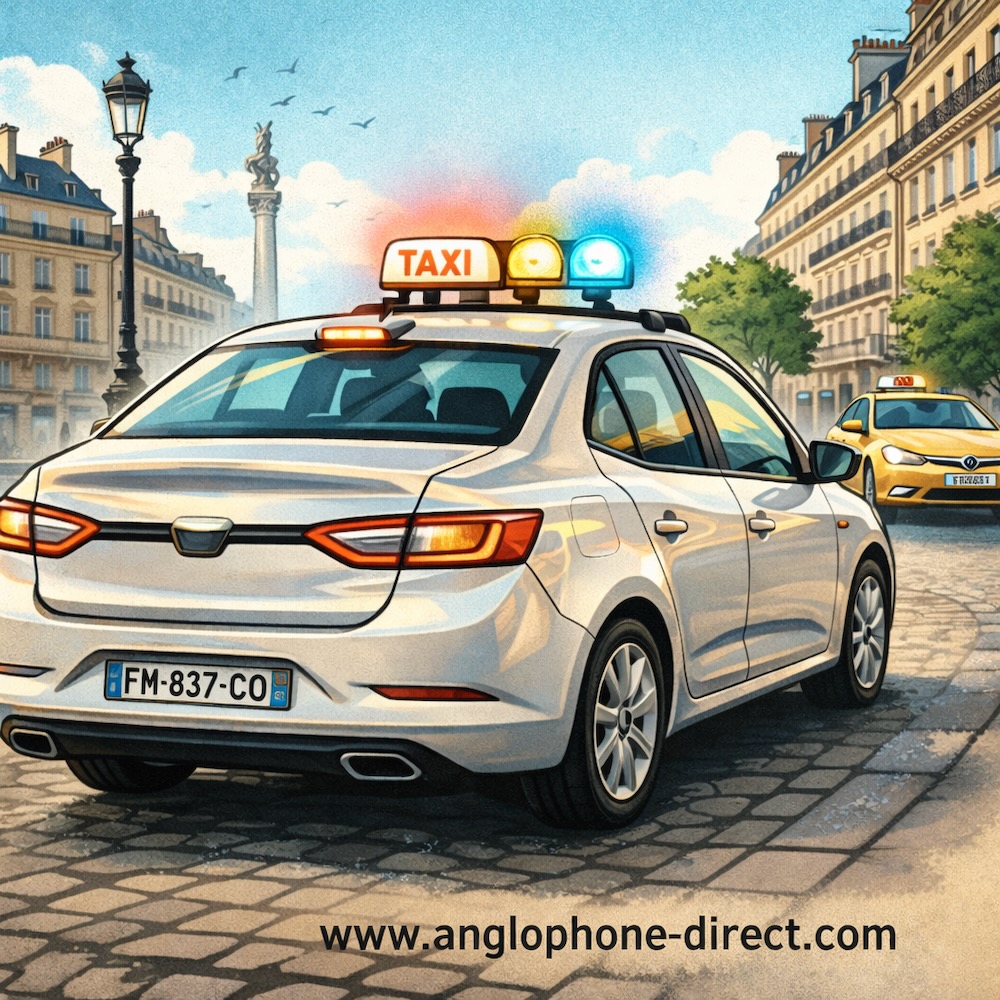
France is one of the most tightly regulated countries in Europe when it comes to taxis. Licences are limited, and drivers must hold an official autorisation de stationnement (ADS), (taxi operating licence or taxi permit) which gives them the right to operate a taxi from designated locations., issued by the local mayor or prefect. This strict system explains why taxis can sometimes be hard to find — and why prices are expensive and none-negotiable.
Fixed and Regulated Prices
If your taxi journey feels expensive, don’t necessarily blame the driver.
Taxi fares in France are regulated, with maximum fares set by the State and applied locally through departmental tariffs. Drivers generally use the regulated tariff shown on the meter, although they may offer a discount.
Fares can vary depending on:
- Time of day and day of the week
- Distance and type of journey
- Whether the taxi returns to its station with or without a passenger
- Waiting time in traffic
- The number of passengers, with a supplement potentially applying from the fifth passenger
- Certain types or quantities of luggage
All official tariffs must be displayed in the taxi, and a minimum fare applies to very short journeys.
How to Tell if a Taxi Is Free
Look at the illuminated sign on the roof. The availability light indicates whether the taxi is free, while the tariff indicator shows which tariff is currently applicable.
The four standard tariffs for taxis outside Paris are:
- White light → Tariff A: daytime journey, with the taxi returning to its station with a passenger
- Orange/yellow light → Tariff B: night-time journey, or certain Sunday/public-holiday journeys, with the taxi returning to its station with a passenger
- Blue light → Tariff C: daytime journey, with the taxi returning to its station without a passenger
- Green light → Tariff D: night-time journey, or certain Sunday/public-holiday journeys, with the taxi returning to its station without a passenger
The A–D tariff system is used for taxis outside Paris, although the actual prices vary by département.
Waiting Time
When the taxi is stationary or moving very slowly, a time-based rate applies instead of the normal distance-based rate. This can add up in traffic or if the driver is asked to wait.
Useful Tips
- Book ahead, especially in rural areas and during evenings, weekends and holidays
- Always use a licensed taxi or a legitimate VTC/private-hire vehicle
- Ask for a receipt or note if you need one
- Card payment is available in licensed taxis, but it is still wise to check in advance in rural areas
Taxis in France are regulated, and understanding how the tariff system works can make taking a taxi much easier.
Medical Transport
If you need a taxi for a hospital appointment, ask whether it is a taxi conventionné and check the conditions for reimbursement before booking. This is a specific type of medical transport and is different from an ordinary taxi journey. Reimbursement is subject to certain conditions, including the appropriate medical prescription where required.
Taxis in France may not be cheap, but they are safe, regulated and transparent — and once you know how the system works, there should be no surprises.
What about an Uber?
🚗 Officially available in the P-O, you can request a ride through the Uber app BUT Uber tends to be more visible and reliable in Perpignan itself and requests in rural areas and smaller communes often go unanswered because there are few or no drivers nearby, and you may have to wait a long time or get no driver at all. So while Uber is technically present in the department, it isn’t yet as widespread or dependable as in major cities.
OUR LOCAL ENGLISH SPEAKING RECOMMENDATION
What you might say | French |
| I’d like to book a taxi for tomorrow morning. | Je voudrais réserver un taxi pour demain matin. |
| Could you pick me up at this address? | Pourriez-vous venir me chercher à cette adresse ? |
| I need to go to Perpignan station / the airport. | Je dois aller à la gare de Perpignan / à l’aéroport. |
| What time can you pick me up? | À quelle heure pouvez-vous venir me chercher ? |
| Roughly how much will it cost? | Combien cela coûtera-t-il environ ? |
| Will I be charged for the taxi’s journey to pick me up | Y a-t-il des frais de réservation ou d’approche ? |
| We are four people and have three suitcases. | Nous sommes quatre et nous avons trois valises. |
| Can I bring my dog? | Est-ce que je peux voyager avec mon chien ? |
| Do you have a vehicle suitable for a wheelchair? | Avez-vous un véhicule adapté à un fauteuil roulant ? |
| Are you a taxi conventionné? | Are you an approved medical transport ?” |
| Please take the quickest route. | Prenez l’itinéraire le plus rapide, s’il vous plaît. |
| Please avoid the motorway / toll roads. | Évitez l’autoroute / les péages, s’il vous plaît. |
| Could you stop here, please? | Vous pouvez vous arrêter ici, s’il vous plaît ? |
| Can I pay by card? | Je peux payer par carte bancaire ? |
| Could I have a receipt, please? | Puis-je avoir une note, s’il vous plaît ? |
| I think I left my phone in your taxi. | Je crois que j’ai oublié mon téléphone dans votre taxi. |
What the driver might say | English |
| Ou souhaitez-vous aller ? | Where would you like to go? |
| Quelle est l’adresse exacte ? | What is the exact address? |
| Ã quelle heure souhaitez-vous partir ? | What time would you like to leave? |
| Je suis devant chez vous. | I’m outside your house. |
| Je suis à la station de taxis. | I’m at the taxi rank. |
| Je serai là dans dix minutes. | I’ll be there in ten minutes. |
| Vous avez des bagages ? | Do you have any luggage? |
| Vous préférez prendre l’autoroute ? | Would you prefer to take the motorway? |
| Il y a des embouteillages. | There’s heavy traffic. |
| Nous sommes arrivés. | We’ve arrived. |
| Cela fait vingt-cinq euros. | That’s twenty-five euros. |
| Vous souhaitez une note ? | Would you like a receipt? |
It’s fascinating to learn about the strict licensing system and regulations that govern the taxi industry in France, particularly in cities like Paris. Knowing that taxi prices are regulated by the government provides peace of mind for travelers, ensuring fair and transparent pricing.I appreciate the reminder to be respectful towards taxi drivers, especially when it comes to pricing. Understanding that they have no control over the fares and that prices vary based on factors like region and luggage helps foster empathy and appreciation for their service.