
Things to Do in Perpignan: Historic Centre, Markets & Sights
A day on the beach, a trek in the mountains, a drive along the pretty coastal or winding mountain roads….we’re never short of things to do and places to go in the P-O. Today however, we’re out on the town for a wander around a few of the delights of historic Perpignan with its colourful mix of old and new, chic and shabby, trendy boutiques, narrow, cobbled streets and small intimate bistros.
Perpignan is a town that rewards a leisurely exploration. There’s history around every corner, a distinctly Catalan atmosphere and plenty of sunny squares in which to stop for a coffee or a glass of something local.
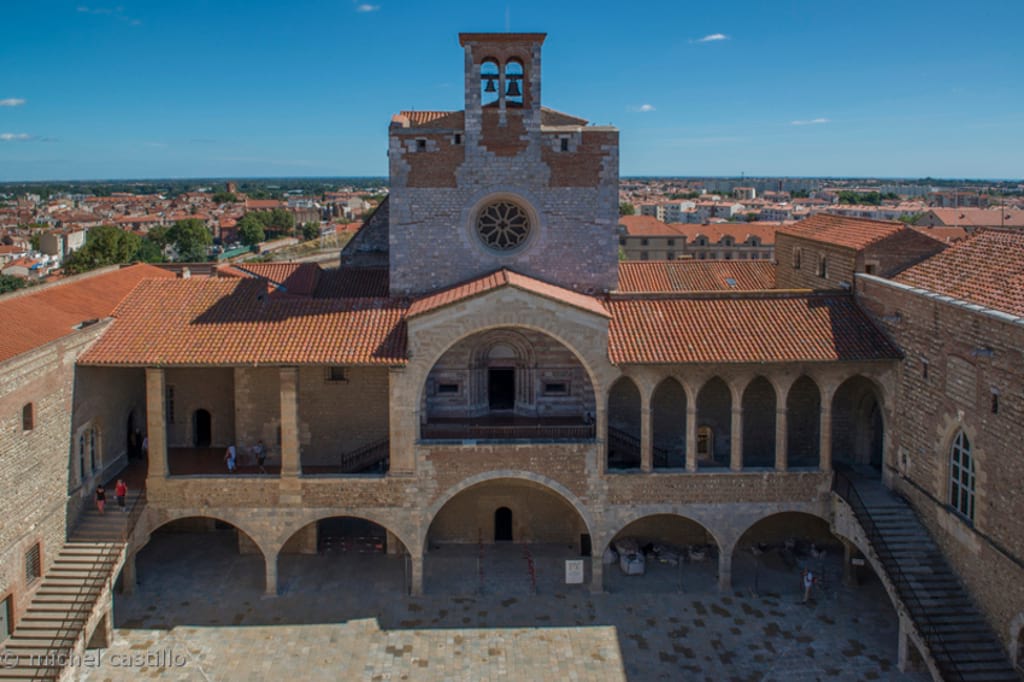
A thirty minute drive from the Spanish border, this cultural capital of Catalonia North owes much of its heritage and cultural development to the kings of Majorca, whose palace still dominates the town. With beautiful chapel, some rather austere royal apartments and a grand courtyard, the palace is very slightly off our city centre circuit today but a must-see another time, if only for the superb view from the impressive red brick ramparts across the city roofs to Canigou and Queribus.
Starting at the Castillet
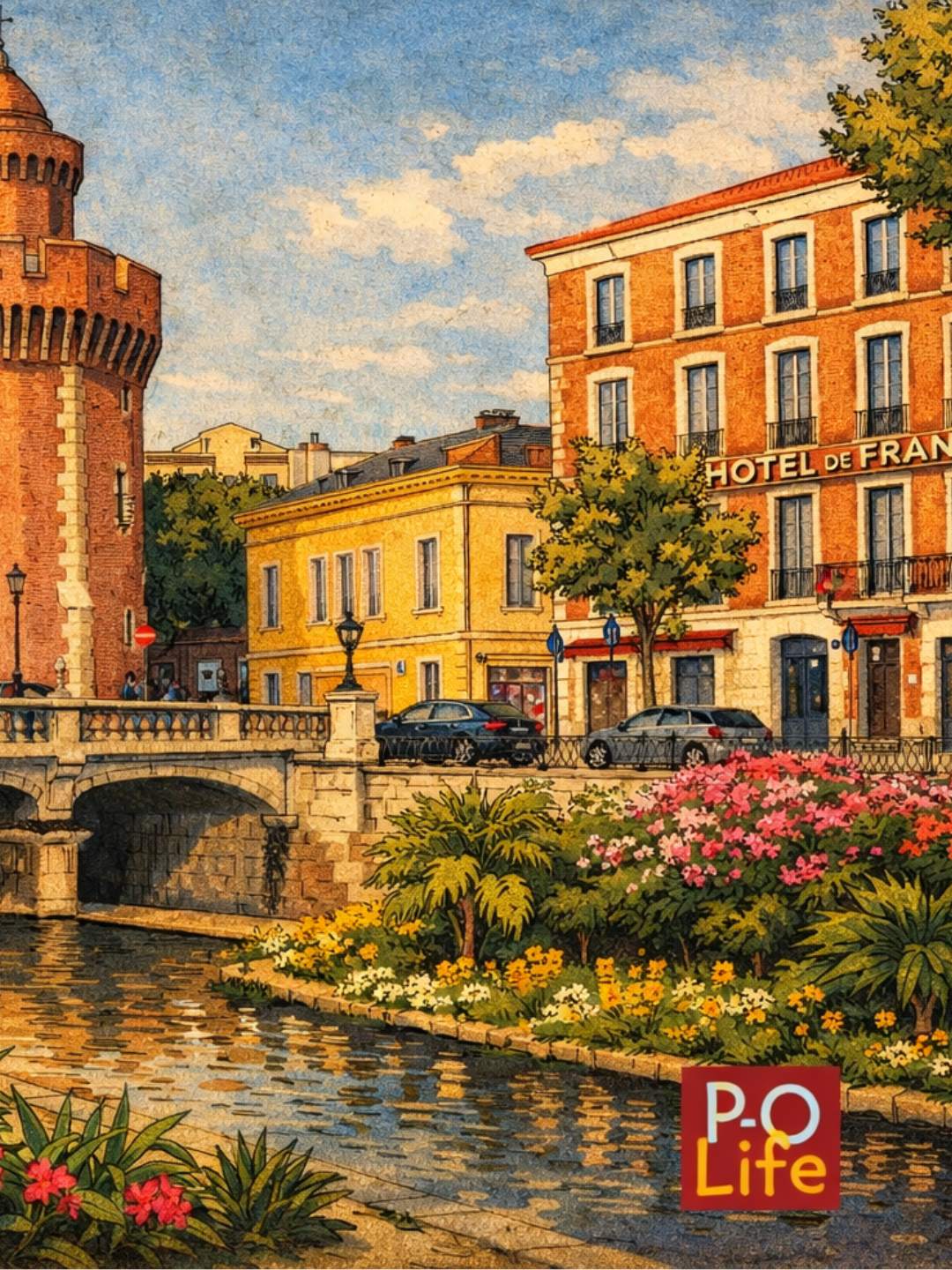
The city’s historic fortifications have largely disappeared, but the impressive XIV-century Castillet remains, standing proudly at the entrance to the old town. This distinctive red-brick building is probably Perpignan’s most recognisable landmark and a natural starting point for our wander.
Gateway, fortress, prison and now home to the Casa Pairal Museum, the Castillet has had quite a varied existence since its construction in 1368.
Climb the spiral staircase to the terrace, originally designed to accommodate artillery, for wonderful panoramic views across the city, the Roussillon plain and, on a clear day, the sacred Mount Canigou.
Inside, the Casa Pairal offers an interesting introduction to Catalan history, traditions and everyday life in the Pyrénées-Orientales. Allow a little extra time if you fancy exploring the museum as well as enjoying the views.
Opening arrangements are seasonal, so check before visiting.
.

Place de la Loge – the historic heart of Perpignan
From the Castillet, head along Rue des Marchands towards Place de la Loge, formerly known as the Place des Hommes Riches, a name that gives you some idea of its importance in the city’s commercial heyday.
The square, with its elegant architecture and handsome paving, was once the beating heart of medieval Perpignan’s commercial and maritime life.
On the corner stands the Loge de Mer, dating from the XIV century and once home to the city’s maritime trading authorities and the Consulate of the Sea. This was effectively the medieval equivalent of a chamber of commerce, reflecting Perpignan’s importance as a Mediterranean trading centre.
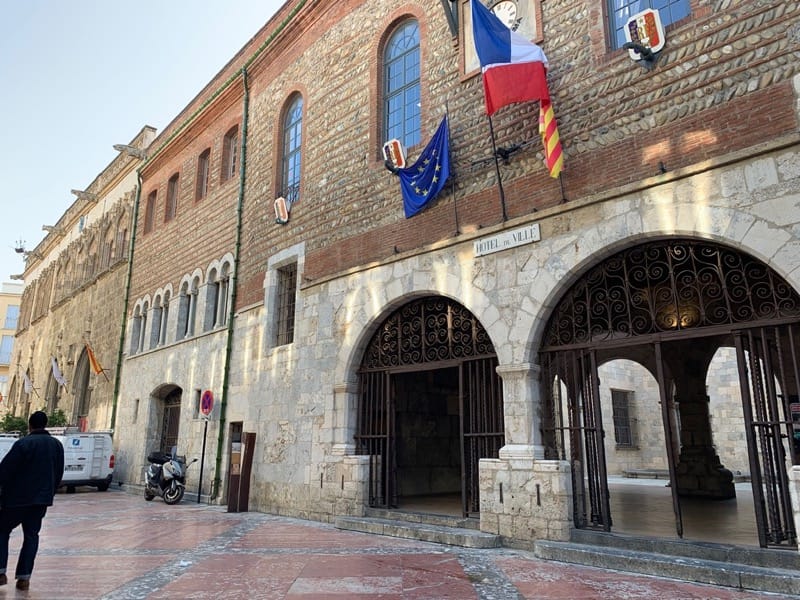
Next door, the XVI century Town Hall has three hands sprouting from the wall, representing each of the main 3 social classes, and their right to vote. Step through the attractive arched entrance into a pleasant courtyard where “La Méditerranéenne” (also known as ‘La Pensée”), bronze statue by Maillol, sits in a pretty pool.

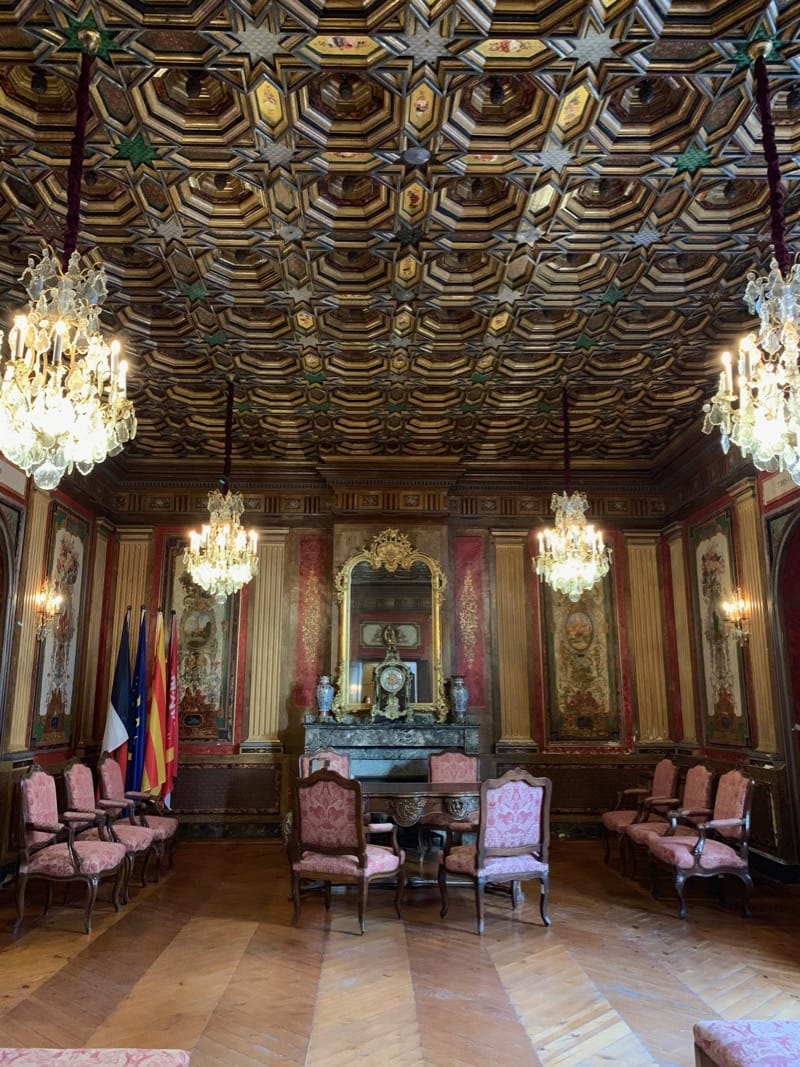
To the left, take a wander around the cool and plush ‘Salle des Mariages with magnificently ornate ceiling, restored in 2008 but originally designed for a visit from Napoleon 1. An ancient and fabulous place to pledge your troth if you’re thinking of taking the plunge!
Next door, the 15th century Palais de la Deputation, once the seat of the Roussillon Parliament, was the setting for many a grisly execution.
The Cathedral and Campo Santo
From Place de la Loge, take the narrow Rue Saint-Jean towards the Gothic Cathédrale Saint-Jean-Baptiste, set in the peaceful Place Gambetta.
The cathedral, begun in 1324, is an imposing example of southern Gothic architecture. Its vast, rather sombre interior houses some spectacular religious art, impressive altarpieces and a remarkable collection of historic furnishings.
One of its greatest treasures is the magnificent Gothic organ case, dating from the second half of the XV century. More than 14 metres high, it is one of the oldest and most impressive surviving examples of its kind in Europe. The instrument itself has undergone several transformations over the centuries.
Look out, too, for the beautiful pre-Romanesque white marble baptismal font, dating from the VII or VIII century.


The original Romanesque church of Saint-Jean-le-Vieux stands alongside the cathedral, partly incorporated into the later Gothic building. Although not generally open to visitors, it remains an important part of Perpignan’s religious heritage.
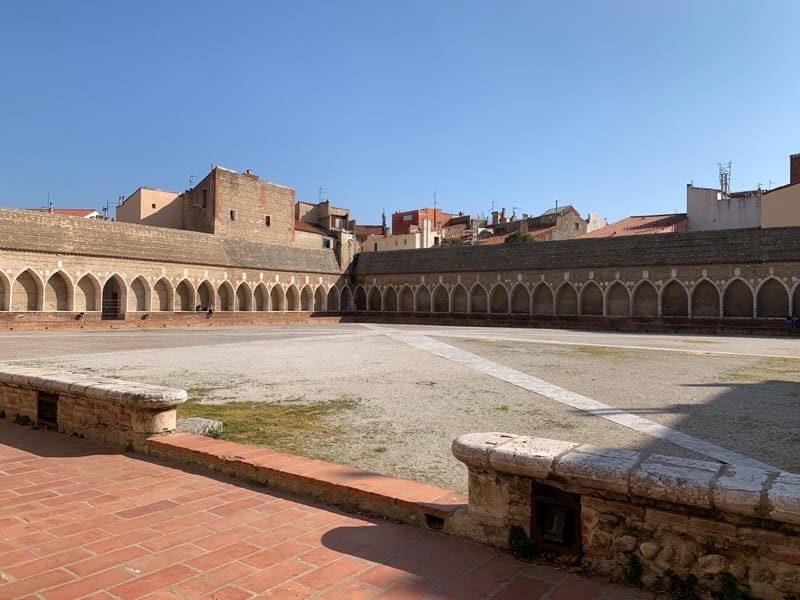
Just a few minutes away is the Campo Santo, one of the very few surviving cloister cemeteries in France.
Its graceful Gothic arcades once sheltered the tombs and funerary chapels of wealthy medieval families. Today, this atmospheric space has a rather different purpose, hosting cultural events, open-air concerts and exhibitions.
It is also closely associated with Visa Pour l’Image, Perpignan’s internationally renowned photojournalism festival, when the city becomes a meeting place for photographers, journalists and photography enthusiasts from around the world.
The festival takes place each September, with exhibitions spread across several historic buildings and evening public projections forming a particularly memorable part of the programme.
Chapels, monasteries and a little more history
In fact, most religions were represented in Perpignan during the Middle Ages and many ancient chapels and monasteries are now used for exhibitions and concerts.
Only a little way off our city circuit, the rambling 15th century Couvent des Minimes is now the International Centre for Photojournalism. Entry is free and fascinating to these all-year-round, diverse exhibitions of photojournalism.
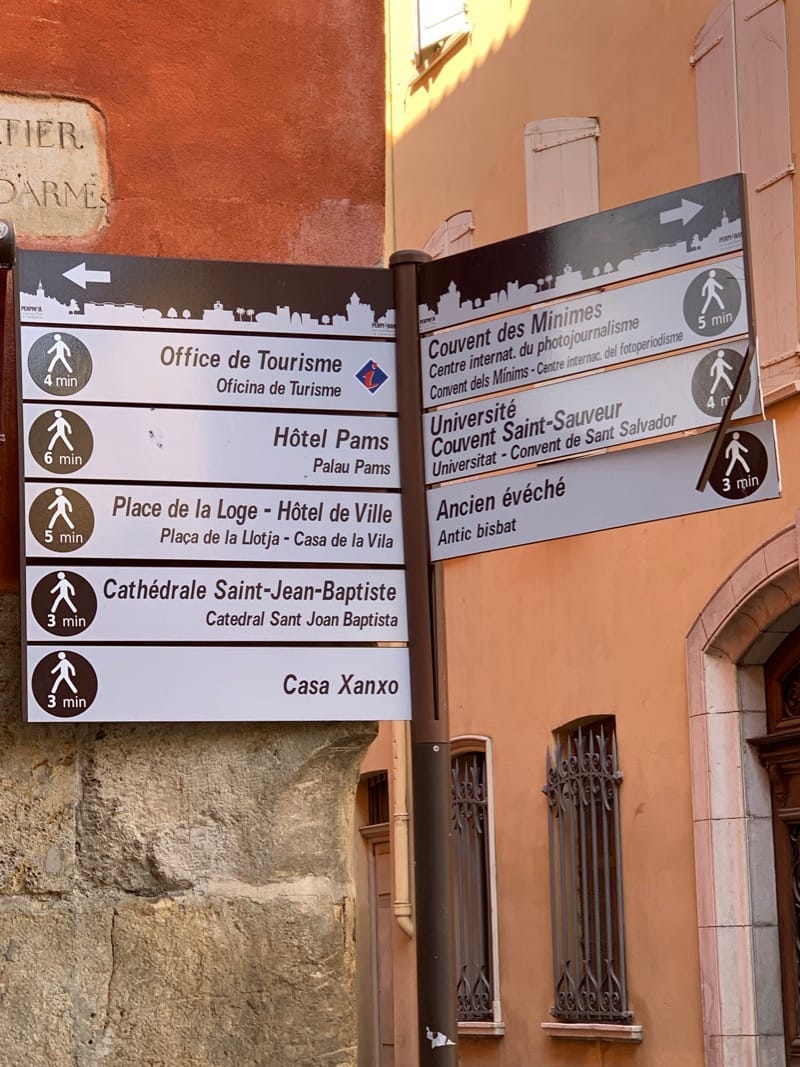
Another interesting building is the Chapelle du Tiers-Ordre de Saint-Dominique, in Place de la Révolution Française.
Completed in 1774, this is one of the rare examples of Louis XVI architecture in the Roussillon. Its history is particularly intriguing, as the original religious decoration was replaced during the French Revolution by revolutionary imagery, when the building became a Temple of the Decade.
Its subsequent use as a military chapel adds another layer to its fascinating past. Access arrangements can vary, so check locally before making a special journey.
A small courtyard joins it to the Chapelle des Dominicains, until recently, the base of the French Foreign Legion, where the “Trabucayres”, (bands of highwaymen) who terrorised the roads of the Albères in the mid 19th century were tried and condemned to death or hard labour.
Also worth seeking out is the church of Saint-Jacques, in the historic inner-city quarter of the same name.
This is one of the oldest and most distinctive parts of Perpignan, with a strong Catalan and Gitano cultural identity. Its streets and squares have a character quite different from the more polished town centre, and offer a glimpse of another side of the town
This is an area with fascinating ambience, despite its crumbling, impoverished appearance. This relatively unknown church dates back to the 14th Century, and the interior is as impressive as Perpignan’s cathedral.
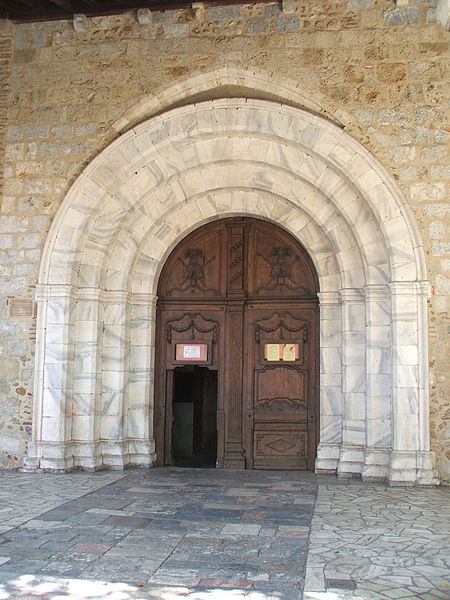
Hôtel Pams – a Belle Époque treasure
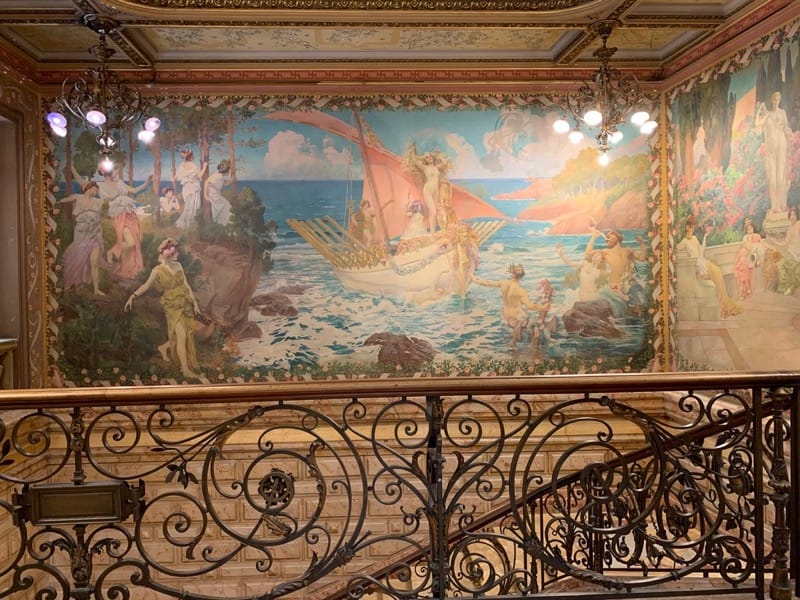
On now to an art deco gem, the Hotel Pams in the Rue Emile Zola, one of several beautiful old ‘hotels particuliers’, elegant private mansions of the Perpignan Bourgeoisie.
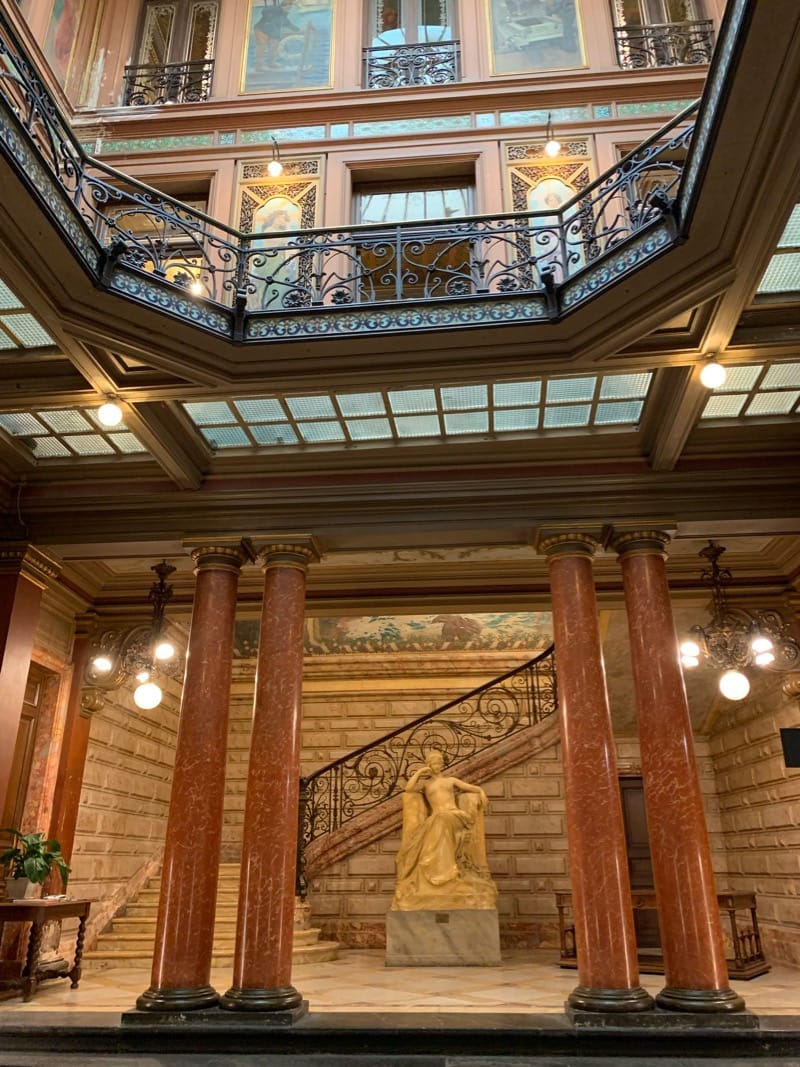
Pierre Bardou of JOB cigarette paper fame bought it along with several surrounding houses in the 1850s. It has enormous Art Deco Pre-Raphaelite paintings on the walls, a stunning entrance hall with an amazing light well, and a delightful hidden garden. Adjoining the house is the old cigarette factory where many people were employed. Entrance is free and it’s a perfect spot to sit a while.

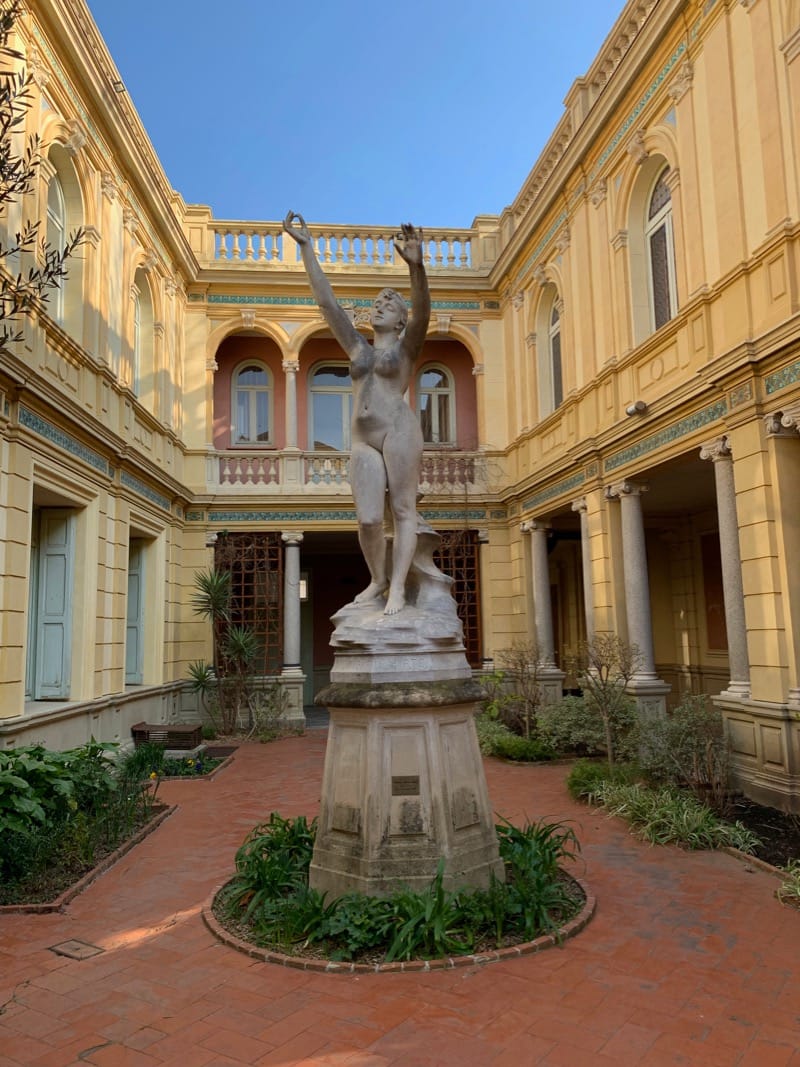
Casa Xanxo – a medieval merchant’s house brought back to life
A short distance away from the Hotel Pams is the Gothic Casa Xanxo, house of Art and History, another example of the XVI century wealth of the Perpignan merchants.
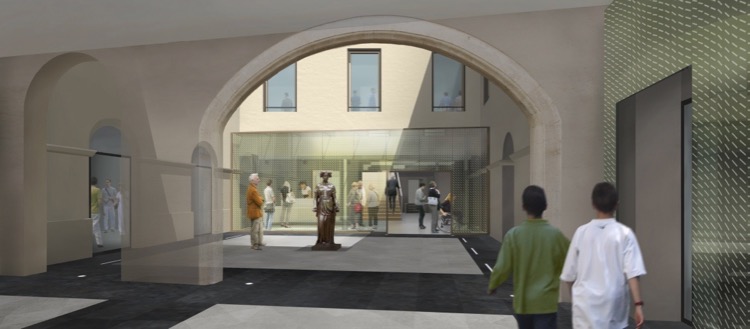
Following an extensive restoration, Casa Xanxo is now open to the public as the Centre d’Interprétation de l’Architecture et du Patrimoine (CIAP), dedicated to the architecture and heritage of Perpignan.
Originally the home of a wealthy merchant. Its remarkable façade features an extraordinary sculpted frieze, while inside visitors can discover Gothic architectural details, beautifully decorated salons, a grand staircase and an attractive Art Nouveau garden.
It’s a wonderful opportunity to see inside one of the town’s historic private mansions and learn more about how Perpignan developed over the centuries.
Guided visits are organised by the city’s heritage service, so check the current programme before visiting.
HOTELS PARTICULIERS
Find out more about these private ‘hotels’ where the wealthy of Perpignan lived.
Art, artists and the Musée Hyacinthe Rigaud
Our final visit today is the Museum of Beaux Arts Hyacinthe Rigaud, a beautifully presented art museum in the heart of the historic centre, boasting an impressive array of both permanent and temporary exhibitions.
Named after the celebrated Perpignan-born portrait painter Hyacinthe Rigaud, the museum has an impressive collection spanning several centuries, with works by local and international artists.
Among the highlights are paintings by Rigaud himself, alongside works by Aristide Maillol and other important figures from the Catalan and wider European art worlds.
Temporary exhibitions add another dimension to the collection, and the museum regularly brings in some interesting and occasionally unexpected displays.
It’s well worth allowing an hour or two here, particularly if you enjoy art and want to discover a little more about the artists associated with this part of the world.
Time for a little refreshment?
Well, that’s quite enough history and culture for one day!
Time for a cold beer, a glass of local wine or perhaps a frothy coffee?
You’ll be spoilt for choice as you wander through shady ancient streets, past inviting inner courtyards, tiny art galleries, quirky boutiques and sunny squares.
Perpignan is a city that is best enjoyed without too much rushing. Take a little detour, follow an interesting-looking street, pop into a shop or find a terrace and simply watch the world go by.
And if you’re feeling peckish, look out for some of the local Catalan specialities.
Boles de picolat, traditional meatballs often served with white beans or olives, are a regional favourite. Escalivada, made with roasted Mediterranean vegetables, is another delicious choice, while those with a more adventurous appetite might enjoy a cargolade, the traditional Catalan gathering involving snails grilled over an open fire.
And don’t leave without trying a rousquille, a delicious little ring-shaped biscuit traditionally flavoured with lemon or aniseed.
Local wines from the Roussillon vineyards are, of course, never far away.
Between festivals, concerts, dancing, theatre, food, wine and ancient traditions, there’s always something happening in Perpignan.
For current events, exhibitions and guided visits, check the Tourist Office before setting off.
In praise of Perpignan’s Little independents….by Henry Shaftoe
FIND OUT MORE…..
Free Shuttle Around Perpignan….
FIND OUT MORE
[/vc_column_text]
THERE’S A PLACE FOR US!
How about a little place-hopping around some of the lovely squares in the centre of Perpignan?
There are dozens of them, each with its own character, history and atmosphere. Here are just a few worth seeking out, whether for their interesting names, their historical associations or simply as somewhere sunny to sit on a beautiful spring day.
Place Bir Hakeim
Just five minutes’ walk from the centre ville, Place Bir Hakeim is a peaceful green space with mature trees, benches, water features and a children’s playground.
It’s a lovely spot for a little time out from the relentless shopping and sightseeing.
The square takes its name from the Battle of Bir Hakeim in Libya in 1942, when Free French forces resisted German and Italian attacks. Their determined stand delayed the Axis advance and helped British forces regroup ahead of the important Battle of El Alamein.

Place Arago
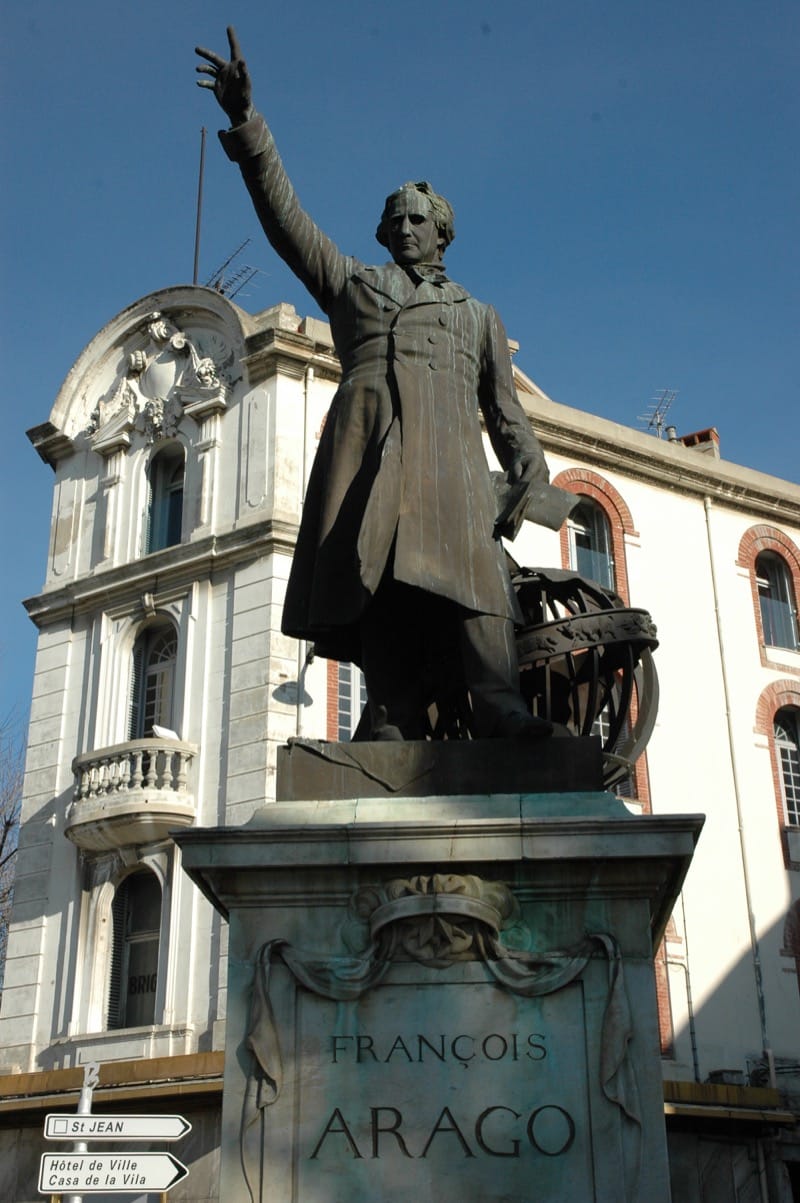
Named after local son François Arago (1786–1853), this lively square is one of Perpignan’s favourite meeting places.
Arago was a remarkable character: physicist, astronomer, mathematician, politician and an important figure in the French abolition of slavery in 1848.
His name has travelled rather further than Perpignan, too, appearing on craters on Mars and the Moon and in the name of a ring of Neptune.
The square itself is a pleasant place to sit, with cafés and restaurants, and plenty of opportunities for people-watching – but also quite a lot of traffic passing nearby so not the most peaceful square in Perpignan.
In hot weather, there is a pretty line of fountains that you can run through if you’re so incline.
Place Cassanyes
Named after Joseph Cassanyes (1758–1843), a local revolutionary politician who played an important role during the French Revolution and in the defence of Roussillon against Spanish forces.
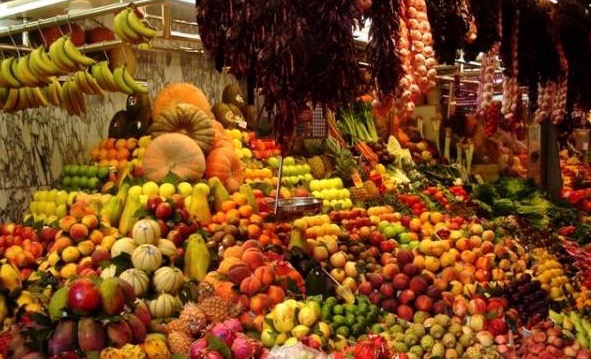
Today, the square is best known for its colourful market, which brings a lively Mediterranean atmosphere to this part of town.
Here you’ll find a wonderful mixture of food stalls, clothing, household goods and everyday shopping, with a distinctly North African influence.
It’s one of the most interesting places in Perpignan for a little cultural immersion.
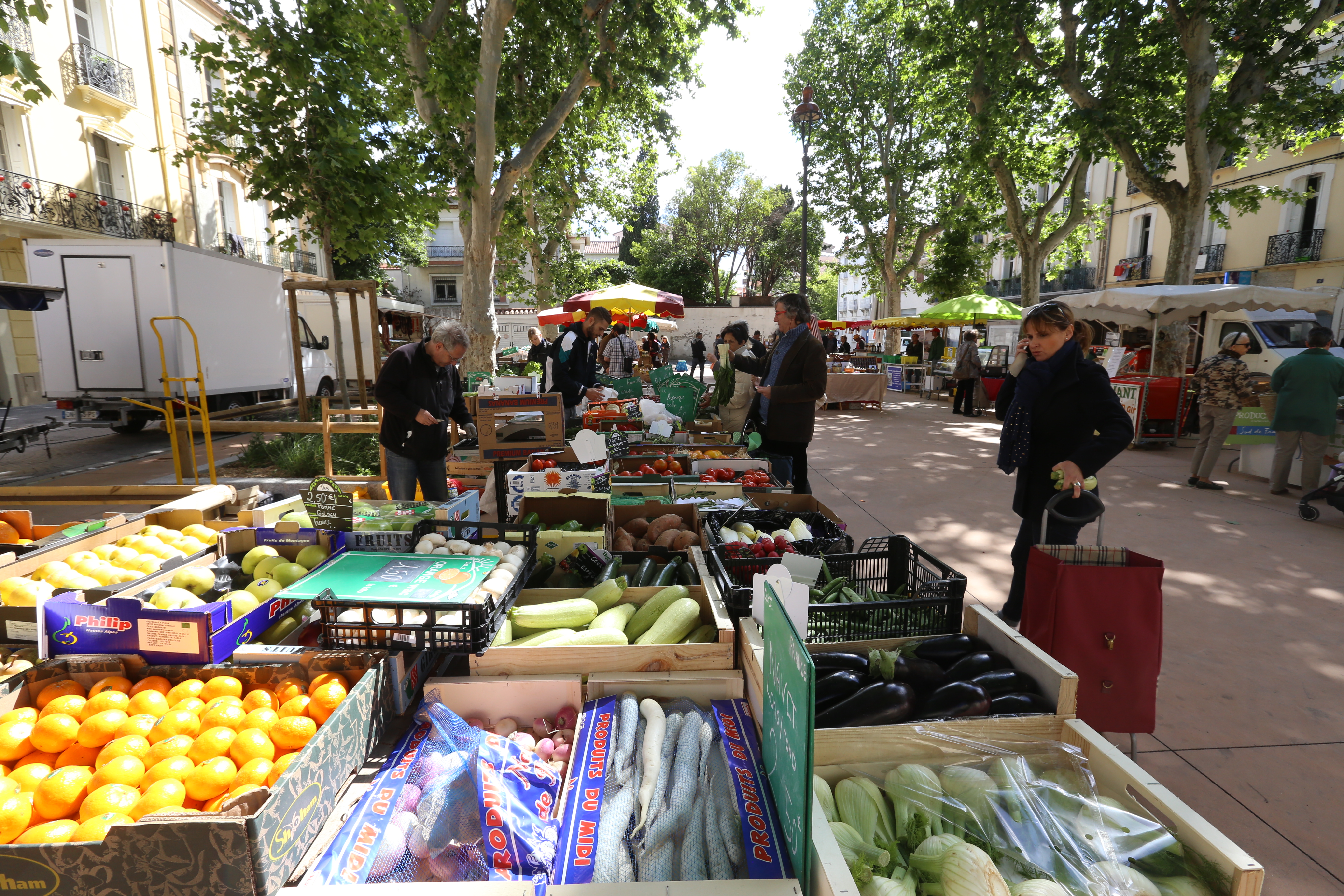
Place de Catalogne
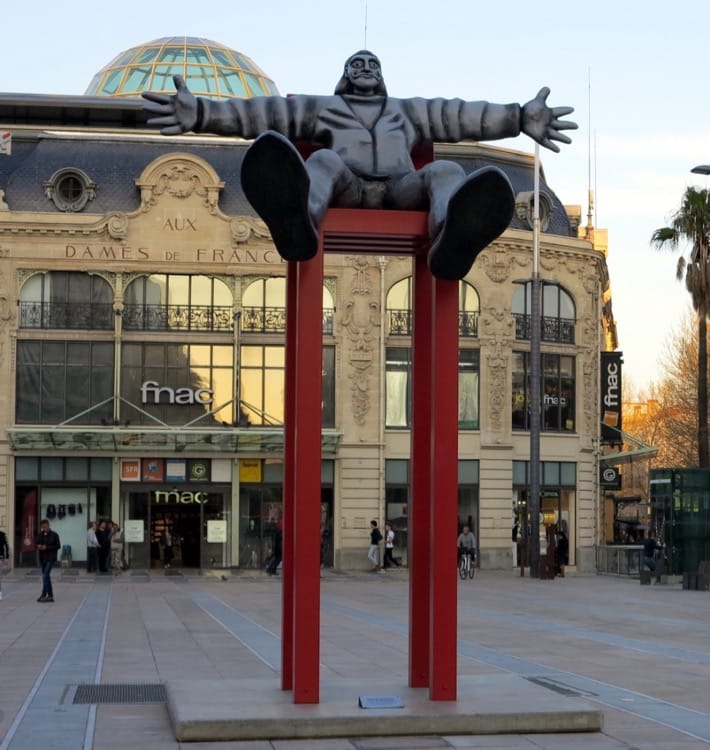
Just south of the historic centre, Place de Catalogne is a spacious square with fountains and places to sit.
Look out for the Dalí sculpture, which adds a rather surreal touch to the surroundings and provides a reminder of the close artistic and cultural connections between Perpignan and neighbouring Catalonia.
Salvador Dalí famously described Perpignan’s railway station as the centre of the universe, and the city has certainly embraced its association with the artist!
Not really a place to picnic as a crossroad for several main roads.
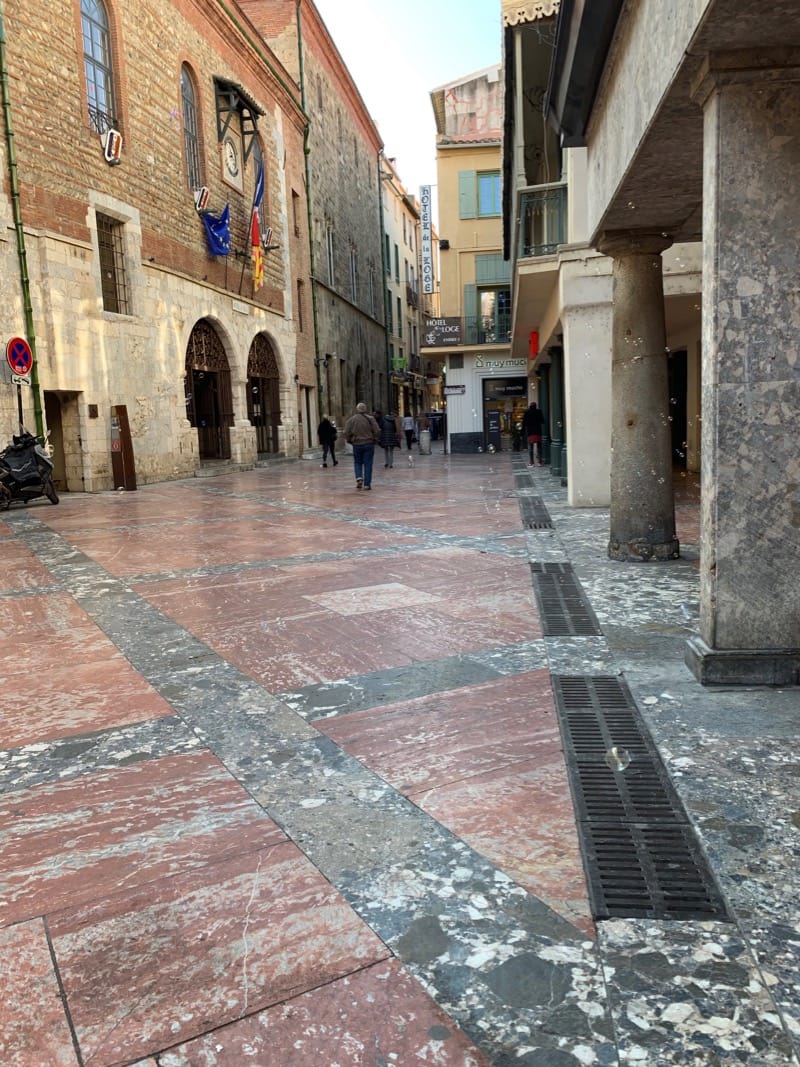
Place de la Loge
We’ve already visited this one, but it’s worth another mention.
With its historic buildings, busy pedestrian streets and strategically placed bars and restaurants, Place de la Loge is a perfect place to sit and watch the world go by.
During the Second World War, the square was also an important meeting point for refugees and escapees seeking help to cross the Pyrenees into Spain.
People fleeing occupied France relied on local guides, known as passeurs, to help them navigate the dangerous mountain routes to safety.
It’s a fascinating and rather poignant piece of the city’s history.
Place de la Révolution Française
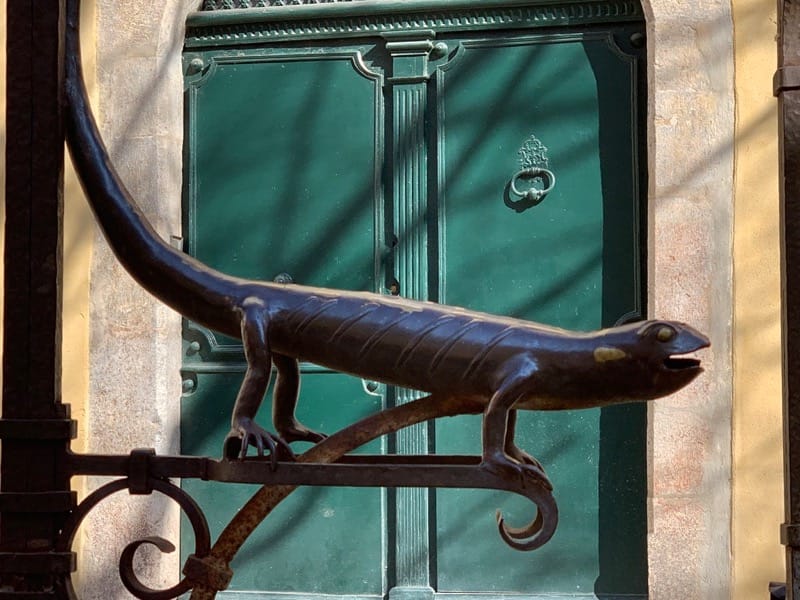
A smaller and rather quieter square, with an ancient well and its own little bronze lizard.
It’s one of those places you might easily walk past without noticing, but it’s worth a little detour if you’re exploring the old streets around the cathedral and Saint-Jacques quarter.
Place Rigaud
Named after the celebrated painter Hyacinthe Rigaud, this little square is another reminder of the city’s artistic heritage.
Its statue and surrounding historic buildings make it a pleasant stop while wandering between the museum and the old town.
Place des Poilus and Rue Paratilla
The tiny Place des Poilus takes its name from the French soldiers of the First World War, known affectionately as les Poilus.
From here, head towards Rue Paratilla, one of the most colourful and interesting little streets in central Perpignan.
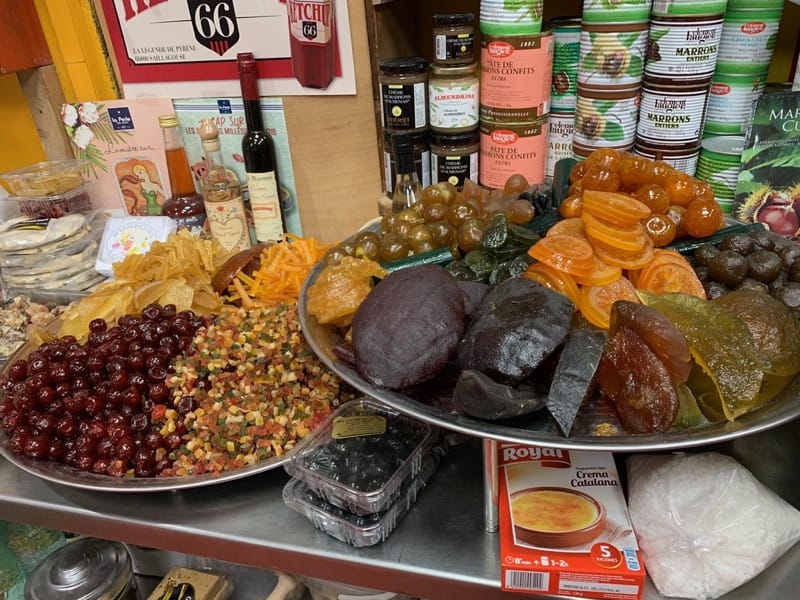
Its morning food market and specialist shops are a real delight, with fresh fish, spices, herbs and ingredients from across the Mediterranean.
It’s a wonderful place to browse and perhaps pick up a few things for supper.
Place de la République
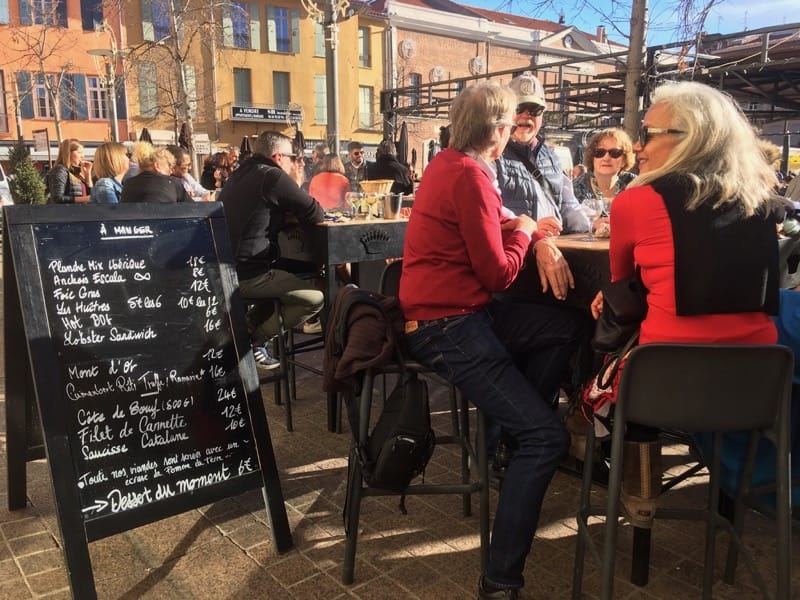
And finally, if you’re simply looking for a cold beer in the sunshine and a spot of people-watching, head for Place de la République.
With its cafés, restaurants and lively atmosphere, it’s a delightful place to sit, eat, drink and relax.
The morning food market adds another splash of colour and activity, making it particularly enjoyable earlier in the day.

MARKETS – A TASTE OF PERPIGNAN
Markets are an important part of everyday life in the South of France, and Perpignan has a good selection, from traditional food markets to antiques and brocante.
If you enjoy browsing, tasting and soaking up the local atmosphere, they’re well worth building into your visit.
Here are a few favourites.
Marché Cassanyes
One of the city’s best-known and most colourful markets.
Open Tuesday to Sunday, generally 7.30am–1pm, it’s a wonderful mixture of fresh produce, clothing, household goods and specialist traders.
Marché de la République
Another popular morning food market, open Tuesday to Sunday, 7.30am–1pm.
Saturday is particularly interesting, with organic and farm produce among the stalls.
Les Halles Vauban

For something a little different, head to Les Halles Vauban, the covered food market in the town centre.
With more than 20 food traders, there’s a tempting choice of local produce, cheeses, charcuterie, prepared dishes and other delicacies.
There are also places to eat on site, making this a particularly good stop if you fancy a leisurely lunch or something delicious to take away.
Generally open Tuesday to Sunday, 8am–8pm, with shorter Sunday hours.
Brocante des Allées Maillol
Every Saturday morning, the tree-lined Allées Maillol come alive with antiques, second-hand treasures and vintage finds.
A lovely place to browse, whether you’re looking for something special or simply enjoy a good rummage.
Sunday Flea Market
The Marché aux Puces takes place every Sunday morning at the Avenue du Palais des Expositions.
Expect second-hand goods, bric-à-brac, clothing and all sorts of curious finds.
Market arrangements can occasionally change, so it’s worth checking the municipal market calendar before making a special journey.
For a full list of markets and current opening arrangements, consult the Perpignan town website.
A LITTLE PRACTICAL INFORMATION
Getting around
The historic centre is best explored on foot. Most of the places described here are within comfortable walking distance of one another, although the Palace of the Kings of Majorca makes a worthwhile extension to the route.
If you’d prefer to give your feet a rest, Perpignan has a free town-centre shuttle, now known as the Navette Cœur de Ville, operated by Sankéo. It connects the historic centre with the railway station and several other useful stops.
How long should you allow?
Allow at least half a day for a leisurely wander around the main sights. If you want to visit several museums, the palace and the markets, you could easily fill a full day.
When to visit
Spring and autumn are particularly pleasant, although Perpignan enjoys plenty of sunshine throughout the year.
Summer brings a lively atmosphere, but some attractions have different opening arrangements according to the season.
A little tip
Many museums and historic buildings have seasonal opening hours, and some close on Mondays. Check before setting off, particularly if there’s somewhere specific you really want to visit.
Comfortable shoes are also a good idea. Those old cobbled streets are charming, but not always kind to your feet!
 FIND OUT MORE
For further information, guided tours, events, museums and visitor information:
- Perpignan Tourist Office – visit the official tourism website.
- Perpignan Museums – opening arrangements and exhibitions.
- Perpignan Markets – current days and locations.
- Sankéo – town-centre shuttle and public transport.
- Visa pour l’Image – annual international photojournalism festival.
Perpignan is a city with plenty of stories to tell, and this is just a taste of what’s waiting to be discovered.
Whether you’re interested in history, architecture, art, markets, food or simply finding a sunny terrace for a leisurely lunch, there’s something here for everyone.
So next time you’re looking for a change from the beach or the mountains, why not head out on the town?
Perpignan might just surprise you!
“Wowee” as Borat would ssay. This article includes every single place of interest in Perps . Thank you for all this info. And thank you for the enticing photos. Let’s off and wander around and admire the town which we ex-pats have adopted.
No….I mean the town which has adopted us.