
Fete du Babau – 7th August 2026
The Babau of Rivesaltes: The Medieval Monster That Still Haunts the Agly
Every summer, the small Catalan town of Rivesaltes, in the Pyrénées-Orientales of southern France, comes alive with the roar of a creature that has supposedly been dead for more than 700 years.
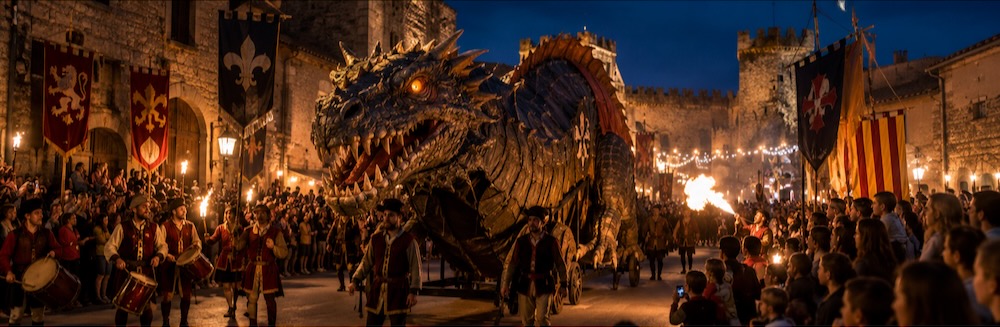
Drums echo through the streets. Knights march beneath medieval banners. Fire performers light up the night. Children watch in fascination as a huge, terrifying beast appears among the crowds.
This is the Fête du Babau, a celebration built around one of the most famous legends of French Catalonia: the story of a monster that once brought terror to Rivesaltes. (Rivesaltes)
But what exactly was the Babau? Was it a dragon? A giant reptile? A creature from the depths of the River Agly?
The truth is that nobody knows. And perhaps that is precisely why the legend has survived.
A Quiet Medieval Town and a Terrifying Night
The story begins in medieval Rivesaltes, a fortified town surrounded by walls and protected by the darkness of the countryside.
According to local tradition, on the night of 2 February 1290, everything changed.
The town was sleeping peacefully when a terrible noise broke the silence.
By morning, the inhabitants discovered that six children had disappeared.
Fear spread rapidly.
The culprit, people believed, was not human.
A gigantic beast had entered the town through a small opening in the walls known as the forat del forn — the “hole of the oven”. This passage, linked to the communal oven of the medieval village, became forever associated with the arrival of the creature.
The people of Rivesaltes were facing an unknown enemy. Something was hiding nearby. Something was hunting in the darkness.
The Creature of the River Agly
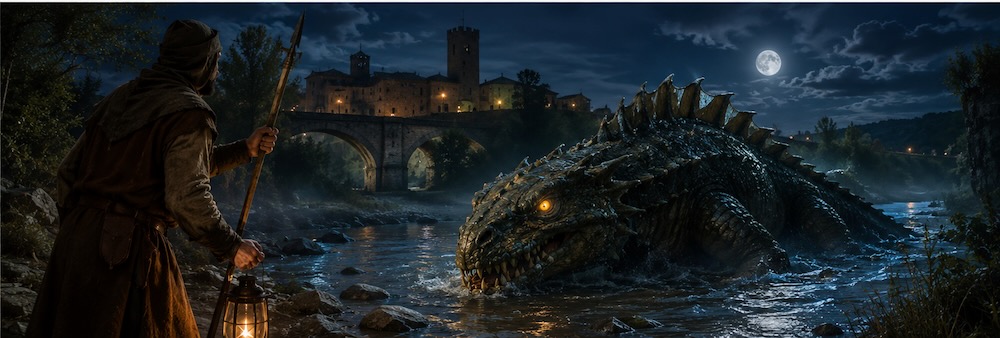
A few nights later, a village watchman made a terrifying discovery.
While keeping guard near the River Agly, he saw something moving in the water.
In the moonlight, the creature appeared enormous.
Some said it looked like a giant iguana. Others described a beast with the body of a reptile, enormous claws and powerful jaws.
Later versions of the legend would transform it into something closer to a dragon — a creature with scales, glowing eyes and a terrifying appearance.
The frightened watchman rushed back to the village to raise the alarm.
When the mayor demanded to know what he had seen, the poor man was so overcome with fear that he struggled to speak. All he could say was:
“Va… vau…”
Meaning, according to the legend, something like:
“It has… it has…”
Those frightened words supposedly gave the creature its name.
Ba…bau.
The story is almost certainly folklore rather than history, but it is one of the most charming parts of the tradition: a monster born not only from fear, but from a frightened man’s inability to describe what he had witnessed.
The Hero Who Defeated the Beast
The people of Rivesaltes needed a hero.
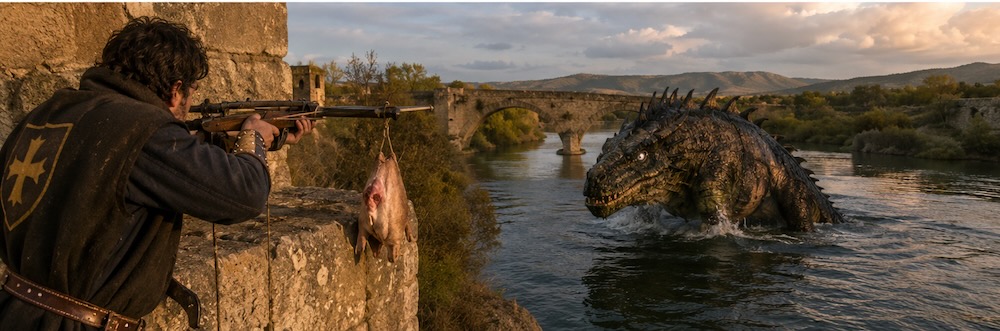
According to the legend, that hero was Galdric Trencavent, a nobleman and skilled crossbowman.
Rather than fleeing from the monster, Galdric decided to confront it.
He studied the creature’s movements and prepared a trap.
The Babau was known to return during the night, so Galdric used bait to lure it close. Pigs were hung from the town walls, attracting the monster towards the place where the crossbowman was waiting.
Night after night, he kept watch.
The first nights passed without success. Then, on the fourth night, the creature appeared.
As the Babau approached, Galdric took aim. His arrows struck the monster in the throat.
Mortally wounded, the beast fled towards the River Agly before finally dying near Ortolanes, according to the legend.
Rivesaltes was saved. The terror was over.
The Mysterious Rib of the Babau
Like many great legends, the story has left behind a supposed relic.
The people of Rivesaltes, wishing to preserve proof of their victory, are said to have taken one of the creature’s ribs, an enormous bone that can still be seen today at the Rivesaltes Tourist Office.
Of course, there is another explanation.
Scientists and historians believe that the famous rib is actually from a whale that washed ashore on the Mediterranean coast in the nineteenth century.
But legends have never depended entirely on scientific proof.
For generations, visitors have enjoyed the mystery:
Was it the bone of a whale? Or was it the last remains of the terrible Babau?
In Rivesaltes, the answer is left to the imagination.
From Medieval Tale to Modern Festival
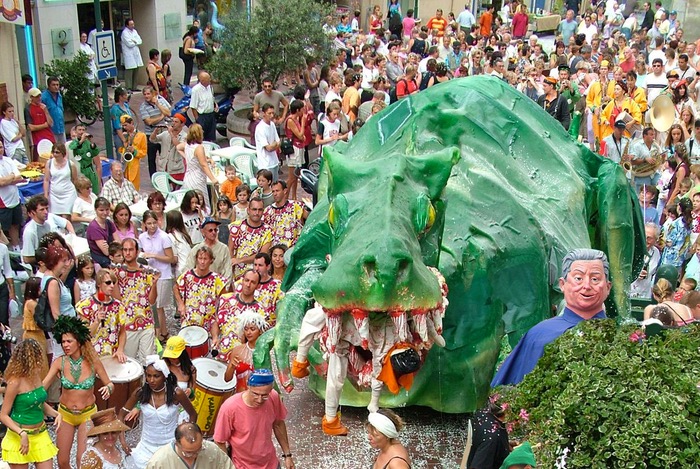
For centuries, the story of the Babau survived through local storytelling. Like many legends, it was passed from parents to children, becoming part of the identity of the town. In modern times, the people of Rivesaltes decided to bring the tale back to life.
The result was the Fête du Babau, a spectacular celebration that recreates the atmosphere of the medieval legend. The festival has become one of the town’s best-known cultural events, attracting thousands of visitors with its medieval entertainment, street performances, markets, music, parades and dramatic finale.
For one day, Rivesaltes returns to the Middle Ages.
Experiencing the Fête du Babau
During the festival, the streets become a stage.
Visitors encounter knights, medieval camps, craftsmen, musicians, storytellers and performers. There are demonstrations of ancient skills, street entertainment, food stalls and activities for children. The atmosphere builds throughout the day until evening arrives.
Then comes the moment everyone has been waiting for.
The Babau appears.
The giant creature moves through the streets once more, recreating the fear and excitement of the old legend.
The crowd follows as the story reaches its conclusion: the confrontation between the monster and the people of Rivesaltes.
Once again, Galdric Trencavent defeats the beast.
Once again, the town celebrates its victory.
The legend ends — until next year.