
Ten Years After an Accident Changed His Life, Maxence Is Heading for the Summit of Canigó
One promise between two friends. Ten years of waiting. One mountain.
Some dreams can be postponed. Others can’t.
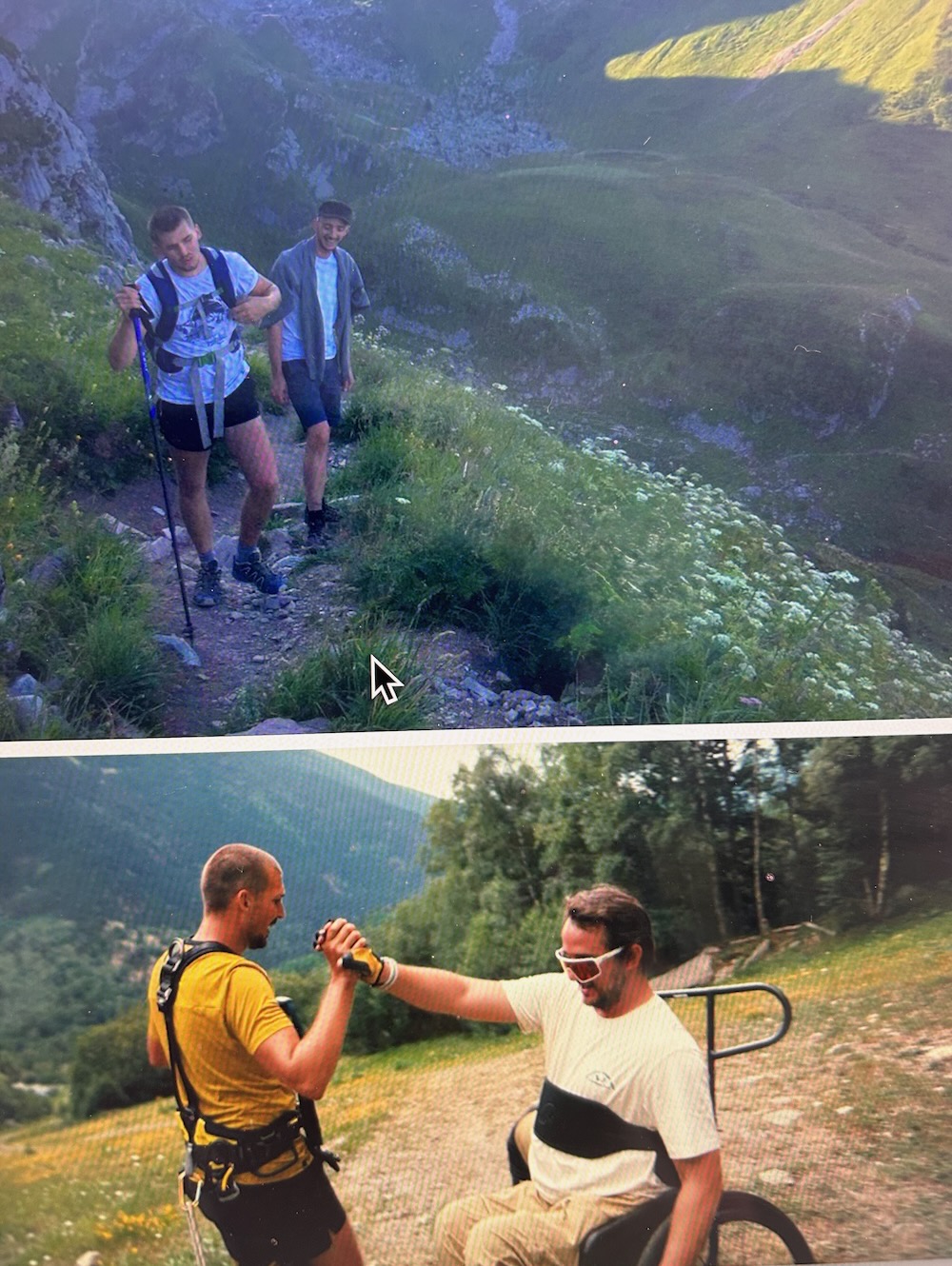
Ten years ago, Maxence Mattioli and his friend Clément Caritg made a simple promise to each other: one day, they would climb the Canigó together.
They could not have known then that, only weeks later, their plans would be turned upside down.
On 11 April 2018, during an off-piste skiing trip in Les Menuires, Maxence fell approximately 50 metres down a slope, landing among blocks of ice. His spine was fractured, and he became a complete T4 paraplegic.
In an instant, the mountains that had always been part of his life seemed to belong to another world.
But Maxence never accepted that his accident should decide what came next.
Ten years after that promise was made, he and Clément are going to try to keep it.
On 3, 4 and 5 September 2026, they will set out to climb the Canigó.
This time, Maxence will make the journey in a wheelchair.
And he will not simply be carried to the top.
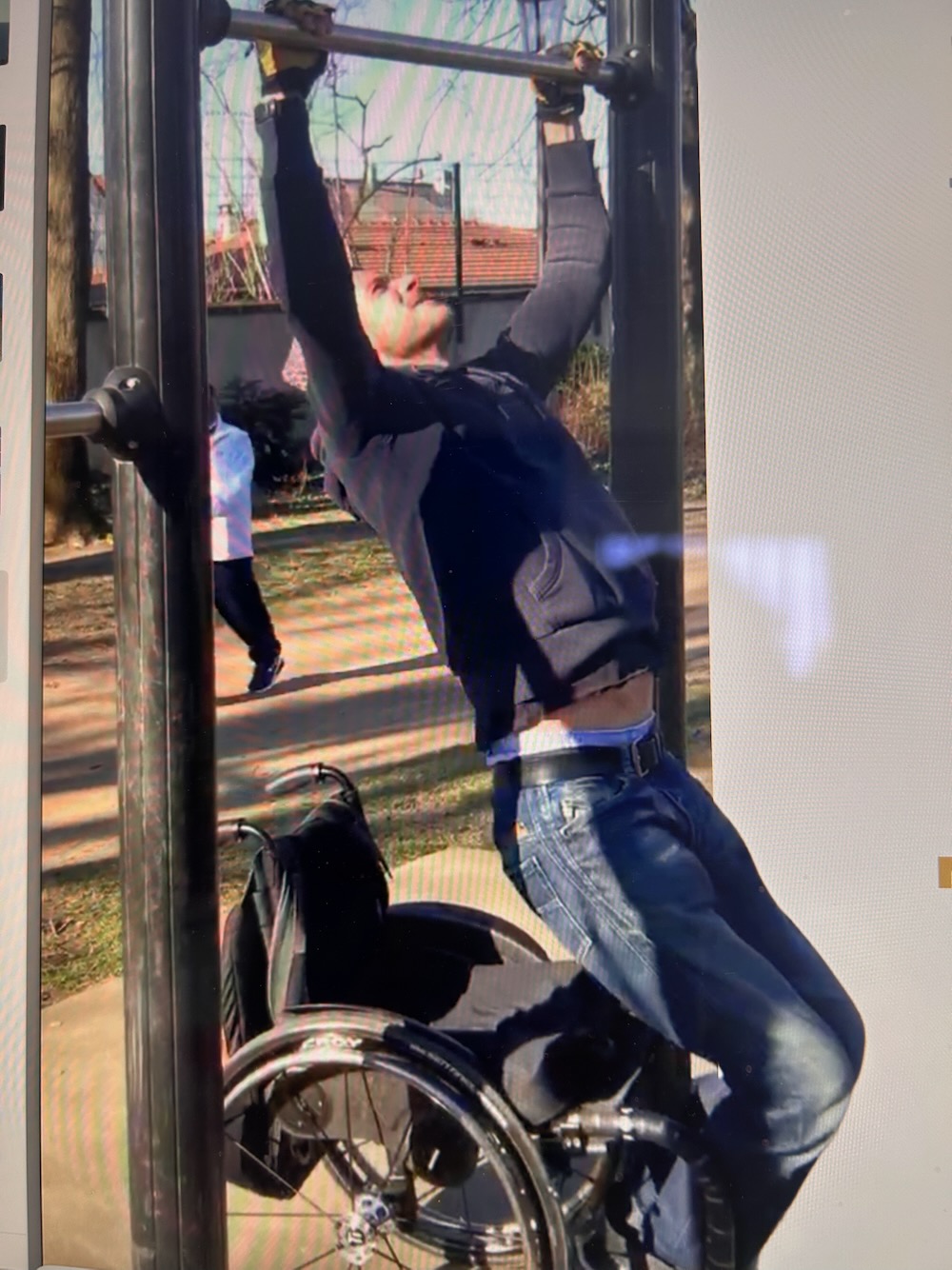
He will climb it himself.
When the accident changed everything
Long before the accident, the outdoors had been an important part of Maxence’s life.
Raised in a music-loving family, he grew up listening to Pink Floyd and David Bowie while developing a deep connection with nature through his father and grandfather. Sailing on his grandfather’s boat in the English Channel helped shape his relationship with the outdoors.
He went on to study musicology and jazz drumming and built a career as a musician, travelling throughout France, Italy, Switzerland and Belgium.
Alongside music, he travelled and hiked in different parts of the world — experiences that taught him humility in the face of nature.
Then, on 11 April 2018, everything changed.
The accident left Maxence with a complete T4 spinal cord injury.
But it did not take away his appetite for life.
Today, he remains a musician, a lover of wide open spaces and intense experiences, driven by an enduring need to move, explore and experience the world.
As Maxence puts it:
“For me, resilience isn’t just about accepting my accident. It’s also about living intensely and without compromise.”
That idea lies at the heart of the Canigó project.
This is not simply about returning to the mountains. It is about refusing to stop living in them.
 A promise born through music
Maxence and Clément first met through music.
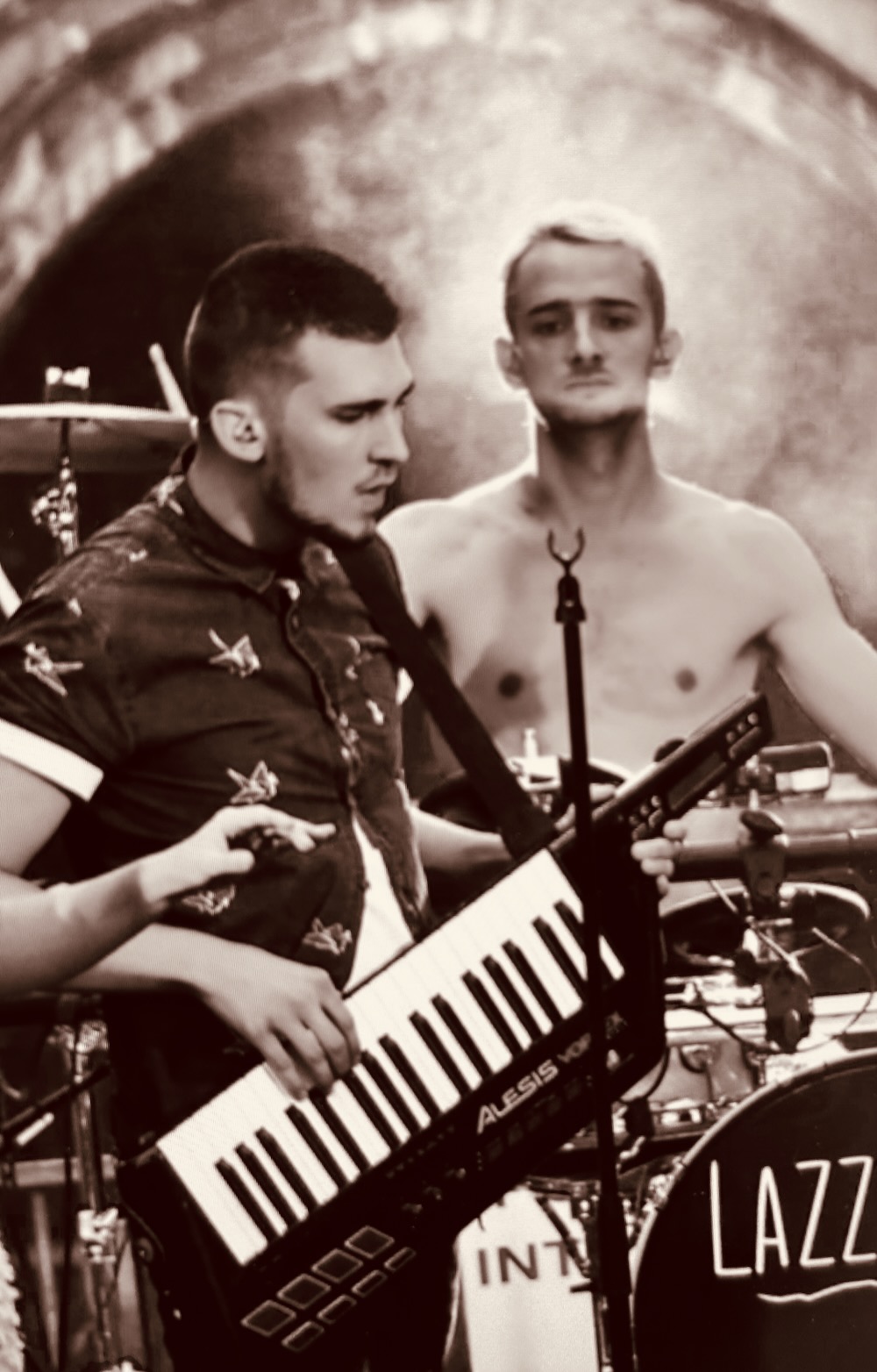
Both were members of the band Lazzy Bird, sharing rehearsals, concerts and long road trips.
Whenever they had the opportunity, however, their instruments would be replaced by hiking boots.
During a concert in Perpignan, they made a promise to each other: they would soon return and climb the Canigó together — the emblematic mountain of the Pyrenees and a mountain with a particularly personal meaning for Clément, who is originally from Céret.
A few weeks later, Maxence’s accident changed everything.
During his rehabilitation, that planned hike became something much more important. It became a goal. Then a promise.
And eventually, a symbol of everything that had happened since.
Ten years later, the promise remains. Only the way they intend to fulfil it has changed.
Climbing Canigó — but differently
This will not be a conventional mountain ascent.
For many adapted mountain outings, a person with a disability may be transported in a specialised chair such as a joëlette, with other people providing most of the physical effort.
The Canigó 2026 project takes a different approach.
The goal is for Maxence to remain an active participant throughout the climb.
To make this possible, the team has spent more than a year working on physical preparation, technical adaptations and safety procedures.
Maxence will use a specialised wheelchair designed for trail and mountain terrain.
Unlike a traditional joëlette, where other hikers carry and manoeuvre the adapted chair, Maxence’s team has designed an approach that allows him to remain an active participant in the climb, contributing his own physical effort while his friends assist with pushing and traction on the most difficult sections.
A reinforced push bar will allow his teammates to assist when necessary, while a traction system using a harness and ropes will enable the team to tackle the most difficult sections with continuous safety support.
But the principle is simple:
The team will help Maxence when the mountain demands it — but they will not climb the mountain instead of him.
As Maxence explains:
“Just as with everything I’ve undertaken since my accident, I want to be at the heart of the effort.”
And:
“Where most mountain outings are done in a joëlette, we’re putting solutions in place so that I can be fully involved in the ascent.”
Three days. 1,934 metres of ascent. One summit.
The challenge is formidable.
Three days of hiking. 1,934 metres of positive elevation gain. A summit at 2,785 metres.
And three hikers at the heart of the challenge.
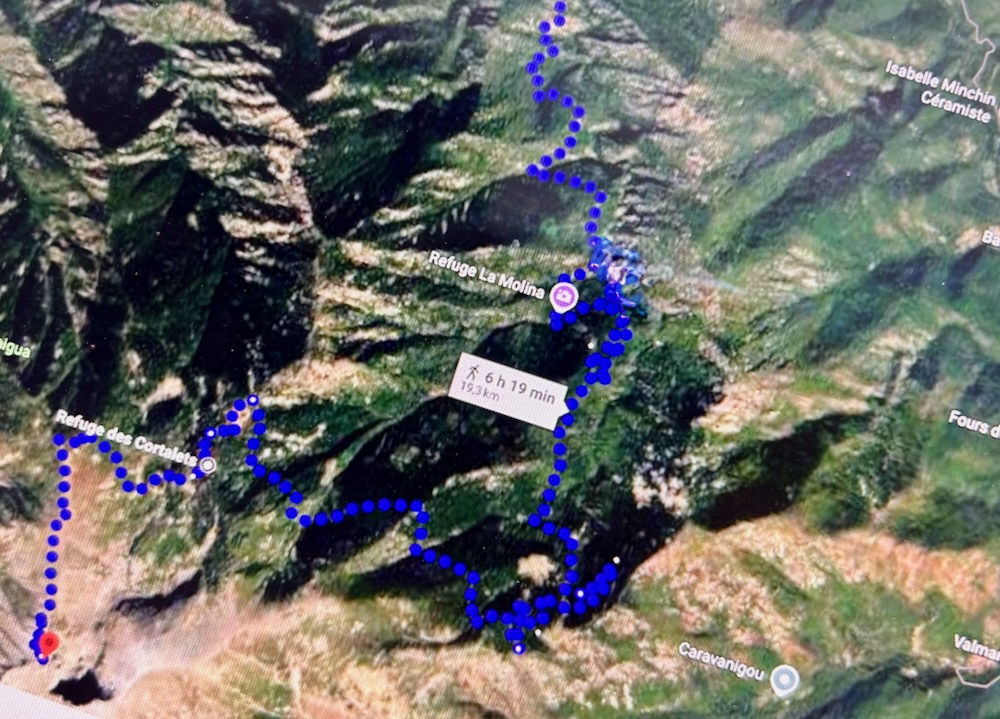
The expedition will begin at Mas Malet, at 849 metres and climb in two stages to the Cortalets refuge at 2,187 metres, before the final push towards the summit at dawn, reaching 2,785 metres.
Mountain guides have helped identify the most practicable route, taking into account the terrain, accessibility and safety requirements.
The landscape will change throughout the ascent: forest tracks, mountain paths and increasingly rocky terrain at higher altitude.
The mountain itself will not be made easier for them.
They are finding a way to meet the mountain on its own terms.
An effort that belongs to everyone
This is not simply the story of one man trying to conquer a mountain. It is the story of what can happen when a team of people put their strength behind the same dream.
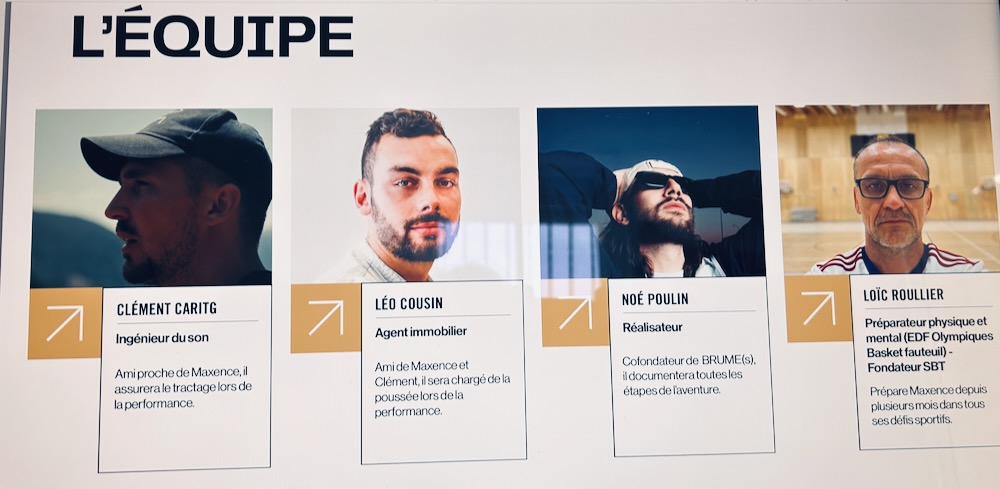
Although Maxence is at the centre of the story, he will not make the ascent alone. Clément Caritg will be responsible for pushing during the performance, Léo Cousin will handle the traction system, Loïc Roullier, a physical and mental preparation specialist with experience including Olympic wheelchair basketball, has been preparing Maxence for his sporting challenges for several months. And Noé Poulin, filmmaker and co-founder of BRUME(s), will document the entire adventure.
Twelve months of preparation for three days on the mountain
The team has been preparing physically and technically, testing equipment, practising climbing and safety techniques, studying the route and rehearsing the logistics required to make the ascent possible.
There have been physical preparation sessions, specialist collective coaching, rope and harness tests, full-team training and route reconnaissance.
Because climbing the Canigó in a wheelchair is not simply a matter of putting wheels on a mountain path. The team has had to think about propulsion, traction, balance, difficult terrain, food and water, equipment, shelter, energy management and safety.
The expedition will include a self-sufficient bivouac, with a tent and cooking equipment, alongside logistical support for supplies, carrying equipment and safety.
More than a sporting challenge — a story of friendship
It would be easy to describe Canigó 2026 simply as a sporting achievement but that would miss the heart of the story.
Because behind the wheelchair, the ropes, the physical effort and the altitude is a promise from ten years ago when two friends stood together in Perpignan and planned to climb the Canigó.
The project describes the ascent as a symbol of friendship, rebuilding and sporting challenge.
And perhaps the real courage lies in continuing to make plans after life has shown you just how quickly everything can change.
A broader question
The project also raises a much broader question: how can people with disabilities access the great outdoors without accessibility meaning that they must give up the physical effort and sense of participation that make a mountain adventure so meaningful?
The team hopes that the adventure will open conversations about disability, accessibility in the mountains and pushing beyond perceived limits.
From mountain challenge to lasting story
The expedition will also become a 52-minute documentary, directed by Noé Poulin, co-founder of BRUME(s).
This project is not intended to be simply a sports film or turn Maxence into a superhero.
It is about friendship, a promise and a man who has had to find a new way of experiencing the landscapes he has always loved.
It will follow Maxence’s journey, exploring how life in a wheelchair has not ended his desire to experience the great outdoors — but has forced him to invent a different way of doing so.
The summit will not be the end of the adventure.
The team is currently looking for partners to help finance the documentary and share this story with a wider audience.
Watch the trailer
Support the project
Discover the project and partnership opportunities on HelloAsso