
Iglesieta de Vallserra – A Walk Through History in the Capcir
Introduction
This delightful family walk explores one of the most atmospheric corners of the Capcir Valley, leading to the mysterious ruins of the ancient village of Vallserra and its Romanesque chapel, hidden amongst forests and meadows above Les Angles.
Suitable for walkers of all ages, the route involves only modest height gain and can be enjoyed throughout the year. In summer it is an easy countryside ramble, while in winter it becomes a peaceful snow walk through a landscape rich in wildlife and history. The route is also ideal for mountain bikes and requires only a basic VTT.
The complete circuit is approximately 13 km and typically takes between three and four hours on foot in summer. Winter conditions may significantly increase the duration, particularly after fresh snowfall. Mountain bikers should allow around two hours.
Getting There
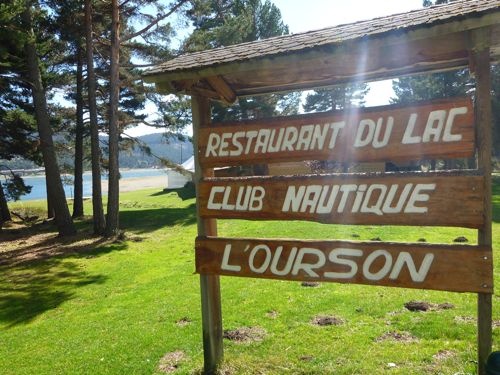
The walk begins at the popular parking area beside the restaurant at Lac de Matemale, one of the region’s favourite family recreation areas.
From Prades, follow the N116 to Mont-Louis and then the D118 towards Formiguères. Shortly after passing Lac de Matemale, follow the signs leading to the lake and recreation area.
In summer, walking shoes are sufficient, although food and water should be carried as no facilities are available on the route itself unless returning via Lac de Balcère.
Following the Voie Royale
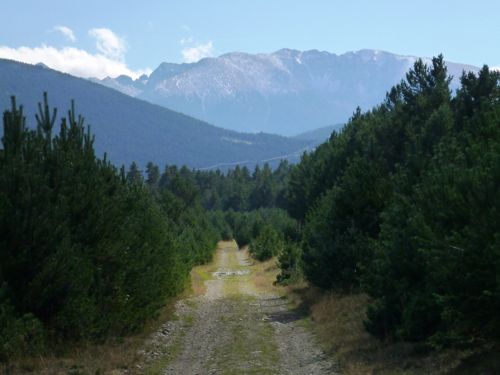
From the car park, take the path heading north-east alongside the road towards the VTT hire centre. Shortly afterwards, turn onto the broad forest track known as the Voie Royale.
Today it is a peaceful woodland path, but during the Middle Ages it formed one of the principal routes through the Capcir Valley. The track provides superb views across the surrounding mountains, including the imposing silhouette of Le Madres and, looking back, the ridges of Cambre d’Aze.
The route follows VTT Route 6 for much of the way, making navigation straightforward.
Cross the Les Angles–Formiguères road with care and continue on well-marked tracks towards Formiguères before turning onto a pleasant canal-side path that climbs gently through the forest.
The Lost Village of Vallserra
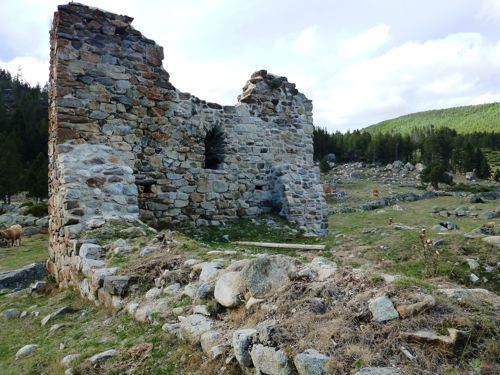
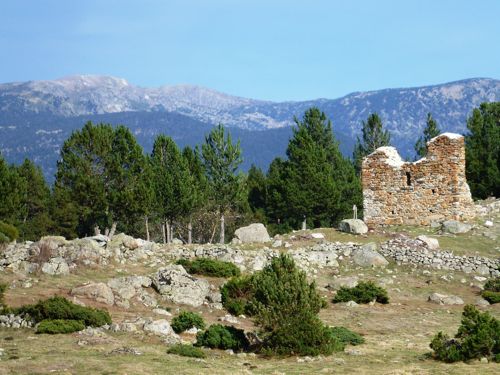
After reaching a wide forest track, signs direct walkers towards Les Iglesiettes and Lac de Balcère. A few minutes later, the ruined chapel of Santa Maria appears amongst the trees.
This tranquil spot was once the heart of the medieval village of Vallserra, also known as Valserra or Vallsera. Although only ruins remain today, archaeological evidence suggests the settlement dates back at least a thousand years, with references appearing in documents as early as 1011 under the name “Vallem Ursariam”.
The Romanesque chapel was the spiritual centre of a small mountain community whose inhabitants farmed, grazed livestock and exploited the surrounding forests.
Today, only fragments of walls and foundations survive, but the outlines of former houses and field boundaries can still be identified around the chapel.
Plague, War and Decline
The story of Vallserra is closely linked to one of the darkest periods in European history.
Before the arrival of the Black Death, the region had already suffered from warfare and instability. During the early fourteenth century, parts of the Capcir were affected by military incursions and raids that disrupted local life.
The plague arrived in the mid-1300s and devastated many communities throughout the Pyrenees. Vallserra experienced a dramatic decline in population, although modern historians believe the village did not disappear immediately. Documentary records suggest that a small number of inhabitants continued to live here for generations before the settlement was eventually abandoned.
Standing beside the chapel today, surrounded by silence and forest, it is easy to imagine how isolated life must have been in these mountains.
The Legend of the Two Sisters
No visit to Vallserra is complete without hearing the area’s most famous legend.
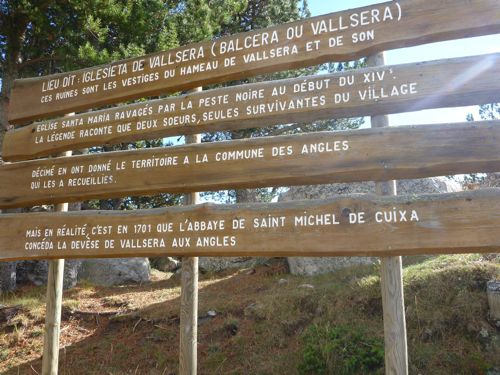
According to local tradition, the plague left only two sisters alive in the entire village. Seeking help, they first travelled to Formiguères, where they were supposedly refused shelter. They then continued to Les Angles, whose inhabitants welcomed and cared for them.
In gratitude, the sisters are said to have bequeathed all the lands of Vallserra to the people of Les Angles.
It is a wonderful story and remains deeply rooted in local folklore.
However, modern historical research suggests that the tale is probably more legend than fact. Historical records show that the territory belonged to the powerful Abbey of Saint-Michel de Cuxa and was formally transferred to the community of Les Angles in 1701.
Whether true or not, the story of the two sisters remains one of the most enduring legends of the Capcir.
Archaeology and Recent Discoveries
Interest in the site has grown considerably in recent years.
Archaeologists and local historians have undertaken investigations around the chapel and village remains, helping to reveal more about everyday life in medieval Vallserra.
Vegetation has been cleared from many areas, exposing additional foundations and structures that had been hidden for centuries. Interpretation panels and heritage trails now help visitors understand the significance of the site and the ongoing research.
These discoveries have transformed Vallserra from a little-known ruin into one of the most fascinating historical sites in the area.
The Lime Kiln
A short distance beyond the chapel lie the remains of an old lime kiln.
Such kilns played an important role in mountain communities, producing lime for mortar and construction work. Remarkably, this kiln continued to operate into the twentieth century, providing building materials for nearby villages.
From here there are excellent views up the valley towards the ski slopes of Les Angles.
The sheltered meadow around the chapel makes a perfect picnic location and is one of the most peaceful spots in the Capcir.
Returning to Lac de Matemale
The simplest return follows the outward route.
Alternatively, several variations are possible, including a detour via Lac de Balcère. During the summer months a café beside the lake provides welcome refreshments and visitors can return to Les Angles using the local shuttle service before walking back to Lac de Matemale.
The route described here returns to the earlier junction before following forest tracks back towards the Formiguères road and eventually descending to the lakeshore.
Wildlife of the Capcir
One of the pleasures of this walk is the abundance of wildlife.
Red deer are frequently seen throughout the year, particularly in the quieter woodland sections. Marmots are common during the warmer months, while wild boar often emerge during the late afternoon and evening.
In winter, snow reveals an intricate network of animal tracks that provide clues to the hidden lives of the valley’s inhabitants.
During summer the meadows around Vallserra are also used by grazing cattle and horses, adding further charm to this historic landscape.
This remains one of the finest easy walks in the Capcir. Combining beautiful scenery, rich wildlife, medieval history and local legend, it offers far more than a simple woodland stroll.
Whether you come for the mountain views, the fascinating story of the lost village or the mystery of the two sisters, Vallserra is a place that lingers in the memory long after the walk is over.
Take a map, allow plenty of time to explore, and enjoy one of the hidden treasures of the eastern Pyrenees.