
C’est la Rentrée!
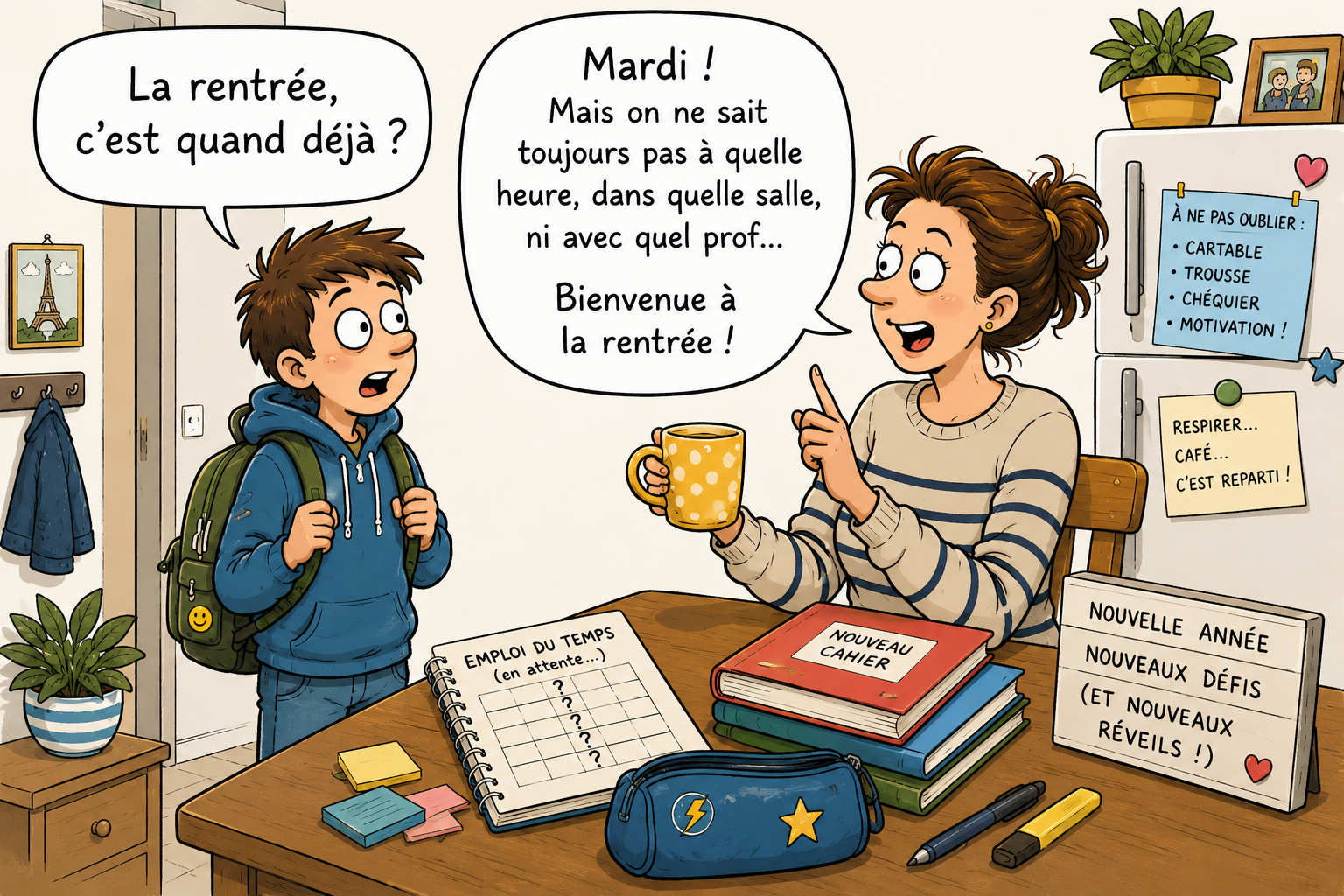
C’est la rentrée ! If you live in France, you’ll hear this expression everywhere at the beginning of September. But what exactly does la rentrée mean, and why is it such a big deal in France?
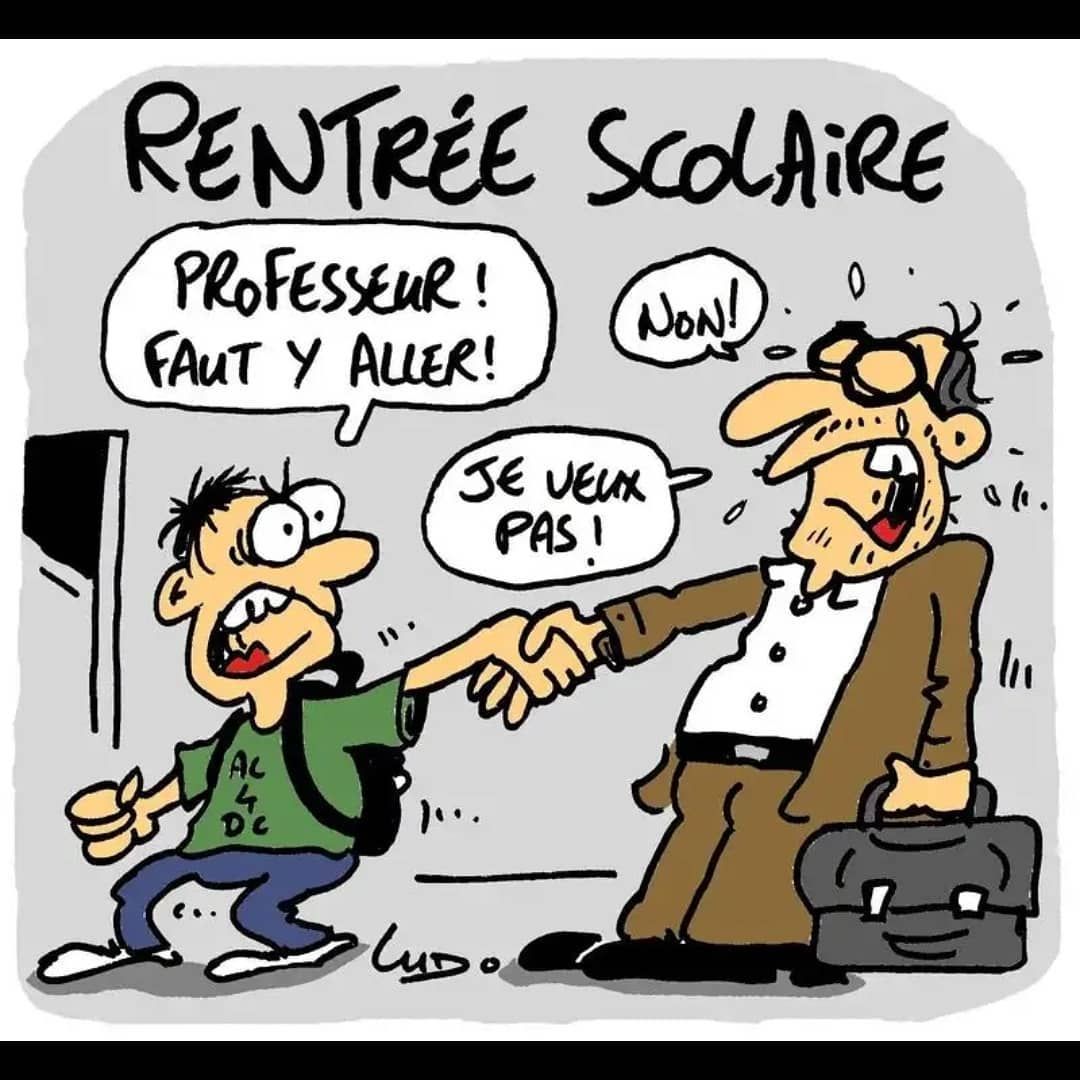
Hands up if the vocabulary and acronyms associated with the French Education System leave you standing outside the classroom door! Your neighbour’s grandson ‘va redoubler’. What a clever girl his sister must be, going to college at just 11 years old. And what on earth is BAC + 3?
Please don’t mark us down on the content of this article. It would fill a very thick exercise book to explain the full system in detail, so we have put together a very basic guide to French schooling vocab and its approximate British equivalent to give you a very rough idea of how it works.
Did You Know?

The general word for teacher, un professeur, has traditionally always been masculine even when the teacher is a lady. In everyday French, however, you’ll very commonly hear un prof or une prof.
A Little Bit of History
The education system in France can actually be traced back to the Roman Empire. Much credit also later goes to Napoleon for reorganising and modernising the structure in order to create a middle-class pot of future leaders.
However, the real founding father of modern French education has to be Jules Ferry. This French politician, who served several times as Minister of Public Instruction and later as Foreign Minister, is remembered for establishing free, secular (laïque) and compulsory education for children, and for helping create the modern French state school system. Today, education is compulsory in France from the age of 3 to 16.
Did You Know
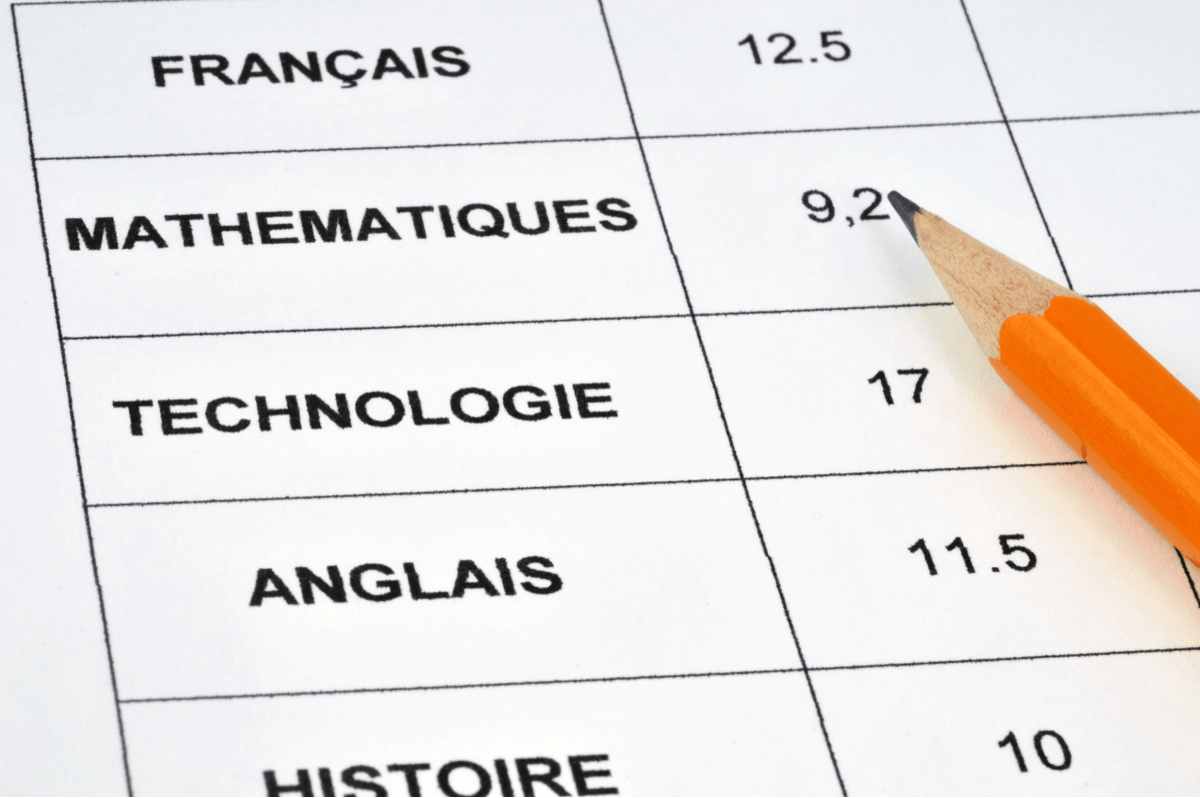
French school marks are traditionally given out of 20, with 10/20 being la moyenne — the average/pass mark. You’ll see marks such as 14/20 or 17/20 all the time, and a surprisingly large part of French school vocabulary revolves around whether you are au-dessus or en dessous de la moyenne.
The exact rules vary according to the qualification, though, so don’t assume that every French exam is simply a question of getting 10/20 in every subject.
A Little Bit of Useful Information
Maternelle – Pre-school (non-compulsory)
Usually from 3 to 6 years
| Age | ||
| 3 | Petite Section | Nursery Class |
| 4 | Moyenne Section | Reception class |
| 5 | Grande Section | Year 1 |
Enseignement primaire – Primary education
| Ecole Primaire – Primary school (also known as “écoles élementaires”) covers the ages 6 to 11 years | ||
| 6 | CP – Cours Préparatoires | year 2 |
| 7 | CE1 – Cours Elementaire | year 3 |
| 8 | CE2 – Cours Elementaire 2nd year | year 4 |
| 9 | CM1 – Cours Moyens 1st year | year 5 |
| 10 | CM2 – Cours Moyens 2nd year | year 6 |
Collège – Secondary School / High School | ||
| 11 | Sixième (6e ) | year 7 |
| 12 | Cinquième (5e) | year 8 |
| 13 | Quatrième (4e) | year 9 |
| 14 | Troisième (3e) | year 10 |
Lycée – a sort of mix between Secondary school and Sixth form | ||
| 15 | Seconde (2nde) | Year 11 |
| 16 | Première (1ère) | Year 12 – Lower Sixth |
| 17 | Terminale | Year 13 – Upper Sixth |
French School Qualifications: Brevet, Bac and Bac+ (Just the basics)
 Brevet Blanc – Equivalent of Mock GCSE’s , (or O Levels if you’re a certain age!) sat by all students in ‘troisième’ just after Christmas.
Brevet (Diplôme National du Brevet (DNB) – Equivalent to GCSE’s sat at the end of the ‘troisième’. It equates roughly to 4 Grade C GCSE’s, but is taken at the age of 14 instead of 16 in the UK. This is a national diploma marking the end of collège.
The final result is calculated from 40% continuous assessment and 60% final examinations, with the overall result expressed out of 20. A student needs a final average of at least 10/20 to obtain the diploma.
Baccalauréat or BAC (Introduced by Napoleon in 1808) – France’s main school-leaving qualification, traditionally compared with A Levels in the UK. There are three main routes: baccalauréat général, baccalauréat technologique and baccalauréat professionnel.
For the general and technological bac, the final result combines continuous assessment (40%) with final examinations (60%). Students receive an overall mark out of 20, with 10/20 remaining the basic pass mark. The general bac is primarily designed for further academic study, while the technological and professional routes have different mixes of practical, technical and academic study.
BAC Général – The most academically oriented route, generally designed to prepare students for higher education, including university and other selective courses.
BAC Technologique – A more specialised route combining general education with a particular technological field. It can lead to higher education as well as employment.
BAC Professionnel – A vocational route designed to prepare students for employment and further vocational study, including apprenticeships and higher education
Rough French / English Equivalents
You’ll often hear French people talking about their bac+2, bac+3, bac+5, etc. Don’t let the terminology confuse you! The bac+ number simply refers to the number of years of higher education completed after the baccalauréat.
So, roughly speaking:
- bac+2 = two years of higher education, for example a BTS
- bac+3 = three years, usually a Licence or BUT
- bac+5 = five years, usually a Master
- bac+8 = eight years, usually a Doctorat
There are also bac+1, bac+4, bac+6 and so on, depending on the course. For example, Master 1 (M1) is normally bac+4, while completing the Master takes you to bac+5.
These aren’t exact equivalents to British qualifications, but they are a very useful shorthand. If someone says « J’ai un bac+5 », they’re telling you that they have completed five years of higher education after the bac — roughly master’s level.
USEFUL VOCABLa Rentrée – new school term |
Papa: Lucien. Où est ton bulletin scolaire? Lucien: Ah, ça? Je l’ai prêté à Alex pour qu’il fasse peur a son père ! (preter – to lend pour qu’il fasse peur – so he can frighten) |