
In the early 1780s, a mysterious and terrifying illness arrived in Languedoc-Roussillon. Known as la suette miliaire, or the English Sweat, it could bring intense sweating, fever and death within hours.
The word miliaire comes from the Latin milium, meaning “millet”, a reference to the tiny, millet-seed-like eruptions that could appear on the skin.
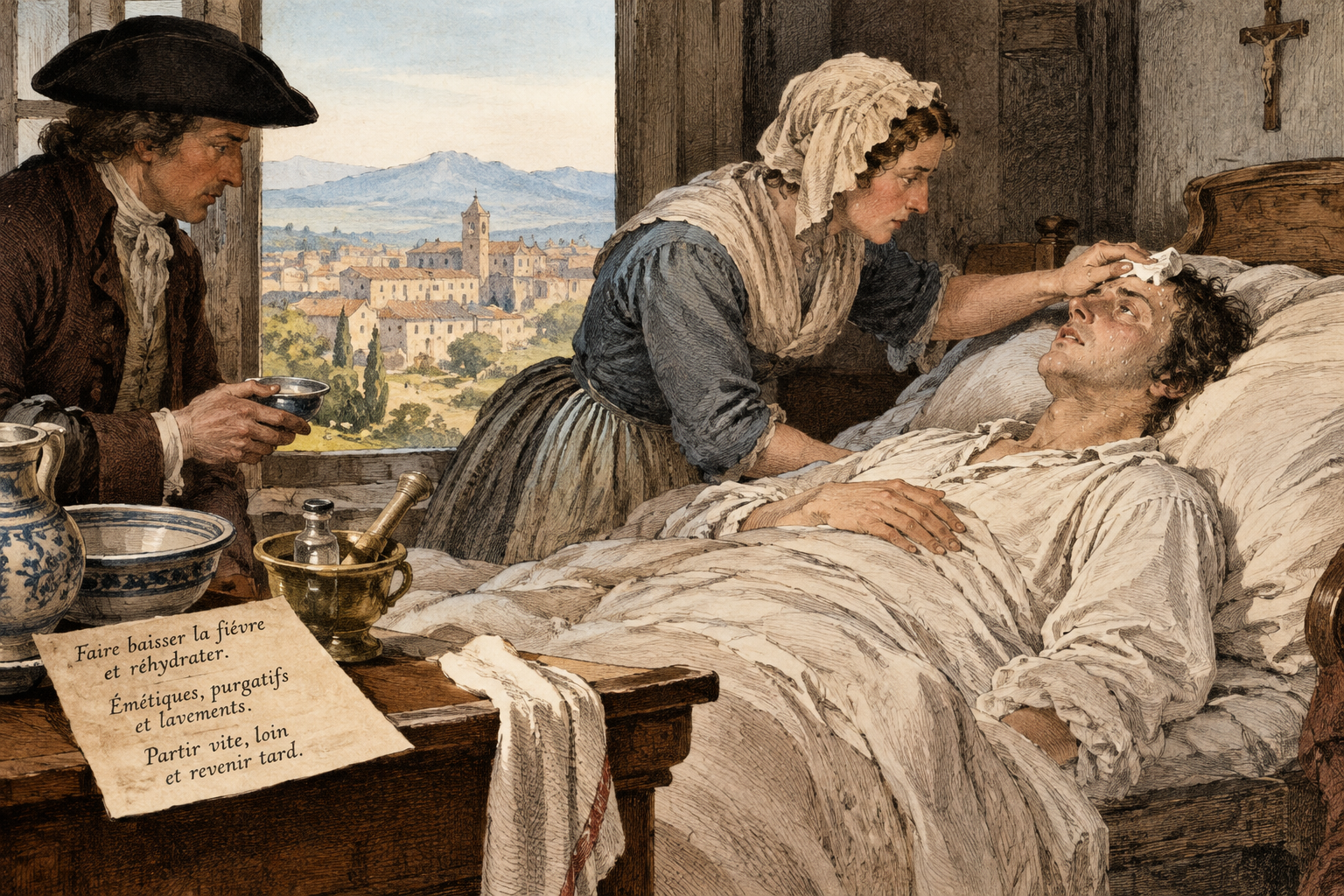
In an age when news travelled slowly and medical knowledge remained limited, the appearance of suette miliaire in the Languedoc-Roussillon was a source of deep anxiety. Communities could do little more than rely on traditional remedies, avoid contact with the sick and hope that the outbreak would pass quickly.
Already experienced in England and known as the English Sweat or sweating fever, the symptoms of this mysterious and contagious disease (intense sweating, often-fatal fever) were sudden, with death often occurring within hours.
Treatment for this frightening virus ranged from ‘faire baisser la fièvre et réhydrater’ (lower the fever and rehydrate) to ‘une succession d’émétiques (vomitifs), purgatifs (laxatifs) et lavements’ (a succession of emetics (emetics), purgatives (laxatives) and enemas’) and ‘partir vite, loin et revenir tard’, (‘leave quickly, go far away and return late’), the latter probably being the closest 18th-century equivalent to our modern-day ‘confinement.