
Catherine Dior: Resistance Heroine
Catherine Dior (1917–2008) was a French Resistance fighter, flower grower, and the younger sister of fashion designer Christian Dior. She’s remembered both for her bravery during World War II and for inspiring one of the most famous perfumes ever created: Miss Dior.
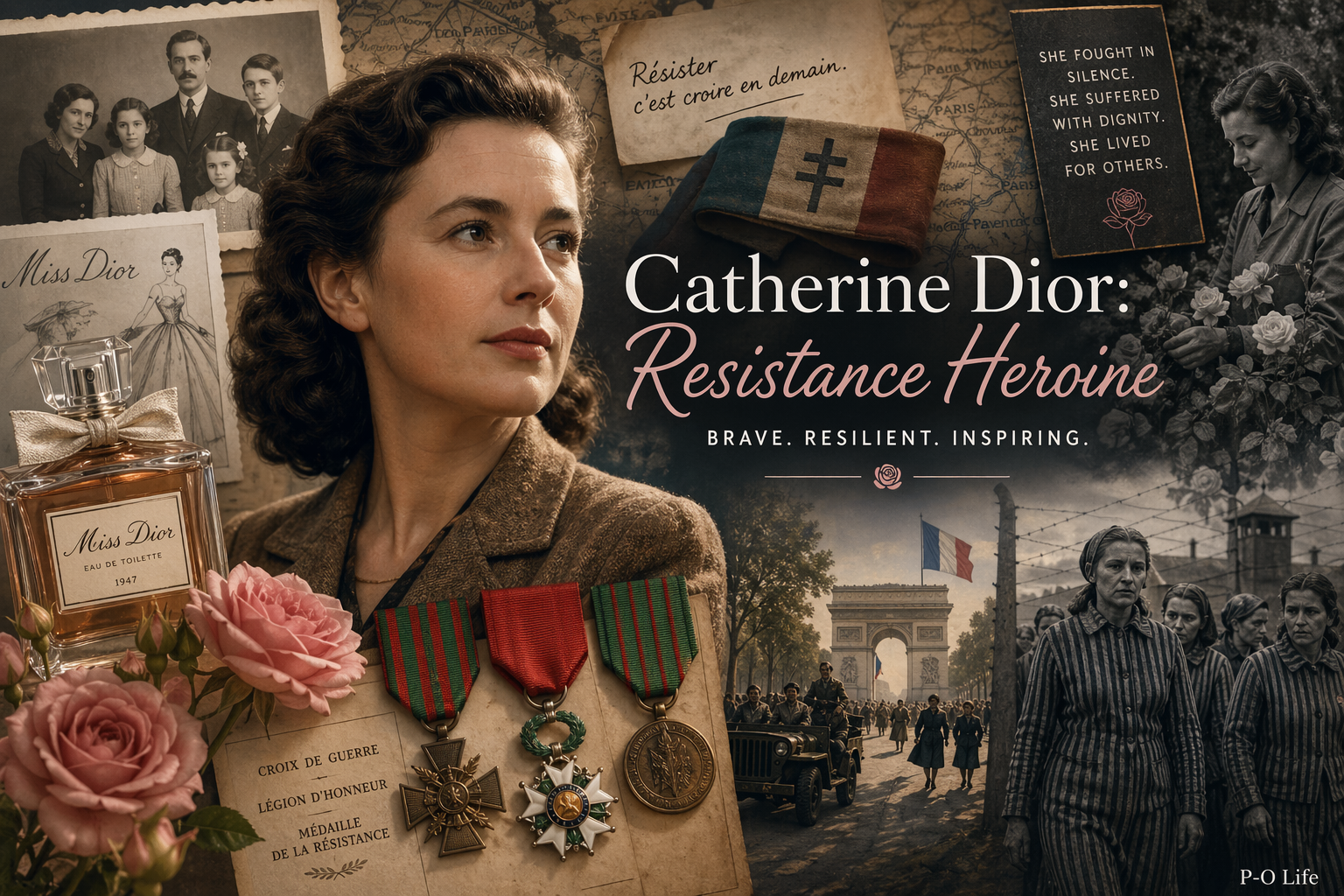
Here’s what makes her life remarkable.
🌸 Early life and family
She was born Ginette Dior on 2 August 1917 in Granville, Normandy, the youngest of five children in a wealthy industrial family.
Like her brother Christian, she developed a deep love of flowers—especially roses—which would later shape her life and indirectly influence Dior’s perfumes and fashion.
When the family lost much of its wealth after the 1929 financial crisis, they moved to the south of France, where Catherine helped grow food to support them.
🕊️ A courageous Resistance fighter
Catherine played a far more dangerous role during the German occupation of France than was widely known during her lifetime. While her brother Christian Dior built his early career in fashion under difficult wartime conditions in Paris, Catherine chose the path of clandestine resistance.
Joining the underground
In the early 1940s she became involved with the F2 intelligence network, a Franco-Polish Resistance organization that gathered military intelligence for the Allies. The network transmitted information to London about German troop movements, military infrastructure, and defensive positions.
Operating under great secrecy, Catherine helped collect and relay sensitive information through couriers and coded communications. Members of the network lived under constant threat of arrest by the Gestapo or French collaborators.
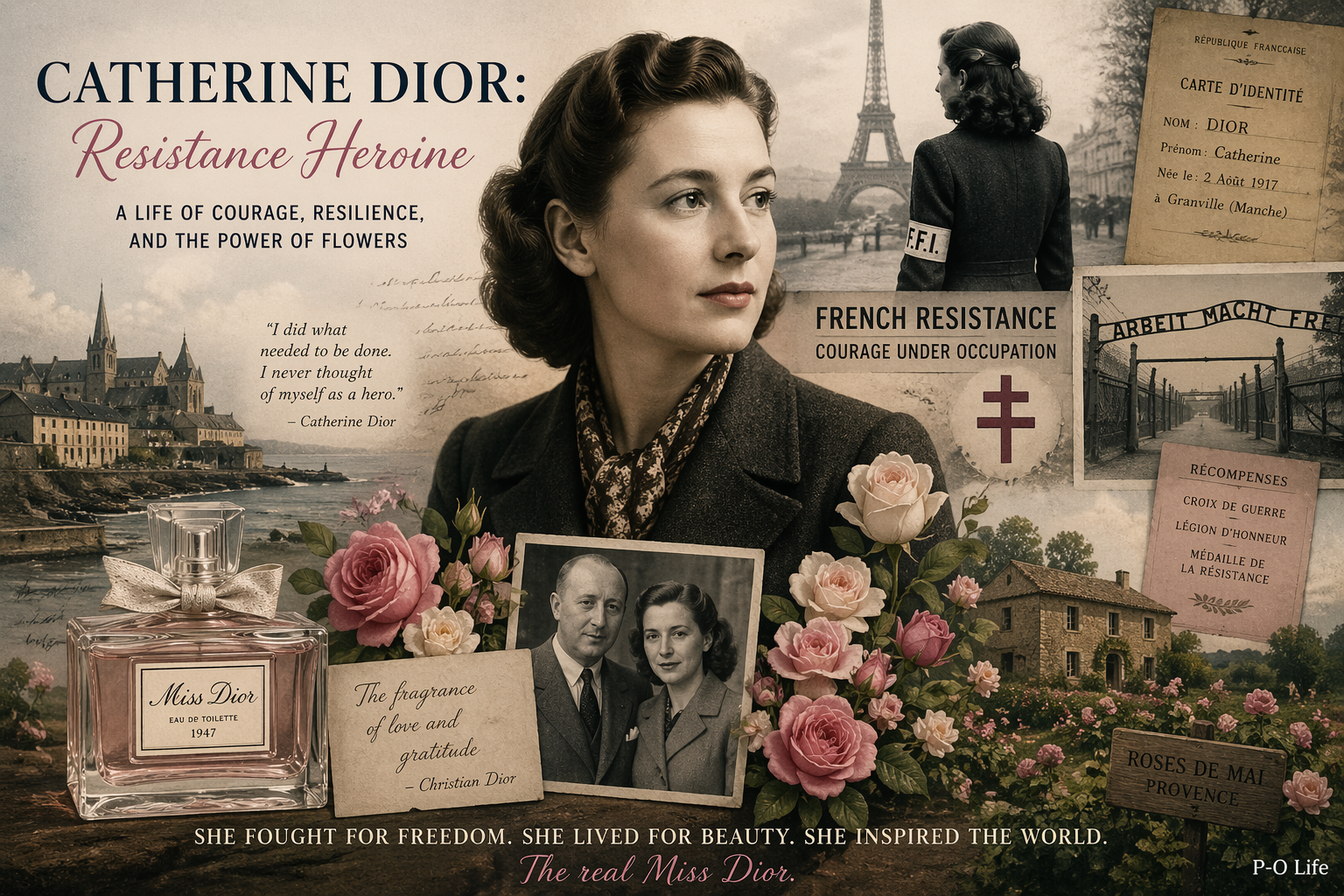
Arrest and torture
On 6 July 1944, just weeks after the D‑Day landings, Catherine was arrested in Paris by the Gestapo.
She was taken to Gestapo headquarters on Avenue Foch, where she was interrogated and tortured. Despite the brutality of her interrogation, she refused to reveal information about her network or fellow resistance members, an act that likely saved many lives.
Deportation to Nazi camps
In August 1944 she was deported to the women’s concentration camp at Ravensbrück concentration camp. From there she was transferred between several forced-labour camps linked to the German war industry.
Like many prisoners, she endured starvation, disease, and exhausting labour during the final chaotic months of the war. She survived until liberation by Allied forces in 1945.
Recognition after the war
Catherine rarely spoke publicly about what she had endured, but the French government formally recognized her bravery. She received several major honours, including:
- the Croix de Guerre
- the Légion d’honneur
- the Médaille de la Résistance
Her resilience and silence about her suffering reflected a pattern seen in many former Resistance fighters who returned quietly to civilian life after the war.
🌹 Life after the war — flowers and fragrance
After the war, Catherine returned to a quieter life centered on flowers. She worked as a flower trader in Paris and later ran a perfume-rose farm in Provence.
Her passion for flowers inspired her brother to name his first perfume Miss Dior after her in 1947.
She also helped preserve the legacy of the Dior fashion house and served as honours president of the Musée Christian-Dior in Granville.
✨ Legacy
Catherine Dior lived to 90, passing away in 2008. She is remembered as a survivor of Nazi imprisonment, a decorated member of the French Resistance and the real “Miss Dior” behind the iconic fragrance
Her life continues to inspire books, fashion collections, and screen portrayals—most recently in the TV series The New Look.