
Shadows on the Canigou; Article 3
Valmanya 1944: The Village That Burned
How one mountain community paid the price for helping the Resistance.
On a warm August morning in 1944, the village of Valmanya awoke to the sound of gunfire echoing through the forests above the Canigou.
High above the village, hidden among the abandoned iron mines of La Pinosa, the Maquis Henri-Barbusse was fighting for its survival. The Resistance camp had been betrayed. Within hours its commander, Julien Panchot, would be captured, tortured and murdered.
Before the day was over, the people of Valmanya would discover that they, too, had become targets.
The Germans had not simply come to destroy the maquis.
They had come to punish an entire village.
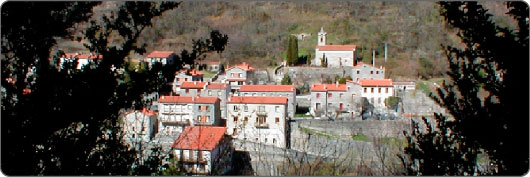
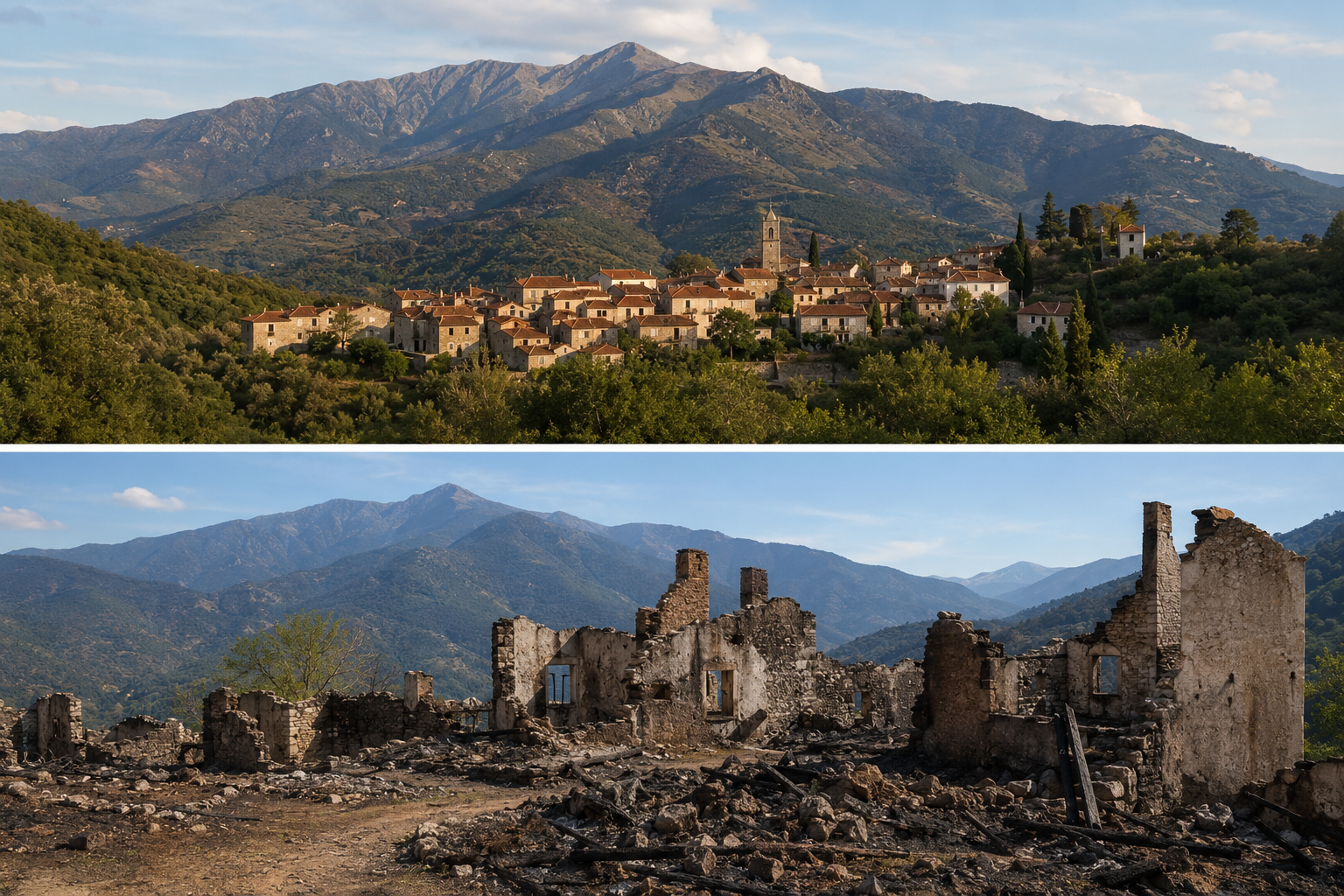
Today, Valmanya is just another pretty mountain village in the Pyrénées-Orientales. Walkers pass through its narrow streets on their way to the Canigou, flowers bloom outside rebuilt stone houses and little hints remain of the catastrophe that unfolded here in the summer of 1944.
Yet beneath its tranquillity lies one of the darkest chapters in the department’s history..
DID YOU KNOW?
Naming Resistance groups after prominent figures was common during World War II, both to honor their ideals and to inspire members.
Henri Barbusse was a French novelist and journalist, veteran of World War I, and author of Le Feu (Under Fire), which vividly described the horrors of trench warfare from the perspective of ordinary soldiers. Although he died in 1935, before World War II began, his writings and political commitments made him an enduring symbol for left-wing resistance to fascism.
Many of the resistance members were French Communists, Spanish Republicans and other anti-fascists for whom Henri Barbusse represented resistance to oppression, solidarity with ordinary people, anti-fascism and the willingness to fight for justice. Using his name reflected the political orientation of many members, particularly those connected with the communist-led Resistance organizations known as the FTP (Francs-Tireurs et Partisans).
A Village That Chose to Help
Valmanya was never a large village.
Hidden in a narrow valley high above the Têt plain, it had long relied on forestry, farming and the nearby iron mines for its livelihood. By the Second World War, many of the mines had already fallen silent, but the surrounding mountains provided something even more valuable.
They offered refuge.
As German occupation tightened across France, increasing numbers of young men escaped into the forests rather than leave for compulsory labour service in Germany. Others crossed the mountains after joining resistance networks. Some were former soldiers. Others were refugees, students, railway workers or farmers.
Many found shelter in the forests above Valmanya.
The villagers understood the dangers.
Supplying food, clothing or information to resistance fighters was punishable by imprisonment, deportation or execution. Entire families could suffer simply for offering a loaf of bread or a place to sleep.
Suspicious troop movements were reported. Some carried food into the mountains. Others acted as lookouts. Messages passed discreetly between trusted neighbours. Farmers shared what little they had.
Yet many quietly helped.
Without local support, the maquis could never have survived. The bond between the village and the maquis grew steadily stronger throughout 1944.
DID YOU KNOW?
Many resistance groups depended almost entirely on nearby villages for food, clothing, intelligence and medical supplies. Every loaf of bread or whispered warning placed local civilians in grave danger.
The Mountains Become a Battlefield
Following the Allied landings in Normandy in June 1944, resistance activity increased dramatically throughout southern France.
German commanders knew that armed maquis groups could threaten roads, railways and communications as the Allies advanced.
The Maquis Henri-Barbusse therefore became a priority target.
Following information supplied by collaborators, German forces located the resistance camp above Valmanya.
In the early hours of 2 August 1944, they launched their assault.
The fighting was fierce.
At first light on 2 August 1944, German troops climbed into the forests above Valmanya.
The resistance fighters were heavily outnumbered.
They fought desperately, not because they believed they could win, but because every minute they delayed the advance allowed more of their comrades—and more villagers—to escape into the mountains. Many did but
Their commander, Julien Panchot, remained behind.
He was captured during the fighting.
He would later be tortured and murdered without revealing the names of his comrades.
Retribution
The German authorities believed the people of Valmanya had actively supported the resistance.
Whether every villager had done so was beside the point.
Occupation forces frequently employed collective punishment, holding entire communities responsible for resistance activity in their area. Across occupied Europe, villages suspected of helping partisans often suffered terrible reprisals.
Valmanya would become one of them.
German soldiers entered the village determined to make an example of it.
Homes were searched, food stores were looted, personal belongings were thrown into the streets..
Most of the villagers were warned in time and escaped into the mountains. The maquis deliberately fought delaying actions to give them that chance.
Families fled wherever they could, many escaping into the surrounding forests carrying little more than blankets and a few possessions.
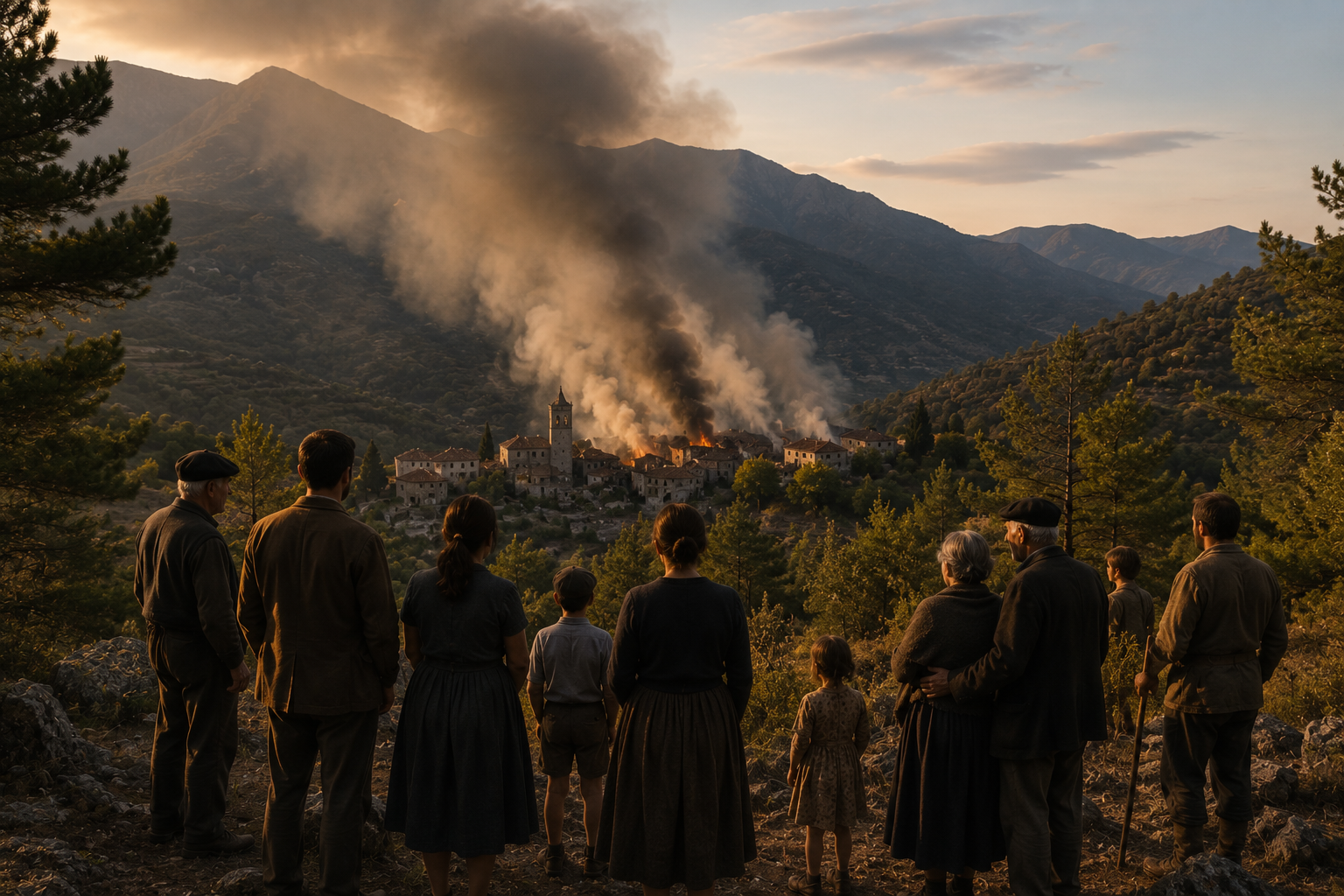
From the slopes above the village, families watched helplessly as smoke began to rise from their homes. Mothers held frightened children in silence. Elderly parents who had been unable to escape were still below. Nobody knew whether they were alive or dead.
Not everyone escaped. Four villagers who remained behind were murdered before the soldiers withdrew, leaving Valmanya a blackened shell.
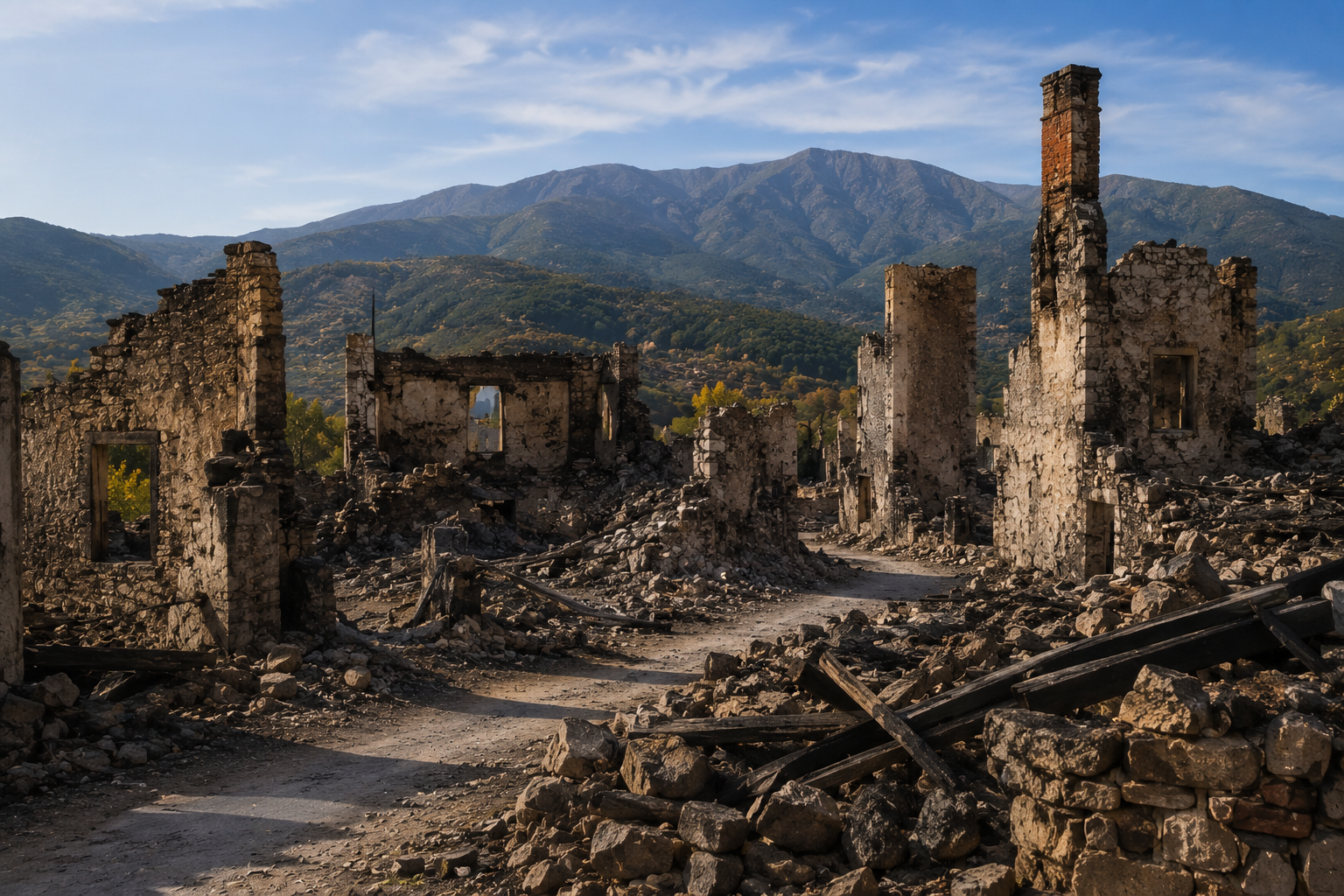
Fire
One by one, buildings were set alight.
Flames spread rapidly through the tightly grouped houses.
Smoke rose high above the valley, visible for miles across the foothills of the Canigou.
By the time the soldiers departed, much of Valmanya had been devastated.
From their hiding places, villagers watched helplessly as generations of family history disappeared.
Generations of family possessions vanished. Photographs, furniture., tools, documents, clothing, entire livelihoods disappeared in a single afternoon.
The destruction was intended to send a message.
Anyone who assisted the Resistance would pay a terrible price.
DID YOU KNOW
Unlike accidental wartime damage caused during military operations, the destruction of Valmanya was a deliberate act of reprisal. Villages across occupied Europe suffered similar punishment when local populations were believed to have supported resistance movements.
Returning Home
Only weeks later, the tide of war changed dramatically.
Following the Allied landings in southern France during Operation Dragoon in mid-August 1944, German forces began withdrawing northwards.
The liberation of the Pyrénées-Orientales soon followed.
For the people of Valmanya, however, liberation brought mixed emotions. There was relief and celebration of course, but also much heartbreak As families returned to find blackened walls, collapsed roofs and homes that no longer existed.
Rebuilding would take years.. Many had lost almost everything except each other.
Yet rebuild they did – and stone by stone, rood by roof, village slowly came back to life.
Remembering
Today, Valmanya stands not only as a beautiful mountain village but also as a place of remembrance.
Memorials commemorate Julien Panchot and the resistance fighters who died defending the region.
Annual ceremonies continue to honour those who resisted occupation and those civilians who suffered because they chose compassion over fear.
For local people, these are not distant historical events.
Many families still remember parents or grandparents who lived through those days.
The story has been passed from one generation to the next.
Walking Through History
Visitors arriving today may notice little evidence of the devastation of 1944 but history remains close beneath the surface.
The road climbing towards the village follows the same route taken by German troops.
The forests above still conceal the paths used by the maquis.
The abandoned mines of La Pinosa remain where resistance fighters prepared for liberation, believing the mountains would protect them.
Standing there today, surrounded by silence, it is difficult not to reflect on the extraordinary courage of ordinary people.
The villagers of Valmanya did not set out to become heroes.
Most simply chose to help neighbours, friends and strangers at a time when doing so carried unimaginable risks.
Some paid with their homes.
Others paid with their lives.
Their courage ensured that Valmanya would be remembered not for its destruction, but for its refusal to surrender its humanity.
Those Who Never Escaped
Not everyone was able to flee. Some elderly residents remained behind. Others either underestimated the danger or were physically unable to escape before German troops arrived.
Historical research identifies four villagers who were killed during the destruction of Valmanya.
Their deaths remain a reminder that the victims of occupation were not only armed resistance fighters but also ordinary civilians caught in events far beyond their control.
DID YOU KNOW?
Every summer, commemorative ceremonies are held in and around Valmanya to honour the Resistance, Julien Panchot and the villagers who suffered during the German reprisals. These events help ensure that the story of one of the Pyrénées-Orientales’ darkest days continues to be passed on to future generations.
Visit the History – Valmanya and the Mines of La Pinosa
A visit to Valmanya is one of the most moving historical experiences in the Pyrénées-Orientales. The rebuilt village contains memorials to Julien Panchot, the Resistance and the civilian victims of the German reprisals. Above the village, walking trails lead to the abandoned iron mines of La Pinosa, where the Maquis Henri-Barbusse established its headquarters.
The surrounding landscape has changed remarkably little since 1944, allowing visitors to appreciate both the beauty of the Canigou and the extraordinary events that unfolded beneath its forests.
Articles In This series
Article 1
The Traitor of Valmanya: The Strange and Tragic Story of Nessim Eskenazi
Article 2
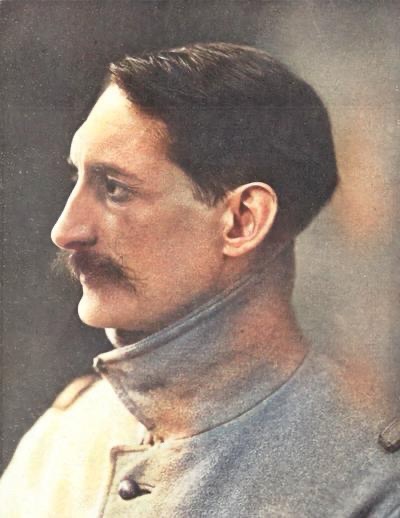
Julien Panchot: The Maquis Leader Who Refused to Break
The story of the Resistance commander captured before the destruction of Valmanya.
Article 3
Valmanya 1944: The Village That Burned
A dramatic reconstruction of the attack on the village and its aftermath.
Article 4
The Milice in Perpignan
Who collaborated locally, how the organisation operated, and how it was dismantled after Liberation.
Article 5
Henri Treyeran: The Most Hated Man in Perpignan
A profile of the Milice leader assassinated by Resistance fighters.
Article 6
Escape Across the Pyrenees
The guides, smugglers, Allied airmen, Jews and resistance fighters who crossed into Spain.
Article 7
The Women of the Resistance in the Pyrénées-Orientales
Too often overlooked
Article 8
The Liberation of Perpignan
August 1944 and the collapse of German authority.
Article 9
Justice and Revenge
The trials, executions, and purges that followed Liberation.
Article 10
The Last Witnesses
How the Occupation is remembered today in the department.