
The Liberation of Perpignan

On 12 November 1942, German forces entered la zone libre — the part of France that had remained unoccupied after the 1940 armistice. German troops arrived in Perpignan that day, beginning almost two years of occupation.
One of their first priorities was Llabanère airfield, now Perpignan–Rivesaltes Airport. A Luftwaffe detachment took over the site and installed anti-aircraft defences. A bunker was also constructed on the heights at Peyrestortes, overlooking the airfield — a reminder of the German military presence that can still be seen today.
The Germans also turned their attention to the Mediterranean coast.
The Mediterranean coast
From 1942 onwards, German forces developed a major coastal defence system, known as the Südwall — the German Mediterranean Wall. Its purpose was to prevent or repel an Allied amphibious landing.
Cap Béar and Port-Vendres became particularly heavily fortified. Bunkers, observation posts, gun positions, machine-gun shelters and underground installations were constructed or incorporated into the existing French military defences. Many of these structures still survive today, scattered around the hills and coastline.
By 1944, around 10,000 German troops were stationed in the Pyrénées-Orientales, and thousands of hectares of land had been mined. The danger was not confined to the coast: the Germans were preparing for an Allied attack from the sea while also trying to control the countryside and the important routes towards Spain.
In early 1944, with an Allied landing increasingly expected, German forces began clearing parts of the coastal area. On 2 February, the prefect ordered the evacuation of people living within 15 kilometres of the coast. Some villages were almost completely emptied.

The beginning of the end
The turning point came in August 1944.
The Allied landings in Provence began on 15 August, and the German position in southern France rapidly deteriorated. Rather than waiting for an Allied army to reach the Pyrénées-Orientales, German forces began withdrawing northwards.
Before leaving, they set about destroying anything that might be useful to the Allies.
In Perpignan, the German ammunition depot was blown up, destroying warehouses, a convent and other buildings. At Port-Vendres, the Germans dynamited the depot containing sea mines and destroyed parts of the port and other installations. Fortunately, not all of the explosives detonated; a complete explosion could have caused catastrophic damage to the town.
The destruction was intended to deny the Allies the use of the port and to delay any possible advance.

The Liberation of Perpignan
As the German forces withdrew, Resistance groups from across the region moved towards Perpignan.
On 18 August 1944, fighting broke out in the city. Resistance fighters confronted German troops as well as members of the French Milice, the Vichy regime’s paramilitary organisation.
Among those involved were fighters from the Maquis de Rabouillet, who had been ordered towards Perpignan. Resistance groups entered the city and fighting continued through the night. One of the encounters took place around Rue Mailly, while other clashes occurred elsewhere in the city.
DID YOU KNOW?
The Maquis de Rabouillet was a local Resistance group based in the remote countryside of the Fenouillèdes, north-west of Perpignan. Like many maquis, its members were a mixture of local men, young people avoiding forced labour, escaped prisoners and others who had chosen to join the Resistance. The forests and rugged hills around Rabouillet provided ideal country for hiding, training and organising clandestine operations.

In August 1944, as the German occupation began to collapse, around 150 men of the maquis were mobilised towards Perpignan. They were among the local Resistance fighters who helped bring the liberation of the city about.
Their story is a reminder that liberation was not only the work of armies arriving from elsewhere. Local men and women, who had spent years living under occupation, were prepared to risk everything to take their own towns and villages back.
Today, the hills around Rabouillet are peaceful. But during the occupation, these remote valleys were part of the hidden network of the French Resistance.
By the following morning, Major Parthay, one of the German officers still in the city, had been captured along with several armed men.
The German withdrawal was completed on 19 August 1944, bringing the occupation of Perpignan and the department to an end.
After almost two years, the swastika had disappeared from Perpignan.
The forgotten heroes
One of the fascinating stories connected with the liberation of France is that of La Nueve — the 9th Company of the French 2nd Armoured Division.
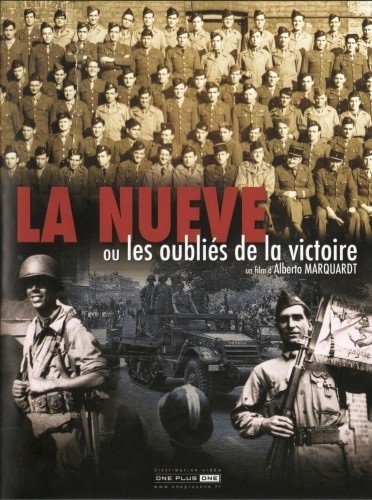
Made up largely of Spanish Republicans who had fought against Franco, these men became part of the Free French forces. On 24 August 1944, La Nueve was among the first Allied units to enter Paris, with its half-tracks carrying names such as Guadalajara, Madrid and Ebro.
Their story is a remarkable reminder that the liberation of France was an international effort involving men and women from many different countries and backgrounds.
And the French story was complicated too.
Not all French people were members of the Resistance. Alongside the Resistance were the Milice, collaborators and people involved in the criminal underworld of the occupation, including the notorious Carlingue.
The liberation of Perpignan was therefore not simply a story of French versus Germans. It was a much more complicated story of occupation, resistance, collaboration, fear, courage and survival.
Today, the bunkers at Peyrestortes, Cap Béar and Port-Vendres remain: scattered reminders of those extraordinary years. Many can still be seen today — the local tourist office provides information for visitors to the German fortifications at Port-Vendres.
More than eighty years later, they are easy to walk past without noticing.
But they are still there — silent witnesses to the occupation and the liberation of the Pyrénées-Orientales in August 1944.


FInd out about THE NUEVE, forgotten heroes of WWII, some of the first soldiers of liberated France to enter occupied Paris.
Read about the MILICE and the CARLINGUE.
Photo Credit: Auguste Chauvin
With Thanks to Estève Valls.