
Shadows on the Canigou; Article 4
The Milice in Perpignan
When Frenchmen Hunted Frenchmen
While villages such as Valmanya paid a terrible price for helping the Resistance, another battle was being fought in the streets of Perpignan.
This enemy did not always wear a German uniform. Sometimes they spoke with a local accent. Sometimes they were former neighbours, colleagues or even friends.
They were members of the Milice Française – the organisation that would become one of the most feared symbols of collaboration during the Occupation.
For many people, the Occupation of France conjures images of German soldiers marching through French towns, Gestapo officers interrogating prisoners and the constant fear of arrest, yet one of the darkest realities of life under German rule was that not all persecution came from the occupiers themselves.
Increasingly, it was carried out by French citizens working against their own countrymen.
By 1944, nowhere was entirely free from suspicion.
Even in the Pyrénées-Orientales, far from Paris and the great battlefields of Europe, ordinary people knew that careless words, a chance encounter or an anonymous denunciation could change a life forever.
In Perpignan, the Milice became the visible face of that fear.
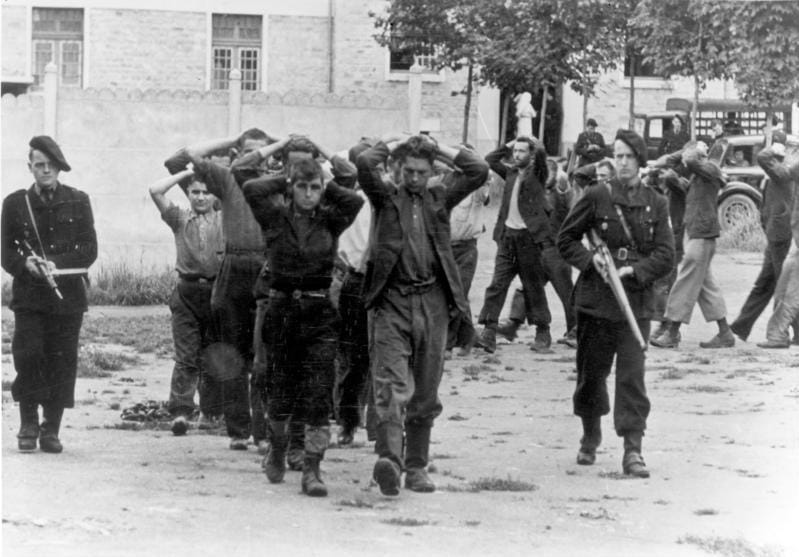
Resistance members captured by the Milice, July 1944.
A Divided France
When France fell to Germany in June 1940, the country was divided.
The north came under direct German occupation, while the south was administered by the new government based in the spa town of Vichy under Marshal Philippe Pétain.
Many French people initially accepted the new regime, believing cooperation would spare France further suffering after the disastrous defeat.
Others believed exactly the opposite.
As the Occupation continued, resistance slowly grew. Young men disappeared into the mountains rather than work in German factories. Secret newspapers circulated from hand to hand. Railway workers sabotaged transport. Information was passed to London. Weapons were hidden in barns, forests and abandoned mines.
The more resistance increased, the more determined the Vichy government became to destroy it.
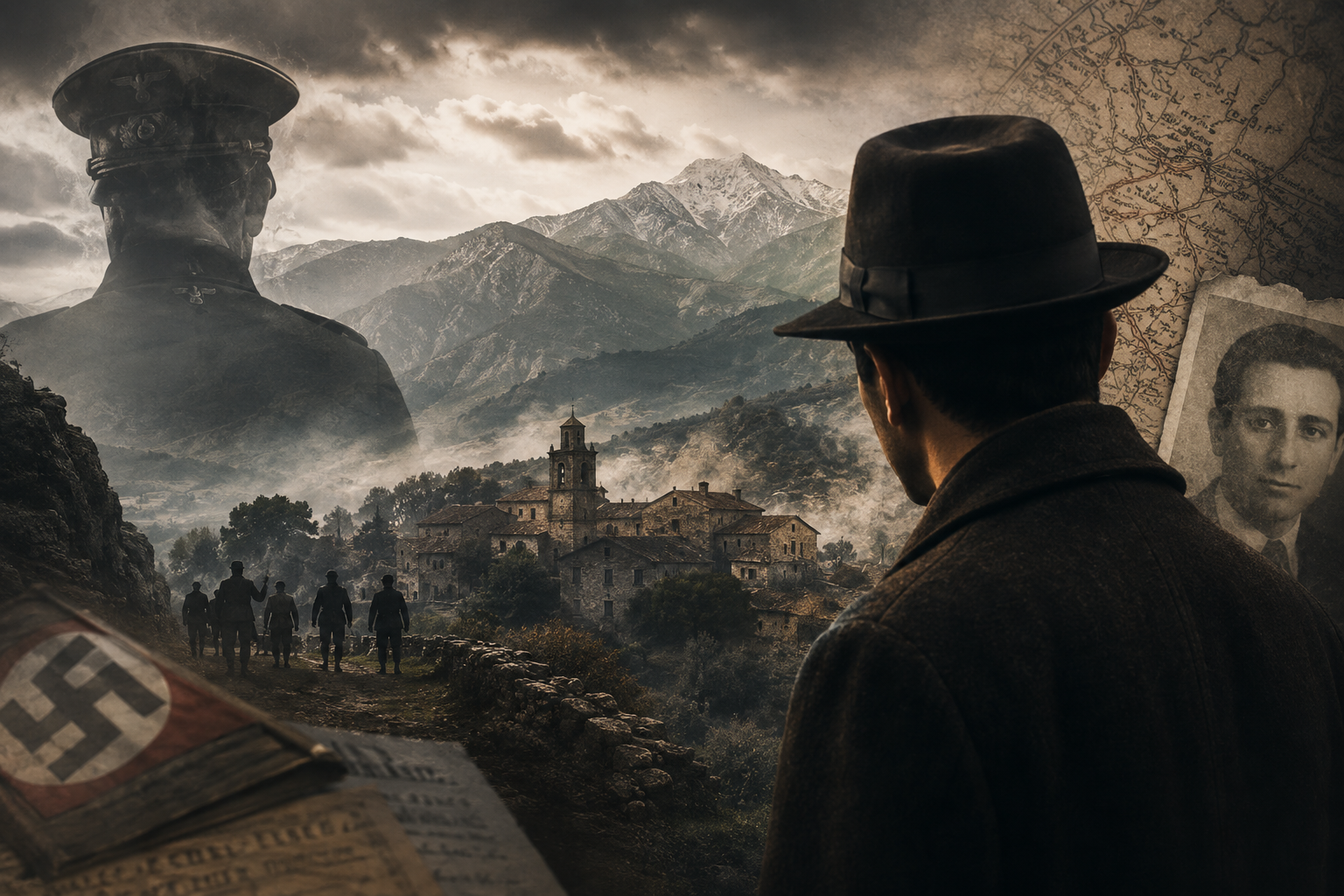 The Birth of the Milice
In January 1943, Pierre Laval’s government created the Milice Française.
Officially, its purpose was to defend France against terrorism and maintain public order.
In reality, it became a political militia dedicated to hunting down Resistance fighters, Jews, escaped prisoners, draft evaders and anyone suspected of opposing the Vichy regime.
Its leader was Joseph Darnand, a decorated First World War veteran who had become an enthusiastic supporter of Nazi Germany.
Under his leadership, the Milice rapidly expanded across France.
Its members were armed. They received military training. Many swore personal loyalty not simply to the French State, but to the ideals of authoritarian rule and the destruction of the Resistance.
Unlike ordinary police officers, Milice members often acted with extraordinary brutality.
Their reputation spread quickly.
People disappeared after midnight arrests. Prisoners were beaten during interrogations. Families lived in fear of a knock on the door after dark.
DID YOU KNOW?
The Milice was officially a French organisation, not a German one. Although it worked closely with the German authorities, its members were French citizens who volunteered to serve the Vichy government.
The French Gestapo?
The Milice is sometimes described as the “French Gestapo.” Strictly speaking, this is not quite correct.
The German Gestapo remained Germany’s secret state police and answered directly to the Nazi authorities.
Alongside them operated another French organisation known as the Carlingue, a criminal collaborationist network often nicknamed the French Gestapo. Led by gangsters and corrupt former police officers, the Carlingue specialised in torture, extortion, black-market operations and hunting members of the Resistance.
The Milice and the Carlingue were different organisations yet in practice, they frequently worked alongside each other and with the German Gestapo.
For ordinary civilians, the distinction mattered very little. Whether the men knocking at the door wore German uniforms or French armbands, the consequences were often the same.
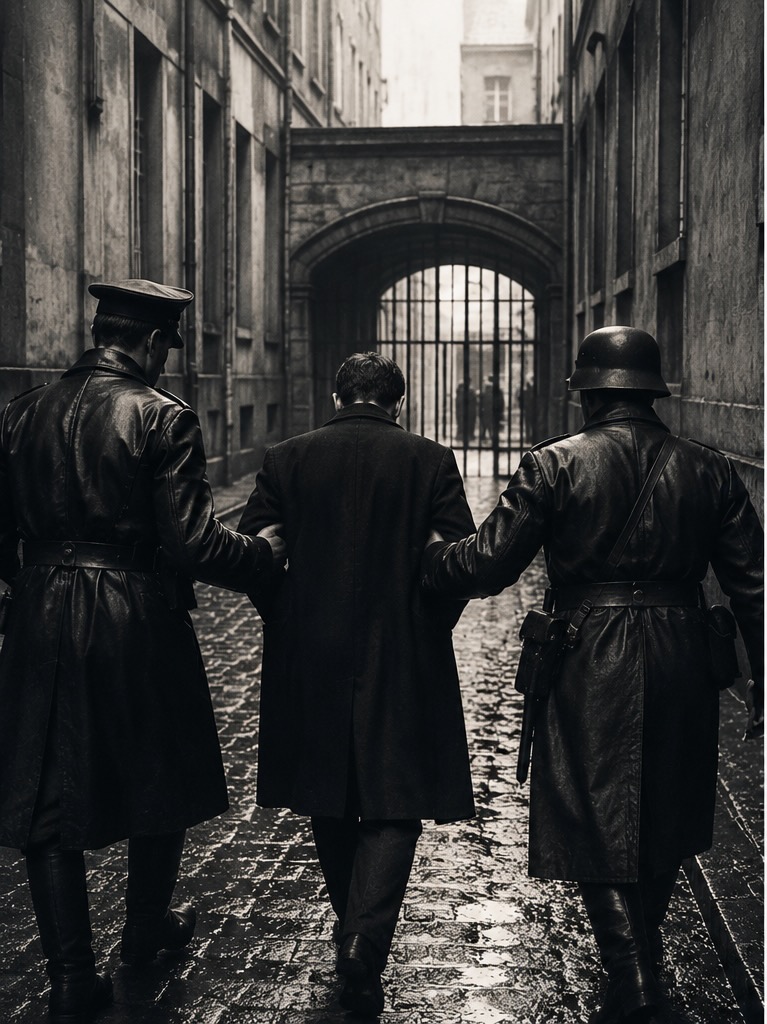
Collaboration Comes to Perpignan
Perpignan occupied an important strategic position.
Only a short distance from the Spanish border, it was a gateway to the Pyrenees.
Throughout the Occupation, hundreds of Allied airmen, escaped prisoners of war, Jewish refugees and Resistance couriers attempted to cross the mountains into neutral Spain.
The Germans understood the importance of controlling these escape routes. So did the Milice.
As resistance activity increased throughout the department, collaborationist organisations became more active.
Lists of suspected Resistance supporters were compiled, meetings were watched, letters were intercepted.
Rumours travelled quickly. Sometimes a careless remark overheard in a café was enough to attract unwanted attention. Nobody knew who might be listening.
Living with Suspicion
Life in occupied Perpignan continued on the surface.
Markets still opened, children still went to school, shops continued trading whenever food could be obtained and the cafés around Place Arago and the narrow streets leading towards Le Castillet remained busy.
Yet beneath this appearance of normality, tension was everywhere. People lowered their voices before discussing politics. Windows were closed before conversations became too sensitive. Families learned not to ask too many questions.
The safest response was often silence.
Every family seemed to know someone who had been arrested.
Some returned. Many did not.
DID YOU KNOW?
The Resistance relied heavily on secrecy. Members were often known only by code names, and many fighters had no idea of the real identities of those working alongside them. This meant that if someone was captured and tortured, they could reveal very little.
The Weapon of Fear
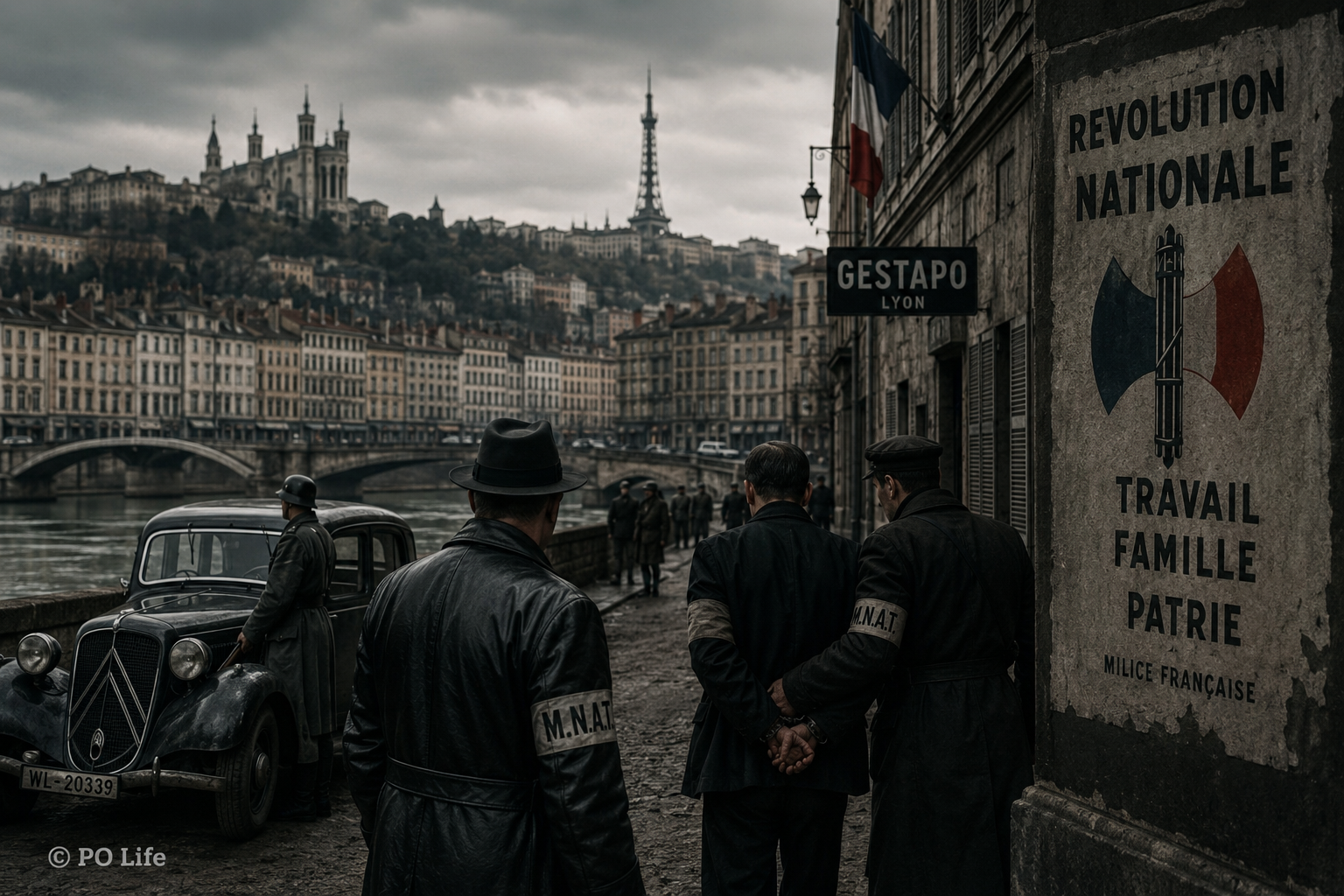
The Milice understood that fear itself could become a weapon. Visible patrols reminded people they were being watched and very public arrests demonstrated the consequences of helping the Resistance.
Informers created an atmosphere in which nobody felt entirely safe.
Not every accusation proved true. Personal disputes, jealousies and old grudges sometimes became denunciations.
For investigators, suspicion alone could justify questioning. and once arrested, proving innocence was often extremely difficult.
The Shadow Over the Canigou
While the streets of Perpignan lived under growing surveillance, events in the mountains were moving rapidly towards tragedy.
The forests around the Canigou had become home to increasingly organised Resistance groups; young men escaping compulsory labour service joined experienced fighters., Spanish Republicans who had fled Franco’s victory bringing valuable military knowledge.
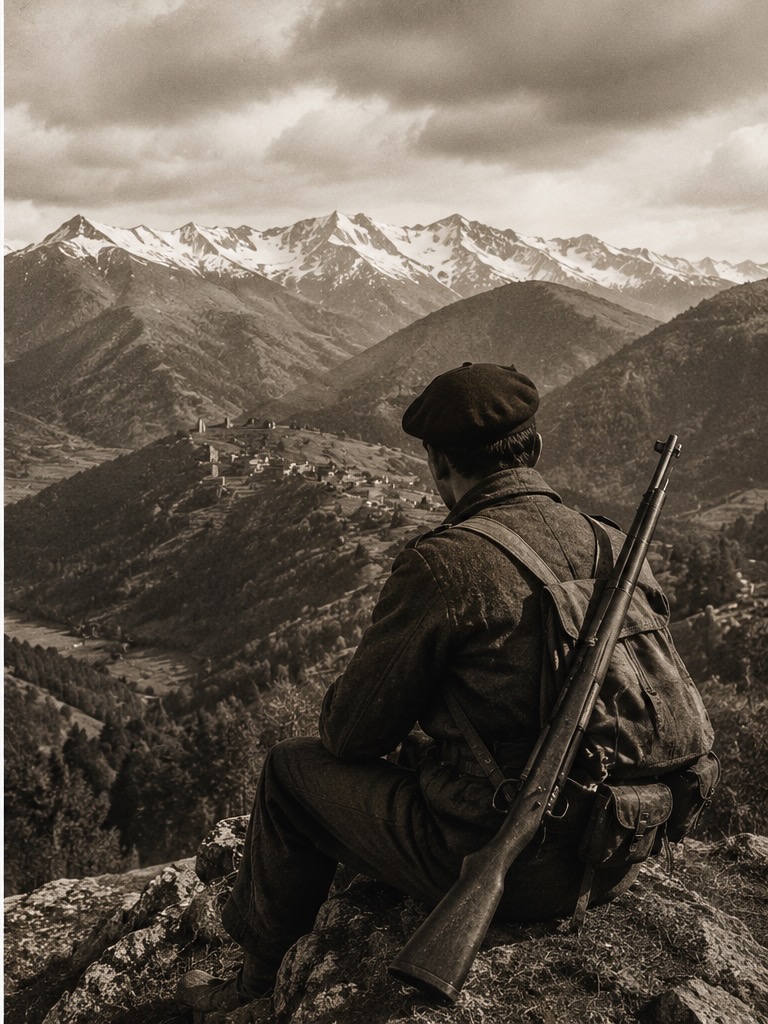
Weapons arrived by parachute, radio operators maintained secret contact with London….and each successful operation increased German determination to crush the Maquis.
The Milice became one of their most valuable allies. Its members knew the local roads. They recognised faces. They understood village loyalties. Most importantly, they could often identify who was helping the Resistance.
When the Maquis Henri-Barbusse established itself above Valmanya, it was only a matter of time before collaborators began searching for it.
The events described in our previous article did not happen by chance. They were made possible by intelligence gathered through collaboration.
The betrayal of resistance movements rarely began in Berlin. It often began much closer to home.
DID YOU KNOW?
The word maquis originally referred to the dense Mediterranean scrubland found across southern France and Corsica. Made up of evergreen oaks, broom, juniper, rockrose and thorny shrubs, it was so thick that people could hide there for weeks without being discovered.
During the Second World War, young men escaping compulsory labour service in Germany took refuge in these remote hills and forests. As more joined them, they organised into armed Resistance groups.
They became known as maquisards—literally, “those of the maquis”—and the name soon came to describe the Resistance groups themselves.
In the Pyrénées-Orientales, however, the maquis did not hide only in scrubland. They also found refuge in the deep forests, abandoned iron mines and rugged mountains surrounding the Canigou, where the landscape offered natural protection from German patrols.
Fear Has a Face
By the summer of 1944, the Milice had become one of the most hated organisations in France.
To Resistance fighters, they were traitors. To ordinary civilians, they represented uncertainty and fear.
Yet their power depended on one simple fact. They were French. They understood the language, the customs and the communities they were policing. That made them far more dangerous than strangers.
A German soldier might not recognise a local schoolteacher, a railway worker or a village mayor but a member of the Milice almost certainly would.
For those living in Perpignan, the greatest threat sometimes lived only a few streets away.
To be continued…
In Part Two: As Allied forces landed in southern France and the Liberation approached, the Milice’s grip on Perpignan began to weaken. Some collaborators fled. Others fought to the bitter end. Many would soon face justice—while others disappeared into history.
Articles In This series
Article 1
The Traitor of Valmanya: The Strange and Tragic Story of Nessim Eskenazi
Article 2
Julien Panchot: The Maquis Leader Who Refused to Break
The story of the Resistance commander captured before the destruction of Valmanya.
Article 3
Valmanya 1944: The Village That Burned
A dramatic reconstruction of the attack on the village and its aftermath.
Article 4
The Milice in Perpignan
Who collaborated locally, how the organisation operated, and how it was dismantled after Liberation.
Article 5
Henri Treyeran: The Most Hated Man in Perpignan
A profile of the Milice leader assassinated by Resistance fighters.
Article 6
Escape Across the Pyrenees
The guides, smugglers, Allied airmen, Jews and resistance fighters who crossed into Spain.
Article 7
The Women of the Resistance in the Pyrénées-Orientales
Too often overlooked
Article 8
The Liberation of Perpignan
August 1944 and the collapse of German authority.
Article 9
Justice and Revenge
The trials, executions, and purges that followed Liberation.
Article 10
The Last Witnesses
How the Occupation is remembered today in the department.