
Winter Fruits of the South of France – The Strawberry Tree and Persimmon
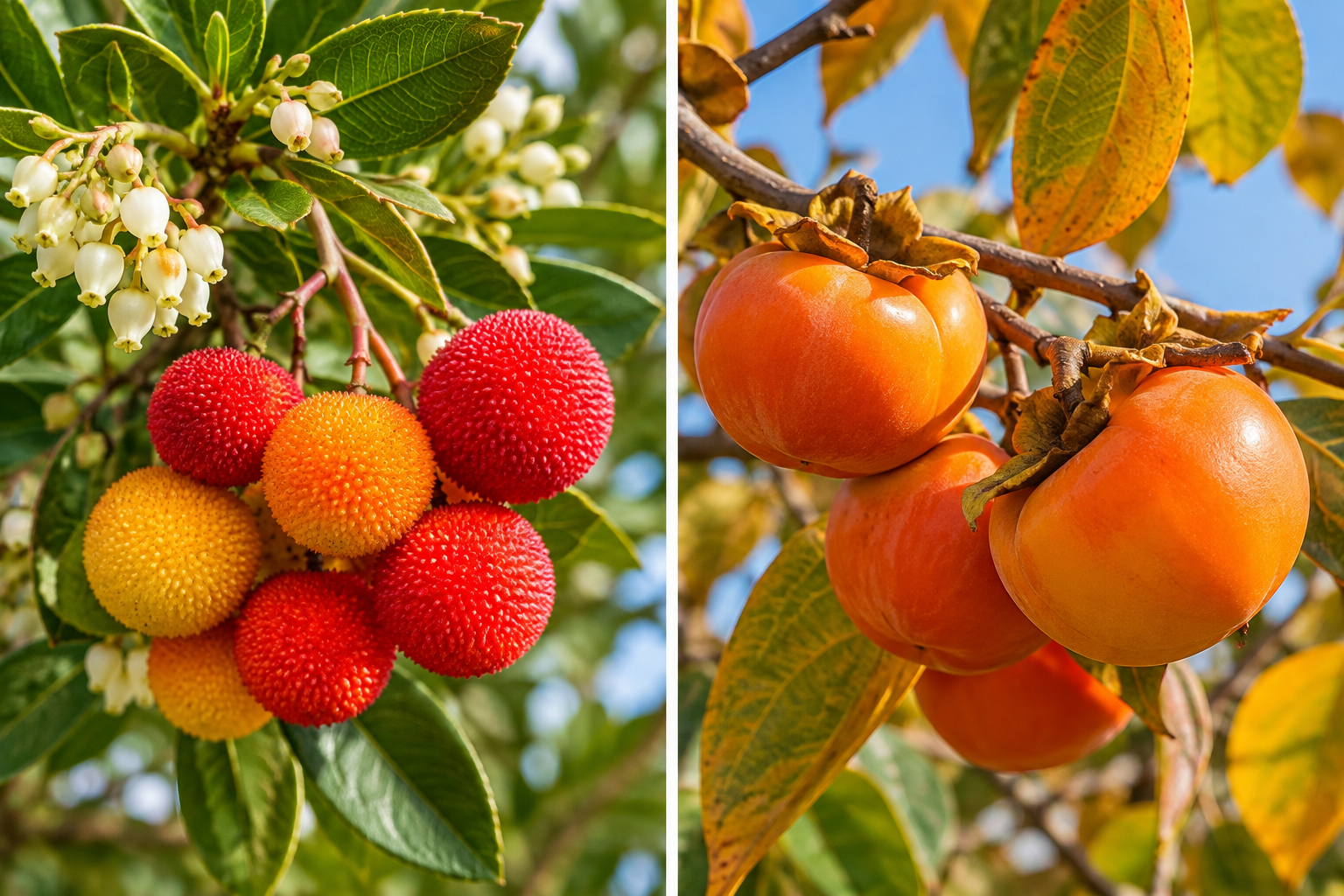
As autumn turns to winter in the south of France, two particularly colourful fruits brighten up our gardens and countryside. The bright red berries of the strawberry tree and the cheerful orange persimmons (kakis) are both characteristic sights at this time of year.
L’Arbousier (The Strawberry Tree)
Native to the Mediterranean region and parts of Western Europe, the strawberry tree (Arbutus unedo) is a familiar sight throughout the south of France. It is difficult to miss these attractive evergreen trees, particularly in autumn when their colourful fruits and delicate white flowers appear together.
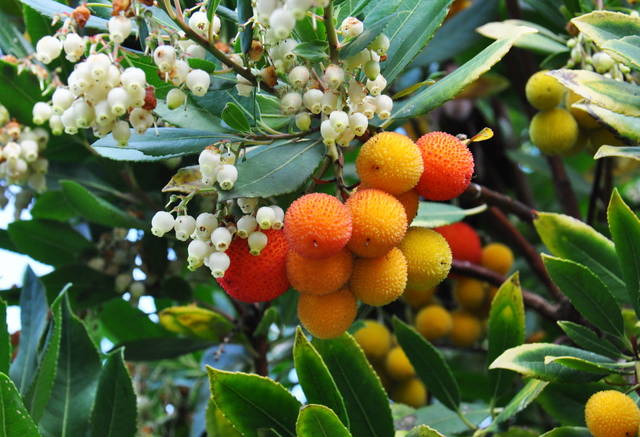
A tough, slow-growing and relatively trouble-free tree, the arbousier is well suited to our Mediterranean climate. It tolerates dry conditions once established, copes well with coastal exposure and strong winds, and can grow in fairly poor soils. It is also an attractive addition to the garden throughout the year, with its glossy green leaves, reddish-brown bark and pretty bell-shaped flowers.
The Strawberry-Looking Fruit
The fruits, known in French as arbouses, look rather like little strawberries, hence the English name. They are actually round berries with a slightly rough, bumpy skin, turning from yellow to orange and finally deep red as they ripen.
However, don’t expect them to taste anything like strawberries! Their flavour is mildly sweet, slightly tangy and rather unusual, with a soft, sometimes grainy texture. They are perfectly edible, but perhaps not everyone’s cup of tea.
Interestingly, the Latin name unedo is thought to come from the words unum edo, meaning “I eat only one”. This is traditionally attributed to Pliny the Elder, who apparently wasn’t particularly impressed by their flavour!
Flowers and Fruit at the Same Time
One of the most fascinating things about the strawberry tree is its unusual growing cycle.
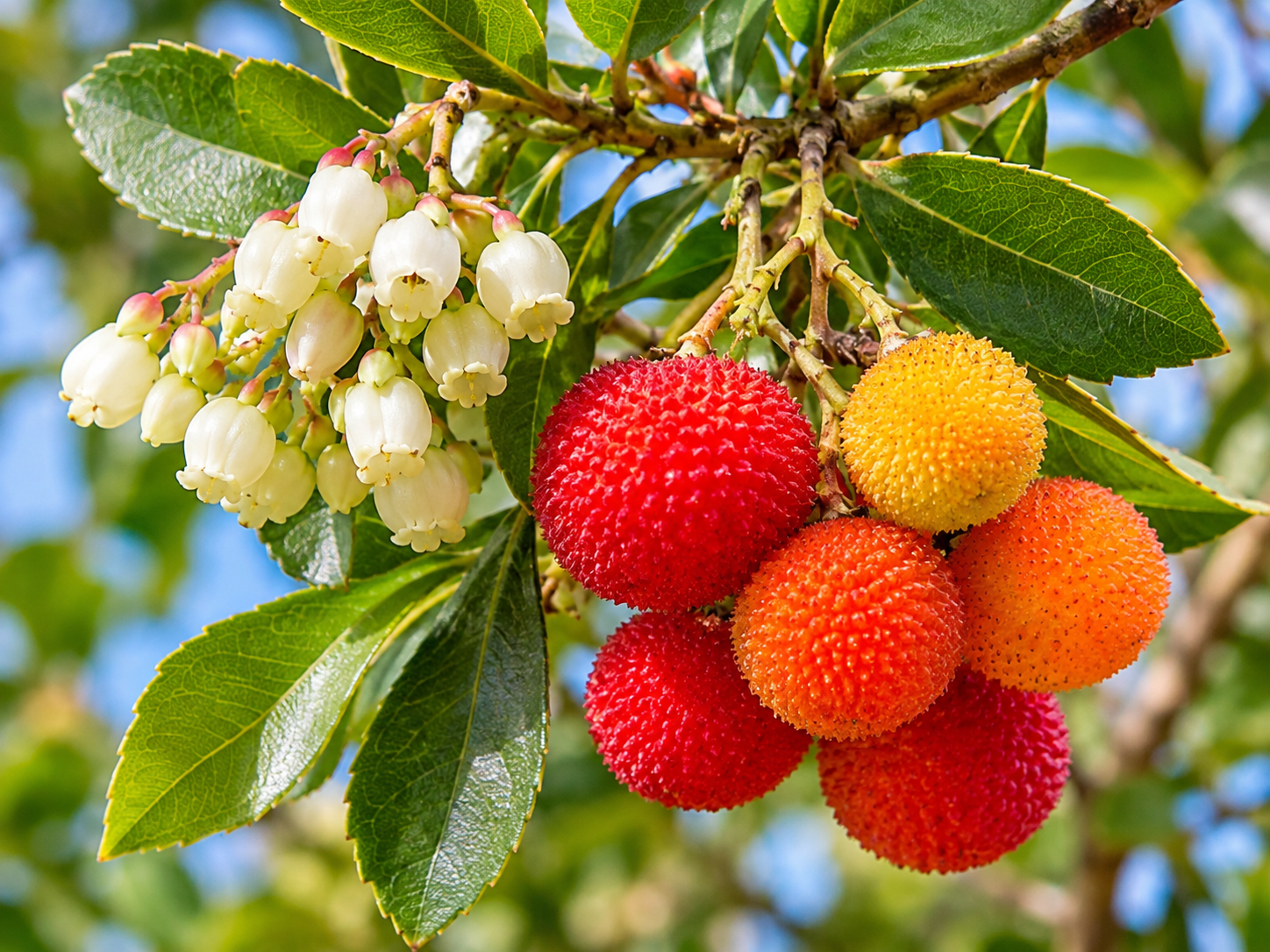
The pretty clusters of small, white or sometimes pink-tinged, bell-shaped flowers appear in autumn, generally between October and December. They are also an excellent source of nectar for bees and other pollinating insects.
But here’s the interesting bit: the fruits take approximately 10–12 months to ripen. So, while the tree is producing its new flowers, the fruits from the previous year’s flowering are turning bright red and becoming ready to pick.
This means you can often see flowers and ripe fruit growing side by side – a rather lovely sight in the autumn sunshine!
Picking and Using the Fruit
The fruits are best picked when they are a deep red colour and very soft to the touch. They are quite delicate and don’t keep particularly well, so it’s best to use them soon after picking.
Although they can be eaten fresh, their rather subtle flavour means they are more commonly used in jams, jellies and preserves. They are also fermented to produce alcoholic drinks, particularly in Portugal, where medronho (sometimes called strawberry tree brandy) is a traditional, rather potent spirit.
The fruit is also used to make liqueurs and other regional specialities around the Mediterranean.
Are There Any Health Benefits?
Strawberry tree fruits contain dietary fibre and various natural plant compounds, including polyphenols with antioxidant activity. They also contain vitamin C.
Extracts of the fruit and other parts of the plant have been investigated for possible antioxidant, antimicrobial and other biological properties. However, much of this research is still at an early stage, and traditional medicinal uses should not be confused with proven health benefits.
As with any fruit, enjoy them in moderation, particularly as their soft, sugary flesh can be rather rich!
Kakis (Persimmons)
Another winter fruit adding a wonderful splash of colour to our landscape is the persimmon, known as kaki in French.
Originally from China, where it has been cultivated for thousands of years, the persimmon gradually spread throughout Asia and was introduced to Europe during the nineteenth century. Today, it is particularly at home in the warmer parts of southern France, where the hot summers help the fruit to develop its sweetness.
The trees are attractive in their own right, with their large green leaves turning beautiful shades of yellow, orange and red in autumn. Once the leaves have fallen, the bright orange fruits can remain hanging on the bare branches, making quite a spectacular display.
What Do Persimmons Taste Like?
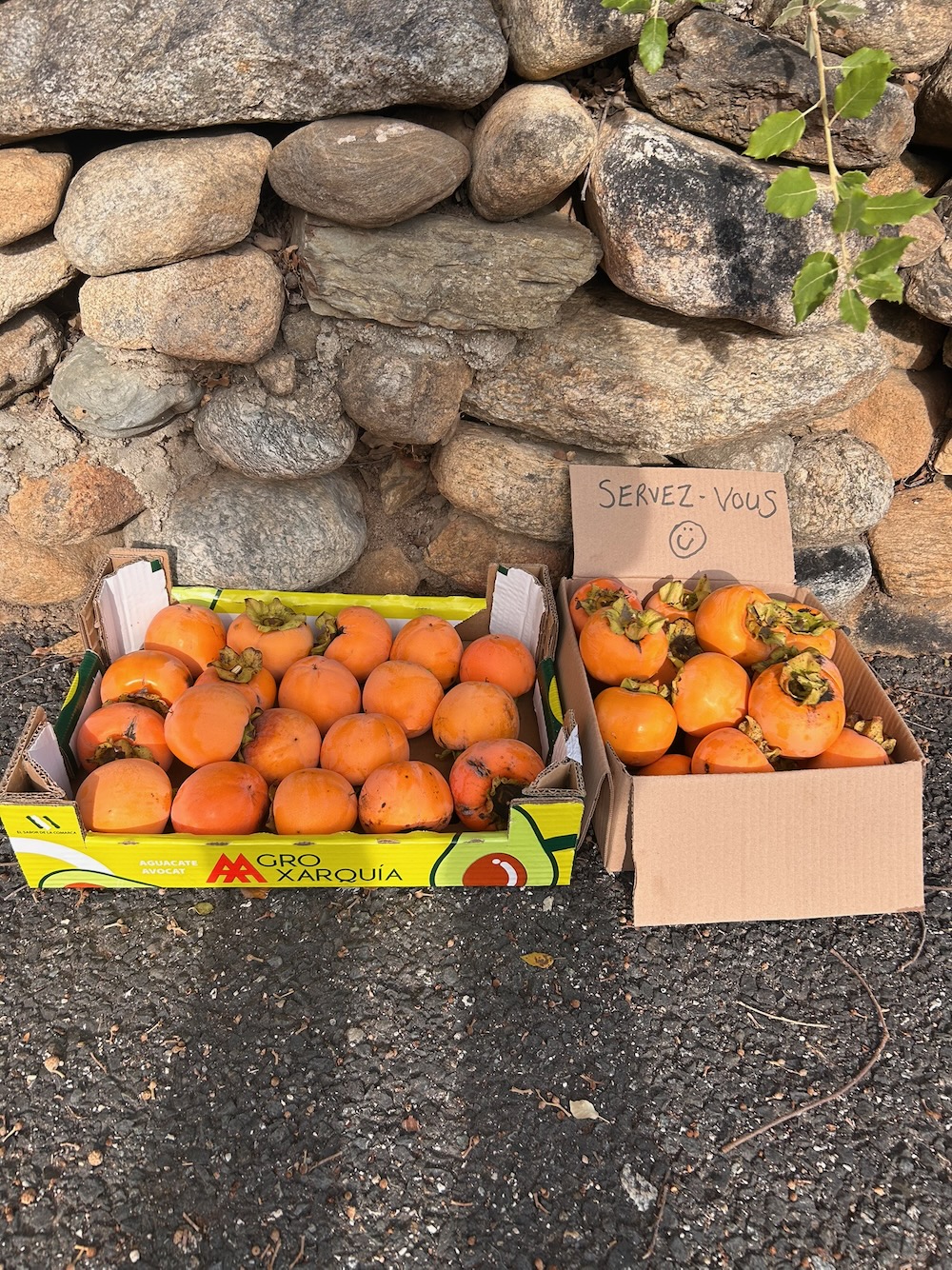
Persimmons are wonderfully sweet, with a soft, almost custard-like texture when fully ripe. Some varieties have a slightly fibrous flesh, and the flavour is often compared to a mixture of apricot, honey and melon.
The fruit varies in size and shape, from small and round to large and rather tomato-shaped. Depending on the variety, the skin can range from pale yellow-orange to a deep reddish orange.
There are two main types of persimmon:
- Astringent varieties: These contain high levels of soluble tannins when unripe and can leave an unpleasant, dry, puckering sensation in your mouth. They must be allowed to become very soft and fully ripe before eating.
- Non-astringent varieties: These can be eaten while still firm and crisp, rather like an apple, without the unpleasant astringency.
This distinction is important when buying them, as not all persimmons can be eaten while firm.
Growing Persimmons in the P-O
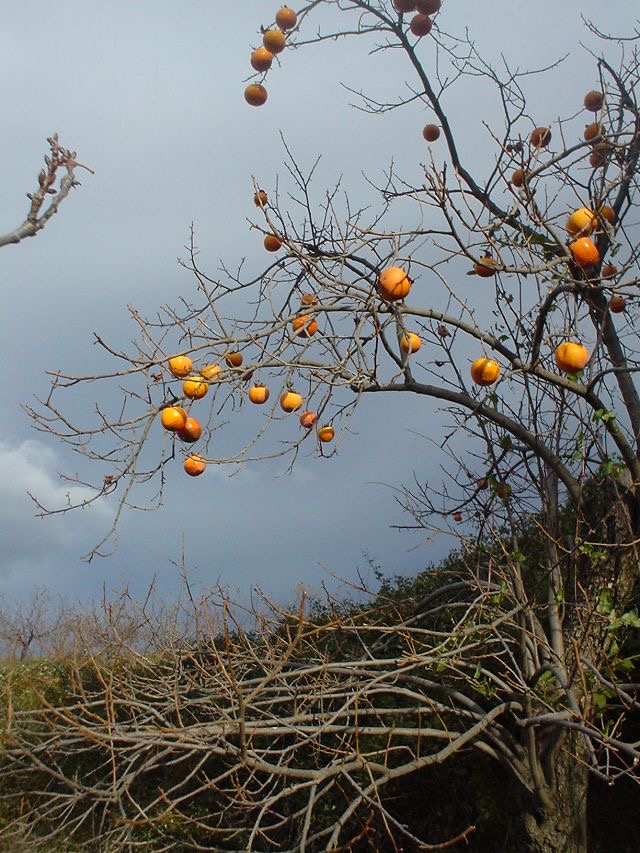
Persimmon trees grow particularly well in the warmer parts of the Pyrénées-Orientales. They appreciate hot summers and plenty of sunshine, making them well suited to our Mediterranean climate.
Several varieties are grown here, including non-astringent types such as Fuyu, which can be eaten while still firm. However, it is worth remembering that not all the persimmons you see locally will necessarily be non-astringent.
If you buy one and it tastes horribly dry and puckering, don’t throw it away! It may simply need more time to ripen.
A firm, mature persimmon can be left at room temperature to soften. Placing it in a paper bag with an apple or banana can speed up the process, as these fruits release ethylene, a natural ripening gas.
Health Benefits of Persimmons
Persimmons are a nutritious winter fruit and a good source of dietary fibre.
They also contain:
- Vitamin C, which contributes to normal immune function and helps the body absorb iron from plant-based foods.
- Beta-carotene, which the body converts into vitamin A, essential for normal vision, healthy skin and the immune system.
- Antioxidant compounds, including carotenoids and polyphenols, which help protect cells against oxidative damage.
They are also naturally sweet, making them a delicious alternative to more sugary desserts.
One word of caution: don’t eat unripe astringent persimmons. Their high tannin content can cause digestive problems, and eating large quantities has occasionally been associated with the formation of hard masses in the digestive tract.
A Little Seasonal Treat
Both the strawberry tree and the persimmon are lovely reminders of just how much colour and variety our Mediterranean countryside has to offer, even as winter approaches.
So, next time you’re out walking or driving around the P-O, keep an eye out for the bright red arbouses and the beautiful orange kakis. They’re two of the season’s little treats!
The arbousier flower makes one of the most highly prized (and elusive) of honeys. It is said to rival and even surpass the medicinal benefits of the much more famous manuka honey