
Fly the Flag! A Guide to the Flags of Catalonia
If you know Catalonia, particularly the south, you’ll be used to seeing Catalan flags draped from balconies, hanging outside houses and flying above official buildings. But how closely have you looked?
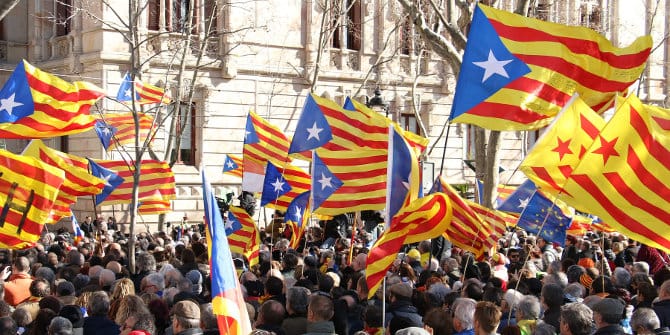
Although the colours generally stick to the familiar red and gold, there are several variations, each with its own meaning and significance.
Here are the main Catalan flags to look out for, and a little of the history behind them.
THE SENYERA (THE CATALAN FLAG)
This is the one most people recognise immediately: four red stripes on a golden background. The Senyera is the official flag of Catalonia and one of Europe’s oldest flags still in use.
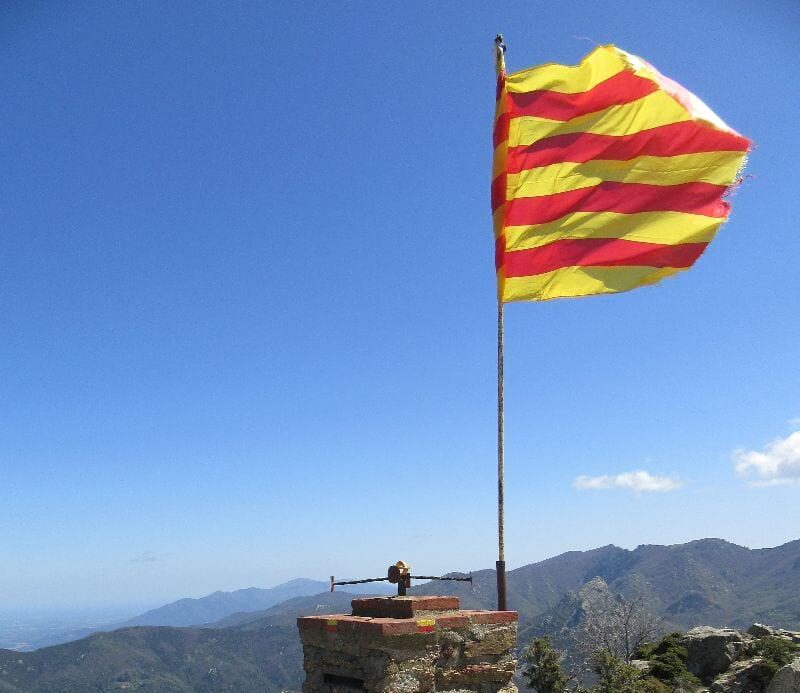
Its origins date back to at least the 12th century, when the four red bars appeared on the heraldic shield of the Counts of Barcelona. The design was first documented in 1150, although it is thought to be older.
There is a wonderfully romantic legend surrounding its origins. According to the story, Count Guifré el Pilós (Wilfred the Hairy) was wounded in battle. The Frankish king supposedly dipped his fingers into the count’s bloody wound and drew four red stripes across his golden shield, creating the famous four bars.
A great story, but almost certainly just that: a legend!
The historical origins are less dramatic, with the design developing as the heraldic symbol of the Counts of Barcelona before becoming associated with the Crown of Aragon and, eventually, Catalonia itself.
Today, the Senyera is proudly displayed on public buildings, at official events and throughout Catalonia as a symbol of its identity and heritage.
L’ESTELADA BLAVA (THE BLUE-STARRED FLAG)
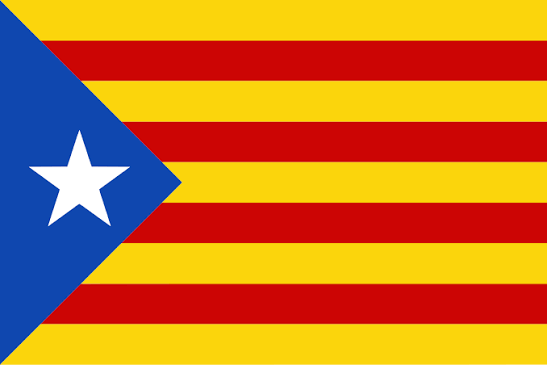
This more modern variation adds a blue triangle containing a five-pointed white star to the traditional red and gold stripes.
The Estelada is the flag of Catalan independence and is frequently seen at demonstrations, political gatherings and on balconies belonging to supporters of independence.
Unlike the Senyera, which has medieval origins, the Estelada is a relatively recent creation, emerging in the early 20th century. Its design was influenced by flags associated with independence movements, particularly that of Cuba.
The word estelada comes from the Catalan word estel, meaning star.
L’ESTELADA VERMELLA (THE RED-STARRED FLAG)
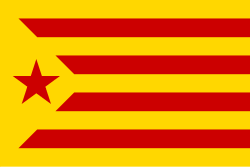
Another variation is the red Estelada, which is associated with socialist and Marxist currents within the Catalan independence movement.
There are different versions, but this flag generally features a yellow triangle with a red five-pointed star.
It is less commonly seen than the blue Estelada, but its colours give it a distinct political identity.
YOU MIGHT ALSO NOTICE…
L’ESTELADA NEGRA (THE BLACK-STARRED FLAG)
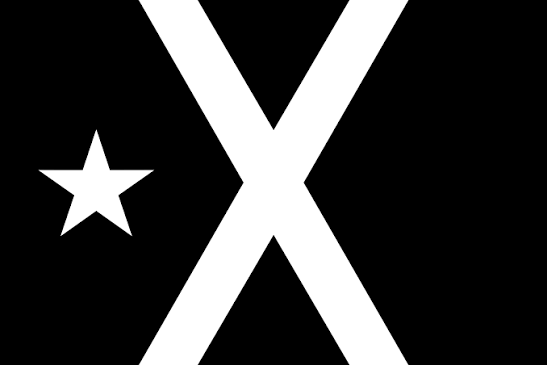
The black Estelada is another, less common variation, associated with more radical and anarchist strands of Catalan independentism.
It is important not to confuse this modern flag with the historic black banners associated with the defence of Barcelona during the War of the Spanish Succession.
During the siege of Barcelona in 1714, black flags became powerful symbols of resistance and the determination not to surrender. The words Viurem lliures o morirem (We will live free or we will die) are closely associated with this spirit.
The siege ended on 11th September 1714, a date now commemorated every year as Catalonia’s National Day, the Diada.
You will often see Catalan flags displayed particularly prominently on this date.
AND FINALLY… THE ROJIGUALDA (THE SPANISH FLAG)
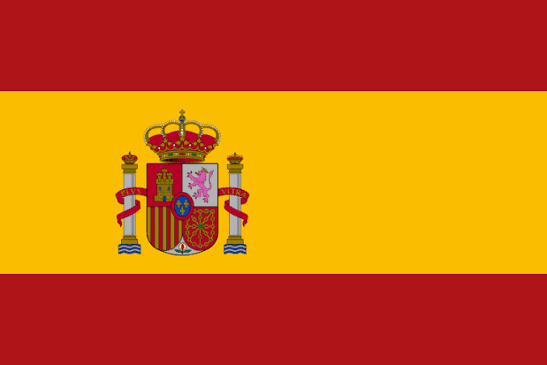
Of course, we shouldn’t forget the Rojigualda, the official flag of Spain.
With its two red stripes and wider golden stripe, complete with the Spanish coat of arms, it is instantly recognisable.
However, you’ll notice that it is considerably less common on balconies and buildings in Catalonia than the Senyera or the Estelada!
So, next time you’re wandering around Catalonia, take a closer look at the flags. Those familiar red and gold stripes might be telling you rather more than you think!