
Tragedy on Canigou
On the night of 6–7 October 1961, a Derby Aviation Douglas Dakota (G-AMSW) was flying from London Gatwick to Perpignan. After reporting over Toulouse, the aircraft headed towards its destination but deviated from its intended route. At around 01:00 GMT, it struck the Canigou massif in level flight at an altitude of approximately 2,200 metres. All 34 people aboard—31 passengers and three crew—died.
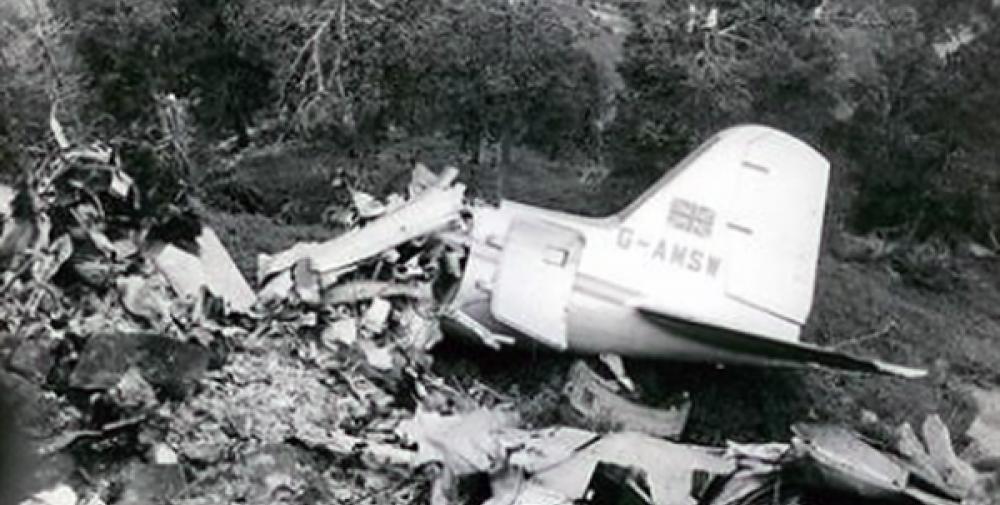
Twelve minutes from its destination
One of the most haunting details is how close the flight seemed to be to completing its journey. The crew had estimated arrival at Perpignan at 01:12 GMT. At 00:58, they were still communicating with the airport, asking about the weather. Around two minutes later, the aircraft struck the mountain. No distress call was recorded.
A misleading radio signal?
The official investigation attributed the crash to a navigational error, but there was insufficient evidence to establish what had caused it.
Investigators examined whether unreliable signals from the Toulouse radio beacon could have contributed to the aircraft’s deviation. Another pilot reported unusual behaviour from his direction-finding equipment that same night, but this possible explanation could not be confirmed.
Local speculation has also linked the accident to magnetic disturbances associated with Canigou’s iron deposits and historic mines. However, the investigation did not establish that such disturbances affected the aircraft’s instruments.
The accident is an example of what aviation specialists call Controlled Flight Into Terrain (CFIT): an aircraft striking the ground or a mountainside while still under the crew’s control.
Sixty-two years later, volunteers returned
Parts of the wreckage remained on the slopes for decades. On 23–24 September 2023, around 40 volunteers gathered for a major removal operation near the GR10 walking route.
Some pieces were embedded in the path; others lay beneath vegetation. Using cutting equipment, ropes and hand tools, volunteers freed the metal and carried some of it along the trail to the Cortalets refuge for onward transport. They also repaired a section of path damaged by the crash.
The operation removed substantial wreckage, although the organisers reported that some pieces still awaited collection afterwards—more than six decades after the tragedy.