
Fougasse; Catalan labourer’s bread
Look out for fougasse, the Catalan cousin of Italian focaccia, found in bakeries across the Pyrénées-Orientales.
At first glance, fougasse is instantly recognisable. Most versions are sculpted or slashed into patterns resembling an ear of wheat, giving the bread its distinctive shape and rustic charm.
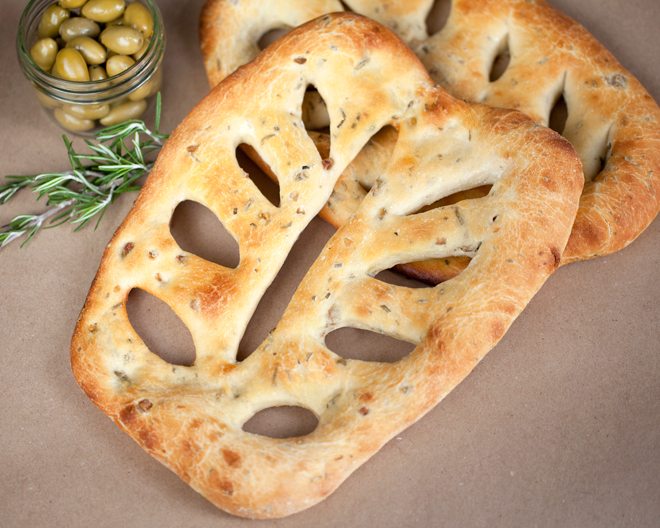
But these cuts were not just decorative.
According to tradition, the slashes allowed labourers to slip an arm through the bread and carry it over their shoulder on the way to the fields, leaving their hands free for tools and daily tasks. Whether entirely true or not, it’s a story that perfectly reflects the practical, no-nonsense spirit of rural life in the south of France.
Fougasse also had an important role in the baker’s routine. Before baking the day’s bread, it was used to test the temperature of wood-fired ovens. If the fougasse baked evenly, the oven was ready—if not, adjustments were needed. In this way, it was both a snack and a tool of the trade.
Today, fougasse comes in many delicious variations. Some are savoury, flavoured with olives, herbs, cheese or anchovies; others are sweet, scented with orange blossom and dusted with sugar, especially around festive periods.
Best enjoyed warm, perhaps with a drizzle of olive oil or alongside a glass of local wine, fougasse is more than just bread—it’s a small taste of Mediterranean life.
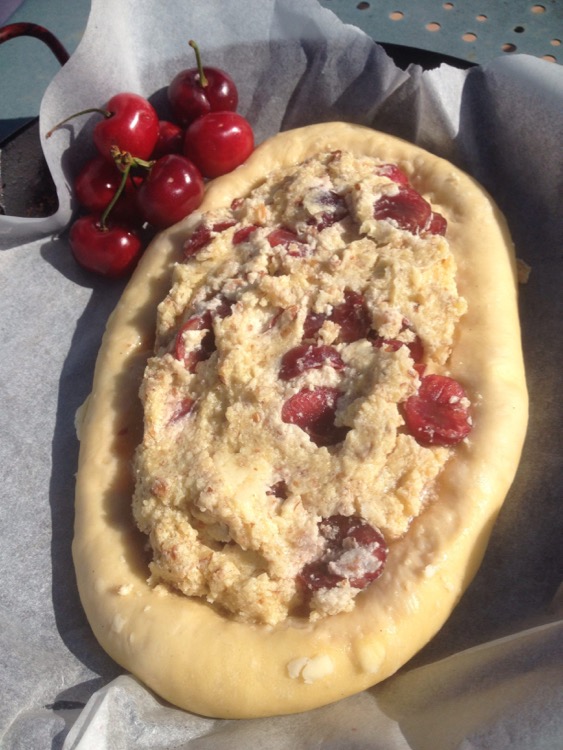
Fun Fougasse Recipe
Why not try making your own fougasse at home with a couple of recipes from our readers? It’s simpler than it looks—and a great way to bring a little southern sunshine into your kitchen.
Give it a go and let us know what you think in the comments below!
Sweet Cherry and Almond Fougasse…with Hilary
Fun Fougasse…..with Suzanne.
You can see a video of how to make focaccia on YouTube.
The Catalan fougasse is not very different, just doesn’t rise as well as the Italian one. And fougasse, the word, is from focus, the Latin word for hearth.