
The Blue Dragon: Could This Tiny Sea Slug Be Heading for the Pyrénées-Orientales?
A tiny, spectacular sea slug has arrived on the Catalan coast. Could Glaucus atlanticus eventually turn up on the beaches of the Pyrénées-Orientales?
It is barely a few centimetres long, looks almost as though it has been designed for a science-fiction film, and is capable of delivering a surprisingly painful sting.
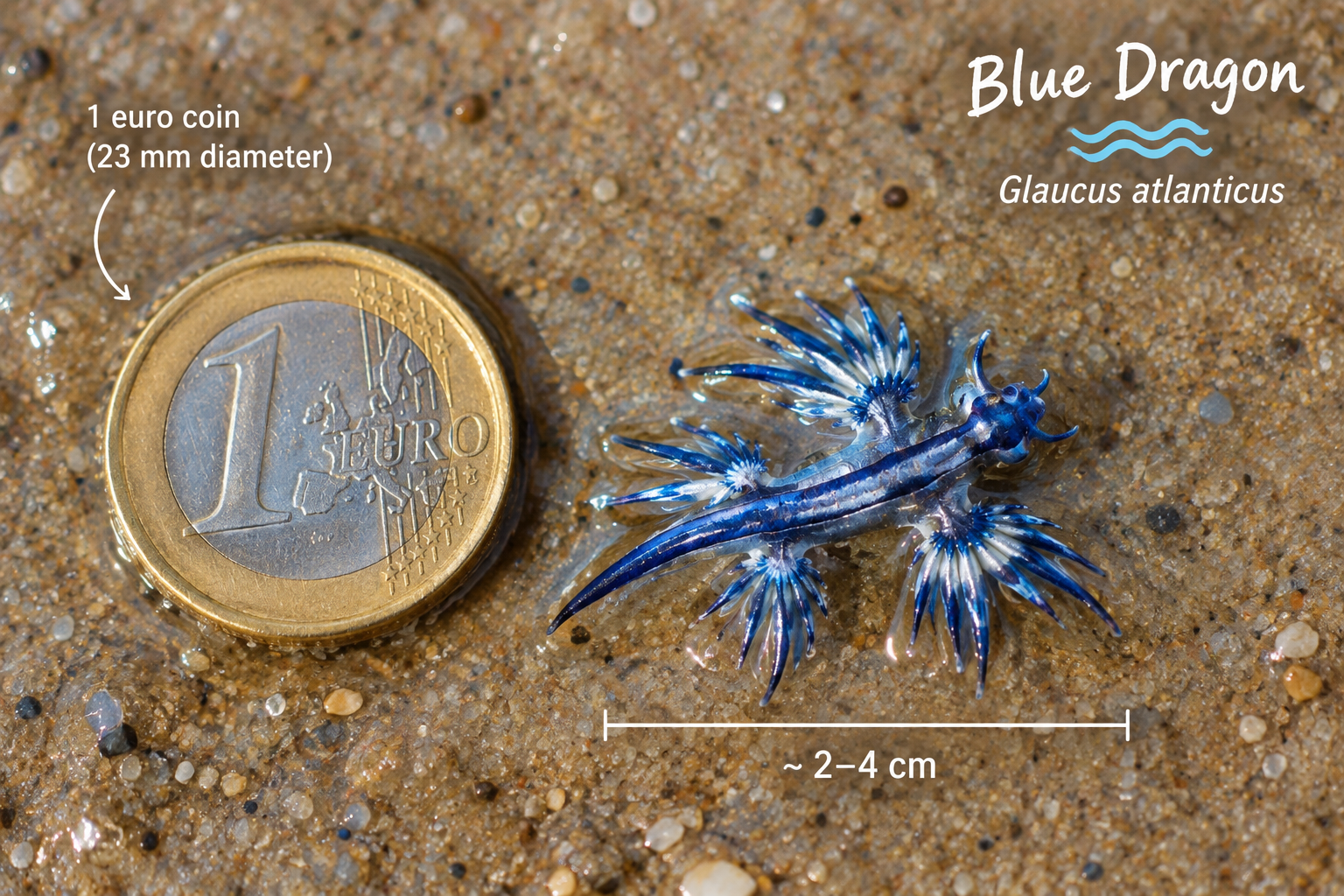
The blue dragon, Glaucus atlanticus, has recently been making headlines after specimens were discovered on the Catalan coast near Tarragona. The discoveries prompted temporary beach closures and raised questions about whether this exotic-looking marine creature could become a more familiar sight around the Mediterranean.
For those of us living on the French side of the border, there is an obvious question:
Could we find one here in the Pyrénées-Orientales?
The answer is yes — it is certainly possible. But there is no reason to panic, and there is currently no evidence that the blue dragon is about to become a common visitor to our beaches.
A dragon that is actually a sea slug
Despite its rather dramatic name, the blue dragon is not a dragon at all.
It is a tiny marine mollusc belonging to a group of animals known as nudibranchs, or sea slugs.
Its scientific name is Glaucus atlanticus, and adults are generally only a few centimetres long. What they lack in size they more than make up for in appearance.
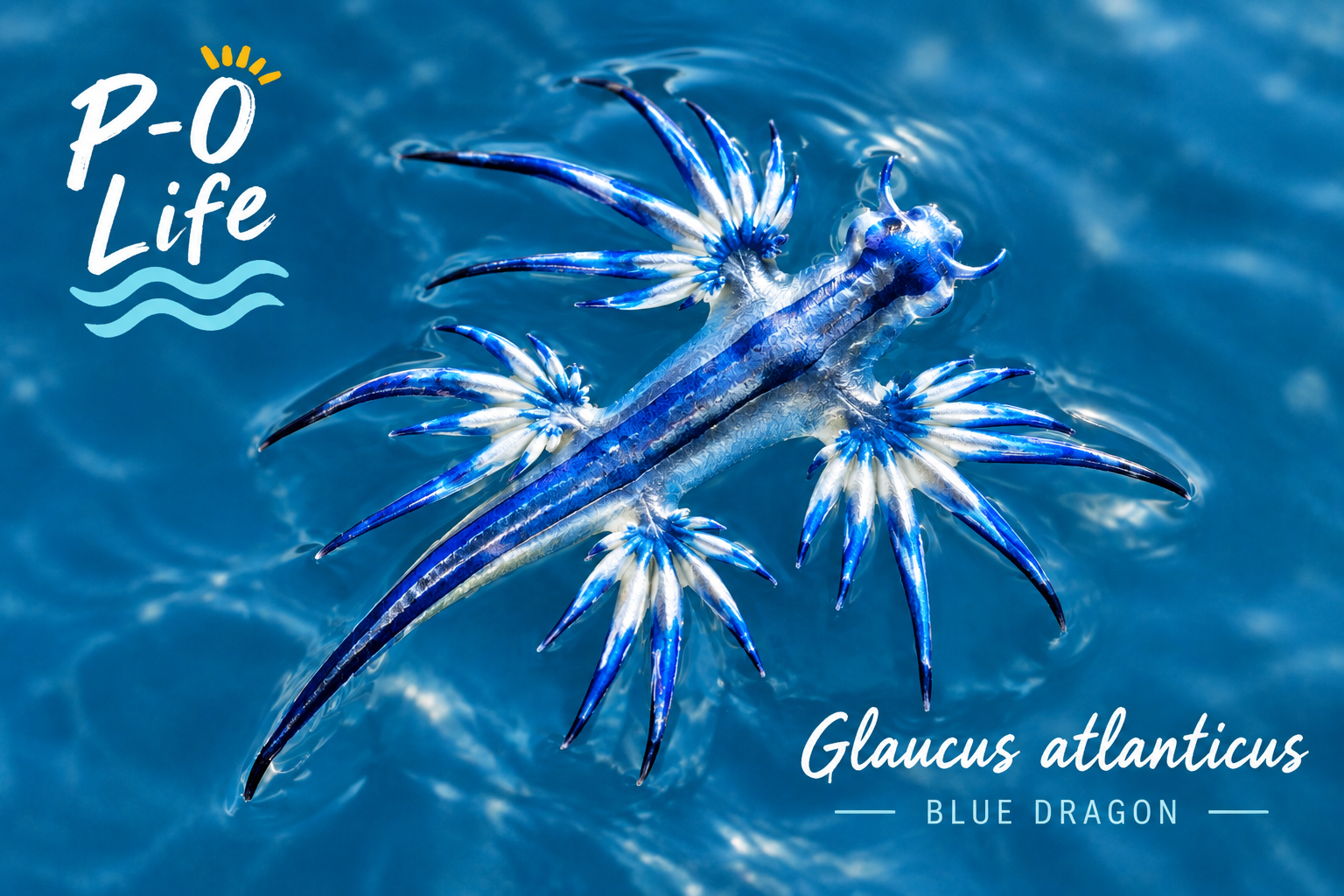
They have an extraordinary electric-blue and silvery colouring, with several branching, finger-like structures extending from the body.
Unlike most sea slugs, however, the blue dragon doesn’t crawl around on the seabed.
It is a pelagic animal, meaning that it lives in the open ocean, floating at the surface. It is frequently found upside down, using a bubble of air to help it remain at the surface.
And that unusual posture serves another purpose: its colouring provides camouflage against the light and colour of the sea.
Why does something so beautiful have a sting?
This is where the blue dragon becomes particularly fascinating.
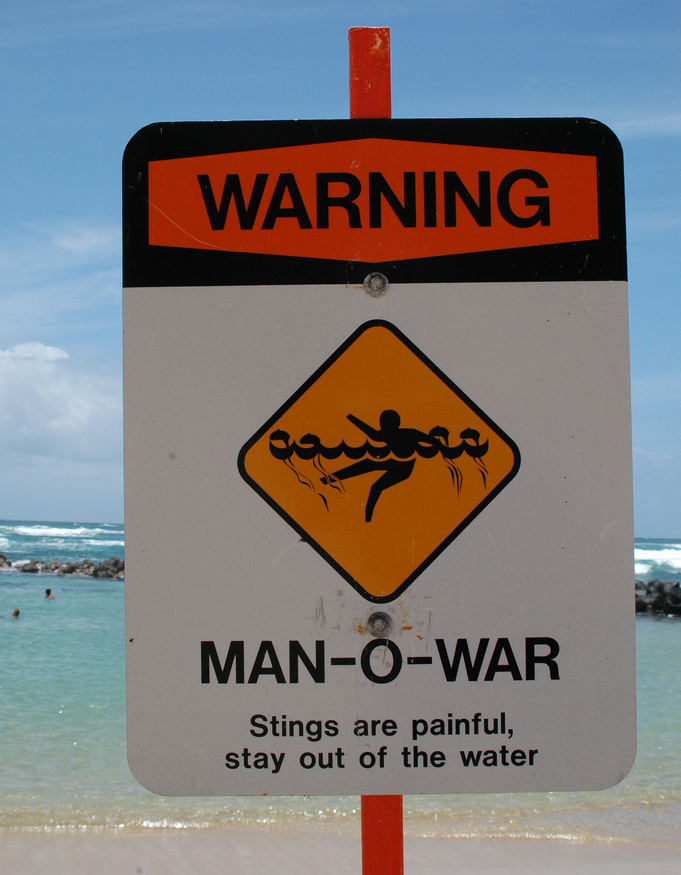
The animal is a predator of other floating marine creatures, including Portuguese man o’ war, which themselves possess powerful stinging cells.
The blue dragon has evolved the remarkable ability to retain those stinging cells from its prey and concentrate them in specialised structures in its own body.
In effect, it steals the weapons of its prey and uses them for its own defence.
This is why picking up a blue dragon can result in a painful sting.
It is therefore better described as an urticating or stinging animal rather than simply calling it a conventionally venomous mollusc.

The recent sightings in Catalonia
The story becomes particularly relevant to us because the recent sightings occurred on the Catalan coast.
In September 2025, three specimens were found washed up at Tamarit, in the Tarragona area. The animals were collected by the Catalan Rural Agents and subsequently transferred to researchers at the University of Barcelona for study. (El País)
The discovery attracted considerable attention because it represented, as far as was known at the time, the first documented appearance of the species on the Catalan coast.
That does not mean blue dragons have suddenly arrived in the Mediterranean.
The species has long been known from Mediterranean waters. What is unusual is its increasingly noticeable appearance in areas where it has previously been rarely observed.
Scientists are particularly interested in what these discoveries can tell us about changes taking place in the Mediterranean marine environment.
Is climate change bringing them north?
It would be too simplistic to say that “global warming has brought the blue dragon to Catalonia.” Sea temperature is only one part of the explanation.
Blue dragons live at the ocean surface, where currents, winds, storms and the distribution of their prey can transport them over considerable distances.
Nevertheless, rising Mediterranean temperatures may be making conditions increasingly favourable for warm-water species.
Recent ecological modelling suggests that climate change could expand suitable habitat for Glaucus atlanticus, allowing its range to extend towards higher latitudes.
More broadly, scientists have documented a process sometimes described as the tropicalisation of the Mediterranean — the arrival and establishment of species normally associated with warmer waters as the sea warms.
The blue dragon is therefore interesting not simply because it can sting. It may also be a tiny and spectacular indicator of a much larger transformation taking place beneath the surface of the Mediterranean.
Could it reach the Pyrénées-Orientales?
Quite possibly.
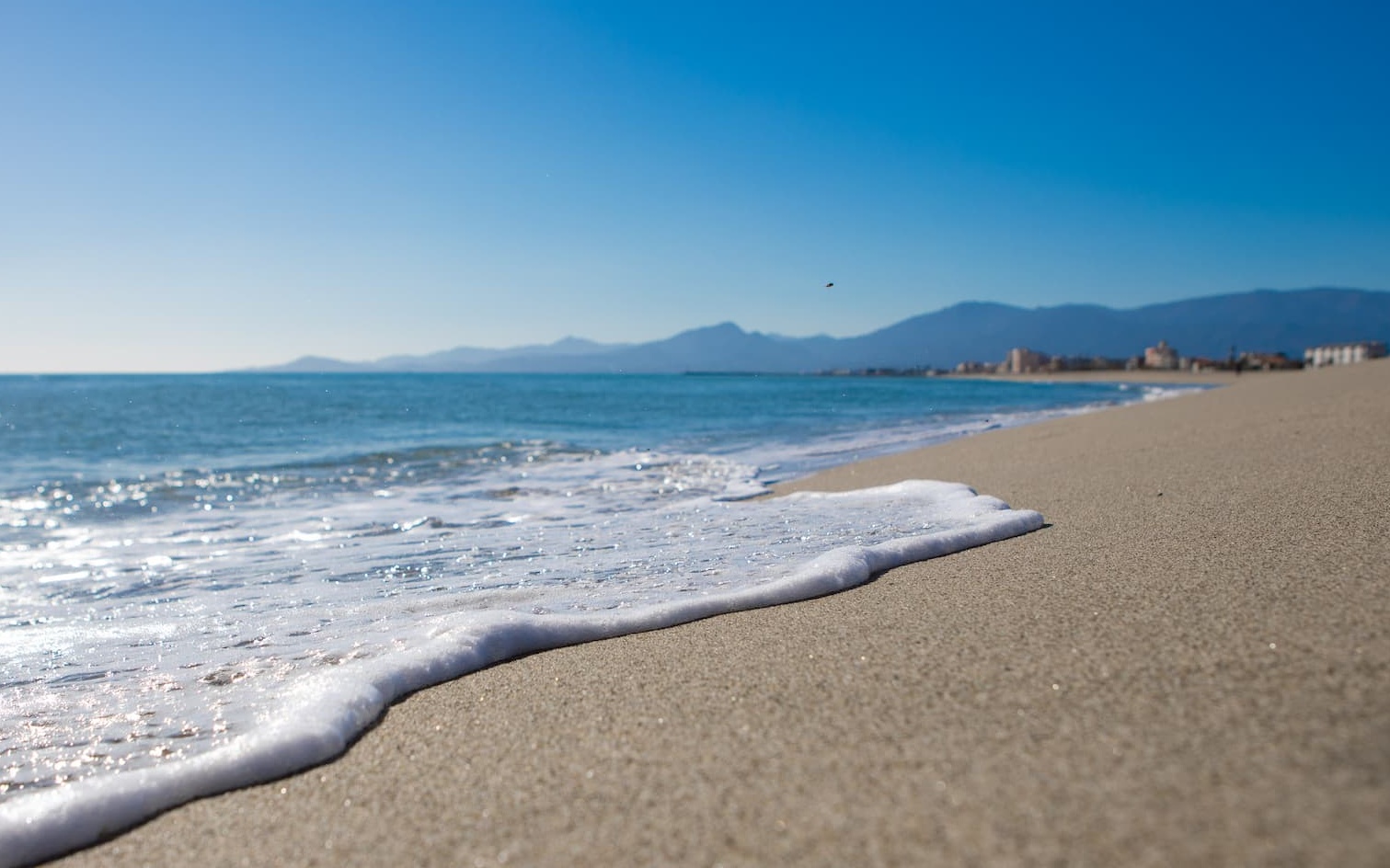
There is no geographical barrier separating the waters around Tarragona from those off the Côte Vermeille.
Our coastline — from Argelès-sur-Mer and Collioure through Port-Vendres, Banyuls-sur-Mer and Cerbère — is part of the same western Mediterranean system.
A surface-floating animal transported by currents and wind could theoretically reach our coastline from the south.
Main ne vous inquètez pas. That does not mean that blue dragons are about to become commonplace here. They remain relatively unusual animals, and finding one washed onto a beach is a very different thing from having a large resident population offshore.
But as Mediterranean waters continue to warm and marine species change their geographical ranges, occasional appearances would not be particularly surprising..
What should you do if you see one?
Simple: Don’t touch it, not even if it appears to be dead. A stranded blue dragon may still possess functioning stinging cells.
Children should be kept away from it, and nobody should attempt to pick it up, carry it home or return it to the sea. Better to alert the lifeguards or local authorities and let them decide what to do.
What if you are stung?
For most people, the reaction is likely to be local: pain, burning, itching, redness or a rash. However, any marine sting can potentially cause a more serious reaction, particularly in someone who is sensitive or allergic.
The first priority is to get safely out of the water. A painful sting can cause panic, and panic in deep water can itself become dangerous.
Once safely ashore, don’t rub the affected area as rubbing can cause remaining stinging cells to discharge.
Don’t rinse it with fresh water. Seawater is generally preferred for rinsing marine stings because fresh water can trigger further discharge from some types of stinging cells.
Don’t improvise with household remedies. Advice regarding vinegar, heat and other treatments varies according to the species involved, so follow the instructions of lifeguards or medical professionals.
When should you call for help?
A serious reaction requires immediate medical attention.
Call 15 or 112 if someone develops:
- Difficulty breathing
- Swelling of the tongue, lips or throat
- Widespread hives or swelling
- Severe dizziness or fainting
- Loss of consciousness
- Severe or rapidly worsening symptoms
If someone is stung while swimming and gets into difficulty in the water, alert lifeguards immediately.
The important thing is not to create a second casualty by attempting a rescue beyond your own abilities.
Blue dragon or Portuguese man o’ war?
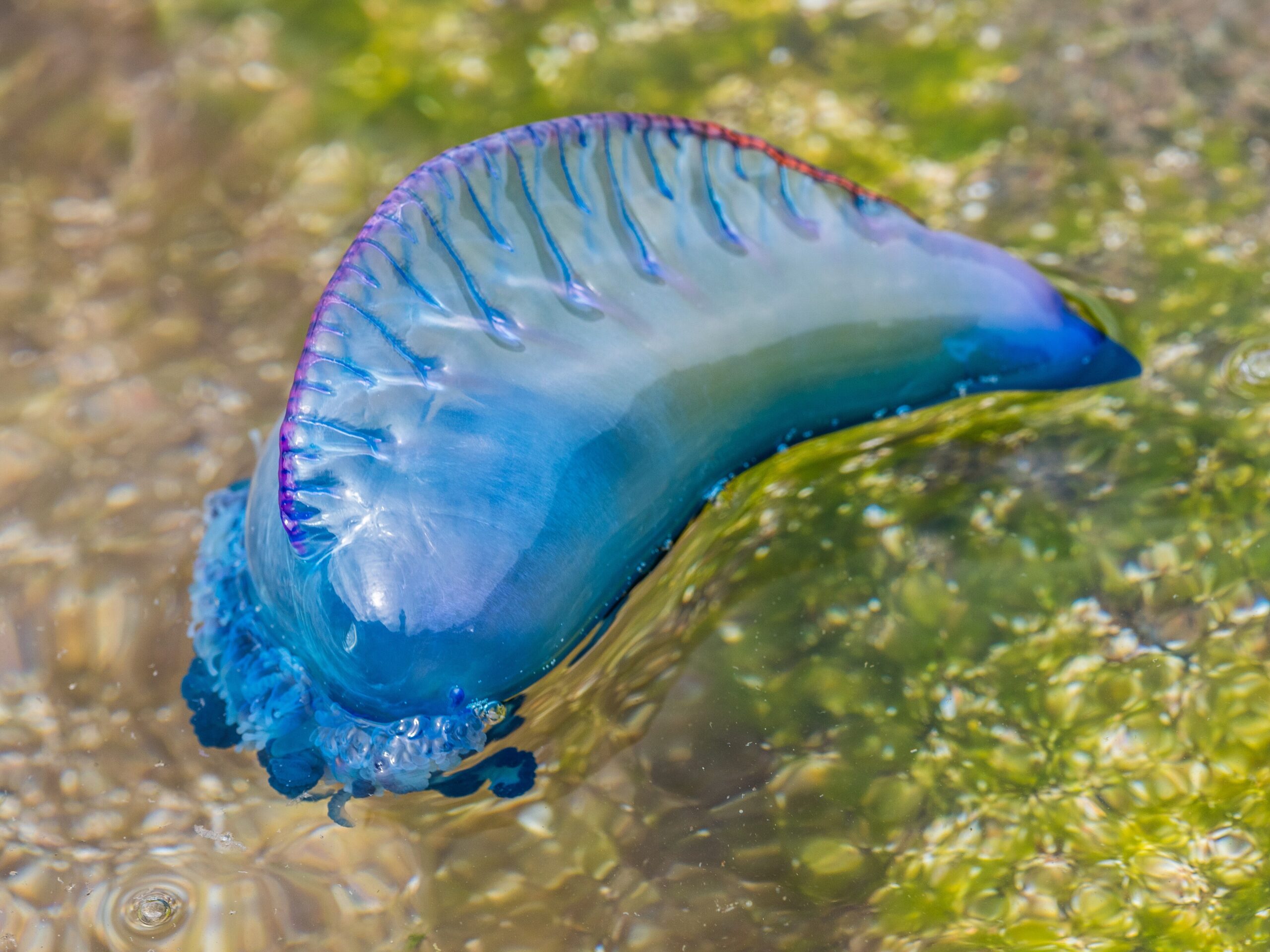
The two are sometimes mentioned together, but they are very different animals.
The Portuguese man o’ war is a much larger floating colonial organism, capable of producing a much more substantial sting.
The blue dragon is a tiny sea slug that actually feeds on creatures such as the Portuguese man o’ war and uses their stinging cells for its own defence.
So if you see a blue dragon, you are looking at one of the Mediterranean’s more remarkable examples of evolutionary ingenuity.
Should swimmers in the Pyrénées-Orientales be worried?
Probably not. There is no reason to stop swimming, snorkelling or enjoying the Mediterranean because of the blue dragon. The chances of encountering one remain small.
But there is a sensible lesson here. The Mediterranean is changing, and the animals we encounter in it can change with it. Warmer seas, changing currents, marine heatwaves and shifting ecosystems mean that species once considered unusual in particular areas can increasingly turn up in unexpected places.
For beachgoers in the Pyrénées-Orientales, the sensible approach is therefore not fear but awareness.
And if something extraordinarily beautiful and brilliantly blue washes up on the beach, admire it from a safe distance.
THE BLUE DRAGON — AT A GLANCE
Scientific name: Glaucus atlanticus
Common names: Blue dragon, blue sea dragon, blue glaucus
Type: Marine mollusc / nudibranch
Typical size: Around 2–4 cm
Habitat: Open ocean, usually at the surface
Diet: Floating stinging organisms, including Portuguese man o’ war
Why can it sting? It concentrates stinging cells obtained from its prey
Can it occur in the Mediterranean? Yes
Could it reach the Pyrénées-Orientales? Yes, although sightings remain unusual
What should you do if you see one? Don’t touch it; alert beach staff or local authorities
Emergency number in France: 15 or 112