
Behind the Curtain at Cirque du Soleil’s Ràdio Andorra
with Rosaleen Bond
Up where the air is a bit fresher just beyond the P-O, in the temporary theatre in the centre of Andorra la Vella, there’s something rather special about watching Cirque du Soleil. Unlike the touring productions seen around the world, this is a show created especially for the Principality, inspired this year by the story of the legendary Ràdio Andorra, the radio station that once broadcast across Europe from the heart of the Pyrenees.
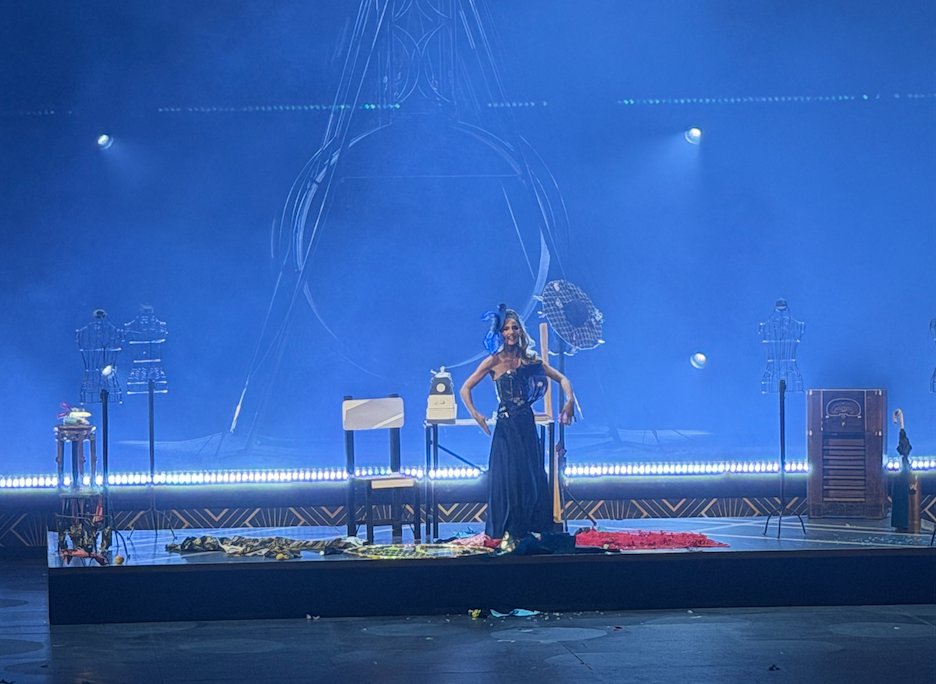
Before taking my seat, I was invited backstage to meet the artists and crew, hear their stories and discover what goes into creating the magic. It completely changed the way I watched the performance.
I expected organised chaos behind the curtain. Instead, I found something surprisingly calm.
While members of the technical crew quietly ate dinner before the show, the artists prepared in their own way. There wasn’t a room full of make-up artists working through the cast. Each performer sat quietly at their own station, carefully recreating the same look they wear every evening. Some followed printed step-by-step guides pinned beside the mirror. Others worked from photographs, checking every detail until it was exactly right.
Watching them prepare felt strangely personal. It wasn’t glamorous or theatrical. It was focused, familiar and almost meditative, the kind of routine that comes from repeating the same ritual night after night.
Nearby, beautifully detailed costumes hung neatly on rails, each labelled with the performer’s name. Designed by Canadian costume designer Jessica Poirier-Chang, every outfit has to stretch, support, climb, spin and survive the extraordinary demands of a Cirque du Soleil performance. Once the audience leaves each night, the wardrobe team carefully inspects every costume, repairing seams and replacing embellishments so they’re ready to do it all again the following evening.
It’s the kind of work audiences never see, yet without it the magic couldn’t happen.
Meeting the artists was equally fascinating.
This year’s production brings together performers from across the world, each arriving with a very different story. Some grew up in circus families, while others came through elite sport, dance or gymnastics.
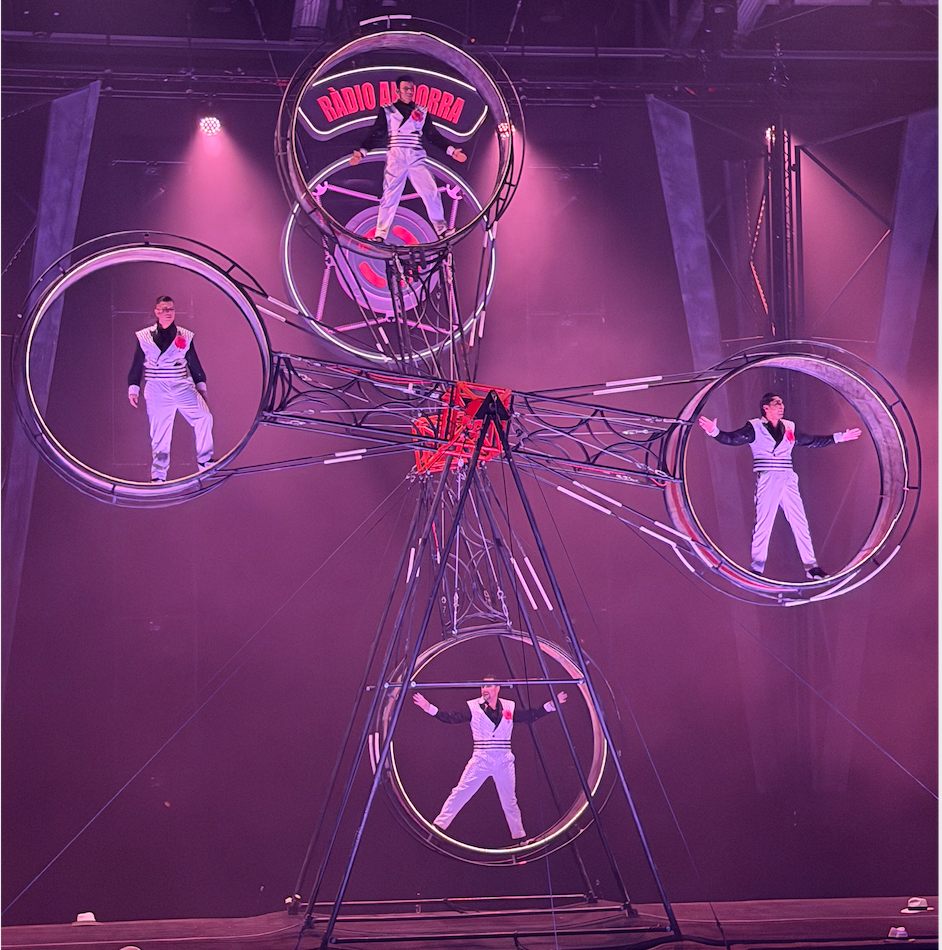
Australian performer Jansen Marty Grant was born into circus life. For him, performing has always felt natural. He performs the spectacular Wheel of Death alongside artists from Colombia and Argentina. They don’t share a common language, yet they work together with complete trust. As Jansen explained, they don’t need the same language when they’re performing. Timing, trust and years of training do that for them.
Fellow Australian Tyson Bull arrived at Cirque du Soleil by a very different route, first representing Australia as an Olympic gymnast. Watching him on stage later that evening, it was easy to see how athletic ability becomes something more than sport when it’s woven into storytelling.
The production itself is inspired by Ràdio Andorra, which broadcast between 1939 and 1981, carrying music and entertainment far beyond the mountains. The story follows two strangers living thousands of kilometres apart who unknowingly request the same song at exactly the same moment. Curious about the coincidence, they each set off across Europe in search of one another, connected only by invisible radio waves.
It’s a simple story, but one that beautifully captures the idea of connection.
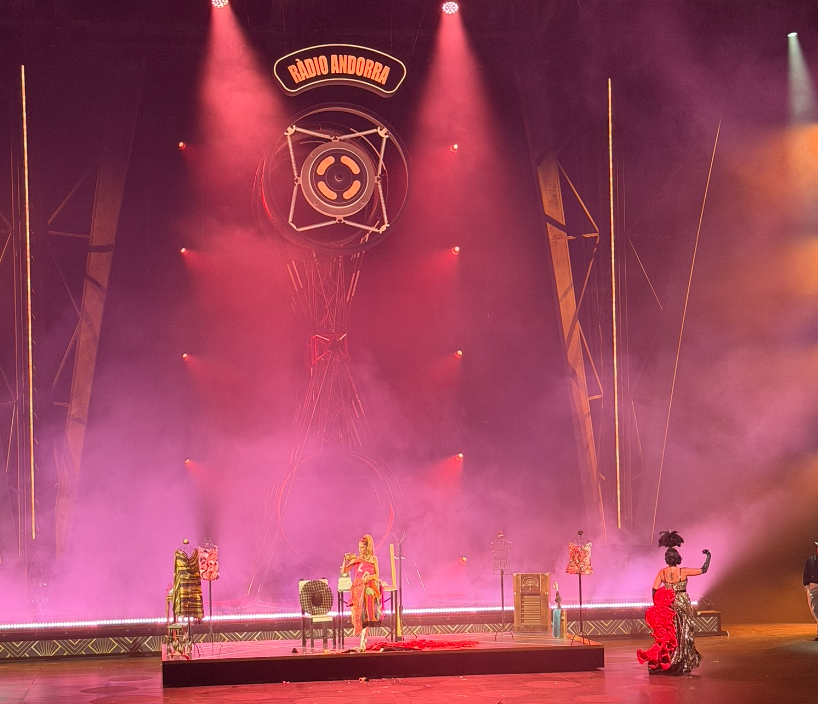
As the lights dimmed and the singers’ voices filled the theatre, I realised I wasn’t watching the show in quite the same way as everyone else. Earlier, I’d watched performers quietly applying their make-up, technicians making final checks and costumes waiting patiently for their cue. Now those same people had transformed into acrobats, musicians and storytellers.
The intimate theatre, seating just over 3,000 people, makes the experience feel remarkably immersive. You can see the performers’ expressions, hear their footsteps and feel the energy they bring to every movement. Sitting so close during the fire act and aerial performances, I found myself instinctively holding my breath alongside the rest of the audience.
Of course, this is Cirque du Soleil, so the storytelling is only part of the experience.
There are breathtaking aerial performances that leave the audience collectively holding its breath, illusions, moments of comedy that have children giggling one minute and adults laughing the next, and a spectacular fire act that somehow feels even more dramatic because you’re sitting so close to the stage.
What stayed with me most, though, wasn’t a single stunt or illusion. It was the people behind them.
For just over an hour they tell one story together. Behind the curtain, they’re individuals from different countries, cultures and backgrounds. In many ways, that’s what makes Ràdio Andorra such a fitting production. It’s a story about invisible connections bringing people together across borders. Looking around the cast, I realised they were living that story every night.
The theatre’s central position makes it easy to combine with an evening exploring the town or enjoying dinner nearby. If you’d rather eat at the venue, there’s a food area open from 8pm, and arriving before 9.40pm means you’ll also catch the pre-show entertainment that adds to the atmosphere before the performance begins.