
Festa Major de la St Ferréol
..September 18th 2026
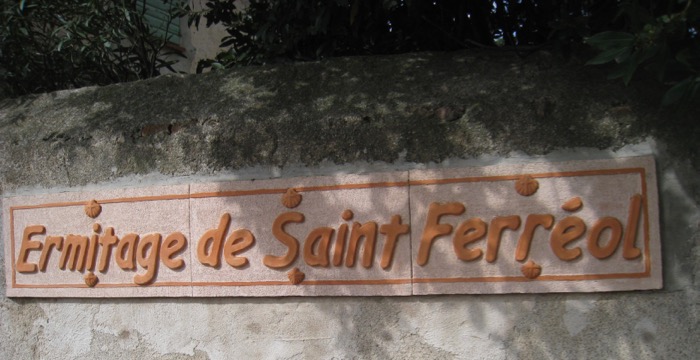
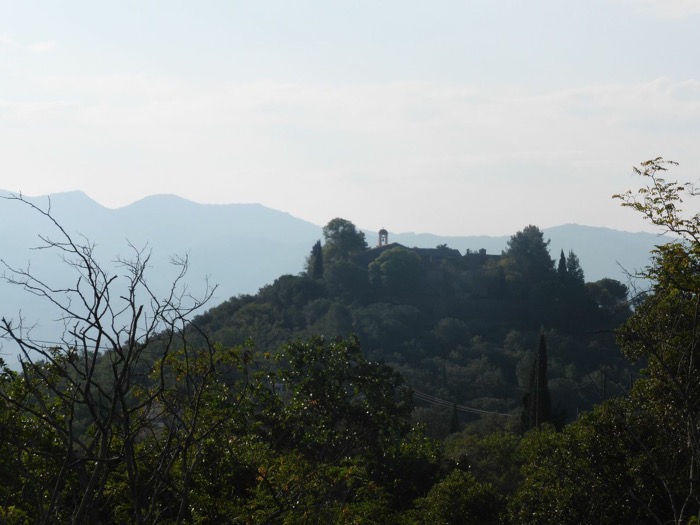
Set high above Cérêt,, at around 300 metres above sea level, the Ermitage de Saint-Ferréol is one of those places where the history of the landscape, the town and its people all come together.
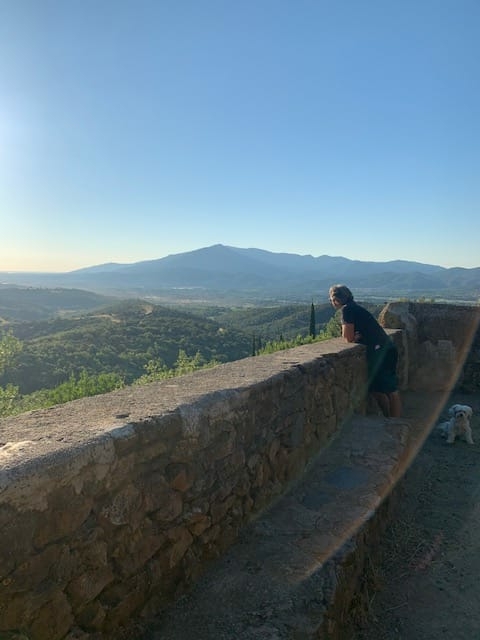
Sitting on a rocky plateau surrounded by holm oaks, the site has magnificent views across the Tech valley towards the Albères and the Canigou.
The chapel itself is thought to stand on the site of an earlier sanctuary and was established by Benedictine monks from the Abbey of Arles-sur-Tech. The hermitage is first mentioned in written records in 1235, when it formed part of a bequest by Raymond de Llauro.
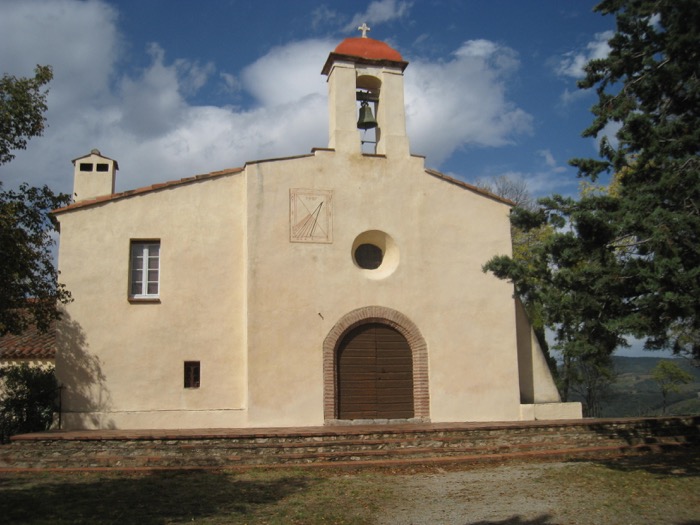
Its importance grew during the 13th century when fragments of the relics of Saint Ferréol and Saint Julien were brought here for safekeeping during the Albigensian Crusade. Saint Ferréol himself lived in the 3rd century and became an important figure of devotion in the region. The presence of his relics transformed the little chapel into a place of pilgrimage, and generations of people from Céret and the surrounding area came here to pray for his protection and intercession.
The relics are still preserved in 18th-century bust-shaped reliquaries inside the sanctuary, while a number of ex-votos bear witness to the prayers and thanks of those who believed they had received the saint’s help.
The chapel we see today is largely the result of a much more ambitious rebuilding in the 1770s.
As the number of pilgrims grew, the earlier building was no longer large enough, and work on a new sanctuary began in 1772, continuing until around 1775.
The present chapel is a relatively simple building externally, but inside it takes the form of a Latin cross, with a nave, three altars and a gallery above the entrance. Its religious furnishings include retables, statues, paintings, murals, stained glass and a wrought-iron grille separating the nave from the transept. The simplicity of the exterior therefore gives little indication of the richness of the interior.
Look out too for some wonderfully tangible details of the chapel’s past. The three bells — Maria, Margarita and Salvaterra — date from 1608. A sundial bearing the words Ultimam Time (“Fear the last hour”) was recreated in 2004, while dates and protective symbols from the old buildings, including 1721 and 1722, have been reproduced on the roofline following restoration work.
And then there is one particularly intriguing inscription. Carved into the chapel’s pink marble holy-water font is the extraordinary story of Llaurens Cros, described as a native of Ille and a hermit of Saint Ferréol who had spent 44 years as a slave in Constantinople.
Llaurens Cros, fill d’Illa ermita de Sant Ferriol, estat 44 anys esclau a Constantinople, 1705″, (“Laurent Cros, native of Ille, hermit of St Ferréol, was a slave in Constantinople for 44 years”)
The inscription, dated 1705, simply records his story without explaining how he came to be enslaved or how he eventually returned to become a hermit here. It is one of those tiny details that makes a visit to Saint-Ferréol feel much more personal — a reminder that the history of this peaceful hilltop sanctuary is full of lives and stories that we can only partly reconstruct.
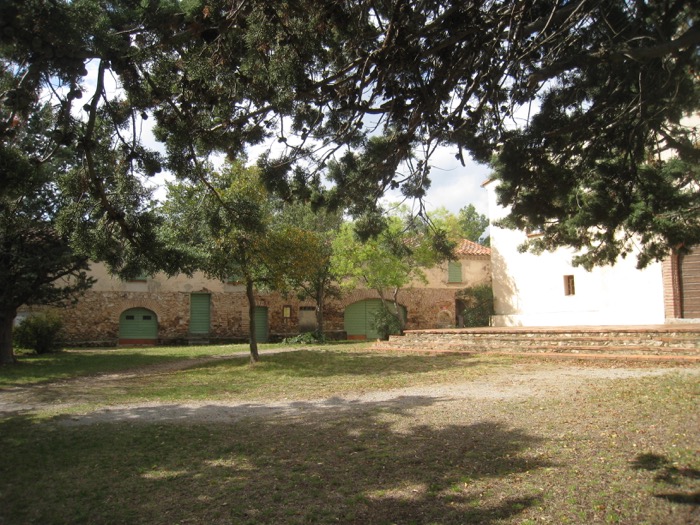
The chapel and its surrounding buildings have not always had an easy history. The hermitage was caught up in the turmoil of the French Revolution and the Franco-Spanish conflicts of the 1790s, and in 1975 a fire destroyed the adjoining buildings, although the chapel itself survived. Restoration work subsequently helped preserve the site and its distinctive features. More recently, the chapel’s historic retables and sculptures have undergone restoration, with work completed in summer 2026.
The Festa Major
Every year on 18 September, Céret celebrates the Festa Major de Sant Ferréol, continuing a tradition that dates back centuries.
The festival has its roots in 1655, when the people of Céret attributed the end of a devastating outbreak of plague to the intercession of Saint Ferréol. The annual pilgrimage traditionally begins at dawn, with people making their way up to the hermitage, historically by lantern and on foot, for religious ceremonies and the veneration of the relics.
The solemnity of the procession and Mass is followed by the more convivial side of the celebration — traditional music and dancing, food, drink and a communal meal — bringing the hilltop hermitage to life and turning this otherwise peaceful spot into one of Céret’s most atmospheric local celebrations.
So, if you’re heading up for the Festa Major, don’t just think of it as a lovely picnic spot with a good view. Go inside the chapel. Look at the retables and statues, find the old bells, search out the inscription of Laurent Cros and take a moment to appreciate the relics and ex-votos. The building may look modest from the outside, but it contains more than seven centuries of Céret’s religious and social history.
Organised terroir meal, pack a picnic or book one of the local restaurants? However you choose to celebrate, the Festa Major is a lovely opportunity to experience Saint-Ferréol as generations of Cérétans have done — as both a place of pilgrimage and a place to gather.