
UPDATED SEPTEMBER 2026
Moving to France: Your First Step Is Getting the Right Visa
 So — you’ve decided you want to move to France. Exciting! The food, the sunshine, the culture… it’s a dream for many.
But before you can start your new life, there’s one essential piece of French administration to sort out: making sure you have the right immigration status for your situation.
For people coming from outside the EU/EEA or Switzerland, that will often mean applying for a long-stay visa before moving to France.
And getting this first step right matters.
Why Does the Visa Matter?
Think of your visa as the first key to your new life in France.
Depending on your nationality and circumstances, it determines whether you can live in France for an extended period and, depending on the category, whether you can work, study, run a business or simply live here without working.
For stays of more than 90 days, most non-EU nationals need a long-stay visa unless they fall within an exemption. EU, EEA and Swiss nationals do not need a French long-stay visa to move to metropolitan France. (France-Visas)
Choosing the correct category from the beginning is therefore important. Your visa or residence status can affect what you are allowed to do once you arrive — including whether you can work.
And remember: buying a house in France does not, by itself, give you the right to live here.

Common Long-Stay Visa Options
There isn’t one single “French visa”. The appropriate route depends on why you want to come to France.
Some of the categories that are particularly relevant to people moving here include:
VLS-TS salarié
For people coming to France to take up employment with a French employer, subject to the relevant conditions and work authorisation requirements.
Entrepreneur / profession libérale
For people intending to establish or participate in a business, commercial, industrial, agricultural or craft activity, or to work as a liberal professional in France.
The official France-Visas category is “entrepreneur/profession libérale”. Applicants have to demonstrate, among other things, the viability of a new business project or sufficient resources in the case of an existing liberal activity.
Talent
Formerly commonly referred to as the “Passeport Talent” route, this covers a range of situations involving highly qualified employees, researchers, entrepreneurs, investors, artists and other qualifying profiles.
The rules and qualifying criteria vary considerably depending on the particular Talent category, so this isn’t a general-purpose visa for anyone who considers themselves “talented”!
Visitor
If you want to live in France but do not intend to work, the long-stay visitor visa is an important option, particularly for many retirees and people living from pensions, investments or other resources.
The visitor route requires applicants to demonstrate resources, accommodation and medical cover, and to undertake not to engage in professional activity in France.
One Important Point: There Is No One-Size-Fits-All Checklist
This is where many would-be residents get caught out.
Each visa category has its own requirements, and the precise list of supporting documents can also depend on your nationality and the country where you are applying.
The official France-Visas site specifically warns applicants to use its online visa assistant to establish which documents apply to their individual circumstances.
So don’t rely on a friend’s checklist from three years ago — or even on a checklist you find in an expat Facebook group.
Your circumstances may be different.
And yes, it is still sensible to keep your paperwork organised and have good documentary evidence for your application. But rather than simply taking every conceivable piece of paper with you, start with the official checklist generated for your particular application and make sure you can substantiate the information you have provided.
Start With France-Visas
The best place to begin is the French government’s official France-Visas website.
It has an online assistant which helps determine whether you need a visa and, if so, which type and what supporting documents are required. It also explains where you need to submit your application.
Don’t start with Facebook. Don’t start with an expat forum. And don’t start by copying somebody else’s application.
Facebook groups and forums can be fantastic for hearing how other people managed the process. They’re also good for moral support! But keep in mind: what worked for someone in Paris may not be the same in Perpignan, or in your country of application. Always check advice against the official sites before relying on it.
So use Facebook for experience and community.
Use France-Visas and the French administration for the rules.
Where Do You Apply?
For most people who require a first long-stay visa, the application is made before moving to France, through the French consular system serving the country where they legally reside.
The exact procedure varies from country to country.
In many countries, France uses an external visa application centre to receive applications and biometric information. Depending on the country, this may be TLScontact, VFS Global or another designated provider. The French consulate remains responsible for the decision on the visa.
This is one reason we no longer recommend simply saying “book with TLScontact or VFS Global”.
You must check the France-Visas page for the country where you are applying to find out which provider and application centre currently applies to you.
The system can change.
The Basic Process
Although the details vary, the process generally looks something like this:
1. Check whether you need a visa.
Your nationality and circumstances matter.
2. Use the France-Visas visa assistant.
This identifies the appropriate visa category and supporting documents.
3. Complete your application online.
Make sure the information matches your supporting documentation.
4. Find out where your application must be submitted.
France-Visas provides country-specific information about the relevant consulate and/or external visa application centre. (France-Visas)
5. Attend your appointment.
Depending on your circumstances, this can involve submitting your documents, photographs and biometric data and paying the applicable fees.
6. Wait for the decision.
Processing times vary according to the type of visa, the country and the time of year, so don’t leave things until the last minute.
What Happens When You Arrive in France?
This is another area where people sometimes get confused.
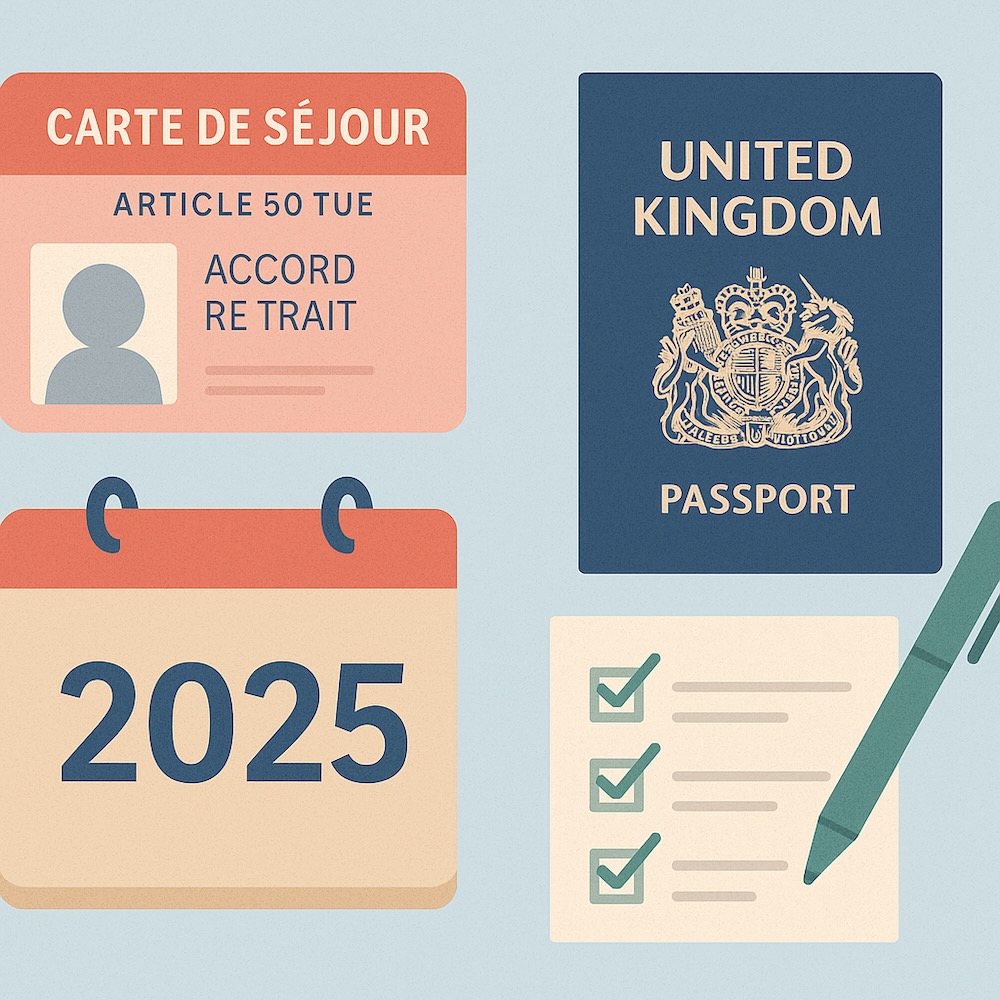
If you have been issued a VLS-TS — a long-stay visa that serves as a residence permit — you must validate it online within three months of arriving in France.
The validation is now carried out online through the French administration’s portal.
You will need information including your visa details, your date of arrival and your address in France, and you will normally need to pay the applicable residence-permit tax online.
Don’t forget this step.
It isn’t simply an administrative nicety. France-Visas states that failing to validate the VLS-TS within the required period means you are no longer legally resident under that visa and can have problems re-entering the Schengen Area.
However, not every long-stay visa works this way.
Some visas carry the wording “carte de séjour à solliciter” and require the holder to apply for a residence permit after arrival, generally within two months.
So once again: check exactly what your visa says.
Can You Apply Once You’re Already in France?
Well,yes but as a general rule, don’t assume you can simply arrive in France as a visitor and then apply for and quickly receive the long-stay visa you really wanted. It’s a little more complicated than that.
The long-stay visa process is better completed before arrival in France, although French immigration law contains exceptions and different procedures for particular circumstances.
This is one of the biggest mistakes people make when planning a move.
“I’ll just go to France and sort it out when I get there” is generally not a good immigration strategy, mainly because, even after all the paperwork is completed, the wait is loooooooong..
If you are planning to move permanently, check the correct procedure before you travel.
And What About EU Citizens?
If you’re a citizen of an EU country, the situation is very different.
EU, EEA and Swiss nationals do not need a French long-stay visa to settle in metropolitan France.
That means the visa information in this article is primarily aimed at people who are not EU/EEA/Swiss citizens and who are planning to live in France for more than 90 days. Thank Brexit!
If you have more than one nationality, make sure you check which passport you will be travelling and applying with.
Do You Need Professional Help?
Not everyone wants to tackle French administration alone — and that’s perfectly understandable.
There are relocation consultants, immigration specialists and concierge-style services that can help with things such as:
- Understanding which route may apply to you.
- Organising supporting documents.
- Translations.
- Certified copies and formalities.
- Setting up practical matters after arrival.
- Helping you navigate French administrative procedures.
Obviously, professional help costs money.
If you decide to use a service, check exactly what it does, what it charges and whether it is providing immigration advice or simply administrative assistance.
And don’t assume that paying somebody guarantees a successful visa application.
Ultimately, the decision belongs to the French authorities.
A Final Word Before You Start
Moving to France is exciting, but it is worth treating the visa process as a serious project rather than something to be dealt with at the last minute.
- Start early.
- Keep copies of everything.
- Make sure names, dates and other details are consistent across your documents.
- Follow the checklist generated for your application.
- And most importantly, check the official rules immediately before submitting your application because French immigration procedures can change.
Your French Adventure Starts Here
Note from P-O Life: Many of our regular readers have already made the move. If you’ve been through the visa process yourself and have a useful tip, story or lesson learned that could help somebody else, we’d love to hear from you.
Your experience could make somebody else’s journey just a little easier..
Thank you
Do you know any Relocation agencies that can help us prepare a long term visiteur visa application
Yes — there are a few relocation and visa concierge services that specialise in helping with long-term visiteur visa applications. They usually guide you through gathering the right documents, translations, and scheduling your TLS/consulate appointment. We would recommend Eric at https://theeuropeanconcierge.com/ Also there are services that can help you in our directory once you get here like https://anglophone-direct.com/listing/help-in-the-conflent-and-beyond/ Good luck hope that helps!