
Out for the day in Palau-del-Vidre – the Palace of Glass
Just a few kilometres inland from Argelès-sur-Mer, Palau-del-Vidre is one of those villages that is very easy to drive through without realising quite how much there is to discover.
Its name gives away its greatest claim to fame. Palau del Vidre means “Palace of Glass” in Catalan, and glass has been part of the village’s story for more than 700 years.
Add a medieval Templar past, a church containing some remarkable and rather mysterious treasures, working glass artists, a pleasant lake and picnic spot, and views towards Canigou and the Albères, and you have all the ingredients for an easy day out.
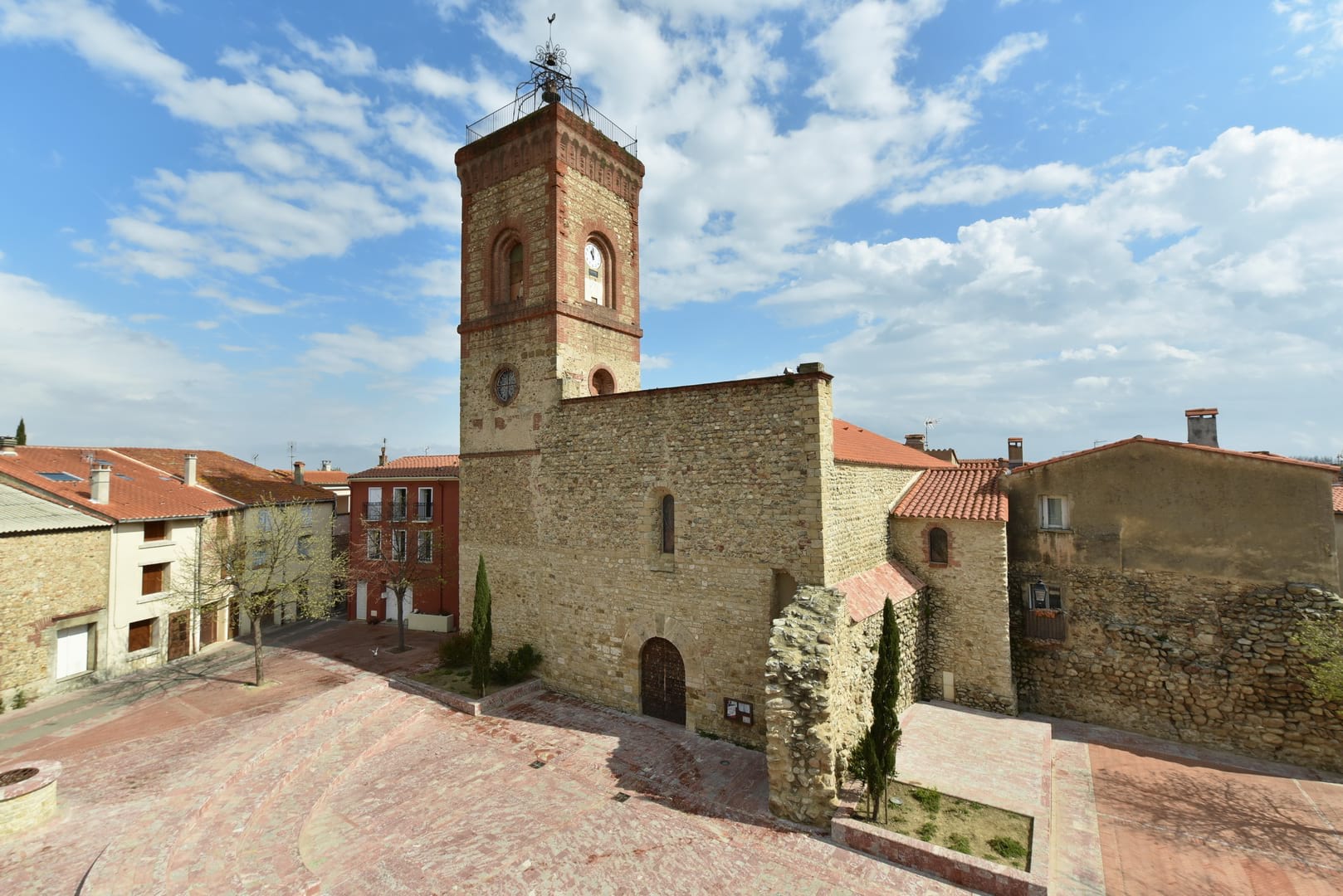
Knights Templar and a fortified village
Palau existed long before it became famous for glass.
In 1172, Girard II, Count of Roussillon, gave the lordship of Palau and its church to the Knights Templar. Following the suppression of the Templars in the early 14th century, their possessions here passed, as elsewhere, to the Knights Hospitaller – the Order of Saint John of Jerusalem.
The medieval centre, or cellera, was once protected by an oval enclosure. Only fragments of the old fortifications remain today, but look around the church and old centre and you can still get a feel for the compact medieval village.
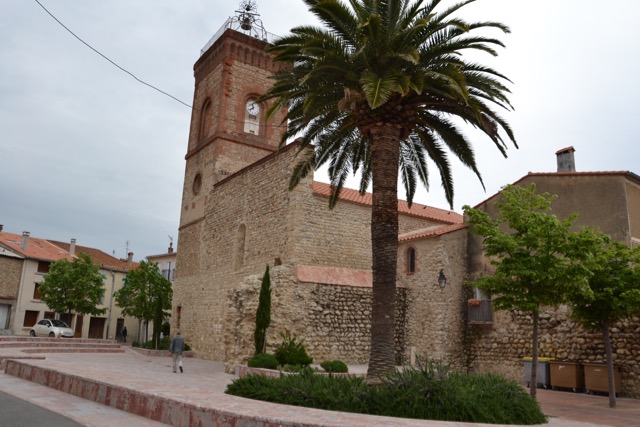
Why the “Palace of Glass”?
The name Palacium Vitri – Palace of Glass – is associated with a glassmaking tradition that was already flourishing here in the Middle Ages.
Glassmakers worked in Palau from at least the 13th century and the village became an important centre of Roussillon glassmaking, particularly during the 15th and 16th centuries.
The surrounding countryside provided many of the things the craftsmen needed, including wood for the furnaces, while the village was well placed for trade around the Roussillon plain.
The fortunes made from glass left Palau an extraordinary legacy – not in grand palaces, but inside its church.
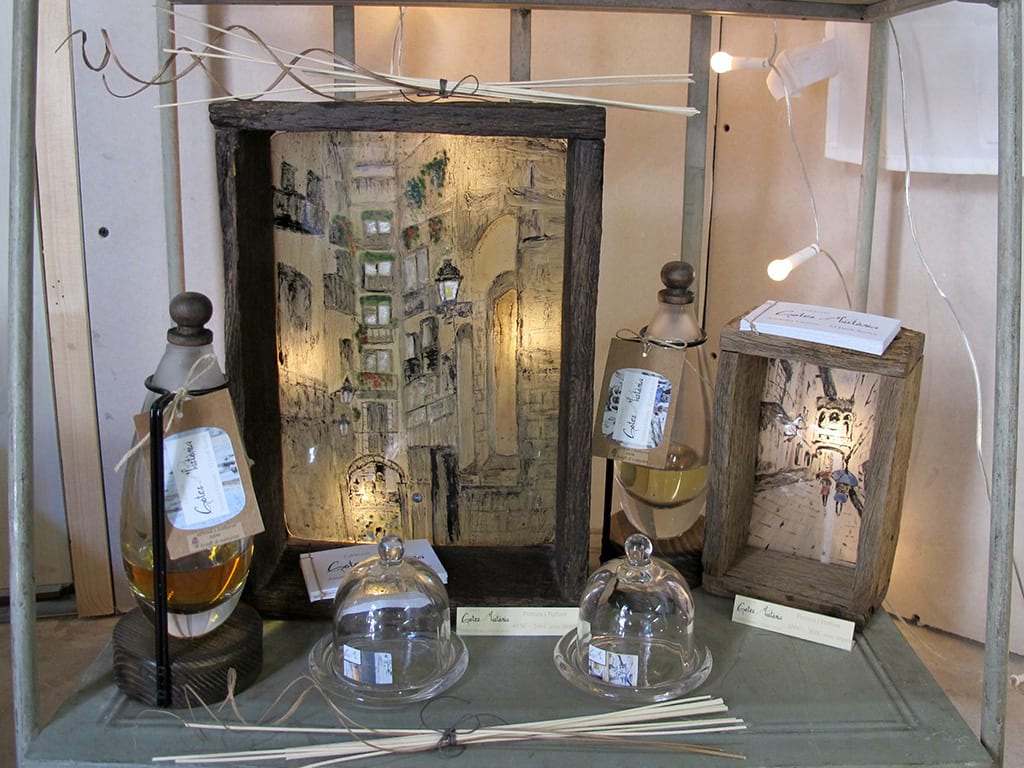
Glassmaking is alive and well
The medieval glass furnaces may have disappeared, but Palau has successfully reclaimed its identity as the village of glass.
Today several professional glass artists work in and around the old centre, using an impressive range of techniques including traditional glass blowing, stained glass, engraving, fusing, enamelling, lampworking and glass sculpture.
In fact, Palau is officially recognised as a Ville et Métiers d’Art for its glassmaking tradition.
One of the best-known local figures is master glassblower Jorge Mateus, whose workshop has helped introduce generations of visitors to the extraordinary business of turning a blob of almost unimaginably hot molten glass into something beautiful.
At certain times of year, introductory glassblowing sessions are available in the village. Participants can even blow their own coloured glass sphere and have it engraved with their name once it has cooled.
Some sessions are open to children from the age of three, making this a particularly unusual family activity.
Check before setting off, however, as demonstrations, workshops and opening times vary throughout the year.
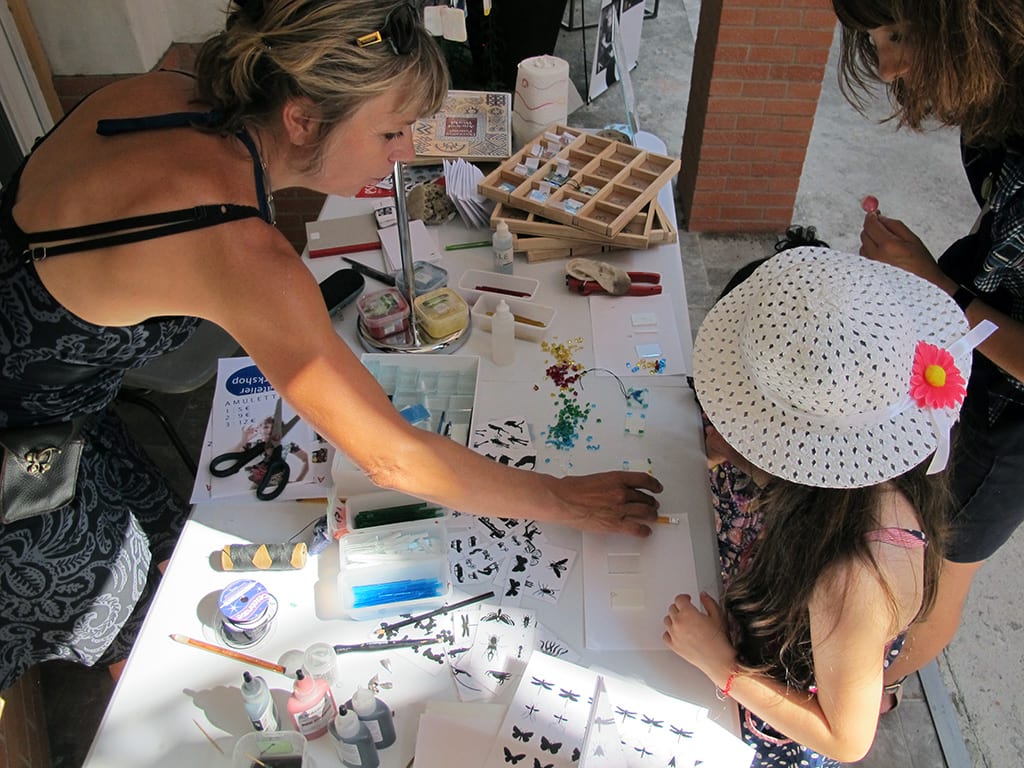
L’Été Verrier
A relatively recent addition to Palau’s glass tradition is L’Été Verrier.
During the summer, visiting glass artists are welcomed to the Maison Vila in the village, allowing visitors to discover techniques and artists from well beyond the Pyrénées-Orientales.
It means that Palau’s connection with glass is no longer simply something that happened centuries ago. Wander through the village in summer and you can actually see this ancient craft continuing and evolving in front of you.
The International Glass Festival
If you really love glass, put Palau on your calendar for the beginning of August.
The Festival International du Verre has been held in the village since 1994 and has grown into a major gathering of glass artists.
For several days, Palau becomes one enormous showcase for contemporary glass, with artists, exhibitions, demonstrations, sales and entertainment taking over different parts of the village.
The 32nd festival took place from 31 July to 3 August 2026, bringing internationally renowned glass artists to Palau.
Dates change from year to year, so check the programme before planning a future visit.
A little church with cathedral-sized treasures
Don’t overlook the Église Sainte-Marie de l’Assomption.
The church is associated with a parish recorded as far back as 1100, although the building you see today has been substantially altered over the centuries and appears to incorporate part of the former medieval castle.
It doesn’t look particularly grand from outside.
Inside is another matter.
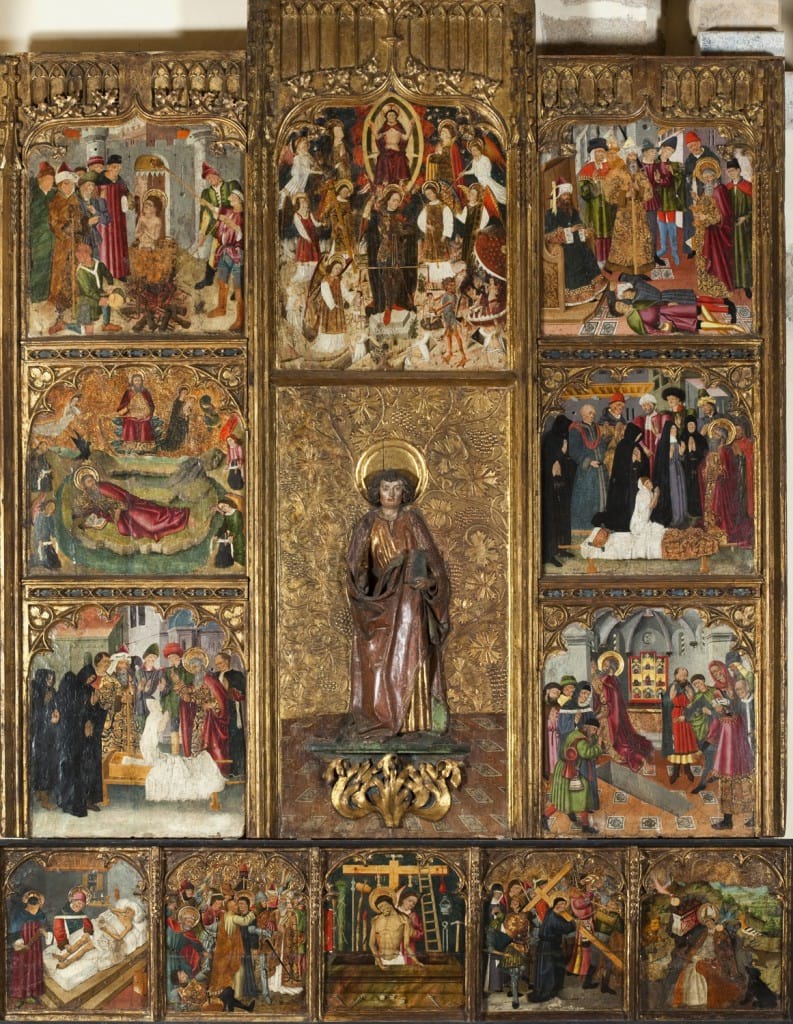
The wealth generated during Palau’s great glassmaking period helped furnish this small village church with an extraordinary collection of religious art.
Among its treasures are two magnificent 15th-century Gothic altarpieces, a Renaissance altarpiece, the 1609 tabernacle by Honorat Rigau, precious church silver and a 16th-century cope embroidered in Barcelona.
The Retable of Saint Michael the Archangel and Saint Hippolytus, painted in 1454 by Arnau Gassies, has a particularly close connection with the village’s glassmakers.
It was commissioned by master glassmaker Père Montroig, who even appears in the painting, kneeling at the feet of Saint Hippolytus.
Look carefully and you can spot glass objects represented in the paintings – little glimpses of the products being made in Palau nearly six centuries ago.
The mysterious Virgin who opens up
The church’s strangest treasure is undoubtedly its Vierge Ouvrante – literally an “Opening Virgin”.
Closed, the figure represents the Virgin Mary holding the infant Jesus.
But the wooden statue opens.
Inside is a representation of the Holy Trinity, with God the Father enthroned within Mary’s body.
Opening Virgins were once used to illustrate difficult religious ideas to worshippers who could not read, but this particular representation of the Trinity within the Virgin became theologically controversial.
Most disappeared.
According to Palau’s church heritage association, only 48 opening Virgins are known to survive worldwide, and only 13 are of the Trinitarian type represented by Palau’s statue.
For centuries, Palau’s Virgin was hidden and protected by local parishioners before eventually reappearing.
Whether you are religious or not, it is an extraordinary survivor.
Can I just walk into the church?
Usually, no – and this is worth knowing before making a special trip.
In 2026 the church is principally accessible as part of a guided visit, which lasts around two hours and reveals far more than you would discover simply wandering around by yourself.
Tours are offered on selected Mondays through much of the year, with more regular Monday visits during July and August. Booking is advisable.
At the time of writing, the standard guided visit costs just €3 and is free for under-18s.
Check current dates and times with the Pyrénées Méditerranée Tourist Office before travelling.
Walk around the Plan d’Eau Sant Marti
After all that medieval history and molten glass, head for some fresh air.
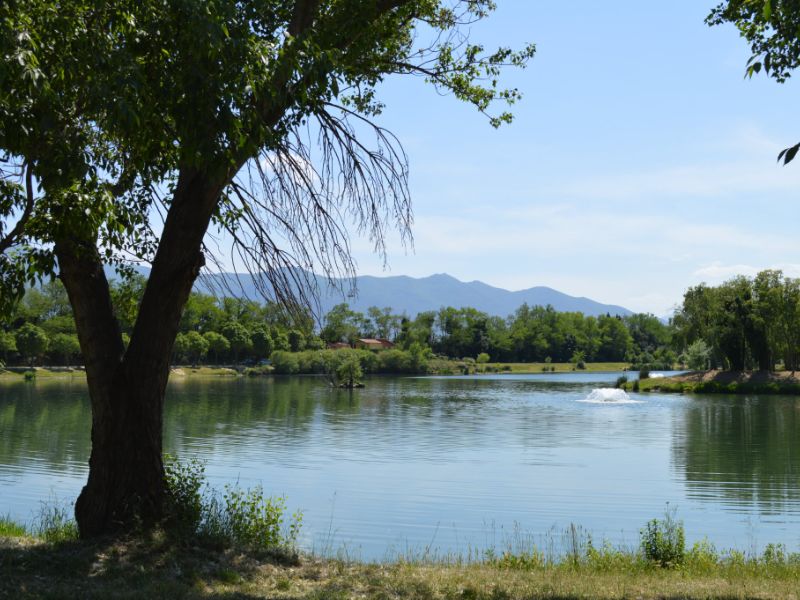
Follow signs for the Plan d’Eau Sant Marti, on the edge of Palau-del-Vidre.
The lake is surrounded by a flat, easy path of around 2 km, making this a gentle stroll rather than a serious hike.
The banks have been landscaped with a variety of trees and plants and there are picnic facilities, a fitness trail, parking, toilets and plenty of places to stop and enjoy the surroundings.
On a clear day there are lovely views towards Canigou and the Albères.
Keep an eye out for birdlife around the water too.
The lake is also popular with anglers. Different types of fishing are permitted according to the season and day permits can be obtained locally, so you do not necessarily need to arrive with an annual French fishing licence.
Access to the lake itself is free and it is open throughout the year.
Plan d’Eau Sant Marti
Chemin de Perpignan
66690 Palau-del-Vidre
Make a day of it
There are several possibilities for lunch or dinner in and around Palau.
L’Ancienne École is set in the village’s former school, a building dating from 1868, it is run by chef Baptiste Gaillard, a Maître Restaurateur. The menu changes with the seasons and concentrates on fresh, largely local ingredients, with Mediterranean and Catalan influences.
Le Haras, at Camping Le Haras, is also open to non-residents during its season and offers Mediterranean cooking, tapas and traditional Catalan dishes such as escalivade, boles de picoulat and galtes de porc.
And just outside the village, Château de Villeclare is worth knowing about in its own right.
The beautifully restored 12th-century château stands in a 120-hectare family estate of vineyards and orchards, with views across the countryside towards the Albères. The property now offers accommodation and hosts weddings, seminars and private events, while the estate continues to produce wine and fruit.
Check ahead rather than simply turning up, as access and activities depend on the season.
P-O Life tip
Don’t try to squeeze Palau into half an hour on the way to somewhere else.
Have a wander through the old centre, book the church tour if you can, watch a glassmaker at work, stop for lunch and finish with a stroll around Sant Marti.
For a small village that many of us have driven past countless times, the Palace of Glass has a surprising amount up its sleeve.
Beautiful place!
Indeed!