
Wildfire Prevention in the Pyrénées-Orientales: What Every Resident Needs to Know
Before heading outdoors, always check the daily fire-risk map for the Pyrénées-Orientales.
Check the Daily Fire Risk Zoning Map (Zonage Météo)
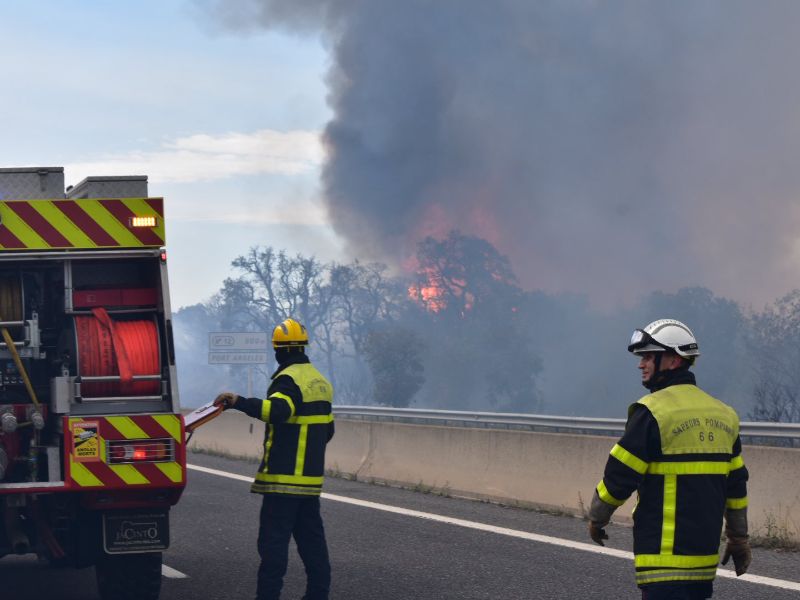
Wildfire near Saint André in the Pyrénées-Orientales.
Fire Risk in the Pyrénées-Orientales
The Pyrénées-Orientales is one of the most beautiful regions in France, but it is also one of the country’s most fire-prone regions. Long, hot summers, increasingly frequent droughts and the powerful Tramontane wind create ideal conditions for wildfires.
In recent years, climate change has increased both the frequency and intensity of fires across southern Europe. What was once considered a summer danger now extends well into spring and autumn, requiring residents and visitors alike to remain vigilant throughout much of the year.
Every year, hundreds of hectares of woodland, scrubland and natural habitat are destroyed by fire. Apart from the obvious threat to people, homes and businesses, wildfires have a devastating impact on local wildlife.
On average, a single hectare of burning forest may destroy millions of insects, hundreds of reptiles and amphibians, many mammals and countless birds, while permanently altering fragile ecosystems.
Operation Héphaïstos: France’s Summer Fire-Fighting Operation
Under Opération Héphaïstos, the French Armed Forces provide seasonal support to civilian wildfire-fighting efforts, deploying helicopters, surveillance teams, and specialist personnel during periods of elevated fire risk
More than 200 military personnel from the Army, Air Force and Navy are deployed across southern France, supported by specialist vehicles and helicopters. Working alongside professional and volunteer firefighters, they assist with surveillance, prevention, logistics and rapid intervention when fires break out.
The operation covers some of the regions most vulnerable to wildfires, including the Pyrénées-Orientales.
Météo des Forêts – France’s Forest Fire Forecast
To help residents and visitors understand wildfire risk, Météo France now publishes a daily Météo des Forêts bulletin during the fire season.
The forecast takes into account several factors, including:
- Temperature
- Rainfall
- Wind strength
- Humidity levels
- Vegetation dryness
- Soil moisture levels
The aim is simple: to identify areas at risk and encourage people to adapt their behaviour accordingly.
Fire Risk Levels
- Green – Low Risk
- Yellow – Moderate Risk
- Orange – High Risk
- Red – Very High Risk
Departments facing elevated risk levels may also receive additional prevention messages and restrictions.
Emergency Numbers
- Fire Brigade (Sapeurs-Pompiers) – 18
- European Emergency Number – 112
- SAMU (Medical Emergency) – 15
If you spot a fire, call emergency services immediately. Rapid intervention is often the key to preventing a small blaze from becoming a major wildfire.
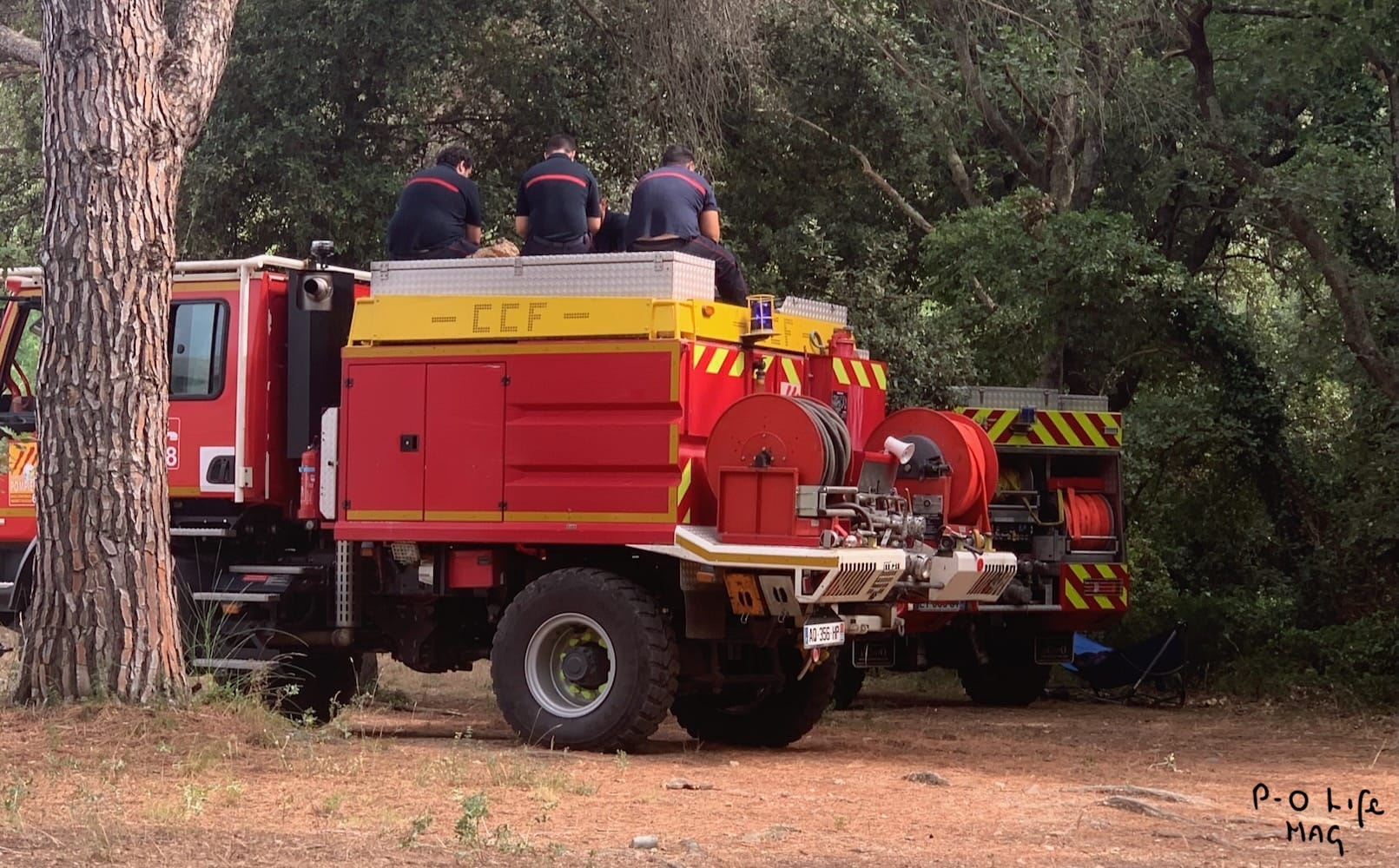
Professional and volunteer firefighters work throughout the summer to protect local communities.
Rules on Outdoor Fires and Garden Waste
Many wildfires begin accidentally during routine gardening activities, barbecues or the burning of garden waste.
French regulations can vary according to weather conditions and local prefectural orders, but some general rules apply.
- Never light a fire within 200 metres of woodland, scrubland or moorland.
- Burning garden waste is heavily regulated and often prohibited.
- Restrictions become stricter during periods of high fire risk.
- Strong winds may trigger additional bans, even outside the main fire season.
- Always check with your local mairie before carrying out any controlled burning.
Failure to comply with local regulations can result in substantial fines and legal liability if a fire spreads.
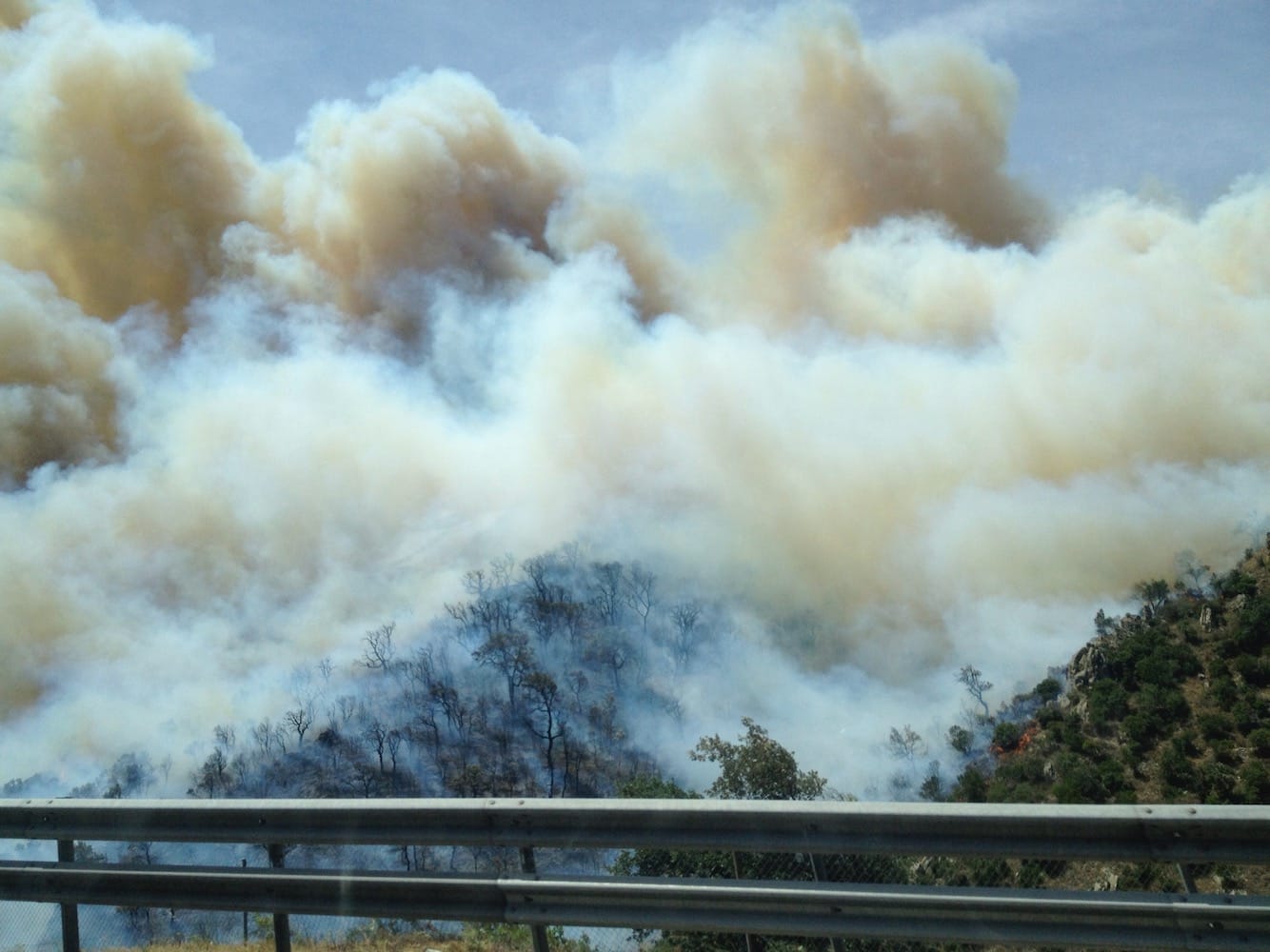
The devastating wildfire at Le Perthus and La Jonquera in 2012 demonstrated how quickly fires can spread under windy conditions.
Débroussaillement: A Legal Responsibility
If your property lies within 200 metres of woodland, scrubland or moorland, French law may require you to carry out débroussaillement – the clearing of vegetation around buildings.
This important preventative measure helps reduce the amount of combustible material available to a fire and can significantly improve the chances of firefighters protecting a property.
Property owners may be required to clear undergrowth and maintain a safety zone around their homes. Failure to do so can result in fines and may affect insurance claims.
Consult your local mairie for the latest requirements in your commune.
Protecting Your Property
In the Garden
- Remove dry vegetation, dead branches and accumulated garden waste.
- Keep grass short during the summer months.
- Prune trees and prevent branches from touching buildings or power lines.
- Maintain adequate spacing between trees and hedges.
- Avoid storing combustible materials close to the house.
- Ensure emergency vehicles can access your property.
- If you have a swimming pool, consider keeping a pump available for emergencies.
Around the House
- Keep roofs, gutters and drains free of leaves and pine needles.
- Inspect chimneys regularly.
- Choose fire-resistant materials whenever possible.
- Ensure house numbers remain clearly visible from the road.
- Trim vegetation away from walls and roofs.
What To Do If a Fire Threatens Your Home
Immediate Actions
- Call 18 or 112 immediately.
- Follow instructions from emergency services.
- Open gates and clear access routes for firefighters.
Then
- Close shutters, windows and doors.
- Turn off ventilation systems.
- Move gas cylinders away from buildings if it is safe to do so.
- Wet vulnerable areas around the property if time permits.
If You Become Trapped
- Remain inside a solid building whenever possible.
- Stay low if smoke enters the building.
- Cover your nose and mouth with a damp cloth.
- Move to a visible location where emergency services can see you.
Many wildfire casualties occur when people attempt to flee too late. Always follow official advice.
How Wildfires Spread
Wildfires generally spread in three ways:
Surface Fires
These move through grass, shrubs and low vegetation.
Crown Fires
When flames reach the tops of trees, fires can spread rapidly through the forest canopy. Crown fires are particularly dangerous because they move quickly and generate intense heat.
Spot Fires
Burning embers can be carried hundreds of metres ahead of the main fire front by strong winds. These embers can start entirely new fires, allowing a blaze to jump roads, rivers and even firebreaks.
Living With Fire in a Changing Climate
Wildfire is increasingly becoming part of life across the Mediterranean region.
Scientists expect longer droughts, hotter summers and more extreme weather events to increase fire risk in the coming decades. While these trends cannot be ignored, most wildfires are still caused by human activity and are therefore preventable.
By respecting regulations, maintaining properties responsibly and remaining vigilant during periods of high risk, residents can help protect their homes, their communities and the remarkable landscapes of the Pyrénées-Orientales.
Useful Links
- Daily Fire Risk Map (Zonage Météo)
- Météo France – Météo des Forêts
- French Fire Service and Useful Vocabulary
French Fire Service and useful voc link doesn’t work…
Hi Laura. Thanks for that. It works for me and someones who has just tested it out. Could it be your computer?