
Cathars, legend and the enduring mystery of the Holy Grail.
No One Expects the Medieval Inquisition!
The Cathars — the name is thought to come from the Greek katharos, meaning “perfect” — were a breakaway Christian movement that spread through the region during the eleventh century.
It was a time when plenty of people were questioning what they had been taught about faith, the Church and how they should live.
By the early thirteenth century, Catharism had become hugely influential, perhaps even the majority religion in parts of the region. And it wasn’t just ordinary people who were attracted to it. Some members of the nobility supported the Cathars too, giving the movement considerable protection and influence.
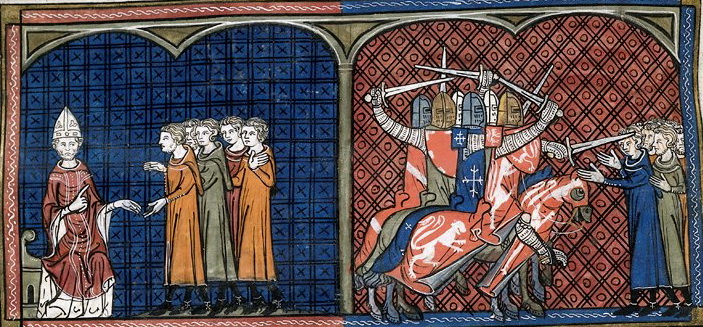
The Roman Church was not impressed.
Some Catholic priests had even converted to Catharism, which was bad enough from Rome’s point of view. But there was another particularly irritating detail: the Cathars refused to pay their tithes. That was hardly going to help relations with the Church.
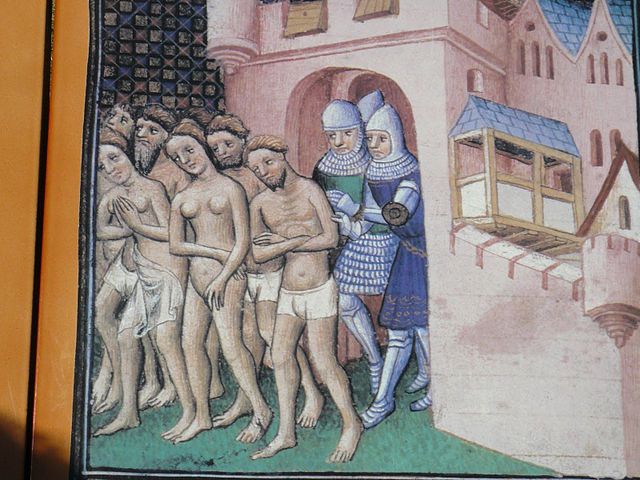
Pope Innocent III declared Catharism a heresy and called for a crusade against it. What followed was brutal. Towns and villages were attacked, men, women and children were massacred, and nobles who supported the Cathars were disgraced, dispossessed or replaced.
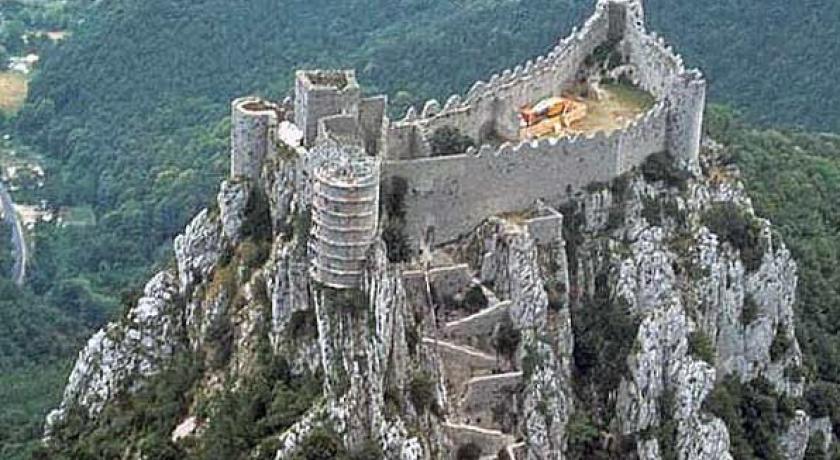
The spectacular ruins we now call the “Cathar castles” are a striking reminder of this violent period. Perched dramatically on rocky peaks, they have become one of the region’s most evocative — and romanticised — legacies.
And then came the Medieval Inquisition.
Established in part to root out the remaining traces of Catharism, the Inquisition has acquired a particularly grim reputation for its interrogations, trials and use of torture. Whatever the reality behind some of the later stories, there is no doubt that the campaign against heresy was relentless.

History records that people escaped from Château de Montségur shortly before the fortress surrendered in March 1244. Later tradition says they took a Cathar “treasure” with them. Modern fiction and some non-fiction have suggested that the Cathars may have been guardians of the Holy Grail, or that they possessed secret knowledge or treasures that somehow survived their destruction. There’s no solid historical evidence for these claims — but they certainly make an already fascinating story even more intriguing.
Catharism didn’t survive as a regognised religion into the modern era, but the Cathars certainly haven’t been forgotten. Today, various groups and spiritual movements draw inspiration from Cathar beliefs, while the Cathar legacy remains a powerful part of the culture and identity of southern France. Whether these modern movements represent a genuine continuation of Catharism is another question entirely — and one that historians still argue about!
And the Holy Grail?
According to one of the most enduring legends surrounding the Cathars, the Grail was kept at Montségur. As the fortress was about to fall in 1244, a small group of Cathars supposedly escaped down the mountain carrying the Cathar treasure. Whatever they carried was never found.
Was it money? Religious writings? Something far more mysterious?
And, according to the legend, was it the Holy Grail?
There is no historical evidence that the Cathars possessed the Grail, let alone that they passed it from one generation of guardians to the next. The connection between the Cathars, Montségur and the Grail belongs largely to a much later tradition, particularly the writings of Otto Rahn in the twentieth century.
But legends have a habit of surviving long after the people who created them have disappeared.
Some versions of the story say that the Grail was carried away from Montségur and hidden somewhere in the mountains, entrusted to people who knew its secret. Perhaps it was passed quietly from one guardian to another, generation after generation, waiting for the right time to emerge again.
Is any of that true?
Almost certainly, we will never know.
But somewhere beneath the history, the archaeology and the centuries of storytelling, there remains one tantalising possibility: that something really did leave Montségur on those final nights — something small enough to carry, important enough to protect, and mysterious enough that nobody has ever been able to say exactly what it was.
And if the legend is right, perhaps it isn’t lost at all. Perhaps someone is still keeping it safe waiting for the next generation.
Perhaps the Cathars really did leave something behind. And perhaps it’s been hiding in plain sight all along…