
Shadows on the Canigou; Article 8
Shadows on the Canigou; Article 8
The Liberation of Perpignan
For almost two years, the German presence had been a fact of everyday life in Perpignan.
They occupied the railway, controlled strategic buildings and roads, imposed their authority on the population and worked alongside the Vichy machinery that already existed in France. Behind them came repression, arrests, interrogations and deportations. Alongside them were French men and women who chose to collaborate.
For nearly 21 months, the swastika had flown over Perpignan. The Milice hunted Resistance fighters, informers were encouraged and rewarded to betray friends and neighbours. Some people made money from the misery of others, whilst others kept their heads down and turned a blind eye.
And then there were those who resisted.
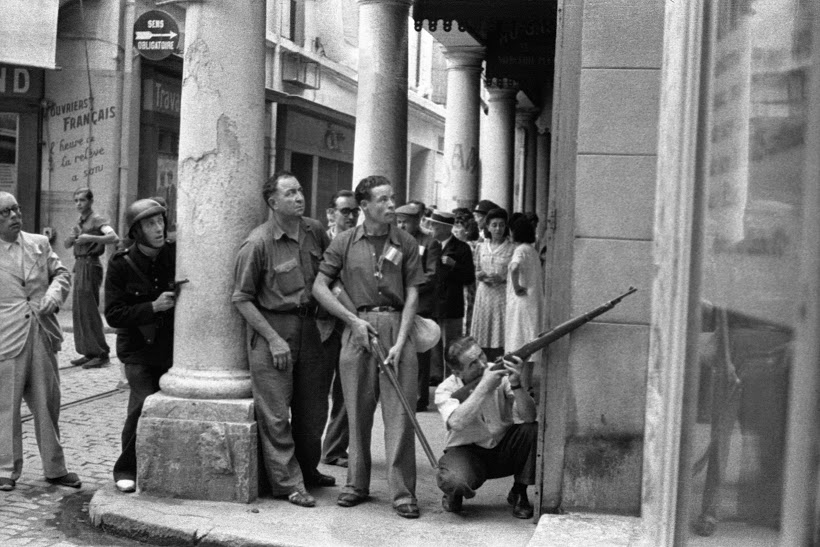
In August 1944, everything began to unravel for the occupying forces.
The Allied landings in Normandy had been followed on 15 August by Operation Dragoon, the invasion of southern France. German forces in the south were suddenly faced with the prospect of being cut off and destroyed.
Suddenly, the Germans who had seemed so permanent were leaving – but they did not intend to simply disappear. They continued to destroy, take prisoners and in the case of many of the milice, to change their colours and melt back into the crowds.
The Resistance knew that if the Germans were allowed to withdraw unchallenged, they could leave behind a trail of destruction so the liberation of Perpignan was a confused, dangerous and sometimes bloody two-day struggle.
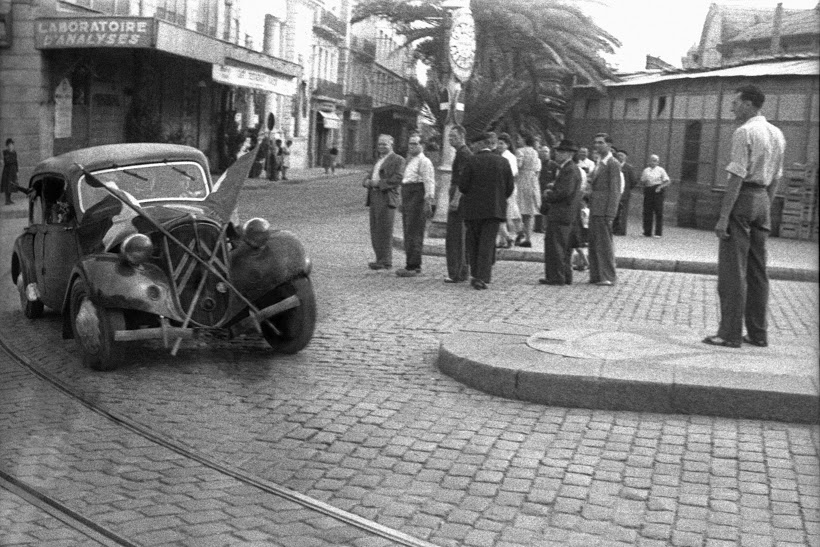
A man preparing for Liberation
Camille Fourquet, born in Maureillas, understood what was ahead. Schoolteacher, union man and socialist sympathiser, he became increasingly important as a political and administrative organiser, rather than as an armed fighter.
In fact, it was Gilbert Brutus who suggested that Fourquet join the Resistance movement Libération. Brutus was not simply a rugby celebrity, he was an established local political and civic figure, a councillor in Perpignan, and an early member of the Resistance. He was arrested by the Germans in March 1944 and died after being tortured in detention.
Fourquet understood that defeating the Germans was only half the job, and that someone would have to take over the prefecture, the town hall, restore order, control the police…..and decide what happened to the collaborators.
The Germans came to arrest him on 29 February 1944, but he escaped to the Aveyron…. so they arrested his son instead.
Fourquet eventually returned to Perpignan on 9 August 1944 ready for the endgame.
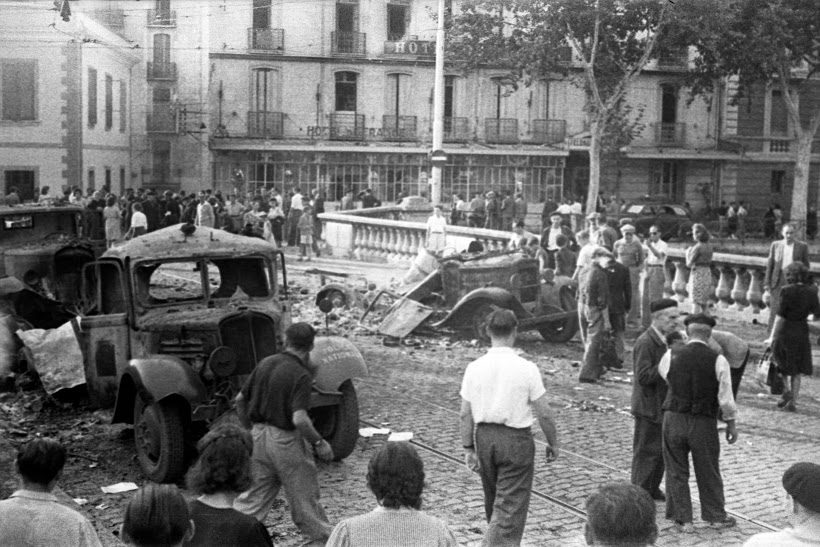
The Resistance prepares to take power
The different Resistance movements did not suddenly become one united organisation. Between Communists, socialists, Gaullists, military groups and independent networks, there had been much rivalry and dissent throughout the Occupation – but they all agree on ene thing. Vichy was finished.
On 10 August, representatives of the main Resistance organisations formed the Comité départemental de Libération, the CDL with Camille Fourquet as its president.
Men who had spent years hiding from the police were now preparing to become the people who would run the police. History was about to turn upside down.
The Germans begin to run
By the middle of August, as the Allied armies were advancing from the south, German authority in the Pyrénées-Orientales was visibly weakening.
The Resistance was becoming bolder.
Collaborators began to panic. Some Miliciens disappeared or tried to destroy evidence of what they had done. People who had denounced their neighbours were getting worried.
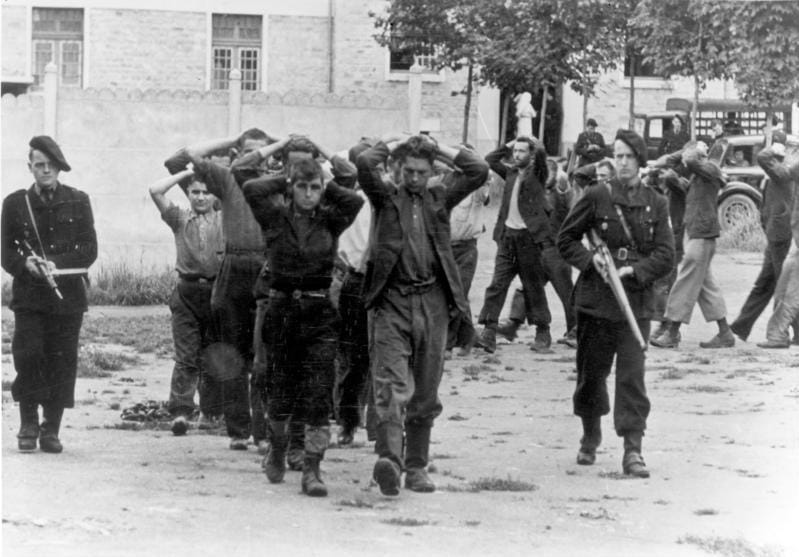
Resistance members captured by the Milice, July 1944.
Negotiating with the enemy
By 17–18 August, Fourquet and other Resistance leaders were in secret negotiations with the German commander in Perpignan, Major Wolfgang Parthey. Parthey understood that the German position was becoming untenable and wanted to explore the possibility that the Germans simply leave without a major battle? But after nearly two years of occupation, the population had seen what German repression meant. They had learnt over and over that they could not trust the Germans..
He agreed to release French resistance prisoners held at the local Citadel and worked to prevent the destruction of key strategic infrastructure. However, despite his efforts to avoid bloodshed, his subordinates and his superior officer, General major Joachim Degener, refused to surrender to the Resistance, leading to brief but intense combat before Perpignan was fully liberated.
19 August 1944
The date has become part of the identity of the city. 19 August 1944.
Liberation.
German forces were withdrawing but they were still armed and dangerous. Resistance fighters were moving openly, many with scores to settle for lost friends and family.
Clashes broke out, vehicles were attacked., shots were exchanged and men who had spent years hiding weapons were now using them in the streets.
The Resistance had come up from underground. Maquisards, FFI, FTP and other fighters were now fighting for control of their own city.
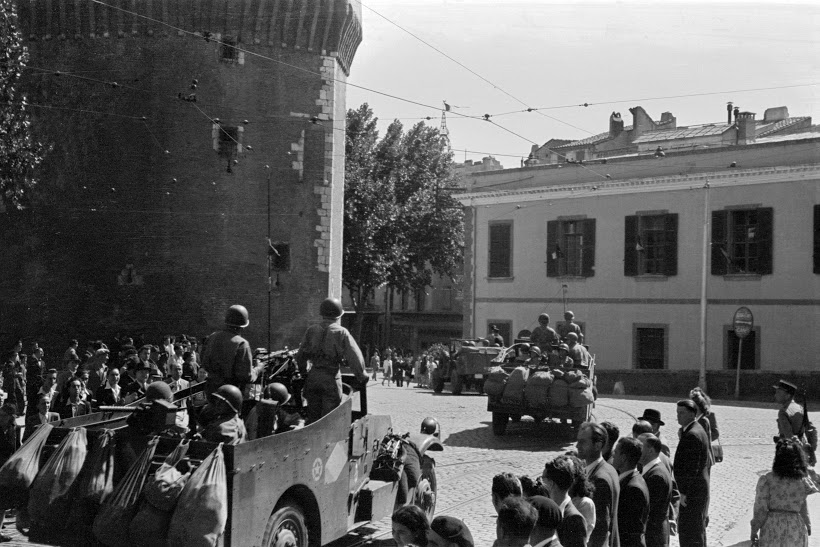
The Castillet
The Castillet, the ancient gateway of Perpignan, became one of the focal points of the fighting.
For centuries it had been a symbol of the city. Now it was surrounded by the final violence of the occupation as resistance fighters attacked and Germans responded.
The price of Liberation
Recent local research records 17 Resistance deaths and three civilian deaths during the fighting of 19–20 August, alongside 22 German soldiers killed.
Roger Julia was only 17. Civilian Paul Masana was 16. They were children by today’s standards. The oldest was Isidore Vidal, aged 68.
Freedom had a price.
The Germans leave
By the end of 19 August and into 20 August, German forces were still withdrawing through the department leaving a wave of destruction behind them. Military installations were being sabotaged. At Port-Vendres, the destruction would be particularly severe.
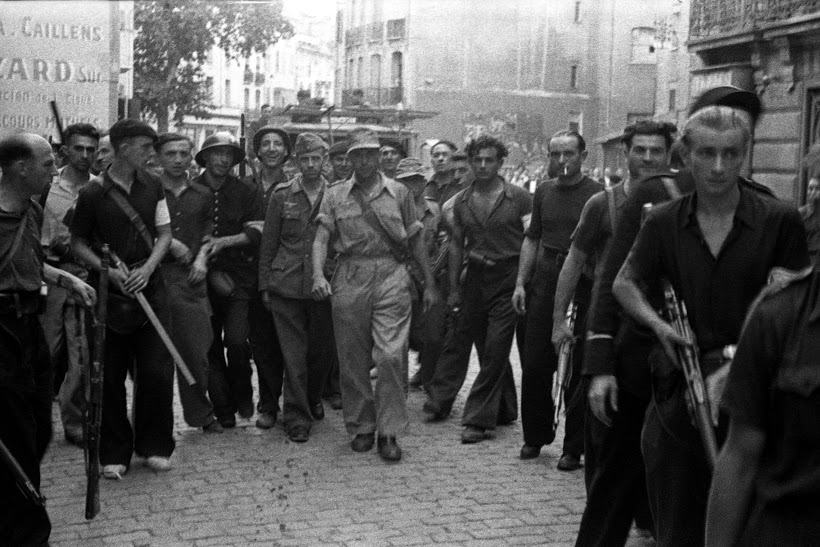
The Prefecture
On the morning of 20 August, Camille Fourquet and Jean Latscha went to the Préfecture and Larscha took over as prefect. The machinery of the Republic was being restored.
Félix Mercader
Félix Mercader emerged as the new mayor of Perpignan and men who had been forced underground were now standing openly in the institutions of their own city.
But there was a darker side to this transformation. Liberation brought joy but it also brought a lot of anger. Collaborators were still around, living in the community and the families of those arrested, deported or murdered had not forgotten.
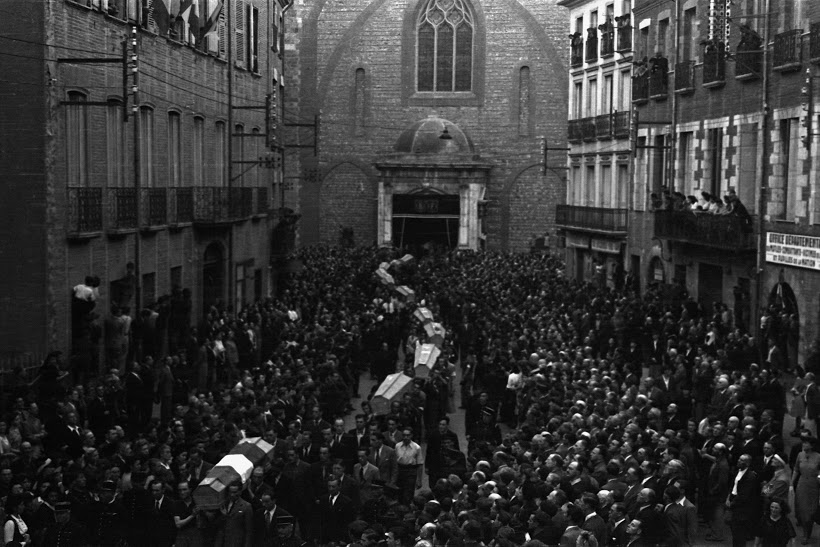
The first morning of freedom
Imagine Perpignan on the morning of 20 August. For some, there is laughter, for others, tears. For some families, there is simply the unbearable knowledge that the person they had been waiting for would never come home. Liberation could not bring them back.
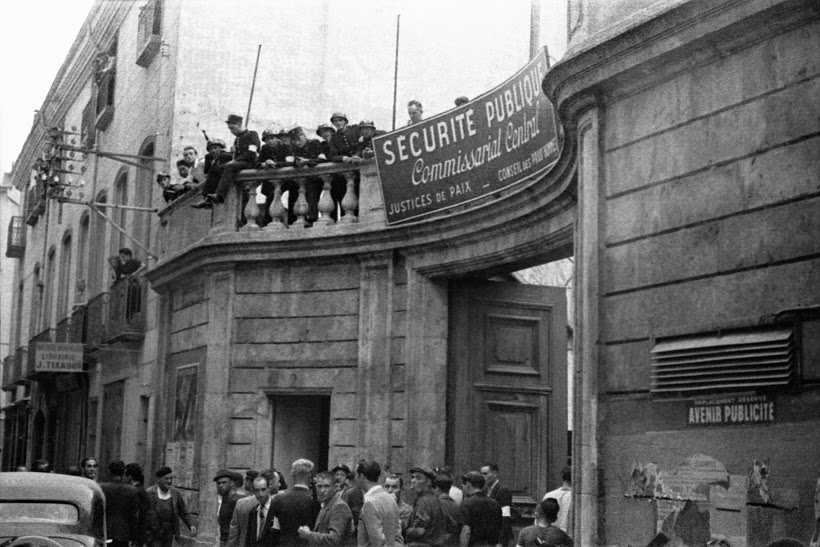
The celebration
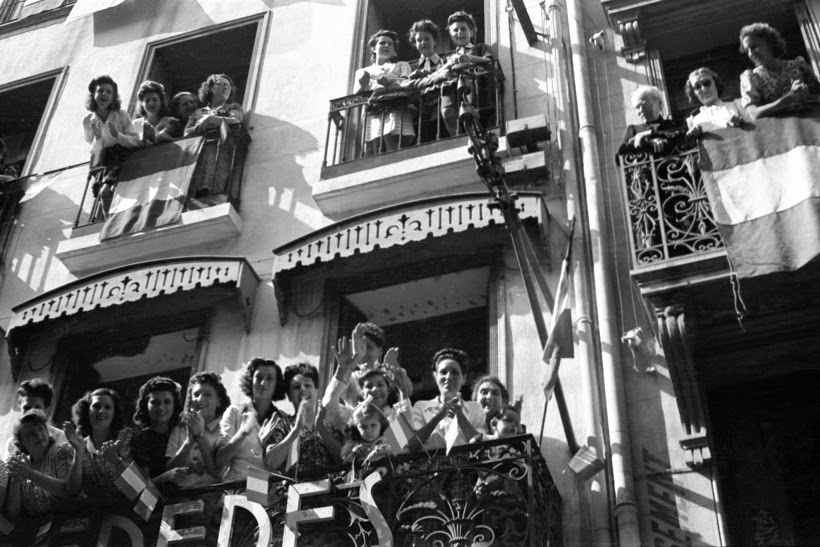
On 27 August, Perpignan held its great public celebration of Liberation. The Resistance could finally march openly. Flags appeared throughout the city and crowds filled the streets. After nearly two years, Perpignan was French again – but for some the next battle was already beginning.
The collaborators
Some collaborators fled, some hid, some destroyed incriminating papers and claimed to have been secretly helping the Resistance all along.
Maybe some really had, but that distinction would become one of the most difficult problems facing liberated France.
Who had resisted, collaborated, informed, merely obeyed or actively and enthusiastically helped the enemy? Who had tortured? Who had enriched themselves? And who was now inventing a heroic past?
These questions would soon have to be answered.
Fourquet’s next battle – the épuration
Camille Fourquet had helped prepare the Resistance for Liberation but now he faced something perhaps more difficult – the épuration, the purge of collaborators.
The Germans were gone but the Resistance itself was divided. Political ambitions and old rivalries flared up. Men who had behaved disgracefully during the occupation attempted to reinvent themselves as patriots. Justice was necessary and revenge was inevitable . The chaos of Liberation was a good time to settle personal scores
For many, fear of the occupier changed to a different fear and uncertainty of what might happen next. Because after the celebrations came the arrests, the denunciations, the trials, the executions.
The Germans had gone but the darkness they had left behind was still there.That is where our next story begins.
……………………………………………………………….
Photo Credit: Auguste Chauvin
With Thanks to Estève Valls.
Articles In This series
Article 1
The Traitor of Valmanya: The Strange and Tragic Story of Nessim Eskenazi
Article 2
Julien Panchot: The Maquis Leader Who Refused to Break
The story of the Resistance commander captured before the destruction of Valmanya.
Article 3
Valmanya 1944: The Village That Burned
A dramatic reconstruction of the attack on the village and its aftermath.
Article 4 Part 1
The Milice in Perpignan
Who collaborated locally, how the organisation operated, and how it was dismantled after Liberation.
The Milice in Perpignan Part 2
Who collaborated locally, how the organisation operated, and how it was dismantled after Liberation.
Article 5
Henri Treyeran: The Most Hated Man in Perpignan
A profile of the Milice leader assassinated by Resistance fighters.
Article 6
Escape Across the Pyrenees
The guides, smugglers, Allied airmen, Jews and resistance fighters who crossed into Spain.
Article 7
The Women of the Resistance in the Pyrénées-Orientales
Too often overlooked
Article 8
The Liberation of Perpignan
August 1944 and the collapse of German authority.
Article 9
Justice and Revenge
The trials, executions, and purges that followed Liberation.
Article 10
The Last Witnesses
How the Occupation is remembered today in the department.