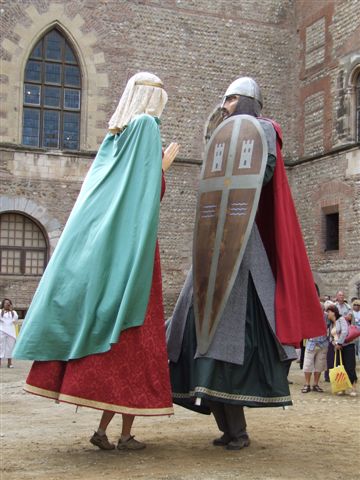
LES GEGANTS CATALANS
Catalan giants (gegants) are impossible to miss—and that’s rather the point.
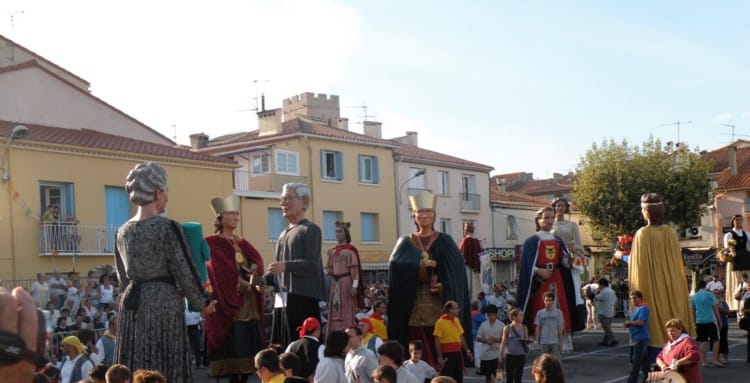
Towering several metres high, these brightly painted figures glide through the streets during festivals, swaying, turning and even dancing above the crowds. Built on wooden or aluminium frames, with heads made from papier mâché and plaster, they date back to the Middle Ages, when they represented religious figures in processions. Today, they are just as likely to depict kings, queens, pirates or local characters.
But what makes them truly fascinating is what you don’t see.
Inside each giant is a geganter, hidden beneath layers of fabric, carrying the structure on their shoulders. Peering out through a discreet mesh hidden in the costume, they guide the giant through narrow streets while making it nod, spin and bounce to the rhythm of drums and gralles (traditional Catalan pipes).
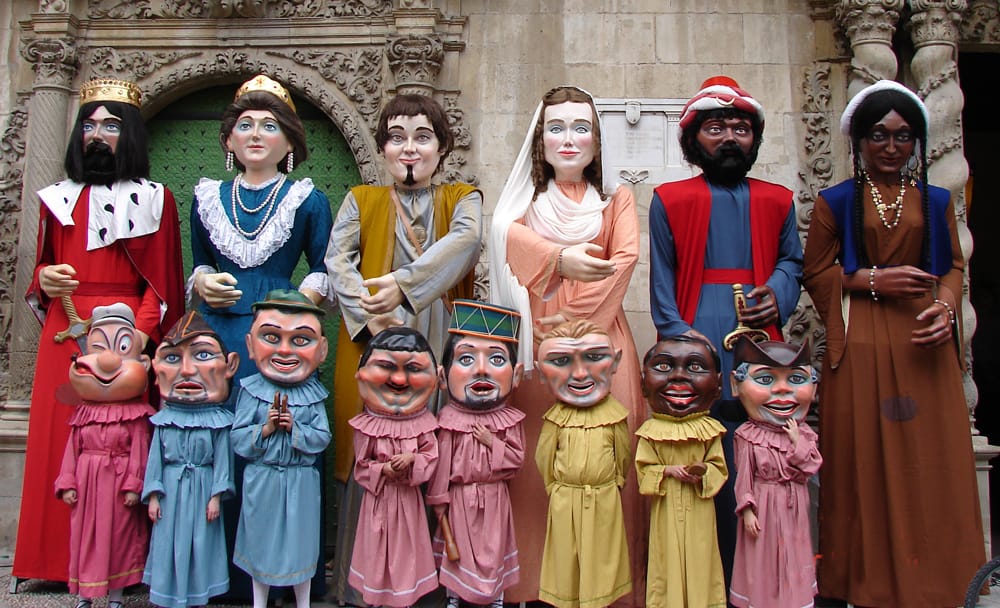
And then come the troublemakers.
The capgrossos—literally “big-heads”—are smaller figures with oversized, slightly comical (and sometimes slightly alarming) heads. They dart through the crowd, chasing children, teasing spectators and, traditionally, swatting the unwary with inflated pig bladders or soft whips. It’s all part of the fun… though not always appreciated in the moment.
Almost every town in Catalonia has its own giants, proudly representing figures from local history or legend. They usually appear in pairs—often as a regal couple—and take centre stage during the town’s Festa Major, when the streets fill with music, dancing and celebration.
And once you’ve seen them, it’s hard to forget the sight: these enormous figures, somehow both majestic and playful, moving through the crowd as if they’ve quietly come to life.
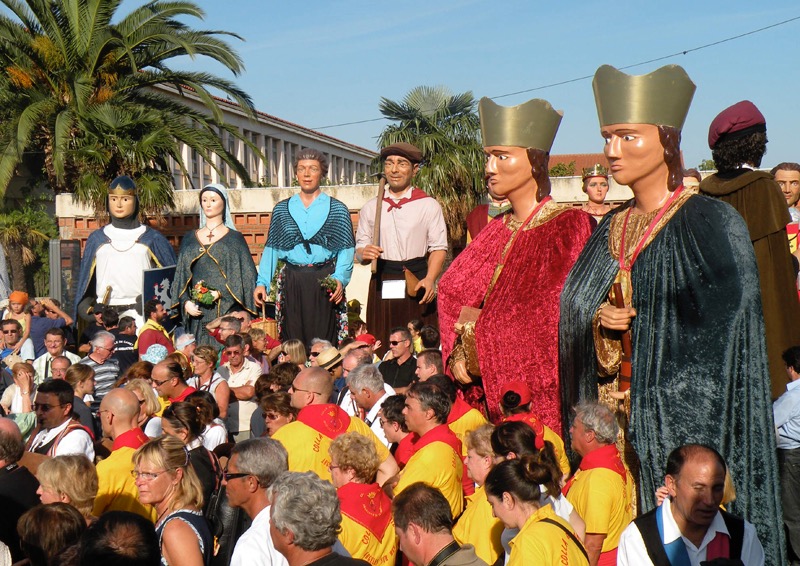
It’s somewhere between theatre, tradition and mischief—and like many Catalan festivals, it’s taken very seriously… while never taking itself too seriously at all.