
UPDATED 2 NOVEMBER 2026
A Remembrance Day Out
Following the footsteps of Gustave Violet and Aristide Maillol through the Pyrénées-Orientales
The Pyrénées-Orientales has a remarkable collection of First World War memorials, many of them created by two of the most distinguished sculptors of their generation: Gustave Violet and Aristide Maillol.
A journey around the department, visiting their monuments, reveals not only some extraordinary works of art but also a very particular response to the horrors of the First World War.
These are not monuments celebrating military triumphs. They are monuments to grief, loss and the terrible human consequences of war.
Gustave Violet – The Artist from Thuir

Gustave Violet was born in Thuir on 19 June 1873.
His father, Pallade Violet, and his uncle, Simon Violet, were among the founders of the Byrrh business, whose fortunes were made through the creation and development of the famous quinquina-based aperitif.
Rather than following the family business, Gustave chose an artistic career. He went to Paris, studied architecture at the École des Beaux-Arts and developed into an extraordinarily versatile artist: architect, sculptor, painter, ceramicist and decorator.
By the beginning of the twentieth century he was an active member of both the Parisian and Roussillon artistic communities.
A gentle, cultured and generous man, he was friendly with artists, musicians, writers and collectors. He knew Picasso and the artistic circle around Céret, and his work was increasingly sought after.
In 1903 he established his workshop, Sant Martí, at Prades. It became an important meeting place for artists and intellectuals and was to remain central to his life.
His artistic career was brought to an abrupt halt by the outbreak of war in 1914.
Within the first few months, his great friend, the writer Louis Codet, was killed.
Violet’s six-year-old son never forgot seeing his father break down in uncontrollable tears on hearing the news.
Violet himself was mobilised in 1915 and returned in 1918, totally traumatised by the horrors of war and weighing a scant fifty eight kilos.
He was profoundly scarred, both physically and mentally, and, when the towns of Perpignan, Thuir, Prades, Claira, Collioure, Estagel and St Laurent de Cerdans commissioned him to sculpt their War Memorials, the monuments he created were, in reality, anti-war memorials.
When the towns of Roussillon began commissioning their war memorials, Violet approached the task in a way that was to distinguish him from many of his contemporaries.
He had no wish to glorify war. He believed that monuments should remind people of the men who had died, rather than encourage admiration for military heroics.
His memorials would consequently concentrate on the bereaved: mothers, wives, sisters and daughters, together with the ordinary people whose lives had been shattered.
Aristide Maillol – A Different Kind of Monument
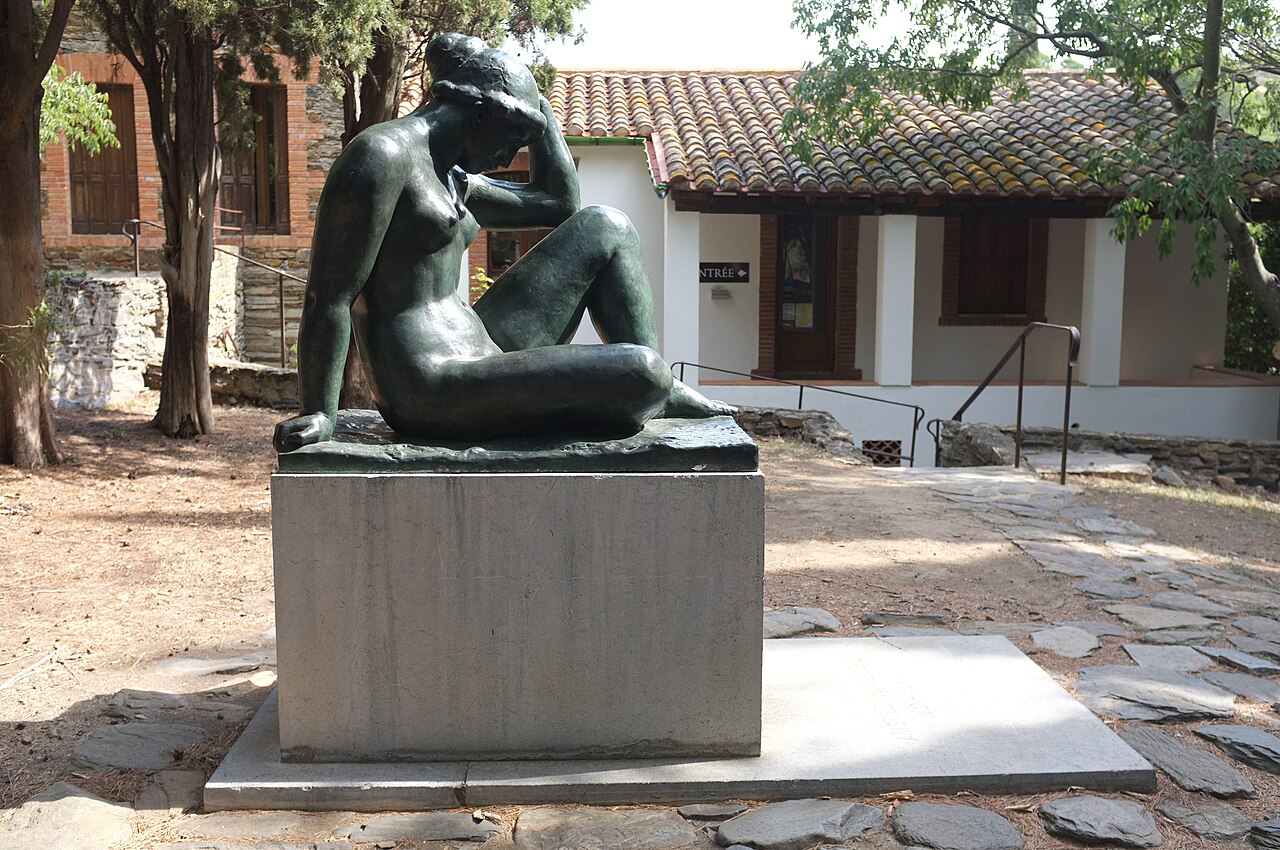
Following the death of Rodin in 1917, Violet’s friend Aristide MaillolAristide Maillol, born in Banyuls-sur-Mer in 1861, was increasingly recognised as one of France’s greatest living sculptors.
Maillol, too, was deeply affected by the war and had little interest in producing monuments glorifying military victory.
Like Violet, he preferred to evoke the human cost of the conflict.
Both men rejected the conventional image of the triumphant soldier. Instead, they turned towards the women left behind, waiting for news of husbands, brothers and sons who would never return.
Their monuments are very different artistically, but they share an extraordinary humanity.
What follows is a journey through the Pyrénées-Orientales, discovering their work in the towns and villages of the region.
PERPIGNAN AND THE ROUSSILLON PLAIN
Perpignan – Gustave Violet’s Masterpiece
We will start in Perpignan, at the monumental First World War memorial on Boulevard Wilson, close to the Palais des Congrès.
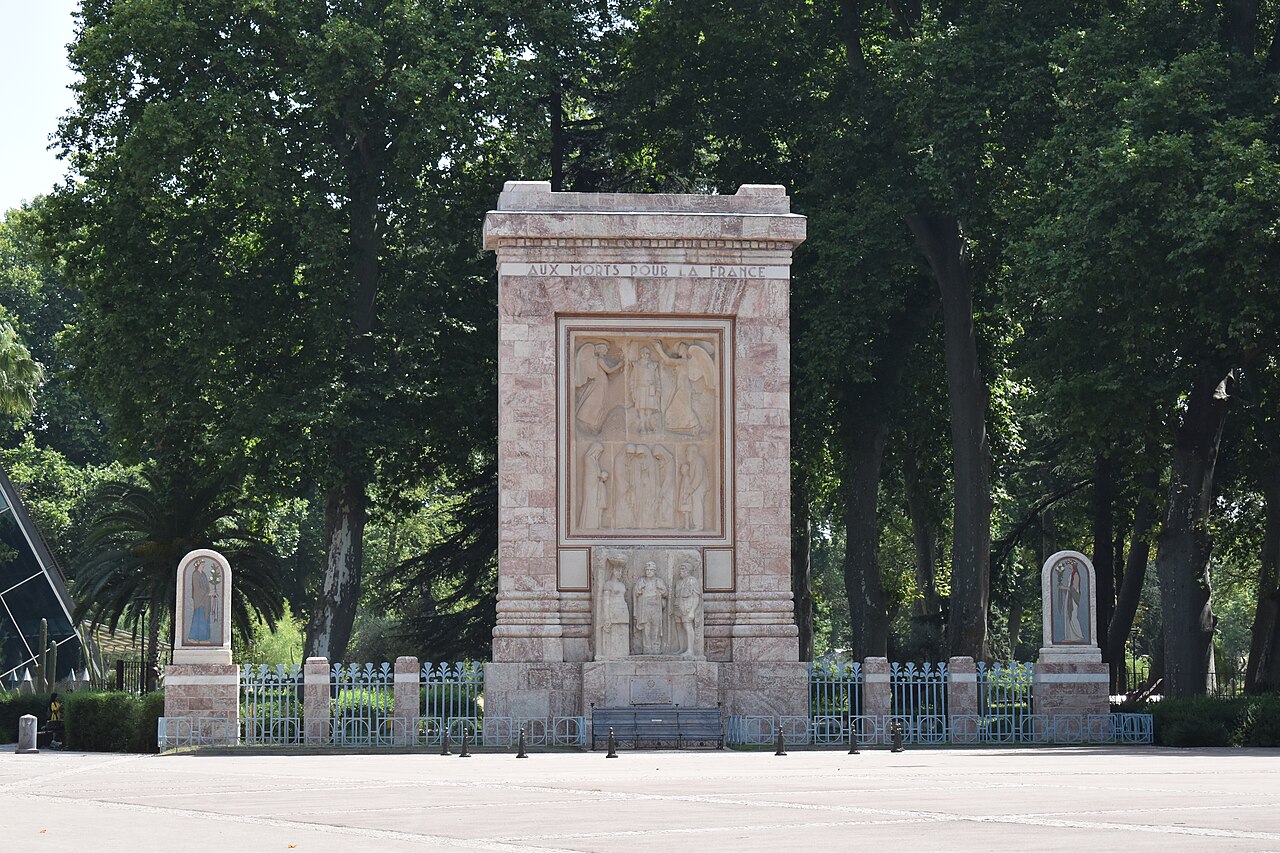
Inaugurated in 1924, this is one of Violet’s most impressive achievements, demonstrating the full range of his abilities as an architect, sculptor, ceramicist and artist.
He deliberately chose hard, rugged stones for the monument, explaining his preference in terms of the character of the Roussillon people:
“Our race has never been aristocratic; it is the fruit of our soil, of the plain and the rocks biting into the sea. It shows the character of our vignerons, our shepherds and our fishermen.”
The monument incorporates figures representing traditional Roussillon society, including a shepherd, a fisherman and a market gardener. Above them appears a great winged Victory.
Yet the central theme remains mourning and remembrance.
It is a magnificent and deeply moving monument.
While in Perpignan, take a wander along the Allées Maillol, where several works by Aristide Maillol can be found.

Do not miss La Méditerranée, in the courtyard of the Hôtel de Ville, or his Vénus, in the Place de la Loge.
La Méditerranée is particularly significant. Maillol presented the original work at the Salon d’Automne in Paris in 1905, where it attracted considerable attention. He subsequently gave it to the city of Perpignan.
Elne – Maillol and Violet Together
Elne is an essential stopping place.

High on the old town ramparts is Maillol’s gentle and contemplative war memorial, dating from 1921.
Nearby is a bust of his friend, the local painter Étienne Terrus.
There is also a considerable amount of work by Gustave Violet to discover.

Set into the ramparts along the Cami de la Réal, where the Wednesday market is held, is a large terracotta bas-relief depicting scenes of everyday agricultural Catalan life.
These rural subjects were particularly dear to Violet, who was fascinated by the people, customs and landscapes of his native region.
Elne is therefore worth exploring in its own right, rather than simply treating it as a quick stop on the way elsewhere.
Ortaffa – The Grief of a Family
A short detour to the cemetery at Ortaffa reveals one of Violet’s most poignant memorials.
Here, a grieving couple mourns the loss of their young soldier son, killed in the 1914–18 war.
The sculpture is particularly powerful because it brings the tragedy down to the level of an individual family.
The neighbouring graves are a sobering reminder of the extent of the losses suffered by this small community.
Collioure – A Girl with a Flower
Collioure’s war memorial is another characteristic Violet creation.
A solitary, sorrowful young girl stands holding a flower above the names of those who died.
There is no triumphant soldier, no celebration of victory, simply the sadness of a community deprived of so many of its young men.
Collioure itself is well worth a longer visit, of course, but the memorial deserves to be sought out.
Port-Vendres – Maillol’s Reclining Figure
In Port-Vendres, it is Maillol’s reclining female figure that gazes out towards the harbour.

Commissioned in 1919 and inaugurated in 1923, the memorial is an elegant and unusually restrained work.
The reclining woman holds a laurel branch, combining the traditional symbolism of remembrance with Maillol’s characteristic sculptural treatment of the female form.
It is beautifully integrated into the monumental eighteenth-century setting of the town’s Place de l’Obélisque.
THE CÔTE VERMEILLE
Banyuls-sur-Mer – Maillol’s Personal Statement
It is in his birthplace of Banyuls-sur-Mer that Maillol’s response to the war reaches perhaps its most personal expression.
His memorial, completed in 1933, occupies a prominent position in the town.
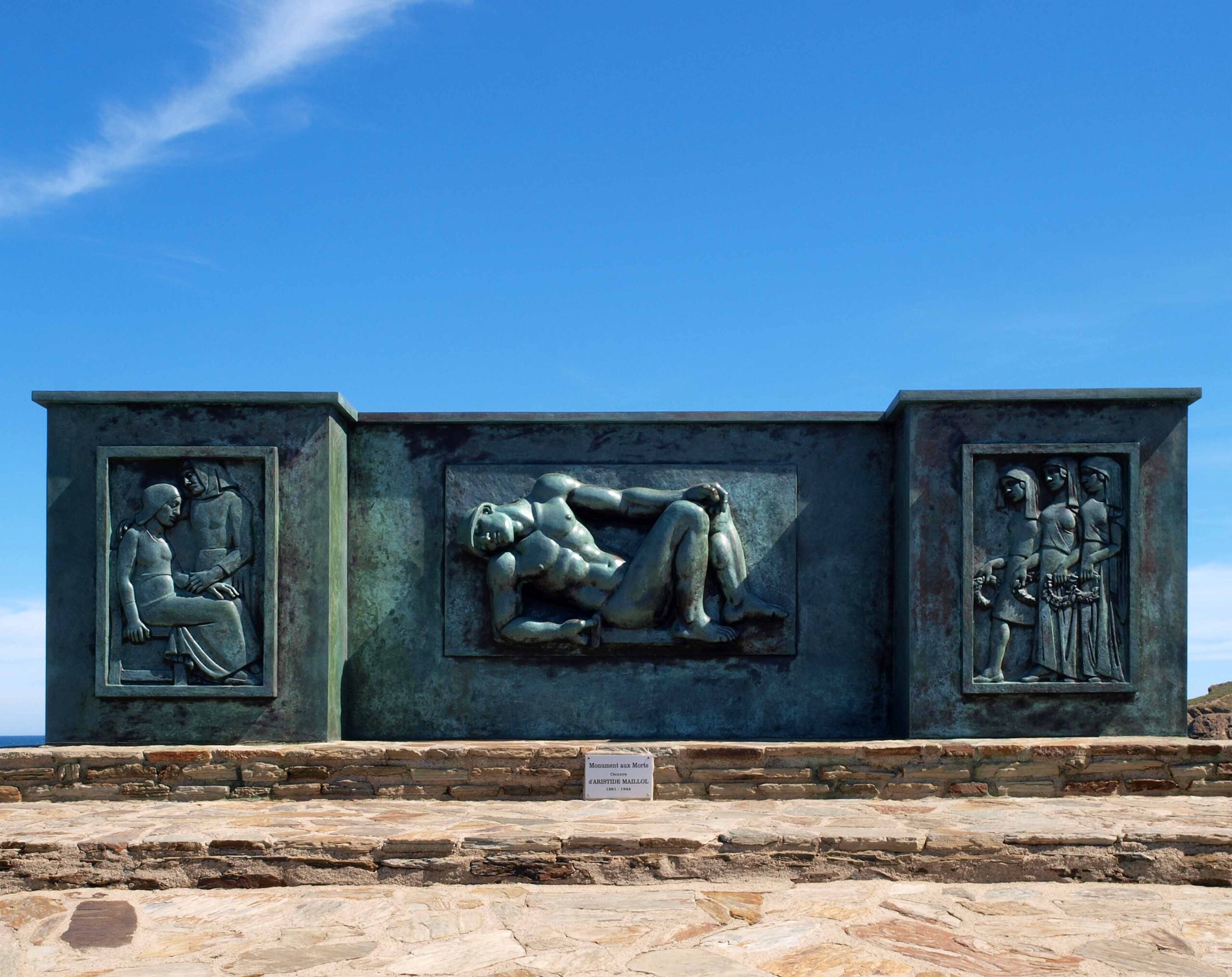
Describing his intentions, Maillol explained that he had added the sadness of war as he felt it. He would have preferred to leave a song of joy, but instead had to leave the sadness he associated with the sun, the sea and the beautiful countryside surrounding Banyuls.
The monument takes the form of a triptych.
The central panel is one of Maillol’s relatively rare male figures: a striking naked soldier, whose body conveys the sacrifice of a man giving his life for his country.
Almost like a Christ on the Cross, the figure expresses a universal sadness.
On either side are female figures, representing the mothers and wives left to mourn their lost menfolk.
It is an extraordinary work, and one which repays spending time with.
More of Maillol’s work can be seen at the Musée Maillol, situated in the beautiful valley outside Banyuls, approximately three kilometres from the town, on the road towards the Col de Banyuls and the Spanish border.
The museum is well worth including in any visit to the area.
THE VALLESPIR AND THE CATALAN INTERIOR
Céret – Maillol’s La Douleur
Céret is an essential stopping place on this journey.
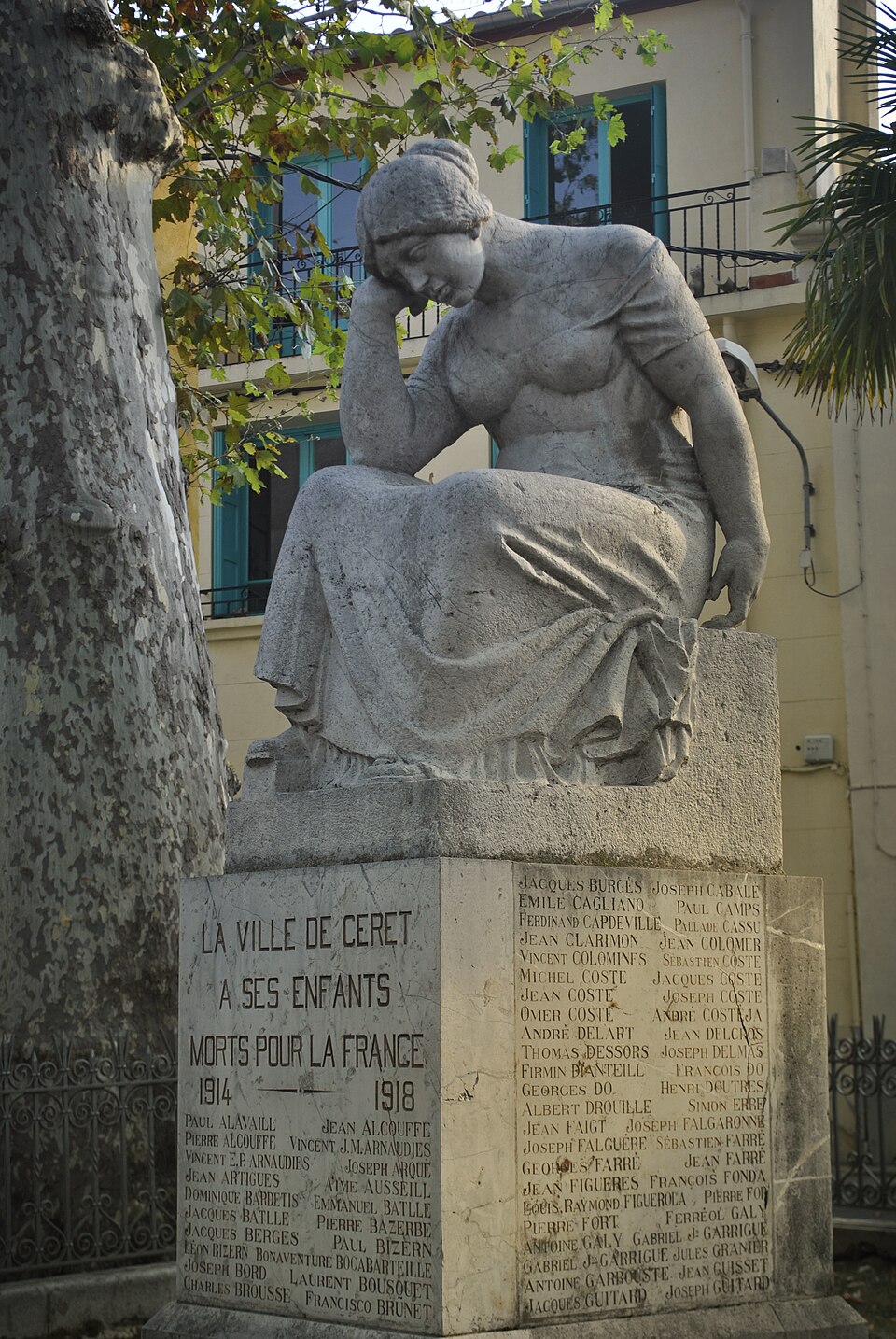
Here we find Maillol’s war memorial, La Douleur, commissioned in 1919 and inaugurated in 1922.
The sculpture represents a seated woman, her head resting on one bent arm, overwhelmed by grief.
It is one of Maillol’s most affecting works and is entirely consistent with his refusal to glorify war.

There is an interesting story attached to the monument.
Maillol was unhappy with the height of the plinth. He believed it needed to be lowered by twenty centimetres to achieve the precise angle he intended for the figure’s chin.
Unfortunately, it was actually raised by twenty centimetres!
To Maillol’s considerable fury, the alteration was never made.
Also in Céret is Violet’s Monument to the Creators of the Canal d’Arrosage, dating from 1937.
Although not a war memorial, it is an excellent example of his interest in the agricultural life and traditions of Roussillon.
Saint-Laurent-de-Cerdans – A Memorial in the Chapel Wall
Further up the Vallespir, in Saint-Laurent-de-Cerdans, Violet’s war memorial is integrated into the wall of the Chapelle de la Sort.
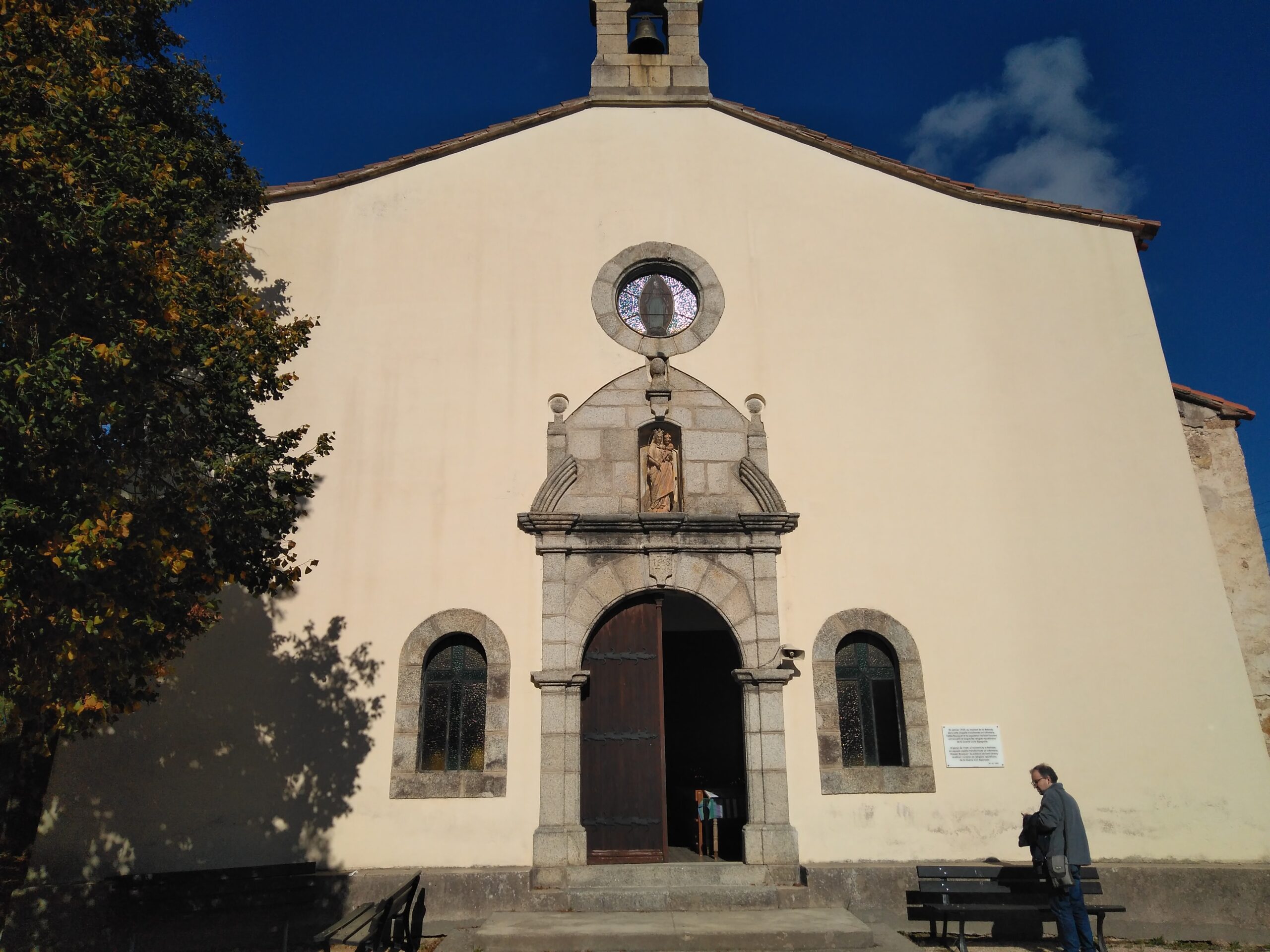
It is another reminder of the way in which he adapted his monuments to their surroundings, rather than simply placing a conventional statue on a pedestal.
The village itself is well worth exploring, particularly for its traditional Catalan textile and espadrille-making heritage.
THE CONFLENT – VIOLET’S ADOPTED HOME
Prades – The Artist’s Own Town
Prades deserves a particularly important place in this journey.
Although born in Thuir, Violet spent much of his life here, establishing his workshop, Sant Martí, in 1903.
The workshop became a meeting place for artists and intellectuals and helped make Prades an important centre of artistic activity.
His war memorial, in the cemetery, is among his most moving works.
A large plaque of repoussé copper, set into a pink marble surround, depicts an elderly Catalan mother in traditional mourning dress.
She is grieving for her son, one of the 95 men from Prades who died in the First World War.
There is no conventional soldier figure. Instead, Violet concentrates entirely on the bereaved mother.

The combination of architecture, sculpture, metalwork, mosaics and ironwork makes this a particularly accomplished monument.
It was listed as a Historic Monument in 2018.
If time permits, it is also worth seeking out the remains of Violet’s former workshop at Sant Martí, which gives an additional dimension to a visit.
Prades is a natural centre for exploring Violet’s life and work, and I would certainly allow time to enjoy the town itself.
Eus – Another Violet Memorial
A little further into the Conflent is Eus, one of the other villages to possess a Violet war memorial.

Eus is frequently described as one of the most beautiful villages in France, and the combination of its dramatic hillside setting and its memorial makes it a worthwhile addition to the itinerary.
Vernet-les-Bains – The Entente Cordiale
The construction of the monument to the Entente Cordiale of 1904 at Vernet-les-Bains was a rather extraordinary undertaking.
The idea was conceived in 1912, and Gustave Violet was chosen as the sculptor.

Among the patrons were Lord Roberts and General Joffre.
Although Violet’s proposed model was approved in 1913, the outbreak of war and subsequent difficulties delayed the project.
It was not until August 1920 that the enormous granite blocks were hauled up from the valley by oxen.
The stone mason then faced the formidable task of working fourteen-hour days in the blazing summer sunshine.
Local children watched, fascinated, as the final iron railings were secured in holes filled with molten lead.
The monument is a fascinating reminder of the diplomatic relationship between France and Britain, as well as of the extraordinary practical difficulties involved in creating monumental sculpture in the early twentieth century.
THE ASPRES AND THE ROUSSILLON INTERIOR
Thuir – Back to Violet’s Birthplace
In Thuir, a suitably dramatic and moving Violet memorial dominates the approach to the town cemetery.
The bas-relief sculptures portray the sorrow of the women and the stoicism, tinged with despair, of the soldiers.
It is particularly appropriate that such an important work should stand in the town where Violet was born.
While in Thuir, a visit to the cellars is practically obligatory.
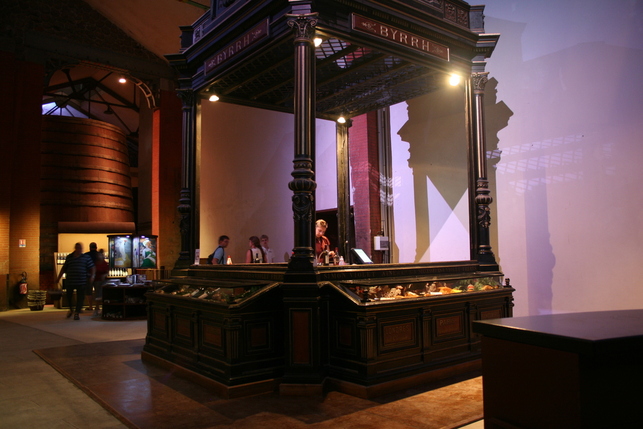
The enormous oak vats, the remarkable industrial architecture and the famous railway-station-style metal roof make this one of the most interesting industrial heritage sites in the department.
It is also a reminder of the family business which provided the background to Violet’s early life.
Estagel and Tautavel
There are further Violet memorials at Estagel and Tautavel.

At Tautavel, the memorial depicts an elderly Catalan mother, her head covered with a traditional scarf and her arms crossed beneath a large shawl.
Once again, it is the bereaved mother rather than the victorious soldier who occupies centre stage.
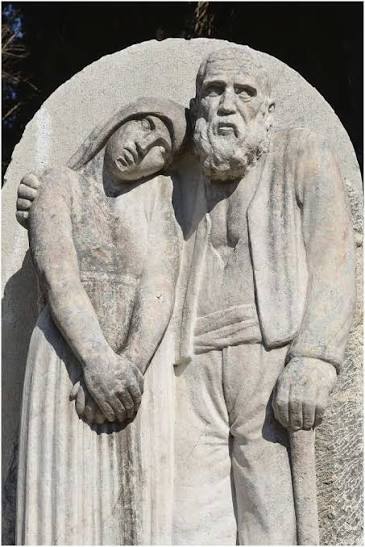
These smaller communities are important to the overall story because they demonstrate just how widely Violet’s approach to remembrance was adopted throughout the department.
Claira and Alénya
Two further memorials worth adding to the itinerary are those at Claira and Alénya.
Both belong to Violet’s remarkable series of First World War monuments.
They are easily overlooked when concentrating on the better-known towns, but they help complete the picture of his work across the Roussillon plain.
BEYOND THE PYRÉNÉES-ORIENTALES
Barcelona – The Catalan Volunteers
Perhaps the most interesting extension to this journey takes us beyond France, to Barcelona.

In the cemetery of Montjuïc stands Violet’s monument to the Catalan volunteers who fought alongside the French during the First World War.
Spain remained neutral throughout the conflict, but a number of Catalans volunteered to fight for France, many joining the French Foreign Legion.
The monument was inaugurated on 1 June 1925 and commemorates 135 men.
Its dedication is to the French soldiers and Spanish volunteers who died for the triumph of justice and freedom.
It is a particularly moving addition to Violet’s body of work and a reminder that the story of the First World War in this part of Europe was not confined by national borders.
Mazères – A Further Violet Memorial
For those wishing to extend the journey further afield, Violet also created a war memorial at Mazères in the Ariège in 1927.
Unlike many of his earlier memorials, this one includes the figure of a soldier.
It is an interesting comparison with the predominantly female figures which characterise so much of his work in the Pyrénées-Orientales.
A LASTING LEGACY
Gustave Violet and Aristide Maillol approached the subject of remembrance in different ways, but both understood that the real tragedy of war lay in the lives it destroyed.
Their monuments are not simply records of the dead.
They are records of the people left behind: the mothers, wives, sisters and daughters whose lives would never be quite the same again.
Lovely idea! Years ago we did a “pilgrimmage” of the monuments relating to the Retirada…
What an excellent survey. Thank you so much Jane.