
Carcassonne: France’s Fairytale Fortress
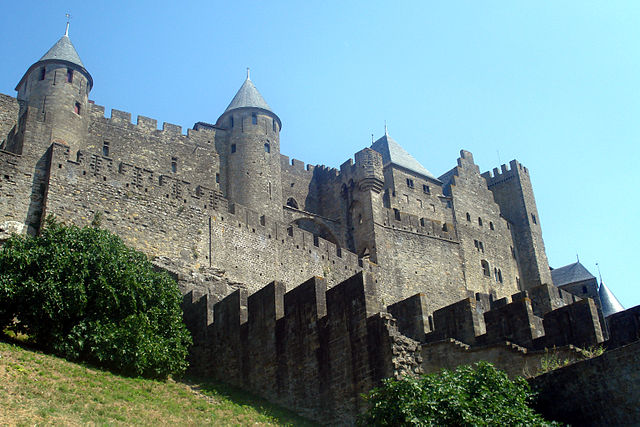
Few places live up to the hype quite like Carcassonne. Rising dramatically above the River Aude, its mighty walls, towers and turrets look as though they’ve been lifted straight from the pages of a fairy tale. It’s one of France’s best-known historic landmarks and, despite attracting millions of visitors each year, it still has the power to leave first-time visitors speechless.
Whether you’re interested in medieval history, the Cathars magnificent architecture or simply enjoying a memorable day out, Carcassonne deserves a place on your itinerary.
DID YOU KNOW
Legend has it…
According to local legend, the city owes its name to Dame Carcas. During a long siege, she supposedly tricked the enemy into believing the city still had plenty of food by throwing its last grain-fed pig over the walls. Thinking the inhabitants had food to spare, the besieging army gave up. As they retreated, Dame Carcas rang the bells, prompting the cry: “Carcas sonne!” (“Carcas rings!”)—a tale that’s almost certainly mythical, but one that locals still love to tell.
A city that was almost lost forever
It’s hard to believe today, but in the early 19th century Carcassonne was in a sorry state. Its ancient walls were crumbling, many buildings had fallen into disrepair and there were even plans to demolish much of the medieval city.
Fortunately, influential historian and writer Prosper Mérimée recognised its importance and campaigned to save it. The restoration was entrusted to the architect Eugène Viollet-le-Duc, whose ambitious work transformed the fortress into the spectacular sight we see today.
Not everyone agrees with every detail of his restoration – particularly the pointed slate roofs, which some historians argue were never typical of this part of southern France – but few would deny that without his efforts the Cité may well have disappeared altogether.
In 1997, Carcassonne’s medieval city was recognised as a UNESCO World Heritage Site, cementing its place among Europe’s greatest historic treasures.
More than a pretty picture
Carcassonne isn’t simply a beautiful backdrop for holiday photographs. For centuries it was one of the most important fortified cities in southern France.
The city became closely associated with the Trencavel family, powerful medieval rulers who found themselves caught up in the Albigensian Crusade against the Cathars in the early 13th century. After a lengthy siege in 1209, the city fell to the crusaders, marking a turning point in the history of the region.
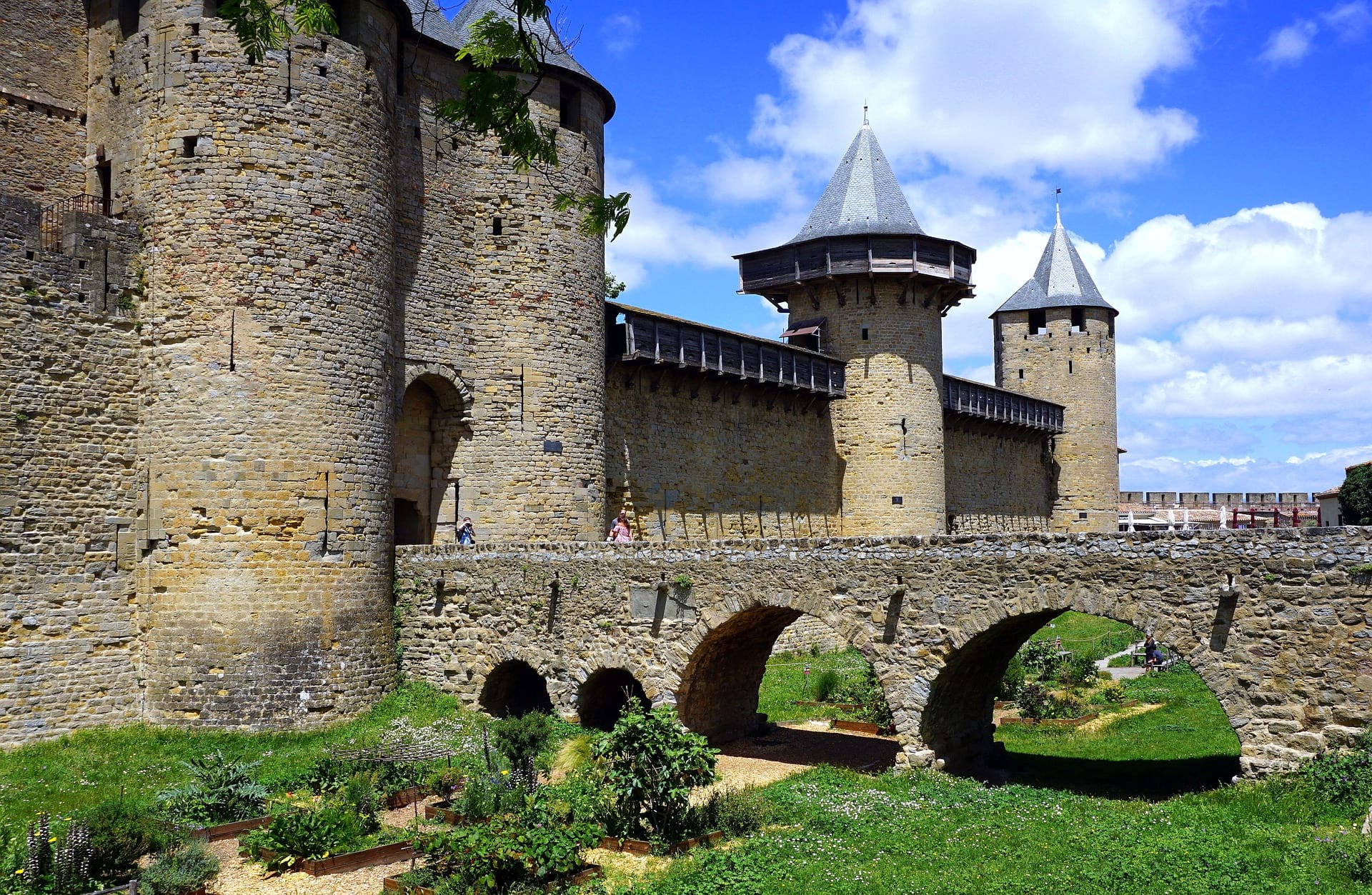
Today, visitors can still explore the impressive Château Comtal, the fortified castle that formed the heart of the medieval stronghold. Walking through its towers, battlements and defensive passages offers a fascinating glimpse into life during one of the most turbulent periods of French history.
DID YOU KNOW?
Carcassonne has 52 towers.
The city’s famous double fortifications are punctuated by 52 towers and almost 3km of defensive walls, making it one of the largest and best-preserved medieval fortified cities in Europe.
Walk the walls
One of the real pleasures of visiting Carcassonne is simply wandering.
The Cité is surrounded by nearly three kilometres of double ramparts, punctuated by more than 50 towers. Walking around the outer paths, known as the lices, gives wonderful views over the lower town, the surrounding vineyards and, on a clear day, the distant Pyrenees.
Inside the walls, narrow cobbled streets twist between stone houses, small squares, cafés and artisan shops. Although parts of the old town inevitably cater for tourists, it’s worth looking beyond the souvenir stalls. Pause in a quiet side street, admire the beautifully restored stonework or simply sit with a coffee and imagine life here hundreds of years ago.
DID YOU KNOW?
Not all the roofs are authentic
Many of the pointed slate roofs seen today were added during the 19th-century restoration by architect Eugène Viollet-le-Duc. Historians believe many of the original towers would probably have been topped with curved terracotta tiles more typical of southern France.
Don’t miss the Basilica
The Basilica of Saints Nazaire and Celse is one of Carcassonne’s real treasures.
Built over several centuries, it combines Romanesque architecture with elegant Gothic additions. Inside, magnificent stained-glass windows fill the church with coloured light, creating a peaceful contrast to the bustle of the streets outside.
Even visitors with little interest in religious buildings often find it one of the highlights of their visit.
Remember there’s another Carcassonne
Many visitors never venture beyond the medieval walls, but it’s well worth crossing the River Aude to explore the Bastide Saint-Louis, also known as the Ville Basse.
Built in the mid-13th century by King Louis IX after the medieval Cité became a royal French stronghold, the lower town has a completely different atmosphere. Here you’ll find elegant squares, bustling cafés, shops, markets and the tree-lined Canal du Midi, making it the perfect place to unwind after exploring the fortress.
 When should you visit?
Carcassonne is beautiful at any time of year, but if you can avoid the busiest weeks of July and August you’ll enjoy a much more relaxed experience.
Spring and autumn are ideal, with pleasant temperatures and fewer crowds. If you do visit in summer, arrive early in the morning or later in the afternoon, when the light on the ancient stone walls is particularly magical.
A few practical tips
Allow at least a full day to explore both the Cité and the lower town. Wear comfortable shoes, as the medieval streets are steep and uneven in places, and many areas are paved with cobblestones. Visitors with limited mobility should be aware that some routes can be challenging, although accessible routes and facilities continue to improve.
Finally, don’t rush. Carcassonne rewards those who slow down. Walk the ramparts, lose yourself in the narrow streets, linger over lunch and stay long enough to see the golden stone walls begin to glow in the late afternoon sunshine.
It’s easy to understand why Carcassonne has inspired writers, artists and visitors for generations. Yes, it can be busy, and yes, it’s one of France’s biggest tourist attractions. But once you’ve stood beneath its towering walls or watched the sunset over its medieval skyline, you’ll understand exactly why so many people fall under its spell.
 P-O Life Top Tips
Getting there
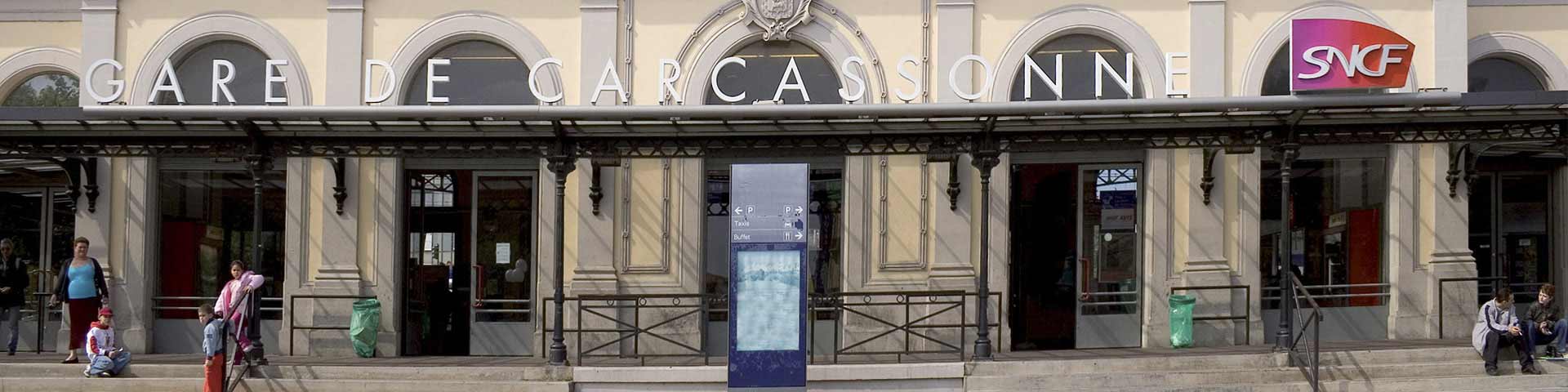
Carcassonne is around 1 hour 20 minutes by car from Perpignan via the A61 motorway. It’s also easy to reach by train, with regular services from Perpignan to Carcassonne station.
Parking
Several large pay car parks are located just outside the medieval walls. Arriving before 10am in summer will usually save you both time and queues.
Best photo spot
For the classic postcard view, head across the Pont Vieux (Old Bridge). From here you’ll get a spectacular panorama of the entire Cité, particularly in the early morning or late afternoon light.
Don’t miss
- Walk the double ramparts and the lices.
- Visit the Château Comtal.
- Step inside the beautiful Basilica of Saints Nazaire and Celse.
- Cross the river to explore the quieter Bastide Saint-Louis and the Canal du Midi.
Allow plenty of time
Although many visitors come for just a few hours, a full day will let you explore both the Cité and the lower town without feeling rushed.
Best time to visit
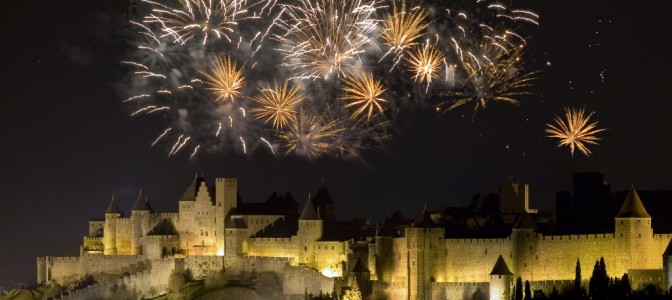
Spring and autumn are ideal, with pleasant temperatures and fewer crowds. If you’re visiting in summer, arrive early or stay into the evening when the day-trippers have gone and the illuminated walls create a magical atmosphere.
Accessibility
The medieval streets are steep in places and many are cobbled, so sturdy footwear is recommended. Visitors with reduced mobility should check the official visitor information before travelling, as accessible routes and facilities are available but can be limited in some areas of the Cité.
Worth staying overnight?
If your schedule allows, yes. Once the daytime crowds leave, Carcassonne takes on a completely different atmosphere, and an evening stroll through the softly lit streets is one of the best ways to experience the city.