
10 French Books That Are Perfect for English-Speaking Learners
Reading a book in French sounds like a wonderful way to improve your language skills – right up until you find yourself looking up six words in the first sentence and have completely forgotten what the story was about by the time you reach the bottom of the page.
The trick is choosing the right book.
You don’t necessarily need books written specifically for language learners. There are plenty of genuine French novels and classics that use relatively straightforward vocabulary and are perfectly manageable for anyone with a reasonable level of French.
Better still, reading them introduces you not just to the language, but to French culture, humour, history and ways of thinking.
So, if you’d like to graduate from Je voudrais une baguette, s’il vous plaît to curling up with an actual French book, here are some good places to start.
Please note: This article contains Amazon affiliate links. As an Amazon Associate, we earn from qualifying purchases, at no additional cost to you. THANK YOU FOR YOUR SUPPORT.
1. Le Petit Nicolas – René Goscinny and Jean-Jacques Sempé
Approximate level: A2–B1
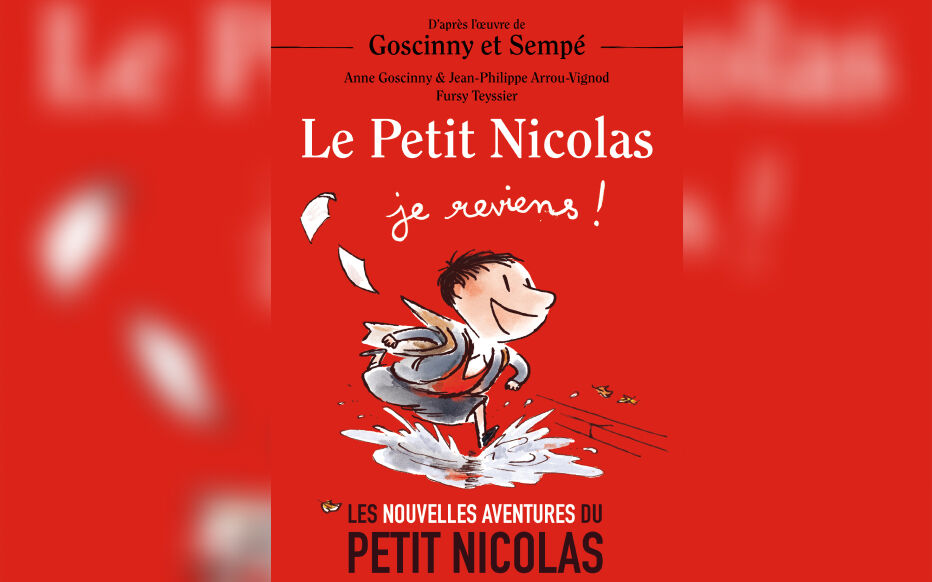
Le Petit Nicolas is a collection of wonderfully funny stories about a French schoolboy, his friends, teachers and long-suffering parents.
Because the stories are told from Nicolas’s point of view, the language is generally straightforward and conversational. The stories are short too, which means you get the satisfaction of finishing something without committing yourself to 400 pages of French.
There’s plenty of everyday vocabulary and dialogue, as well as a lovely introduction to French humour and culture.
And although Nicolas is a child, the humour certainly isn’t only for children.
Why it’s good for learners: Short chapters, everyday French, plenty of dialogue and very funny.
2. Le Petit Prince – Antoine de Saint-Exupéry
Approximate level: A2–B1
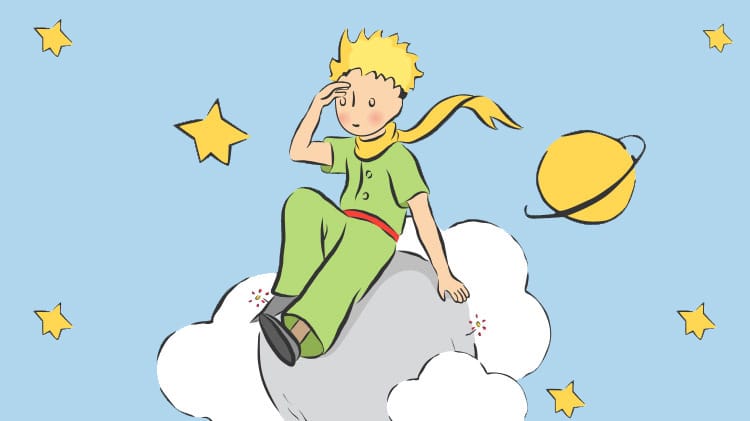
Probably the most obvious choice – but with good reason.
Le Petit Prince is one of the best-known French books in the world and has the advantage of being short, beautifully written and relatively simple in its vocabulary.
A pilot stranded in the Sahara meets a mysterious little prince who has travelled from another planet. What follows looks at first like a children’s story but gradually becomes a meditation on friendship, love, loneliness and what really matters in life.
The vocabulary is generally accessible, although some of the philosophical ideas are rather more complicated than the French used to express them.
It’s also full of phrases and references that French people recognise, so reading it gives you a little piece of shared French culture.
Why it’s good for learners: Short, clear and a genuine French classic.
3. Un sac de billes – Joseph Joffo
Approximate level: B1–B2
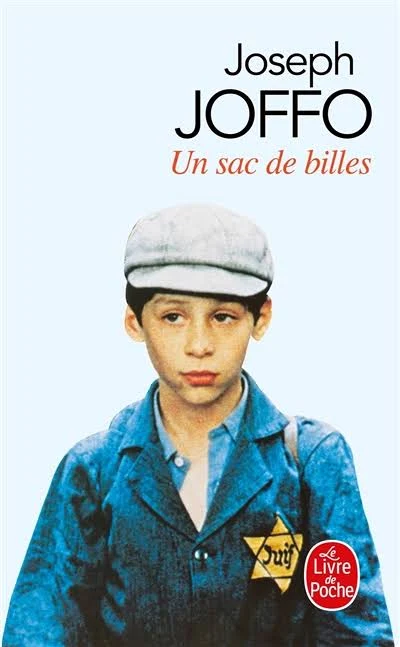
For an adult learner who wants a proper page-turning novel, this could be one of the best choices of all.
Published in 1973, Un sac de billes is Joseph Joffo’s autobiographical account of his childhood during the German occupation of France.
Joseph and his brother Maurice are Jewish boys growing up in Paris. As persecution intensifies, their parents send them away and the two children have to make their way across occupied France towards the free zone.
It’s moving, frightening and sometimes surprisingly funny, and because much of the story is seen through a child’s eyes, the prose is generally direct and accessible.
Most importantly for a language learner, you want to know what happens next. That makes an enormous difference when you’re reading in another language.
Why it’s good for learners: Straightforward narrative, gripping story and an insight into France during the Occupation.
4. La Gloire de mon père – Marcel Pagnol
Approximate level: B1
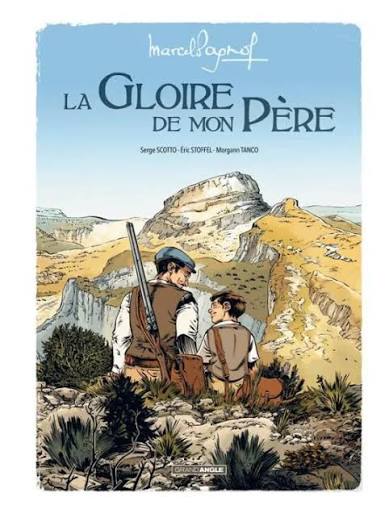
For those of us living in the south of France, Marcel Pagnol deserves a place on the list.
In La Gloire de mon père, Pagnol looks back on his childhood and his family’s holidays in the hills of Provence.
It’s affectionate, funny and full of sunshine, family life and the landscapes of southern France.
There will inevitably be some unfamiliar vocabulary, particularly relating to the countryside, but Pagnol is a wonderful storyteller and the narrative is generally easy to follow.
If you enjoy it, there’s an obvious next book as it’s the first in a series…
Why it’s good for learners: Engaging storytelling, southern French atmosphere and manageable prose.
5. Le Château de ma mère – Marcel Pagnol
Approximate level: B1
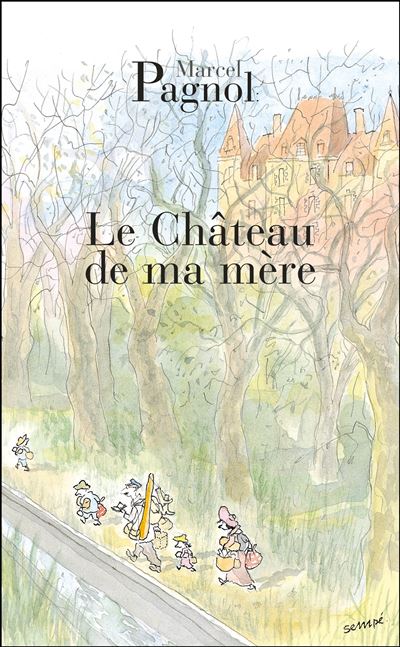
The natural follow-on from La Gloire de mon père.
Pagnol continues the story of his childhood, family and beloved Provence, combining humour and nostalgia with some genuinely moving moments.
Reading the two books together is a lovely introduction to one of France’s best-loved writers.
There are several more in the series and they all have films to watch afterwards.
Why it’s good for learners: Familiar characters after the first book, accessible storytelling and lots of French cultural flavour.
6. Les Contes du chat perché – Marcel Aymé
Approximate level: A2–B1
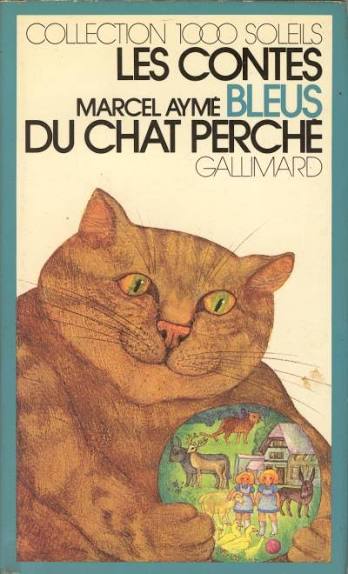
Don’t be put off by the fact that these stories were originally written for children.
Delphine and Marinette are two little girls growing up on a farm where the animals talk, argue, scheme and generally behave rather like humans.
The stories are charming and funny, but clever enough for adults to enjoy too.
Short stories are particularly useful when learning a language because you don’t have to remember a complicated plot over several weeks of reading.
Why it’s good for learners: Short, charming stories with relatively simple vocabulary.
7. Monsieur Ibrahim et les fleurs du Coran – Éric-Emmanuel Schmitt
Approximate level: B1
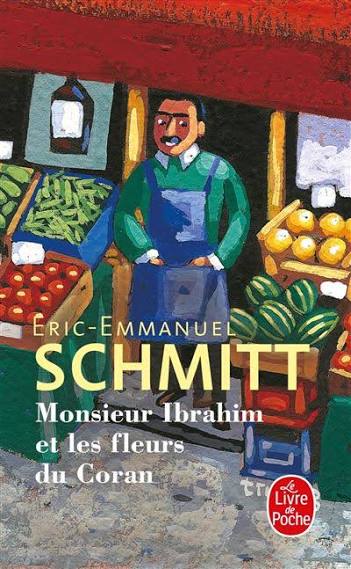
A short modern novel about the friendship between a Jewish boy living in Paris and Monsieur Ibrahim, the elderly Muslim shopkeeper in his neighbourhood.
It’s warm, thoughtful and very readable, with plenty of dialogue and contemporary French.
At around 100 pages in many editions, it also has the considerable advantage of not looking intimidating when you pick it up.
Why it’s good for learners: Short, modern, conversational and emotionally engaging.
8. Oscar et la dame rose – Éric-Emmanuel Schmitt
Approximate level: B1
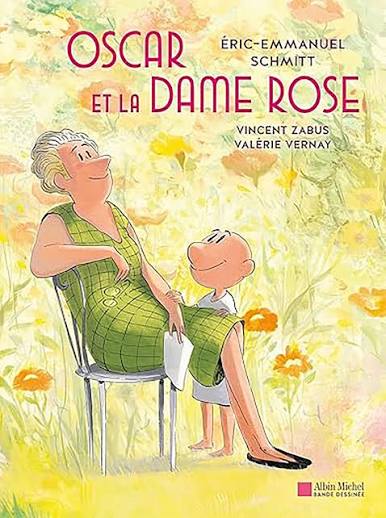
Another short and accessible novel by Éric-Emmanuel Schmitt, although this one comes with a warning: you may need a hanky.
Oscar is a ten-year-old boy with cancer who writes a series of letters to God with the encouragement of Mamie-Rose, an elderly hospital visitor.
Despite the subject, the book isn’t relentlessly miserable. It’s funny, tender and surprisingly uplifting.
The letter format and relatively simple language make it particularly approachable for intermediate learners.
Why it’s good for learners: Short chapters, clear language and an absorbing story.
9. L’Étranger – Albert Camus
Approximate level: B1–B2
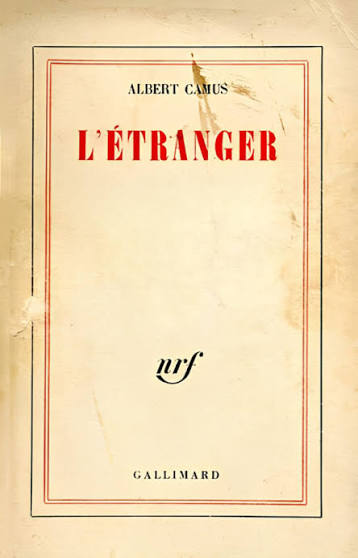
Now we’re moving firmly into French literary classic territory.
Camus’s L’Étranger is frequently recommended to French learners because the writing style is unusually direct. Sentences are often short and the vocabulary isn’t excessively elaborate.
The ideas behind the novel are another matter entirely.
The story follows Meursault, an emotionally detached French Algerian whose seemingly ordinary existence takes a dramatic turn.
You don’t have to understand existentialism to read it – although you may find yourself thinking about the book long after you’ve finished.
Why it’s good for learners: Surprisingly straightforward French for such an important literary work.
10. No et moi – Delphine de Vigan
Approximate level: B1–B2
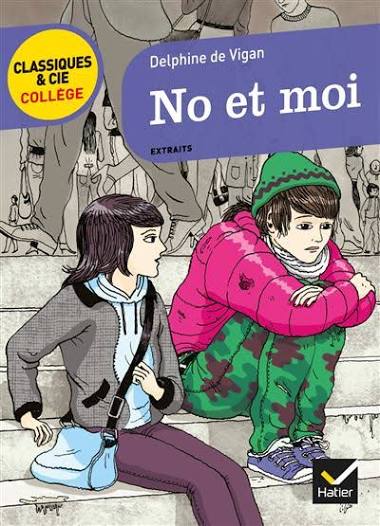
For something much more contemporary, try Delphine de Vigan’s No et moi.
The novel follows Lou, a highly intelligent but socially awkward teenage girl who befriends No, a young homeless woman she meets at a Paris railway station.
The language is modern and generally accessible, and the story deals with friendship, homelessness, family and the uncomfortable gap between wanting to help someone and actually being able to do so.
It’s a useful next step for someone who has already managed one or two of the easier books on this list.
Why it’s good for learners: Contemporary vocabulary and an absorbing modern story.
Bonus suggestion: Try a Maigret
Georges Simenon’s Inspector Maigret novels can be surprisingly good reading material for French learners.
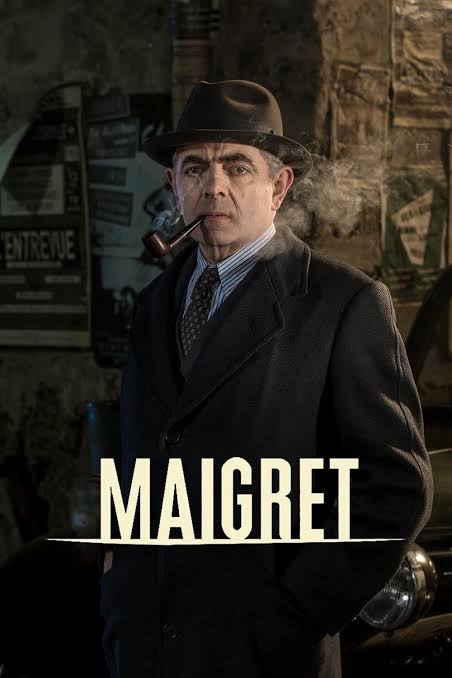
There are dozens of them, the plots give you a reason to keep reading and Simenon’s prose tends to be much clearer and more economical than that of many literary novelists.
They also provide a wonderful glimpse of French cafés, streets, hotels, railway stations and everyday life from another era.
Most would probably suit a reasonably confident B1–B2 reader.
Pick one whose story appeals to you rather than worrying too much about reading them in order.
One for the brave: Kiffe kiffe demain – Faïza Guène
Approximate level: B1–B2 – but with a twist
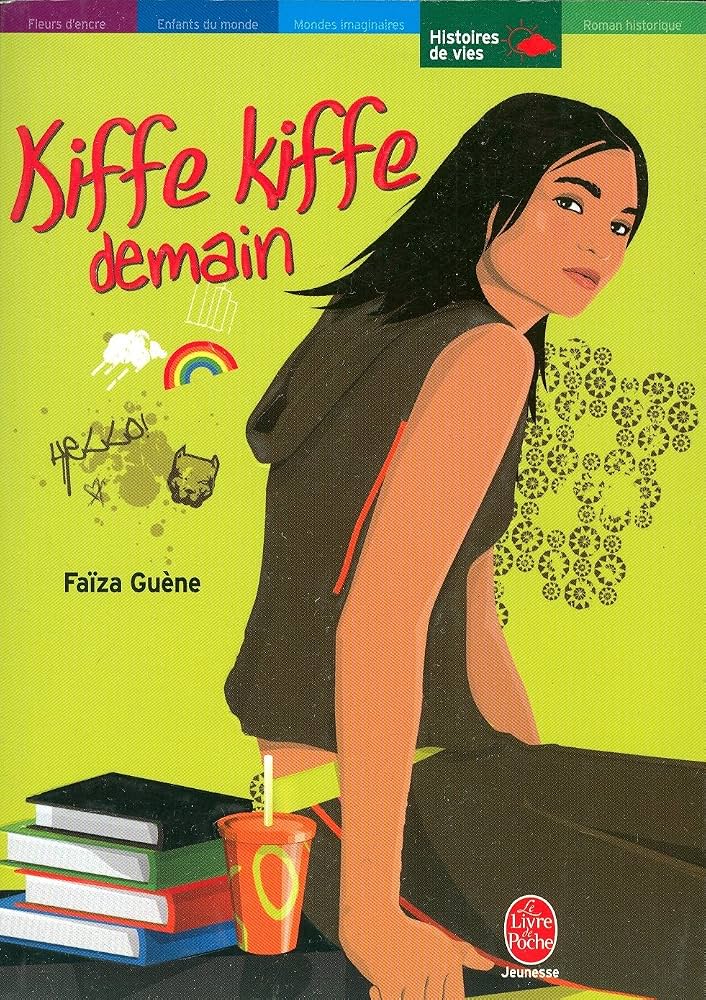
Kiffe kiffe demain is a funny, sharp contemporary novel narrated by a teenage girl growing up on a housing estate outside Paris.
The sentences themselves aren’t necessarily difficult.
The problem – or the advantage, depending on how you look at it – is the slang.
You’ll encounter colloquial expressions and French that may bear little resemblance to what you learnt in evening classes.
For anyone living in France who wonders why they can understand the news on France 2 but can’t understand a group of teenagers at the next table, it could be quite an education.
Which French book should you start with?
If your French is still fairly basic, we’d start with Le Petit Nicolas, Le Petit Prince or Les Contes du chat perché.
If you’re reasonably comfortable having everyday conversations in French and want something that feels more like reading a proper novel than doing a language exercise, try Un sac de billes or La Gloire de mon père.
And if you’re already fairly confident and want to tackle a recognised French literary classic, L’Étranger is probably one of the most approachable places to begin.
But there’s one important rule.
Don’t look up every word!
This is probably the quickest way to turn an enjoyable book into homework.
If you understand enough of a sentence or paragraph to follow what’s happening, keep reading.
You’ll often work out unfamiliar words from the context, and words that matter tend to crop up again. If you stop every thirty seconds to reach for a dictionary, you’ll lose the story – and probably lose the will to continue.
Look something up when not knowing it prevents you from understanding what’s happening, or when you’ve seen the same word several times and still can’t work it out.
Otherwise, carry on.
Understanding 80 or 90 per cent and enjoying the book is far more useful than understanding 100 per cent and giving up on page twelve.
A little French every day
Reading in French is one of those rare forms of language learning that doesn’t necessarily feel like studying.
Even ten pages a day exposes you to vocabulary, sentence structure, expressions and grammar in their natural context. You’ll begin to recognise phrases without consciously learning them, and you’ll gradually develop a feel for what “sounds right” in French.
And unlike a vocabulary list, a good book gives you a reason to come back tomorrow.
So perhaps the best French book for improving your French isn’t necessarily the easiest one.
It’s the one you don’t want to put down.
Bonne lecture !