
Research for the following article and the major crimes attributed to André’ threw up no evidence that Francis André or his principal MNAT/Gestapo-Lyon associates operated in or around the Pyrénées-Orientales. However, it did bring me into contact with both collaboration and resistance in the P-O, its border with Spain shaping everything: escape routes, smuggling, intelligence work, the hunt for Jews and Allied airmen, and the struggle between the Resistance and local collaborators. This article, whilst having no direct link with the P-O, neverthless planted the seed from which the series ”Shadows on the Canigou: Collaboration, Resistance and Betrayal in the Pyrénées-Orientales’ has grown. COMING SOON
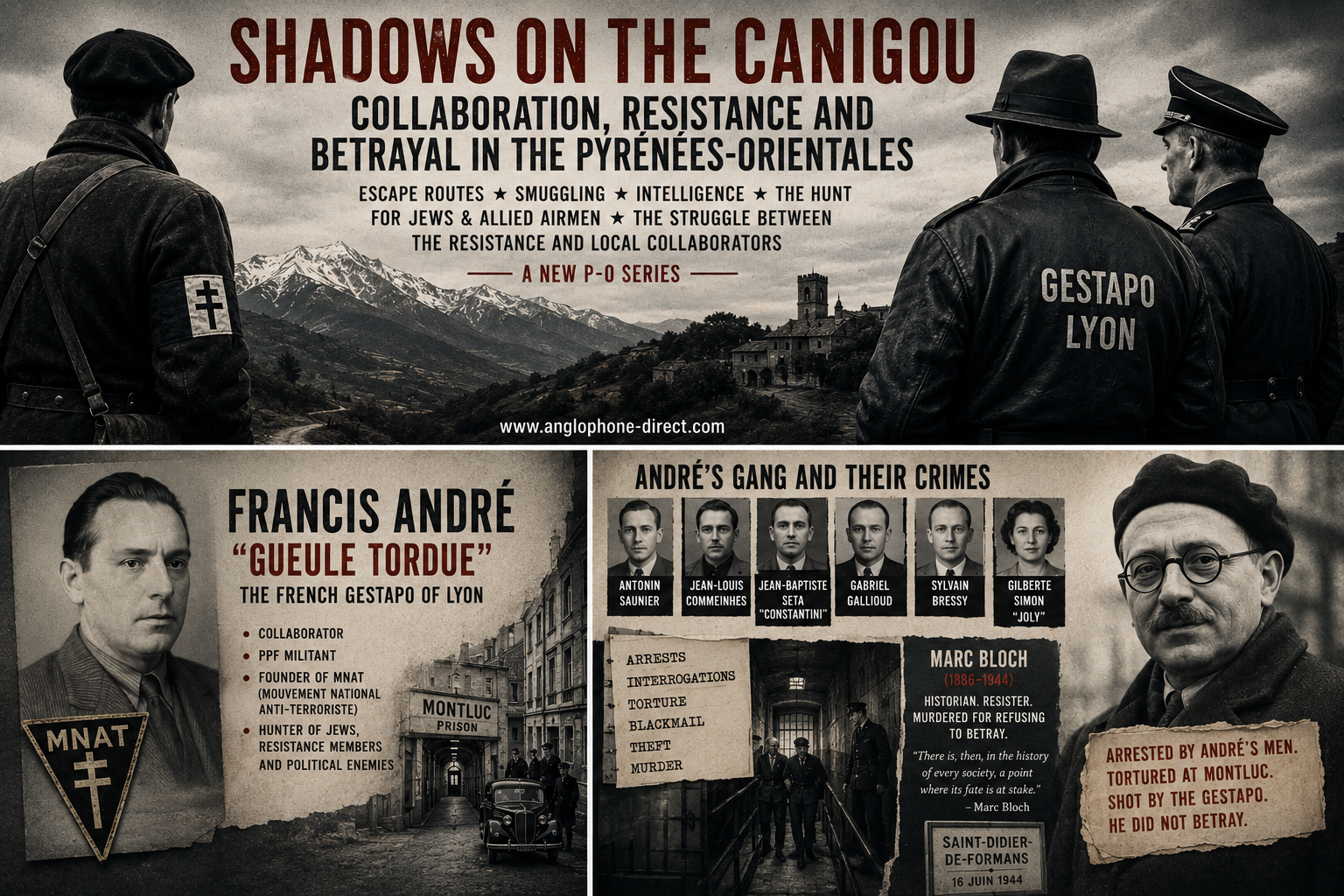
Francis André and the French Gestapo of Lyon
In the history of occupied France, it is well known that collaboration was not only a matter of spies, police files, and official decrees. It also had a criminal, local, and intimate face. In Lyon, one of its most brutal representatives was Francis André, known as “Gueule tordue” — “Twisted Face” — a French collaborator who placed himself and his gang at the service of the Nazis.
André was born in Lyon in 1909. Before the war, he moved in violent political and criminal circles and became associated with Jacques Doriot’s Parti populaire français, one of the most openly collaborationist movements in wartime France. During the German occupation, he built a reputation not merely as an informer or auxiliary, but as a militant hunter of Jews, Resistance members, and political enemies.
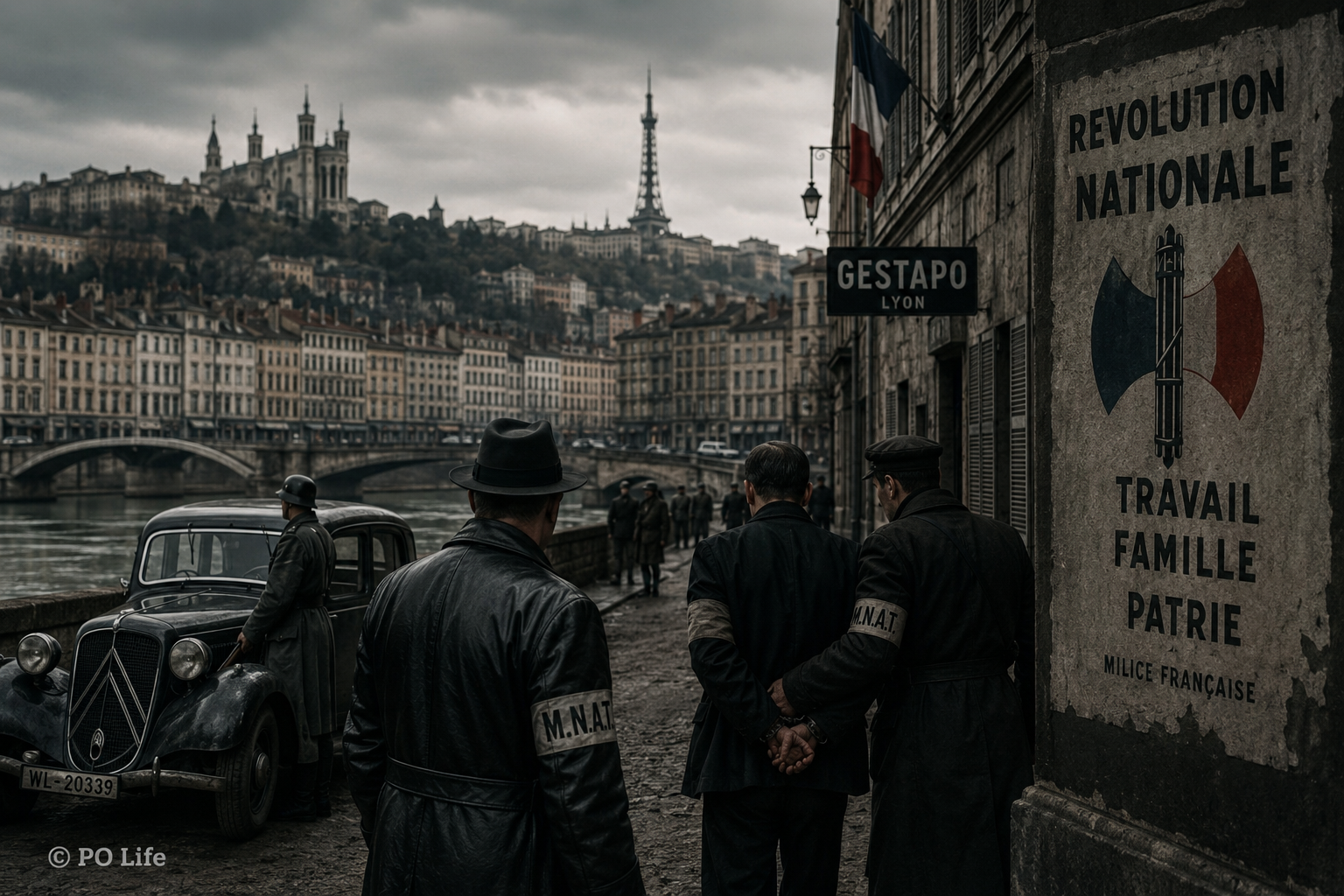
By late 1943, André had formed the Mouvement national anti-terroriste, or MNAT. Its title suggested patriotic counter-terrorism; in practice, it was a French auxiliary force working alongside the Gestapo in Lyon. Its members included convinced fascists, PPF militants, common criminals, racketeers, and social outsiders drawn into the profitable violence of collaboration. The gang carried out arrests, interrogations, thefts, torture, blackmail, and murder. Their usefulness to the Germans lay in their local knowledge: they knew streets, accents, cafés, political grudges, and family networks. They could enter French homes as Frenchmen, then deliver victims to the occupier.
Lyon was already one of the darkest centres of repression in occupied France. Klaus Barbie, the SS officer later known as the “Butcher of Lyon,” directed brutal operations against the Resistance from the city. André and his men became part of this machinery. They were not passive tools. They pursued their own violence and enrichment while serving German aims. Their collaboration was ideological, opportunistic, and criminal.
Among the figures associated with André’s circle were Antonin Saunier, Jean-Louis Commeinhes, Jean-Baptiste Seta, Gabriel Gallioud, Sylvain Bressy, Gilberte Simon, and others tried after the Liberation. Saunier appears to have been one of André’s important lieutenants and was linked to the gang’s finances and spoils. Seta, also known as “Constantini,” Gallioud, Bressy, and other members belonged to the armed world of arrests and intimidation around André. Gilberte Simon, also known as Gilberte Joly, was the only woman among the accused in the Lyon trial mentioned in the contemporary accounts.
The group’s violence extended beyond Lyon. André has been linked to the “Saint-Barthélemy grenobloise,” a wave of assassinations and reprisals in Grenoble in November 1943. In Lyon and the surrounding region, his men were associated with the repression of Resistance networks and with attacks on Jewish and anti-fascist figures. Their victims included lawyers, doctors, activists, underground organisers: people whose names were sometimes known to history only because their lives ended in a cellar, prison, roadside, or field.
The most historically famous victim connected to André’s gang was Marc Bloch. Bloch was one of France’s greatest historians, a co-founder of the Annales school, a veteran of the First World War, and a Jewish scholar dismissed under Vichy’s antisemitic laws. In 1943 he joined the Resistance in Lyon under clandestine names including “Narbonne.” By 1944, he was a senior regional figure in the Resistance.
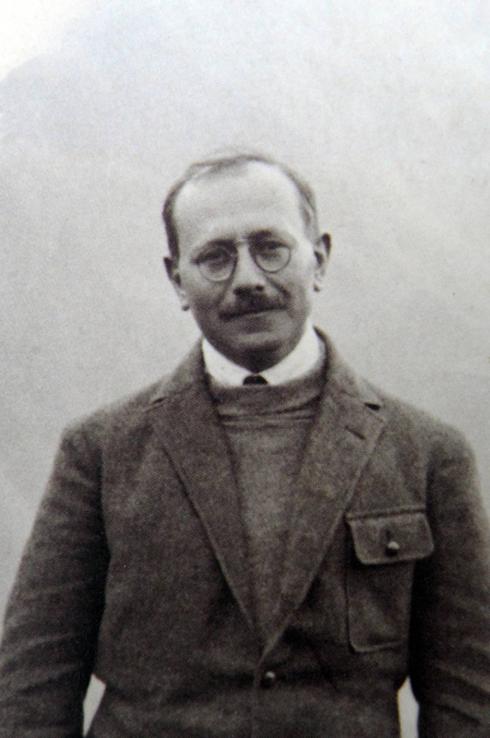
Bloch was arrested in Lyon in March 1944 by men linked to André’s group and the Gestapo. He was taken to Montluc prison, interrogated and tortured. He did not betray his comrades. On 16 June 1944, as the Germans began killing prisoners in the atmosphere of collapse after D-Day, Bloch was taken with other detainees to Saint-Didier-de-Formans, north of Lyon. There he was shot with his fellow prisoners. His death was both a Nazi crime and a French tragedy: French collaborators had helped deliver one of France’s greatest minds to the Gestapo.
After the Liberation of Lyon in September 1944 and the defeat of Nazi Germany in 1945, the machinery of justice turned toward collaborators. On 10 January 1946, thirteen defendants associated with André’s network appeared before the Cour de justice in Lyon on charges including treason. The trial unfolded in a city still marked by occupation, torture, denunciation, and the memory of Montluc prison.
Francis André did not deny the broad nature of his crimes. Accounts of the trial report that he acknowledged responsibility for an extraordinary number of killings, often given as around 120, while other estimates attributed even more victims to him and his circle. The proceedings exposed not only ideological collaboration but a hybrid world of political murder and gangsterism: jewels, money, fur coats, stolen property, rewards, personal vendettas, and murder all mixed with anti-Resistance repression.
The verdict came on 19 January 1946. André was sentenced to death. Several of his associates also received death sentences. The names most consistently reported among those executed with him are Antonin Saunier, Gabriel Gallioud or Gailloud, Sylvain Bressy, Jean-Baptiste Seta — “Constantini” — and André Egger. Other defendants received prison sentences, and the exact fate of every lesser-known figure is less clearly documented in accessible public sources.
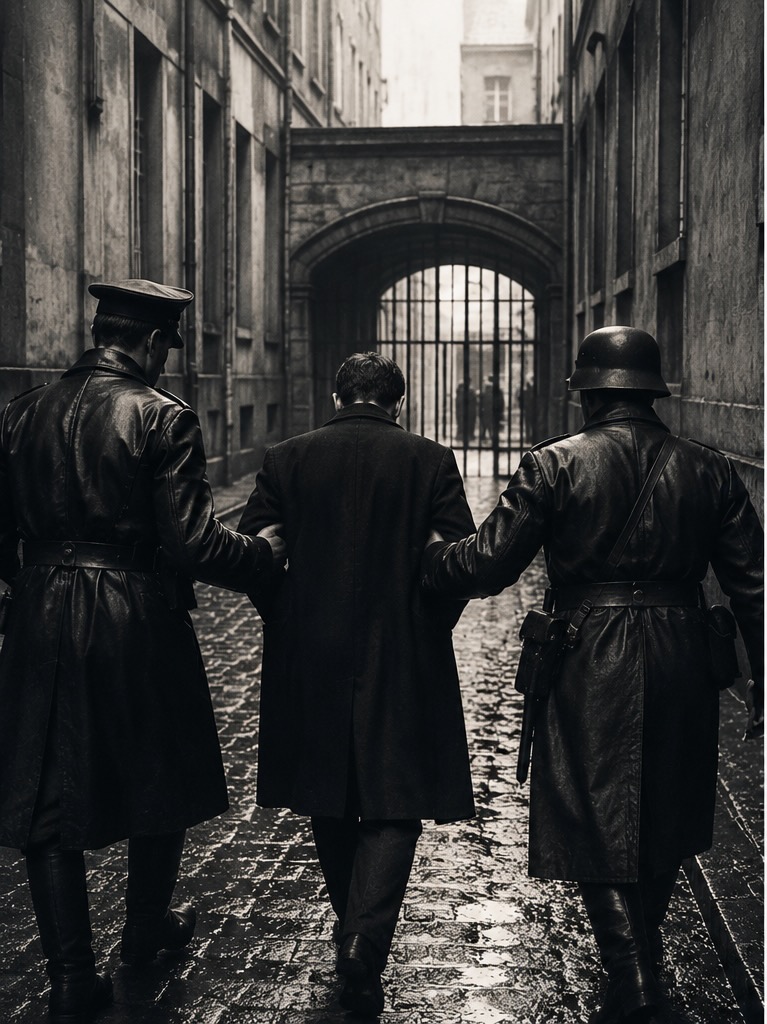
Francis André was executed by firing squad on 9 March 1946 at Fort de la Duchère in Lyon. He was thirty-seven. Saunier, Gallioud/Gailloud, Bressy, Seta/Constantini, and Egger were reportedly shot the same day. T the purge through which France attempted to punish those who had aided the occupier.
Yet the significance of André’s case goes beyond punishment. His story shows that collaboration was not only imposed from Berlin or Vichy. In places like Lyon, it could be local, eager, and intimate. Frenchmen hunted Frenchmen. Criminals learned the language of ideology; ideologues learned the profits of crime. Their victims included unknown resisters and internationally renowned figures such as Marc Bloch.
Bloch’s memory endured in a way André’s never could. André’s name survives as a warning: the face of collaboration as cruelty, greed, and betrayal. Bloch’s name survives as something else — intellectual courage, civic duty, and resistance under terror. In that contrast lies the moral shape of the story: one man served tyranny by turning his knowledge of France against the French; the other served France by refusing, even under torture, to surrender the truth or his comrades.
KEY SOURCES:
Le Monde
Musée de la Résistance en ligne
Maitron; Montluc memorial materials
Centre des monuments nationaux/Panthéon information