
The Mines of La Pinouse
WITH KATYA WILLEMSEN
Cherries, apricots, grapes and peaches may be our region’s above-ground treasure, but iron ore and other metals have long been its underground bounty, mined in the Pyrénées-Orientales since antiquity.
The iron ore found deep within the Canigou massif has, over the centuries, adorned churches, noble homes and palaces. The iron of the Canigou is even traditionally associated with the magnificent gates of Versailles.
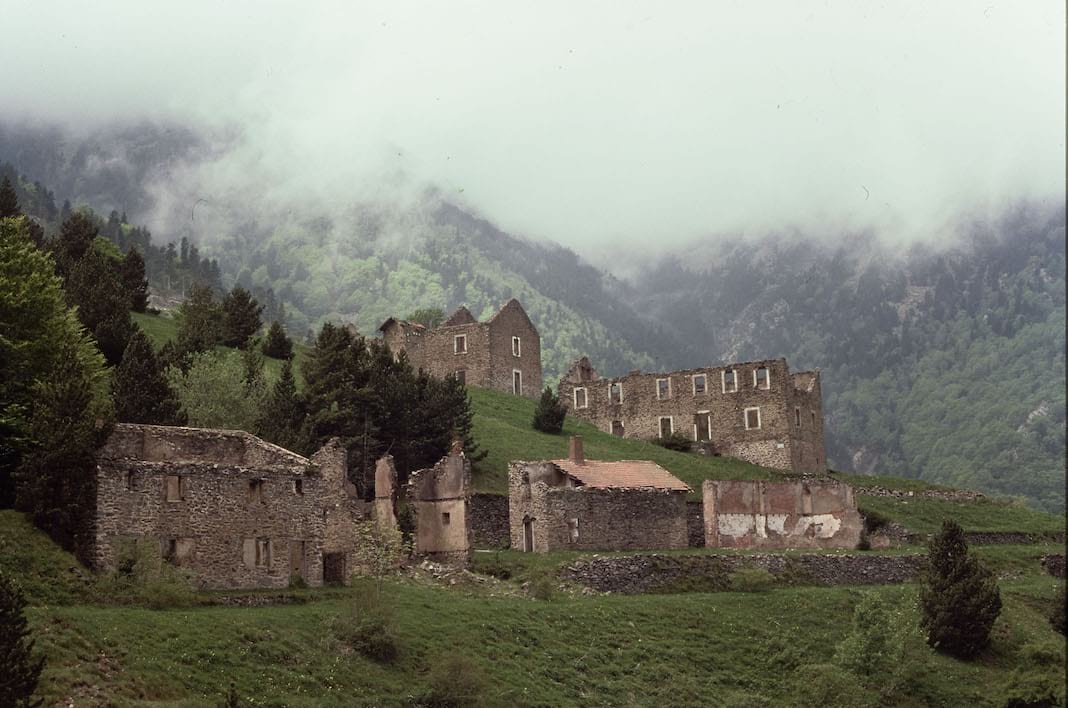
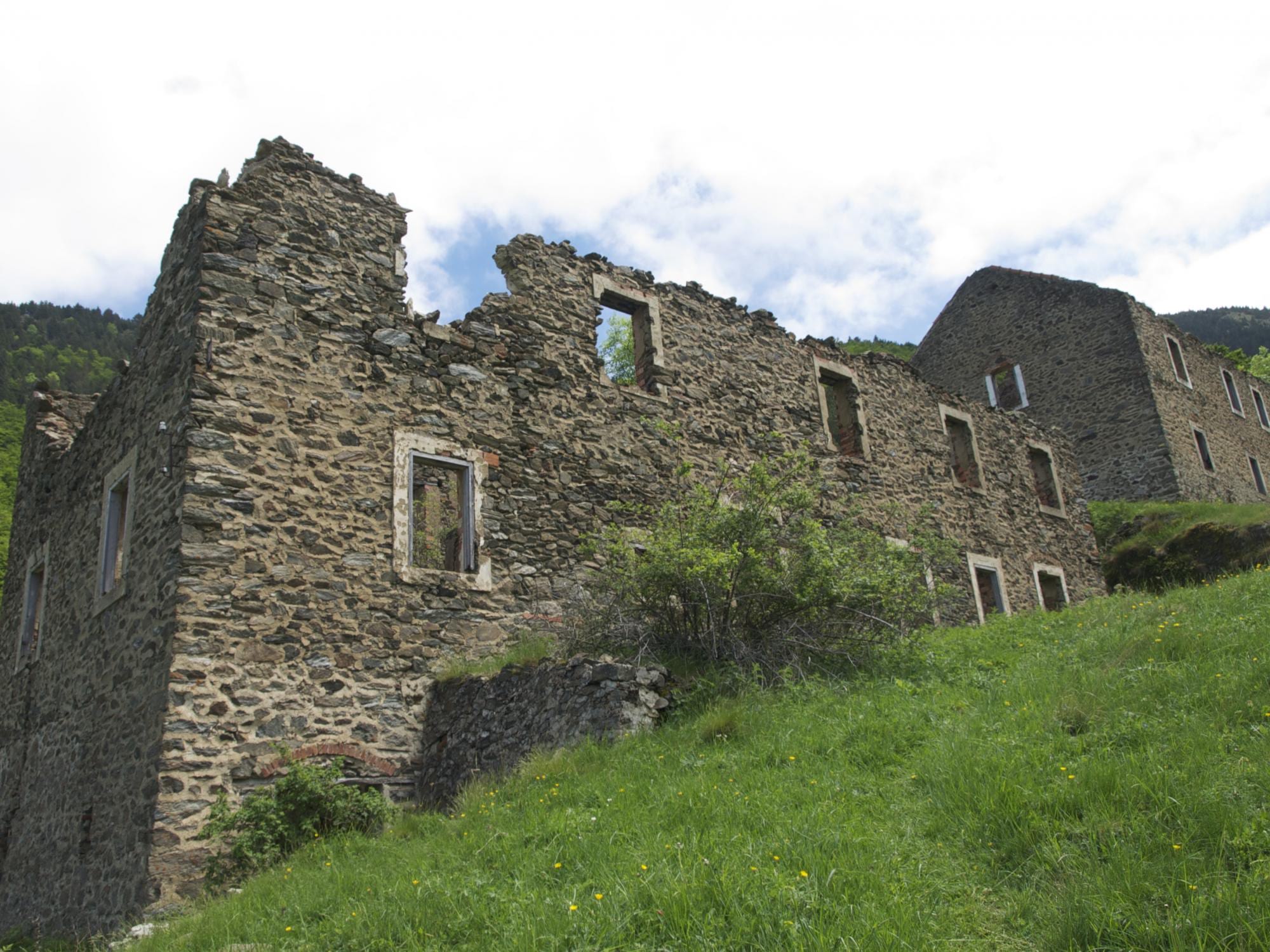
Remnants of this mining industry still scar the flanks of Canigou. A coil of iron rope on the edge of a precipice may be all that remains of an old pulley system. Railway sleepers, tunnels, loading platforms and other structures survive in the forest, reminders of a time when these mountains were alive with miners, muleteers and machinery.
The mining landscape around La Pinouse is now protected as a Monument historique, along with the remains of Roque Jalère, Les Manerots and sections of the old mining railway used to transport the ore.
Until the early 1800’s, mining was manual and dangerous. Village children started young, first as apprentices, handing tools to older miners, then when they were stronger, as wagon-pushers.
Entire villages were made up of miners, coalmen (for the forges), mule skinners, blacksmiths, and transporters.
A mountain built on iron
Iron extraction around the Canigou is far older than the industrial remains we see today. Archaeological evidence shows mining and ironworking in the massif during the Roman period, while the Catalan forges later became an important part of the region’s economy. (inventaire.patrimoines.laregion.fr)
By the nineteenth and early twentieth centuries, mining had become an important part of life in the mountain villages. Miners, charcoal makers, muleteers, blacksmiths and other workers all played their part in getting the ore out of the mountains and down to the forges.
The mines of La Pinouse belong particularly to this later industrial period. The mine operated during the early twentieth century and closed in 1931.
The walk to La Pinouse
It’s just over an hour’s drive from Céret to Col de Palomère, from where the walk begins.
Allow around 1½ hours for the walk to the mine site.
Follow the mountain track through the forest and into the world of the old mines. In autumn, beech leaves create that wonderful copper-coloured carpet beneath your feet, while the pale trunks and branches make skeletal silhouettes against the sky.
On a cold day, mist can drape the surrounding mountains, turning the landscape into folds of eerie blue.
And when shades of ochre, flame and rust begin to burnish the dark rock around you, you know you are getting closer to the mine.
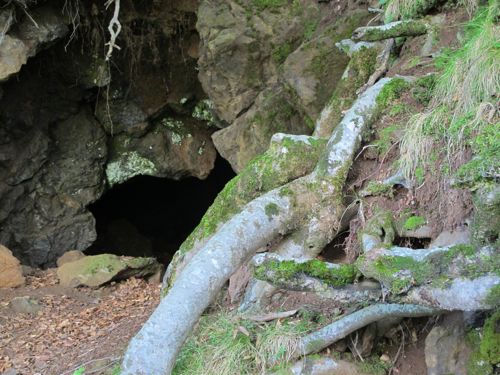
Soon the forest drops below the track and the vista opens. If it’s a cold day, mist will drape mountains that disappear into the horizon in folds of eerie blue.
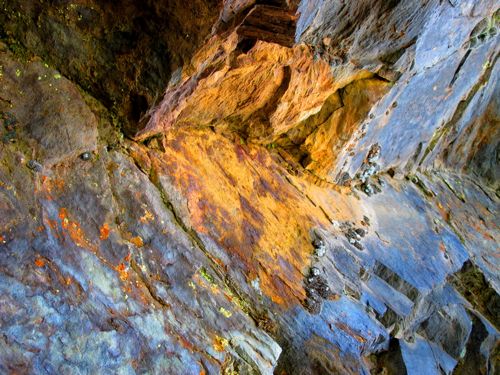
When shades of ochre, flame and rust start to burnish the dark rock next to you, it means you’re getting closer to the mine.
| MINING VOCAB • Les piquers: literally « biters », these men were traditional miners, « biting » into the coalface with hammer and pick. • Les boiseurs: too old for the dangerous work of mining, these men handled wood used to support mine shafts. • Les charbonniers: they kept the forge fires going • Les porteurs: the least paid and the youngest, responsible for carrying iron ore out of the mine in baskets on their backs. • Les muletiers: men and women whose donkeys hauled the iron ore to the forges |
It is easy to forget how physically demanding every stage of this industry was. Before modern machinery, getting iron ore out of a mountain and down to a forge required an enormous amount of human and animal labour.
Explore the remains — carefully
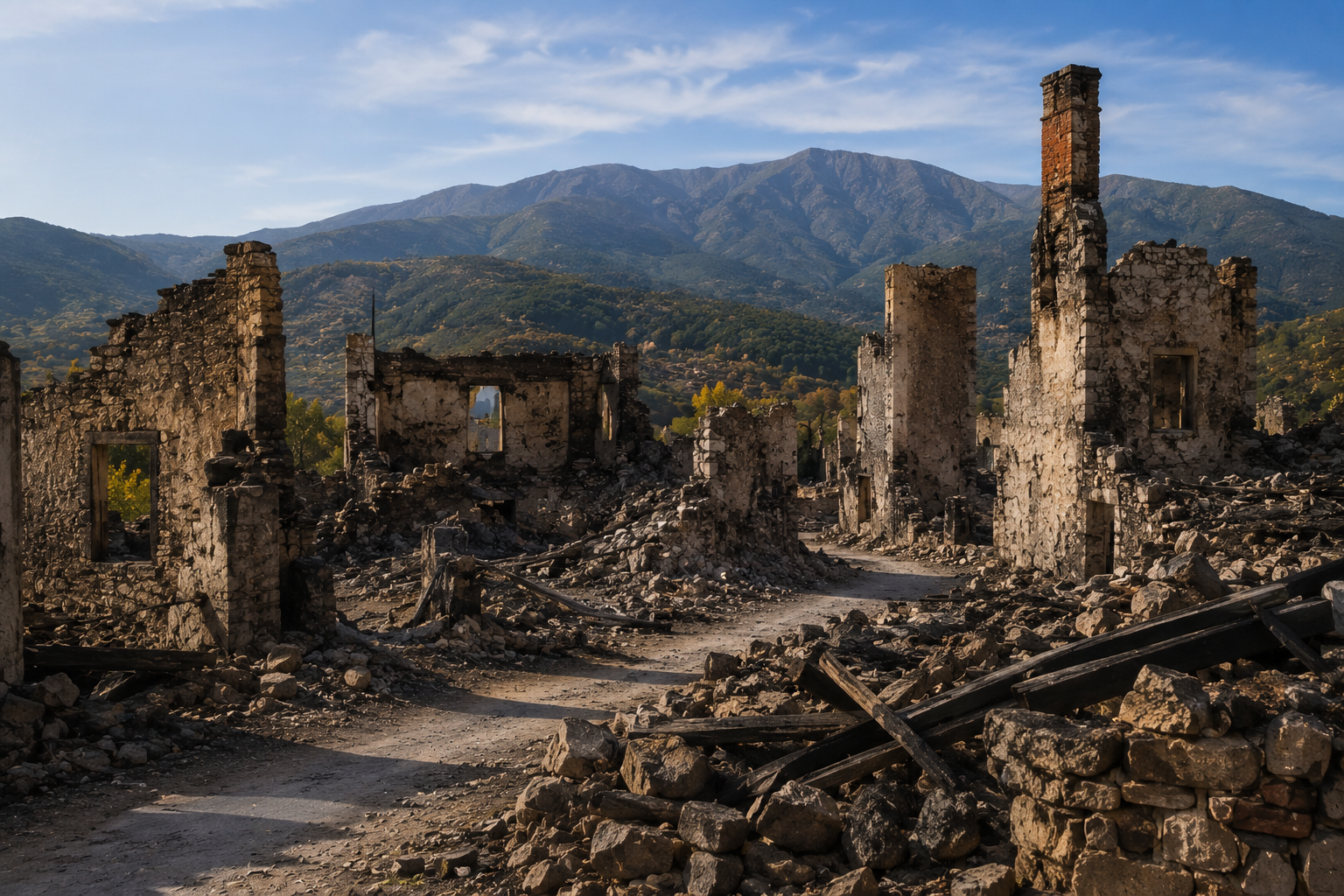
At La Pinouse, the forest opens onto the remains of the old mining settlement and industrial installations.
You can still see evidence of the buildings, railway system and equipment that once formed part of a much larger operation. The old transport infrastructure is particularly fascinating: the mining railway connected the mountain workings with the valley and was an essential part of getting the ore out. (Le plan du patrimoine)
There are tunnels and abandoned mine workings in the area, but please don’t enter them. Old mines can contain unstable rock, hidden shafts, poor air and other hazards. Likewise, don’t climb on ruined buildings, railway structures or retaining walls.
The best way to experience La Pinouse today is to admire the remains from safe paths and imagine the extraordinary amount of work that once took place here.
And then there is the view
One of the great pleasures of this walk is the contrast between the dark industrial history beneath your feet and the extraordinary mountain landscape surrounding you.
The forest gives way to open views, and on a clear day the mountains seem to unfold endlessly into the distance.
It is easy to understand why this place feels so atmospheric.
It is also a wonderful place for a picnic — but choose a safe, level spot well away from cliffs, unstable ruins and old mine workings.
La Pinouse and the Resistance
There is another, darker chapter to the story of La Pinouse.
The remote mining settlement became associated with the French Resistance during the Second World War. In 1944, Resistance leader Julien Panchot was captured, tortured and killed here by German forces during the events surrounding the destruction of Valmanya.
So these mountains are not simply an industrial curiosity. They carry memories of several different generations: miners, their families, the people who transported their ore, and those who later used this remote landscape as a place of resistance.
How to get there
From Céret:
- Take the D615 near the Pont du Diable, direction Oms/Llauro.
- After approximately 7 km of bends, turn onto the D13.
- Continue through Oms.
- After Oms, take the D618 towards La Bastide.
- At the junction, follow the D13 towards Col de Palomère.
- Continue to Col de Palomère, where you can park and begin the walk.
Park at Col de Palomère and walk. Recent descriptions put the walk to the mining site at around 1½ hours, while longer circuits take several hours.
Wear proper walking shoes, take water and allow plenty of time. Mountain weather can change quickly, even when it is warm down in the plains.
A few things to remember
This is an old industrial site in a mountain environment, not a theme park.
Please:
- Stay on established paths where possible.
- Do not enter mine tunnels.
- Do not climb unstable ruins or structures.
- Keep children and dogs close around steep ground and old industrial remains.
- Take all rubbish home.
- Check the weather before setting off.
- Allow considerably more time than the original 45–60 minute estimate.
- Carry enough food and water for a mountain walk.
The site is protected heritage, so leave everything exactly as you find it.

A walk through another P-O
La Pinouse is one of those places where the Pyrénées-Orientales reveals a completely different face.
We tend to think of the department via its vineyards, orchards, beaches and sunny Mediterranean villages. But climb into the Canigou and another P-O appears: colder, wilder and shaped by iron, forests, industry and the people who spent their lives working these mountains.
Today, the railway sleepers are quiet, the mines are silent and the forest has reclaimed much of the mountain.
But walk slowly enough and you can still imagine the noise: picks striking rock, wagons rolling along the railway, mules carrying their heavy loads and workers making a living from the iron hidden inside the Canigou.
And that, perhaps, is what makes the walk to La Pinouse so special.
This article was originally written by Katya Willemsen, who brought many corners of the Pyrénées-Orientales to life for P-O Life readers. It has been gently updated (September 2026) to reflect current access, heritage information and modern safety advice, while retaining as much of Katya’s original voice and spirit as possible.
Katya was a talented and gifted writer, and a truly lovely soul who left a lasting impression on everyone who knew her, both on and off the page. She will be deeply missed by so many. Her words, and the quiet beauty she found in the world, will remain with us. Shine bright, dear Katya.