
Palalda – come on over to Dan’s place
Perched above the Tech valley, just a couple of kilometres from Amélie-les-Bains, this little medieval village is a wonderful place to linger for an hour or two. Leave the car behind and climb into the old village: narrow lanes, stone steps, colourful houses, tiny squares, ancient doorways and, every now and then, a gap between the buildings revealing the green valley below.
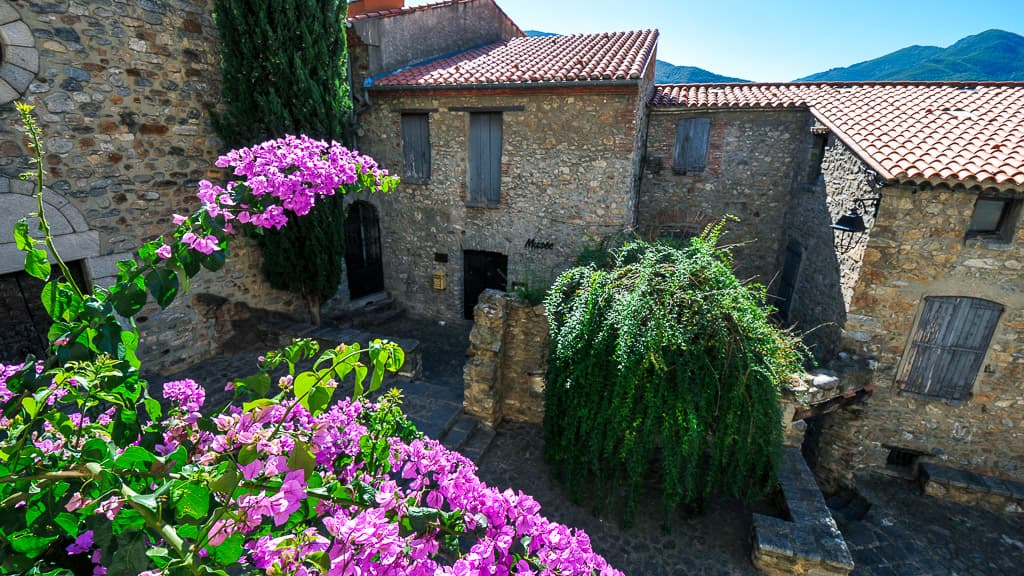
It is tempting to imagine that you have stumbled across a village which time forgot.
It didn’t – but Palalda has been here for a very long time.
The village was recorded as villa Paladdanum as early as the ninth century. The traditional explanation for the name is Palatium Dani — “Dan’s palace.” Exactly who Dan was is another matter. The name has survived; Dan hasn’t.
So who was Dan, and why did he have a palace here? Nobody knows which of course makes the place more intriguing.
A village built for looking out
Palalda occupies a strategic position above the Tech, and its medieval history is inseparable from the castle that once dominated the hillside.
The castle was associated with the lords of Cabrenç and Serralongue. In the thirteenth century, Guillaume-Hugues de Serralongue, lord of Cabrenç and the first known lord of Palalda, replaced the earlier castle fortifications with two substantial signal towers. They are still standing today, rising above the roofs of the village.
The towers were not built simply to look impressive. Their elevated position allowed warnings to be communicated through the medieval landscape.
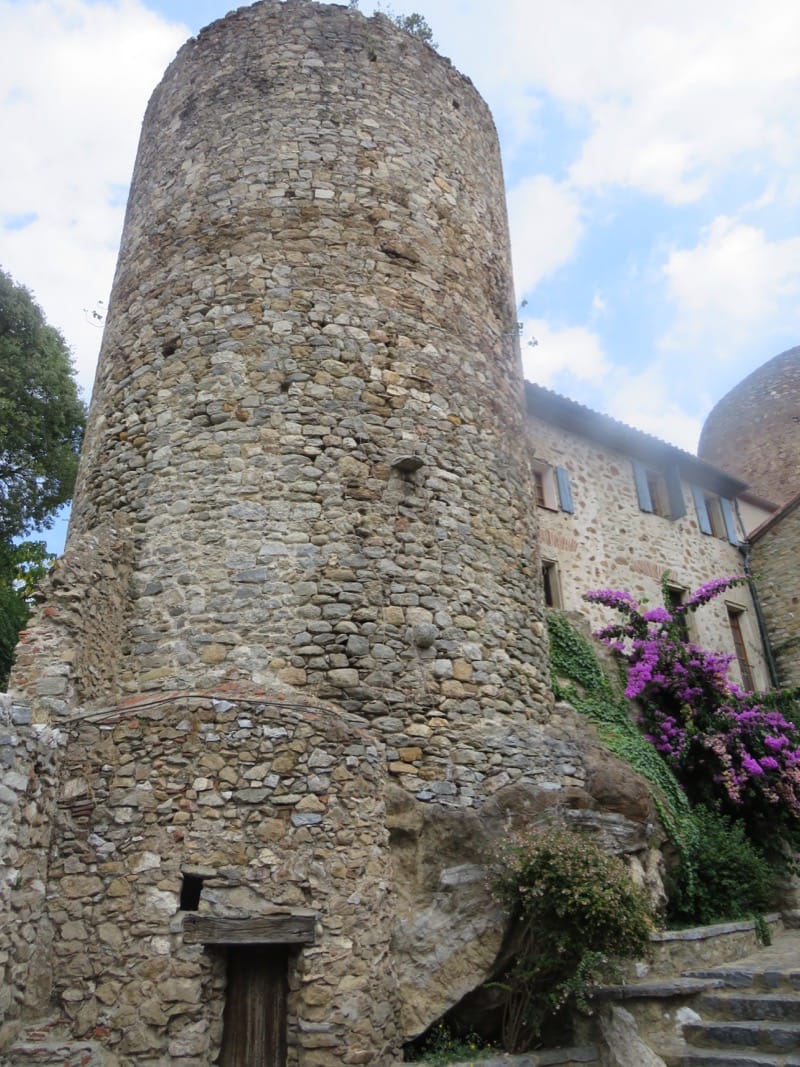
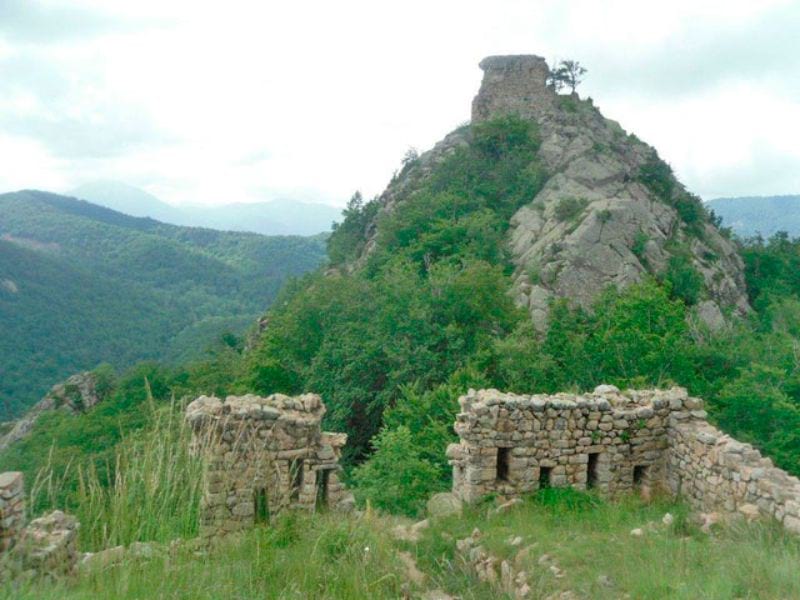
FIND OUT MORE ABOUT THE WATCHTOWERS
The king who probably never existed
An 1899 guide to the Pyrénées-Orientales records a local tale that Palalda was founded by a king called Palatus, who supposedly built the two towers still visible above the village.
The author is quite clear that this was the work of “storytellers of fables” rather than history. But the story had evidently become part of Palalda’s folklore by the nineteenth century.
So take your pick. Dan had a palace. King Palatus built the towers. Medieval lords built a fortified settlement in a strategically useful position above the Tech.
Personally, I like all three versions.
The church door with a very strange story
At the heart of the village is the Église Saint-Martin.
A church has stood here since at least the tenth century, although the present building has been altered over the centuries. The current tourist information describes it as rebuilt in the thirteenth century and restored in 1630. Inside are a seventeenth-century altarpiece by Cécilio Tura, dated 1661, and a twelfth-century processional cross.
But don’t rush inside. First, look at the door. The chestnut-wood entrance is covered with wrought-iron hinges and fittings associated with the local forges. And among all that ironwork are horseshoes — lots of them.
The horseshoes of Saint Martin
A nineteenth-century account records the local story that the marks on the church door were made by the kicks of Saint Martin’s horse.
According to the legend, the miraculous hoof marks were subsequently covered with real horseshoes as a permanent memorial.
Whether the horses of saints really left their mark on church doors is, of course, another question, but Saint Martin is an especially appropriate saint for a horse story as he was a Roman cavalryman before becoming bishop of Tours, and horses have long been associated with his imagery and traditions.
A chapel with a Mediterranean history
Just around the corner is the Chapelle du Rosaire, or Chapel of the Rosary.
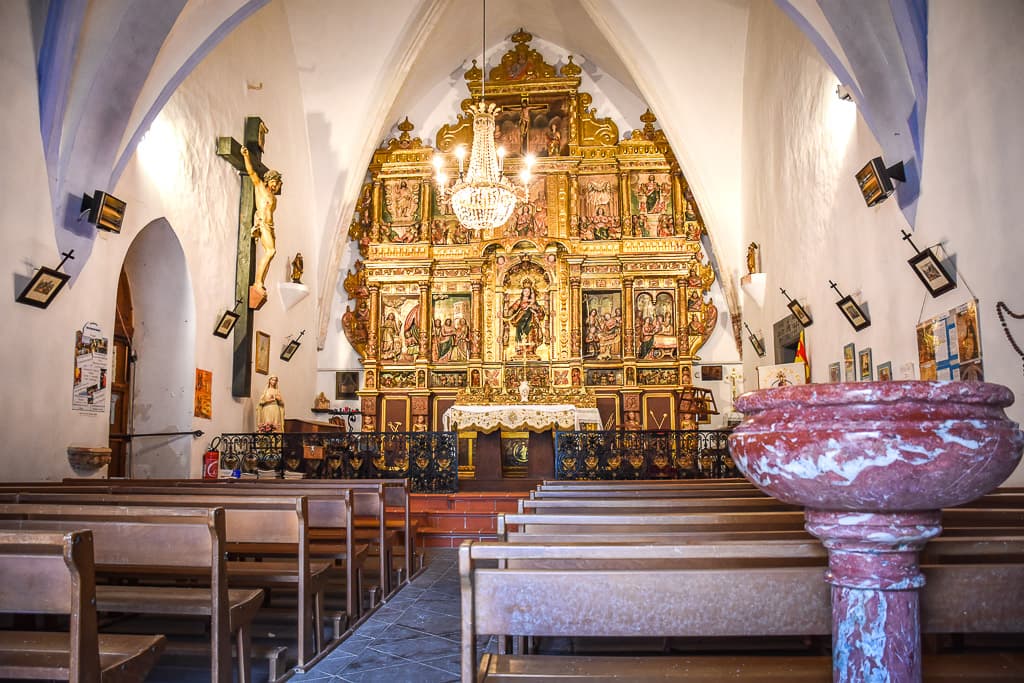
Built at the end of the sixteenth century on the site of the former parish church, the chapel contains a magnificent carved, painted and gilded wooden altarpiece dating from 1673. The chapel itself is a reminder of the important place that the Rosary once held in the religious life of Palalda.
The story of the Rosary also connects this tiny hillside village with one of the great events of sixteenth-century European history.
On 7 October 1571, the Christian fleet of the Holy League defeated the Ottoman fleet at the Battle of Lepanto, one of the most famous naval battles of the Mediterranean.
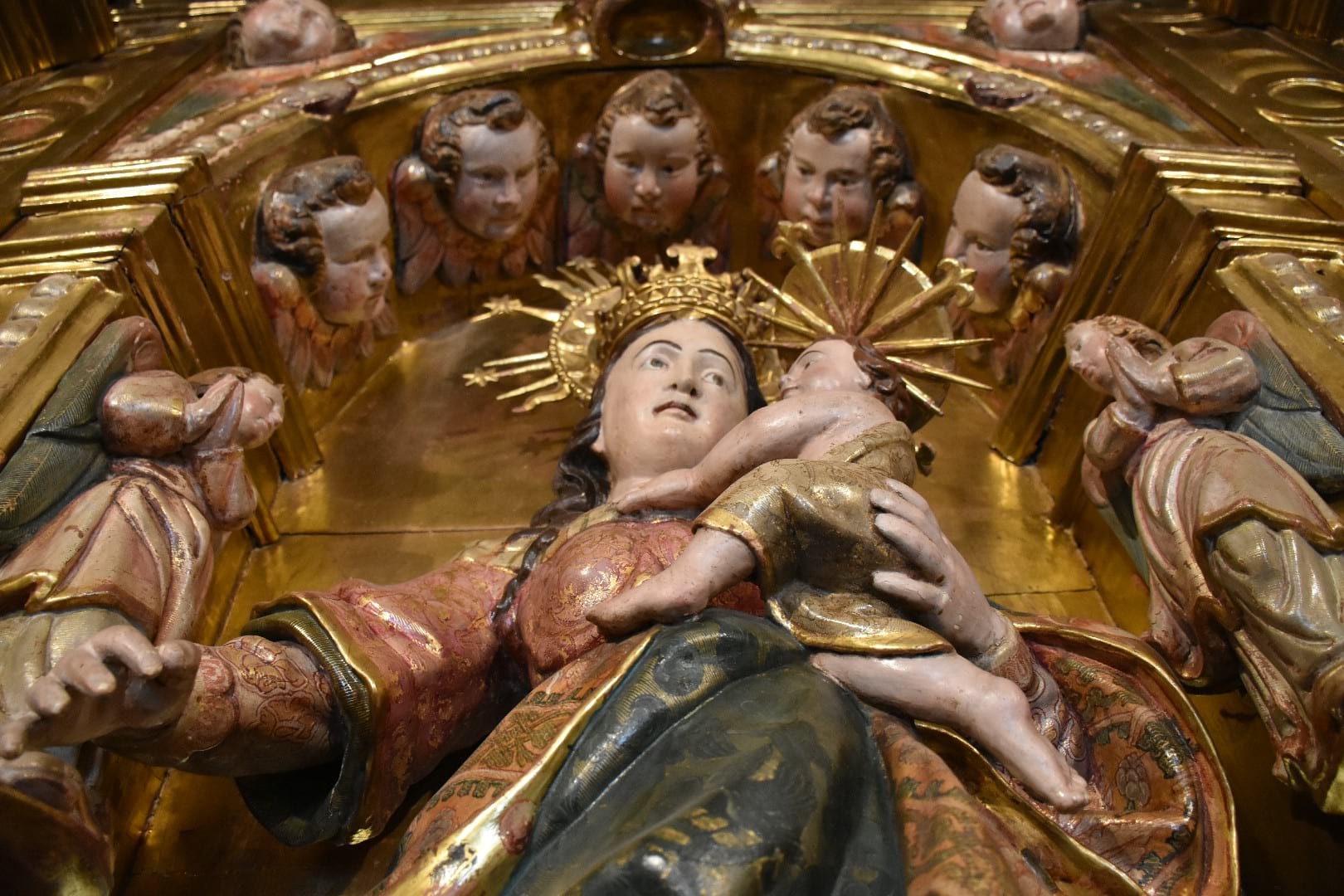
It is said that the the Pope at the time, Grégoire XIII, attributed this victory to the daily processions of St Rosaire brotherhoods who promoted the rosary in the streets of Rome. He promptly changed his planned ’Victory Day’ to ’St Rosaire day’, to be celebrated on the 7th October.
Palalda’s ‘Chapelle du Rosaire‘ usually celebrates the Fête du Rosaire in October with a programme of songs, traditional dancing, prayers and concerts.
The festival does not currently appear in the published 2026 events programme, so check with the Amélie-les-Bains tourist office if you’re hoping to attend
The chapel itself, however, remains very much part of Palalda’s heritage and is open to visitors during the 2026 season.
Mackintosh comes to Palalda
If you know Mackintosh as the Scottish architect and designer behind some of the most distinctive buildings and interiors of the Glasgow Style, you might not immediately associate him with a small Catalan village in the foothills of the Pyrenees.
But Mackintosh spent the winter of 1923–24 in Amélie-les-Bains with his wife, Margaret.
They explored the surrounding countryside, and Palalda was among the places that caught his attention. Mackintosh produced a watercolour simply titled Palalda during this period.
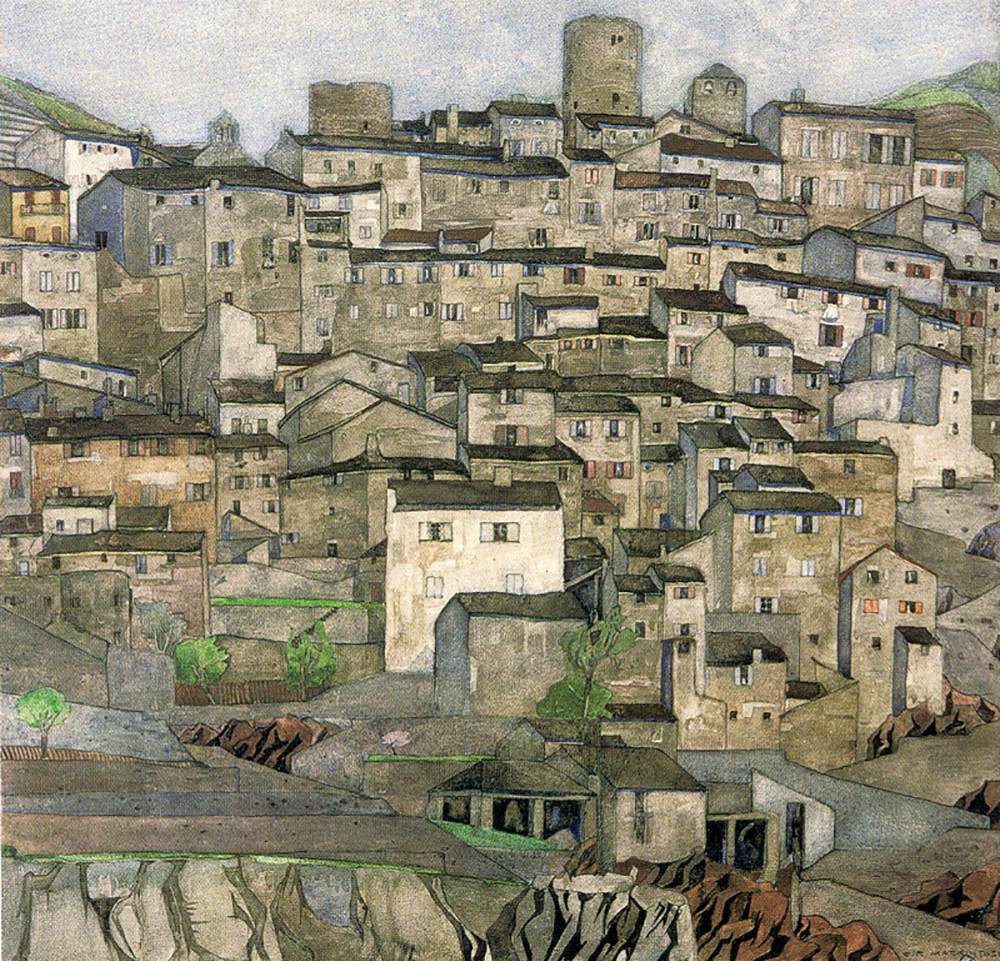
The surviving painting is particularly fascinating because it shows the village much as a visitor can experience it today: houses climbing the hillside, the medieval towers rising above them and the valley beyond.
Mackintosh was no longer concentrating primarily on architecture by this stage of his life. His building commissions had diminished and he had increasingly turned towards painting. The Roussillon offered him something different: intense light, strong colours, flowers, mountains, old buildings and landscapes.
And Palalda became part of that story.
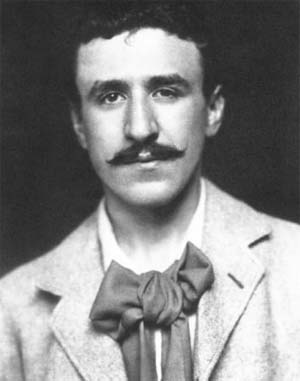
Find Mackintosh in a medieval castle
Perhaps the most unexpected thing about Palalda is that the medieval castle now houses an interpretation centre devoted partly to Mackintosh.
The Musée El Casals – Michel No has been completely renovated and now offers exhibitions devoted to local heritage, the territory and traditional crafts, together with an exhibition about Charles Rennie Mackintosh and temporary exhibitions by artists.
Mackintosh was fascinated by the landscape and light of the Roussillon, and his watercolours give us another way of looking at the villages we think we already know.
There is also a Mackintosh trail through the area, with places connected to his paintings and his time in the Roussillon.
Don’t rush Palalda
The temptation with a small medieval village is to arrive, photograph the church, admire the view and leave.
Don’t. Palalda rewards slow wandering.
Follow the narrow lanes without worrying too much about where they lead. Climb the steps. Look through archways. Notice the old ironwork. Look up at the towers.
Then turn around.
The village is built at several levels, and the higher you climb, the more the view opens out across the Tech valley. The official tourism information describes the village as retaining its medieval character, with old houses, narrow streets, stairways and little squares.
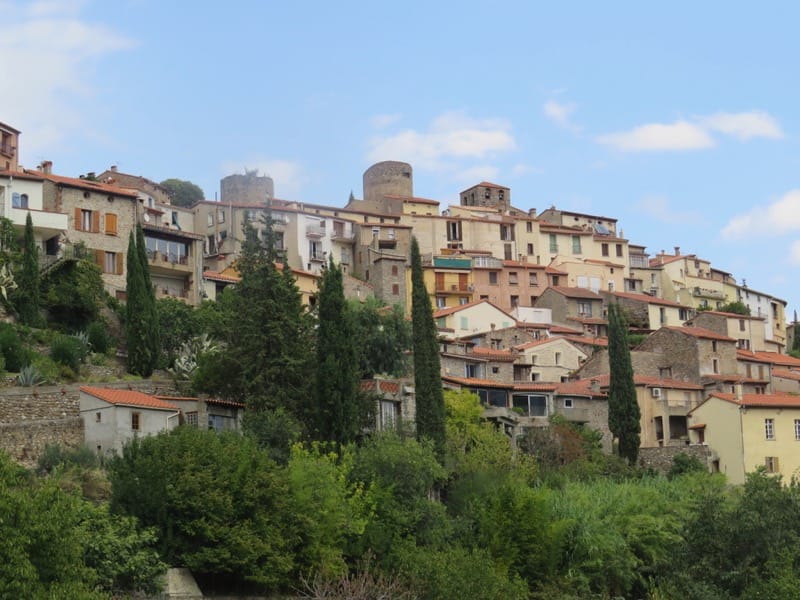
And although the medieval heart is predominantly residential, there are still places to stop for a drink, something to eat and, depending on the season, local arts, crafts and exhibitions. but don’t expect a high street.
So don’t be surprised if something you hoped to see is closed. That is part of the rhythm of a small historic village. Come back another day.
When to go
Palalda can be lovely at any time of year, but spring and autumn are particularly appealing if you want to wander without the heat of high summer.
The village also makes an easy addition to a visit to Amélie-les-Bains, especially if you are already exploring the Vallespir.
If you want to visit the museum, check the current opening arrangements before travelling. For 2026, the Musée El Casals – Michel No is scheduled to open from 10 February to 13 December, with the tourist office giving more specific daily hours for the Mackintosh exhibition.
Opening arrangements for individual buildings, exhibitions and events can change, so it is worth checking with the Amélie-les-Bains tourist office before making a special journey.
Practical information
Is it suitable for everyone?
Remember that this is an old hillside village. There are steps, slopes and uneven surfaces, so comfortable shoes are a good idea.
Is there somewhere to eat?
Facilities in the village can vary with the season and day of the week, so don’t rely on every establishment being open. Check locally before setting off if eating in Palalda is part of your plan.
Where can I get current information?
The Amélie-les-Bains-Palalda Tourist Office is the best place to check current opening times, exhibitions and events.
And keep an eye out for Dan. He may still be around somewhere.
Hello, We have recently purchased a property in Amelie les Bains Palalda for holiday use by ourselves, members of our family and possibly some close friends. Amazingly I saw the property online and then my husband and son-in-law came out in October 2022 and immediately fell in love with the property and put in an immediate offer, all over the space of a weekend! My first visit was in March of this year, and I was a little wary at first, not having seen the property in person, but I have have just returned from my second visit and am now in love with Palalda. Obviously it was very quiet in March, and quite chilly!! Palalda is a real community with a very friendly and helpful vibe – I could quite happily live here permanently! Over the course of 2 visits I have already made some good friends, who are trustworthy and reliable.
Fortunately we also know some people who live close to Arles-sur-Tech, so that is also helpful but it is so good to know that we have made friends in the immediate vicinity which is so important. On our last visit we had to drive down from Calais, which was a very long and tiring journey. This was because we had various items to transport over but on future visits we will be flying over to either Perpignan or Girona.
The local bar/restaurant in Palalda is excellent “Cafe des Sports” and the view from the restaurant is exceptional, nice food and lovely owner too. The views from our house are exceptional too. I would also like to say that the previous owners of our new holiday home left the property in immaculate condition and we didn’t have to do anything, ready to move into straightaway.
Palalda is a very serene and quiet community, it is a pedestrianised village so a good way to keep fit, lots of uphill and downhill walking, but the friendliness and neighbourliness is so lovely in itself and something that, sadly, is lacking in the UK and England today. I look forward to my next visit and hopefully visiting the beautiful beaches that are nearby.
Best wishes,
Lynne