
Castells in the Air
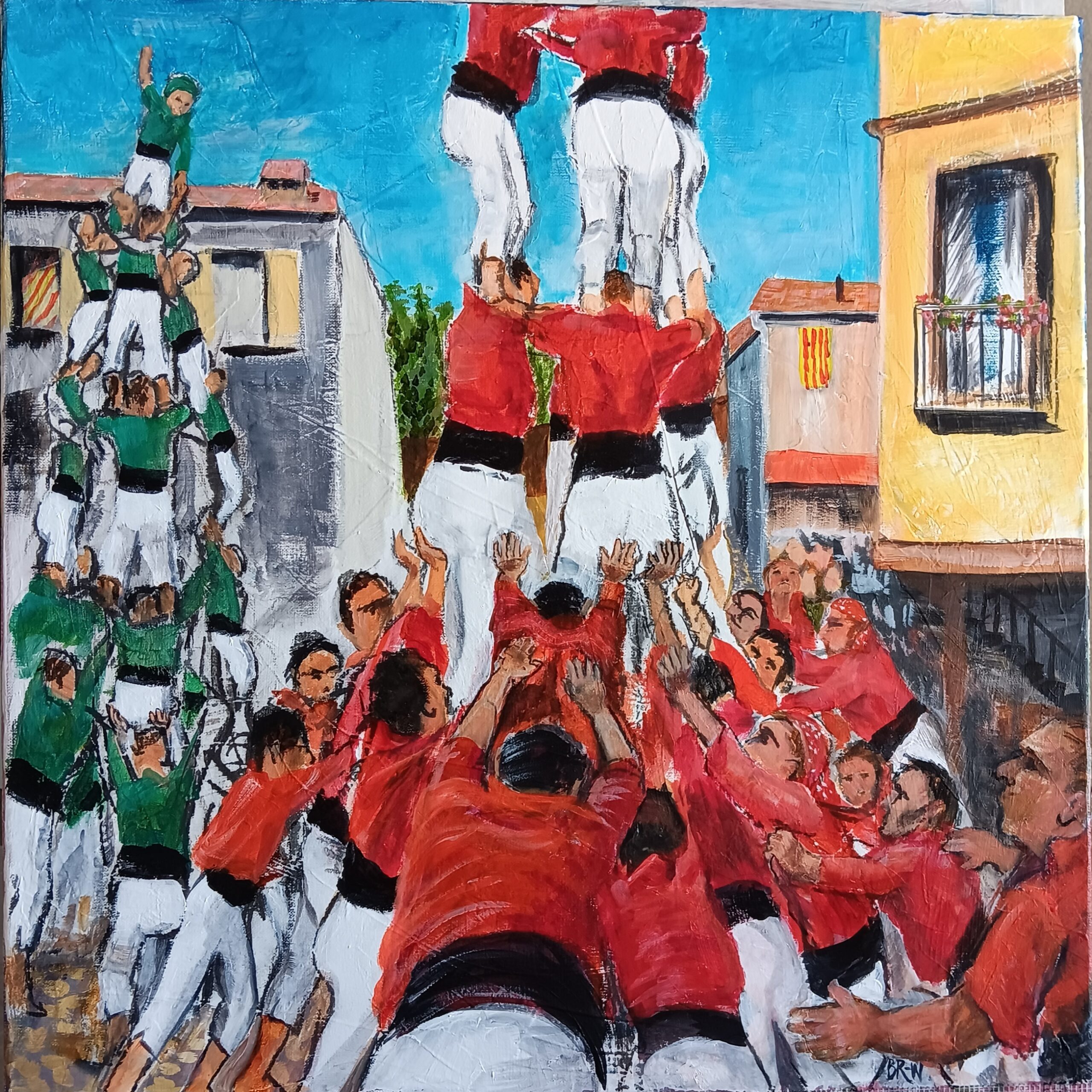
What Are Castells?
Long before modern sports dominated public life, young people in Catalonia channelled their energy into extraordinary displays of strength, balance and teamwork.
In the 18th century, in the town of Valls near Tarragona, groups of labourers formed rival teams known as colles. They competed to build the tallest and most impressive castells — human towers that demonstrated physical strength, organisation and community spirit.
Today, these tower-builders, known as castellers, remain one of Catalonia’s most treasured cultural traditions. Human towers are now built throughout Catalonia and have become a powerful symbol of Catalan identity.
In 2010, castells were recognised by UNESCO as part of the Intangible Cultural Heritage of Humanity. (Ref:Wikipedia)

The History of Castellers
The tradition began in southern Catalonia, particularly around Valls, where rival colles competed to construct increasingly ambitious towers.
What started as a display of strength and teamwork evolved into a highly organised cultural activity combining athleticism, trust and community involvement.
Today, casteller groups perform at festivals and celebrations throughout Catalonia and the Pyrénées-Orientales, attracting participants of all ages.
Els Angelets del Vallespir
 One such group was Els Angelets del Vallespir, based in Saint-Jean-Pla-de-Corts.
Founded in 2000 by Jep Bonet and his schoolteacher wife, the association wore the traditional casteller costume of white trousers, a black sash (faixa) and distinctive blue shirts representing the sky above Canigou.
The shirts featured reinforced shoulders and specially designed collars to help climbers maintain their grip during the construction of the tower.
Sadly, Les Angelets lacked the numbers that large casteller groups aim for, and disbanded in 2019.
This treasured Catalan tradition is only kept alive by non-profit associations who are always on the look out for volunteers to climb, or just to support. Without the numbers, they cannot survive.
My First Experience Climbing a Castell
At the invitation of Els Angelets del Vallespir, I was given the chance to climb a miniature castell.
Before joining the tower, I learned how to wrap the traditional black sash, or faixa, tightly around my waist. The sash acts both as back support and as a foothold for climbers making their way upwards.
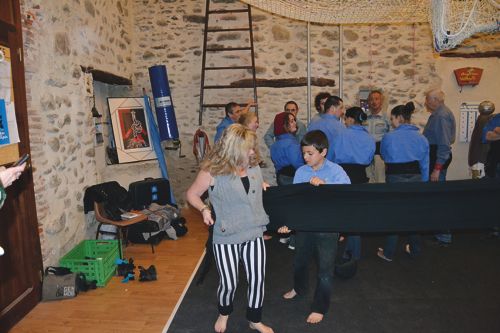
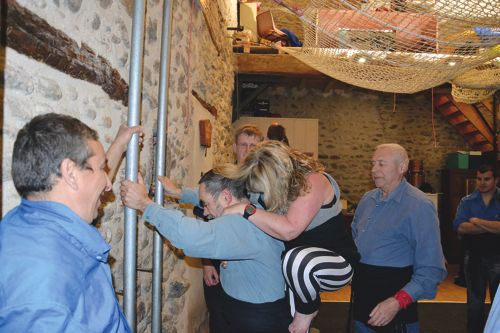
Barefoot for better balance and safety, I climbed onto the shoulders of a sturdy casteller while another participant effortlessly scaled past me.
As I climbed my mini tower, balancing on the shoulders of a sturdy gentleman, a young lady scaled me like a ladder, and I was aware that this is not a sport for the faint-hearted, nor for the coy, as ‘anything goes’ where hand and foot holds are concerned!
How Is a Castell Built?
To spectators, a castell may look spontaneous, but every tower is the result of careful planning and teamwork.
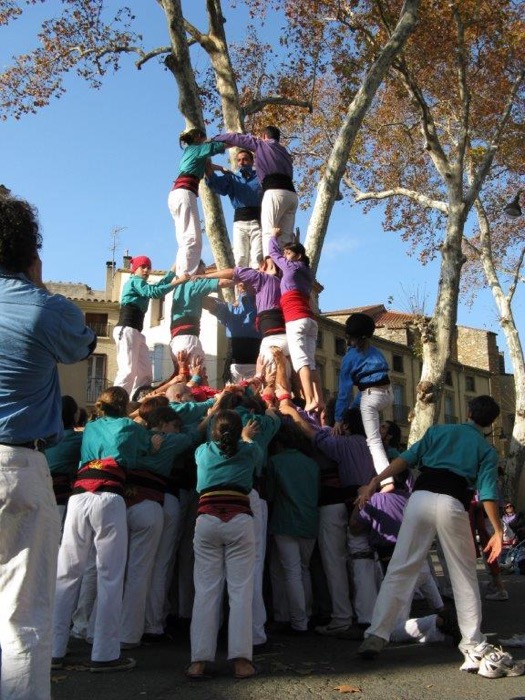
Before construction begins, members forming the base, known as the pinya, discuss positioning, angles and weight distribution much like engineers planning the foundations of a building.
The larger the pinya, the more stable the tower becomes. The base also acts as a safety cushion should part of the structure collapse.
For smaller associations, other casteller groups often join the pinya to provide additional support during festivals and exhibitions.
The Importance of the Pinya
A successful castell depends on strong foundations.
The pinya consists mainly of adult participants who support the weight of the entire structure above them. Their role is not simply to hold the tower upright but also to absorb pressure and protect climbers if a fall occurs.
The strength and solidarity of the pinya reflect one of the core principles of casteller culture: everyone has an important role to play.

Strength, Balance and Courage
Once the base is secure, the remaining castellers climb rapidly into position.
Every participant has a specific role within the structure. Generally, older and stronger members occupy the lower levels, while lighter and younger climbers ascend higher.
Communication is essential throughout the process. The rhythmic beat of the tambourine can even carry coded signals to participants within the tower.
The castell is only considered complete when the enxaneta — usually the youngest and lightest child — reaches the top and raises one hand in a traditional gesture representing the four stripes of the Catalan flag.
Today, children participating at the highest levels wear protective helmets for added safety. (Ref: Wikipedia)

Is Casteller Climbing Dangerous?
Although climbing a human tower may look risky, casteller groups follow strict safety procedures.
Modern castells are highly organised, and safety equipment, including children’s helmets, has significantly reduced serious injuries. According to casteller organisations, the activity is statistically safer than many popular sports. (Ref: (Wikipedia)
Success depends on preparation, discipline and trust between every member of the team.
The Casteller Motto
The traditional casteller motto perfectly captures the spirit of the activity:
Força, equilibri, valor i seny
Strength, balance, courage and common sense.
These four qualities remain at the heart of every successful castell.
Experience Catalan Culture for Yourself
Watching — and even briefly participating in — the construction of a castell revealed far more than an impressive physical achievement.
Castellers embody teamwork, trust, perseverance and community spirit. Whether you join a local colla, support from the pinya, or simply watch a human tower rise above a festival crowd, witnessing a castell is one of the most memorable ways to experience Catalan culture.
Several towns throughout the Pyrénées-Orientales have casteller clubs. Check with your local mairie or cultural association to find upcoming events and demonstrations.
Really interesting and fabulous account of the castellars and your personal experience, Kate!
Just sorry not to see a pic of you on your special tower …