
Shadows on the Canigou; Article 4 part 2
The Milice in Perpignan
When Frenchmen Hunted Frenchmen – Part Two
By the summer of 1944, the tide of war had turned. The Allies had landed in Normandy. German armies were retreating across Europe. In the Pyrénées-Orientales, however, the Occupation was about to become even more dangerous.
For members of the Resistance, the approach of Liberation did not bring immediate safety. Rather it brought desperation.
The German authorities knew their time in France was running out. The Milice knew it too.
Instead of weakening quietly, many collaborators became even more ruthless.
Every successful sabotage operation was answered with arrests. Every attack on German troops increased reprisals. Every rumour of a resistance camp triggered frantic investigations.
Across the Pyrénées-Orientales, men who had spent years hiding in forests and abandoned mines suddenly found themselves hunted more aggressively than ever.
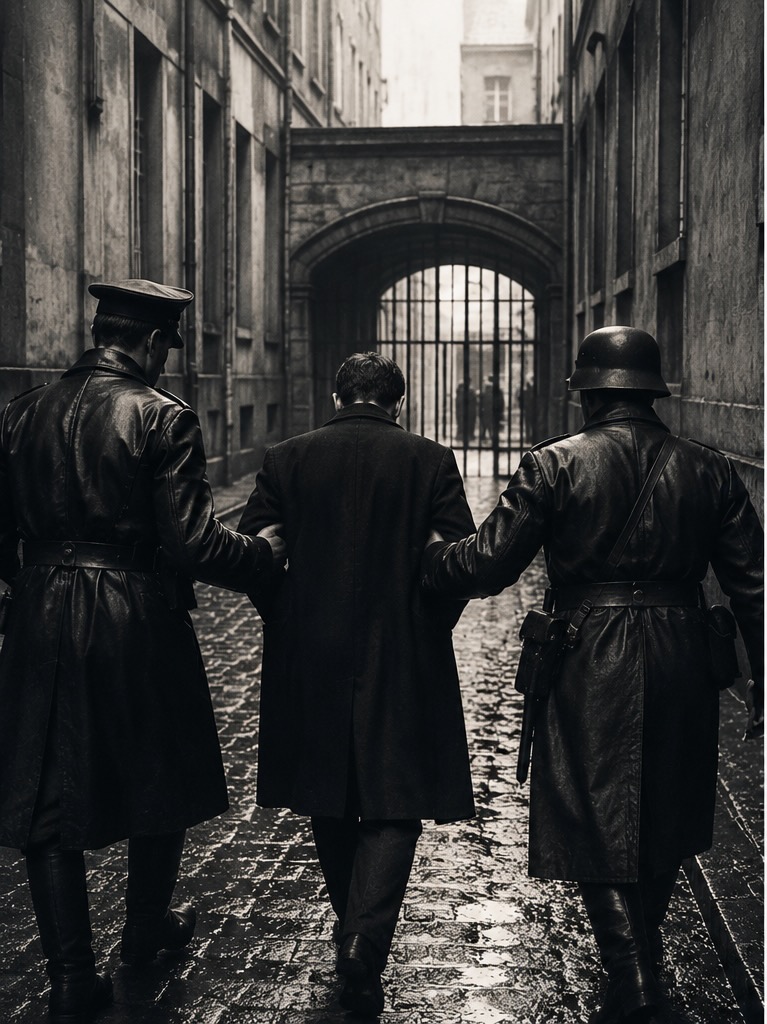
Fighting a Losing War
By July 1944, news travelled quickly, even under occupation.
The BBC’s French broadcasts, listened to in secret behind closed shutters, spoke of Allied advances in Normandy. Whispered conversations in cafés carried rumours that another invasion of southern France was coming.
The Milice understood what those rumours meant. If Germany lost, collaborators would have to answer for their actions.
Some remained fanatically loyal to Marshal Pétain and Joseph Darnand. Others simply feared what justice might bring.
Increasingly, they fought not for victory, but for survival.
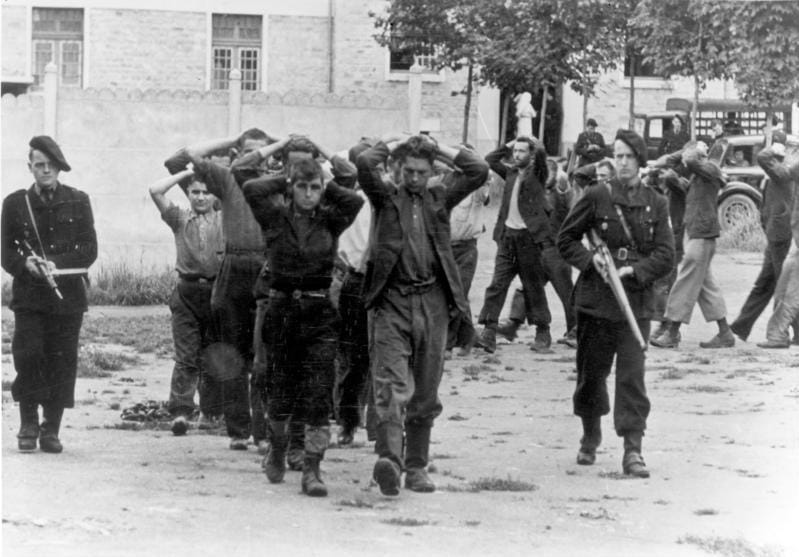
Henri Treyeran
In Perpignan, one name inspired particular hatred.
Henri Treyeran, deputy chief of the Milice in the Pyrénées-Orientales, had become one of the organisation’s most visible local leaders.
Resistance fighters regarded him as personally responsible for arrests, interrogations and helping the Germans identify suspected patriots.
To the Milice, Treyeran was an energetic officer carrying out his duty. To the Resistance, he was a traitor.
They marked him for death.
On 19 February 1944, as Treyeran walked through Perpignan, Resistance gunmen struck.
The assassination sent shockwaves through the city. It demonstrated that the Resistance was no longer merely hiding. It could reach collaborators almost anywhere.
For Milice members, the message was unmistakable.
They, too, had become targets.
The Net Tightens
As the summer progressed, the Milice intensified its search for the maquis.
Mountain villages came under increasing suspicion. Farmers were questioned. Priests and teachers were watched.
Anyone supplying food or shelter to resistance fighters risked imprisonment—or worse.
The Germans depended heavily upon local knowledge. French collaborators provided it.
It was this flow of information that eventually helped lead German forces towards the Maquis Henri-Barbusse above Valmanya.
The destruction of the maquis and the burning of the village did not happen in isolation.
They were part of a much wider campaign to eliminate resistance before Allied armies could reach southern France.
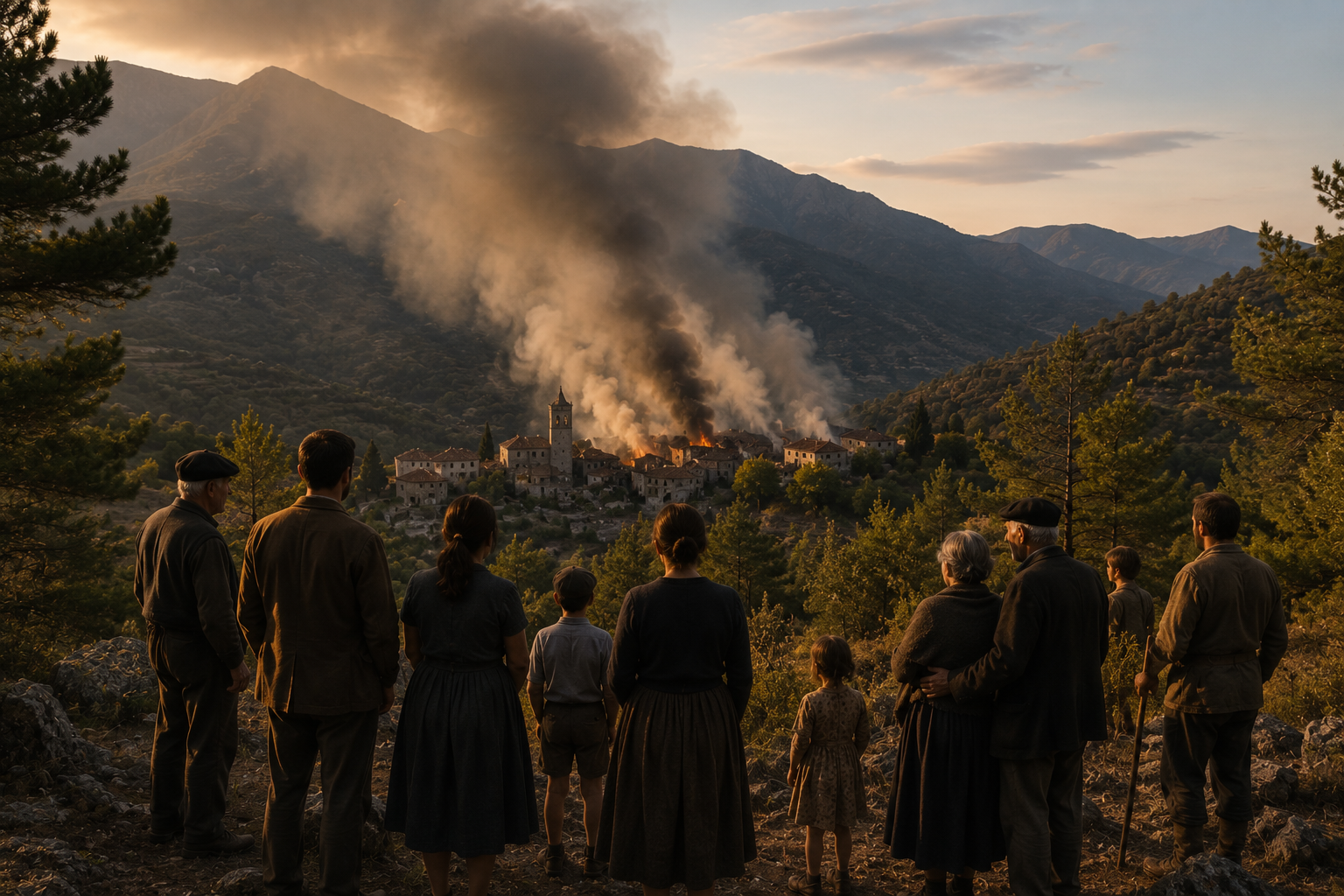
Liberation
On 15 August 1944, Allied forces landed in Provence and Operation Dragoon transformed the military situation overnight.
German commanders began withdrawing northwards.
Resistance groups emerged openly across the south of France.
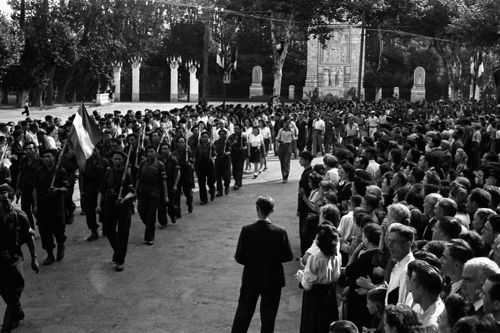
In Perpignan, German authority collapsed with astonishing speed and the city was liberated on 19 August 1944.
French tricolours appeared in windows. Church bells rang. Crowds poured into the streets.
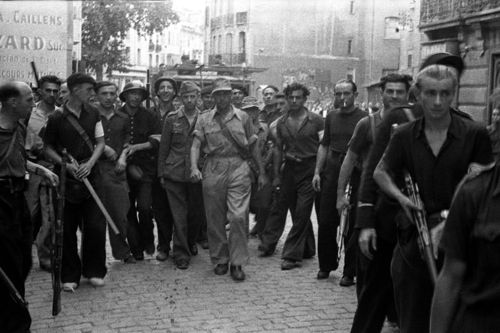
For four long years, fear had ruled daily life.
Now, for the first time, people celebrated openly.
But liberation also brought another question.
What should be done with those who had collaborated?
The Purge
The answer was not always straightforward.
Across France, spontaneous acts of revenge occurred before formal justice could take over.
Some collaborators were beaten by angry crowds. Others were summarily executed by Resistance fighters.
Women accused of relationships with German soldiers often had their heads shaved publicly—a humiliating punishment that remains controversial among historians today.
In the Pyrénées-Orientales, most cases eventually passed into the hands of the restored French courts.
Investigations began almost immediately. Former Milice members were arrested. Informers were questioned. Evidence was gathered.
Some insisted they had merely obeyed orders. Others claimed they had joined to protect their families.
A few disappeared before they could be arrested.
Justice—or Revenge?
The years following Liberation became known as the épuration—the purge.
France faced an impossible task. How should a nation judge those who had betrayed it?
Some collaborators had committed murder. Others had denounced neighbours. Some had acted from ideology. Some from fear.
The courts attempted to distinguish between them.
Death sentences were reserved for the most serious offenders.
Many received prison terms. Others were stripped of civil rights or barred from public office.
Yet not everyone believed justice had been served.
Some argued the punishments were too severe. Others believed thousands escaped accountability altogether.
The debate continues to this day.
The End of the Milice
Officially, the Milice ceased to exist with the Liberation.
Its leaders fled, were arrested or were executed.
Joseph Darnand himself escaped briefly to Germany before being captured, returned to France, tried for treason and executed by firing squad in October 1945.
The organisation disappeared.
Its memory did not.
Even today, the word milicien remains one of the strongest insults in French political language.
It has become synonymous with betrayal.
Remembering the Occupation
Walk through Perpignan today and it is difficult to imagine the fear that once haunted its streets.
Children play beneath the plane trees of Place Arago. Tourists photograph Le Castillet. The cafés are filled with conversation once more….yet behind many of those familiar façades lie stories that are almost forgotten.
Stories of whispered meetings, hidden radios, midnight arrests, acts of extraordinary courage, and acts of betrayal.
The Occupation was never simply a struggle between France and Germany. It was also a struggle between French people themselves.
That may be its most uncomfortable legacy.
Did You Know?
After the Liberation, membership of the Milice became such a source of shame that many former members destroyed uniforms, documents and photographs in an attempt to erase their wartime past. Historians have spent decades piecing together the organisation’s activities from court records, police archives and Resistance testimonies.
Articles In This series
Article 1
The Traitor of Valmanya: The Strange and Tragic Story of Nessim Eskenazi
Article 2
Julien Panchot: The Maquis Leader Who Refused to Break
The story of the Resistance commander captured before the destruction of Valmanya.
Article 3
Valmanya 1944: The Village That Burned
A dramatic reconstruction of the attack on the village and its aftermath.
Article 4 Part 1
The Milice in Perpignan
Who collaborated locally, how the organisation operated, and how it was dismantled after Liberation.
The Milice in Perpignan Part 2
Who collaborated locally, how the organisation operated, and how it was dismantled after Liberation.
Article 5
Henri Treyeran: The Most Hated Man in Perpignan
A profile of the Milice leader assassinated by Resistance fighters.
Article 6
Escape Across the Pyrenees
The guides, smugglers, Allied airmen, Jews and resistance fighters who crossed into Spain.
Article 7
The Women of the Resistance in the Pyrénées-Orientales
Too often overlooked
Article 8
The Liberation of Perpignan
August 1944 and the collapse of German authority.
Article 9
Justice and Revenge
The trials, executions, and purges that followed Liberation.
Article 10
The Last Witnesses
How the Occupation is remembered today in the department.