
Updated 2026
A Little Painted Frog with a Big Story
The Painted Frog (Discoglossus pictus) is a rather special little resident of the Catalan country — although it turns out it isn’t quite as exclusively Catalan as we once thought!
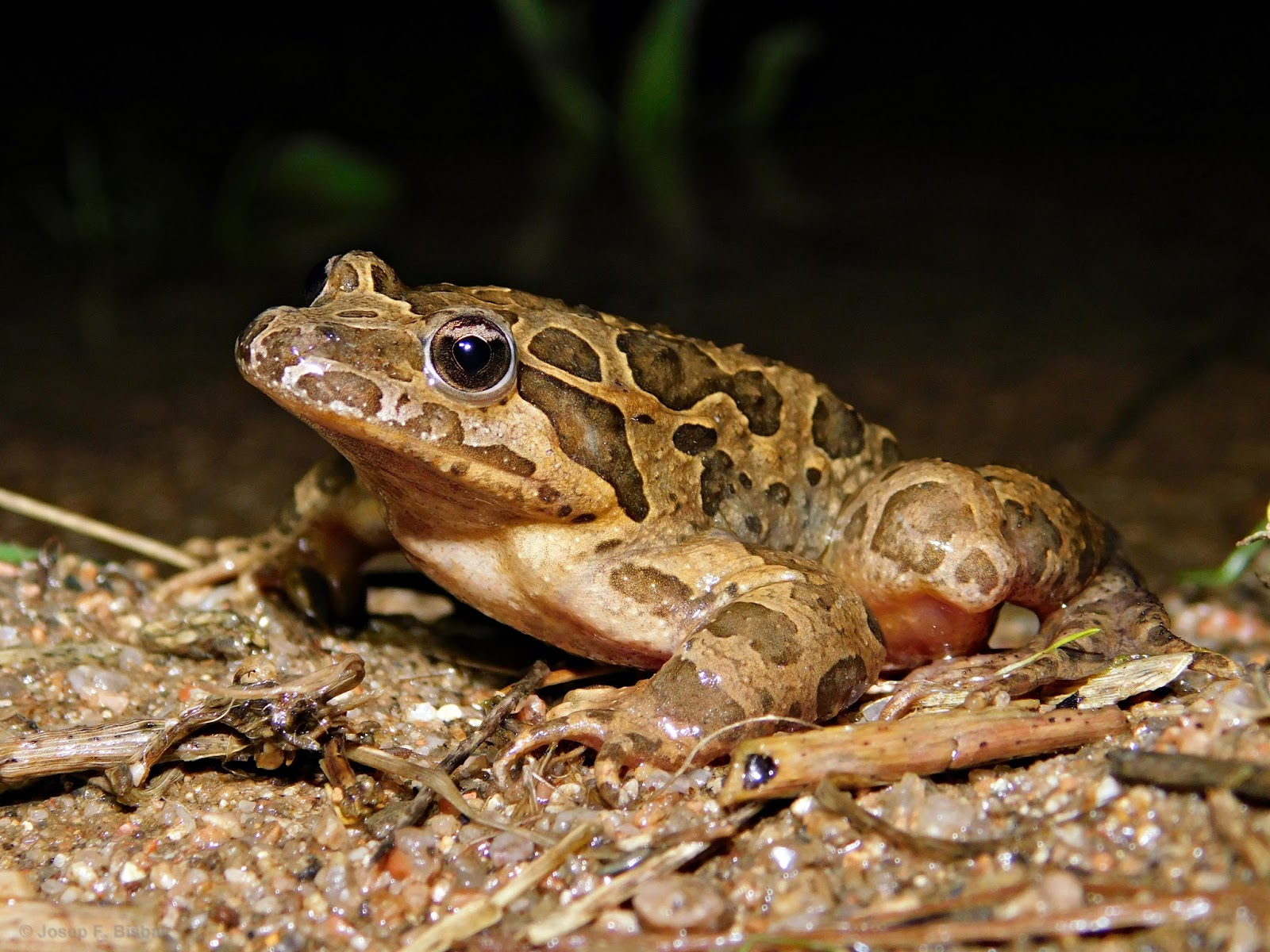
At first glance, it doesn’t look particularly exotic. It’s small, rather pretty, and quite easily overlooked. But this little Mediterranean amphibian has a surprisingly interesting story to tell.
For many years, the Painted Frog was regarded in France as essentially a Pyrénées-Orientales frog, with its range continuing southwards across the border into Catalonia and along the northern Costa Brava.
So, as far as France and Spain were concerned, calling it the “Catalan Frog” seemed perfectly reasonable.
Except that things have changed.
The Painted Frog has been quietly expanding its French territory and is now found well beyond the Pyrénées-Orientales, including parts of the Aude and Hérault. In other words, our supposedly local Catalan frog has been doing a little travelling.
And it turns out that its own origins are rather more exotic than its name might suggest.
An Algerian immigrant in Catalonia
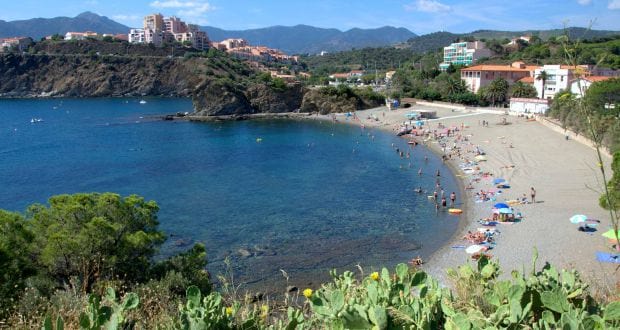
The French population is an introduced one. The frogs are thought to have arrived in the Roussillon around the beginning of the twentieth century, probably in the vicinity of Banyuls-sur-Mer.
For a long time, the population was believed to have originated in Morocco. More recent genetic and taxonomic work, however, points instead towards Algeria.
Quite how they got here remains something of a mystery.
Were they deliberately introduced? Did somebody bring them back from North Africa? Were they accidental stowaways?
Nobody seems to know for certain.
Whatever happened, the little Algerian visitors evidently liked the Roussillon rather a lot.
And they’ve been here ever since.
Today, the French population is classified as Discoglossus pictus auritus, a subspecies of the Painted Frog. Its North African relative, Discoglossus scovazzi, is now generally treated as a separate species rather than the subspecies it was once considered to be.
So the old name “Discoglossus pictus scovazzi” that you may still encounter in older books and articles is now decidedly showing its age!
A frog with Mediterranean credentials
The Painted Frog is part of a distinctly Mediterranean family tree.
The species occurs naturally in parts of the western Mediterranean, including Sicily, Malta and Gozo, as well as North Africa. The French population, however, is an introduced one.
It is a particularly adaptable little amphibian, which probably helps explain its success.
It doesn’t insist on having a grand, permanent pond surrounded by pristine countryside.
A temporary pool will do. A puddle will do. A drainage ditch will do.
Even those little leftover pools that remain after a Mediterranean stream has largely dried up can provide exactly the sort of temporary watery refuge it needs.
And that is where the story gets rather close to home.
A frog in the old Pouy
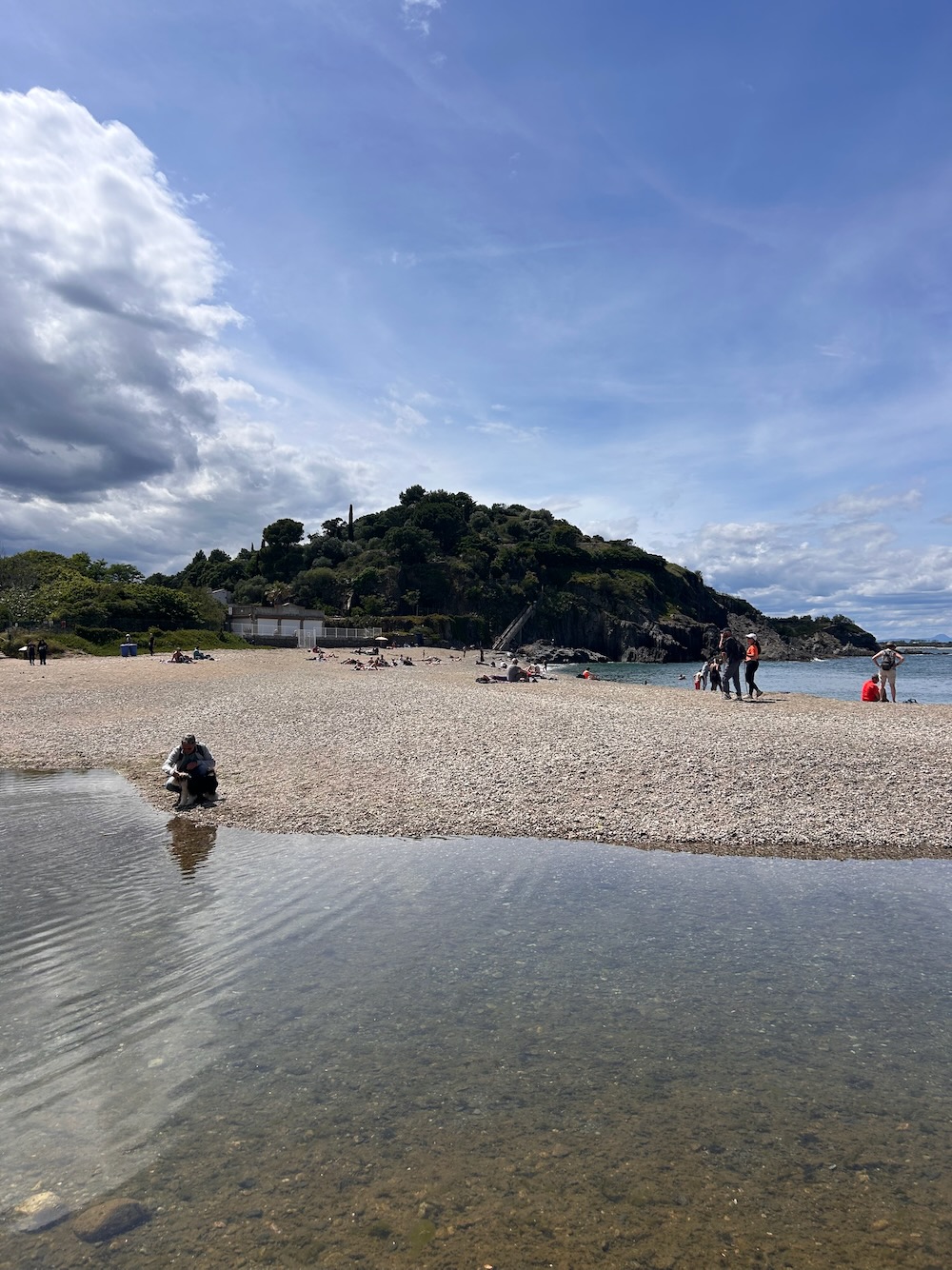
I’ve come across Painted Frogs in and around the little pools left behind by the drying River Pouy, in the valley behind Collioure, on the way up towards the Consolation.
It’s not exactly the sort of place where you’d expect to discover an animal with an intriguing North African ancestry.
There are no enormous lily-covered ponds, no misty woodland tarns and no great expanses of frog-friendly water.
Just small, temporary pools in a Mediterranean valley.
But for a Painted Frog, apparently, that’s quite enough.
The species is largely nocturnal and can breed over a surprisingly long period of the year. Rather than waiting for one brief springtime window, it can take advantage of suitable water whenever Mediterranean conditions provide it.
The females lay their eggs in relatively small batches rather than producing the enormous masses of frogspawn familiar from many European ponds.
It’s a very sensible strategy for an amphibian living in a landscape where water can appear — and disappear — with remarkable speed.
And what does it sound like?
Well, this is perhaps my favourite thing about the Painted Frog.
It doesn’t have the loud, exuberant personality one might expect from a frog.
One prominent herpetological description compared its call to the hushed chuckle of a person in a library.
Imagine a frog which has apparently been told that there are other people trying to sleep.
Instead of the full-throated “RIBBIT! RIBBIT!” of the stereotypical frog, the Painted Frog produces a much more restrained little chuckle.
Once you’ve heard the description, it’s rather difficult not to imagine a tiny amphibian sitting beside a Mediterranean pool, clearing its throat and politely asking everyone to keep the noise down.
So, is it really a Catalan frog?
Well… yes and no.
It certainly feels like one.
The frogs have been part of the Roussillon landscape for well over a century, and their range extends naturally across the border into Catalonia and along the Mediterranean coast.
But genetically and historically, our local frogs have a rather more complicated passport.
They appear to have arrived from Algeria, settled around the Roussillon, crossed into northern Catalonia, and have subsequently expanded their range northwards into other parts of Mediterranean France.
Not bad going for a creature only a few centimetres long.
So perhaps “Catalan Frog” isn’t quite the scientific name.
But as a nickname for a little Mediterranean amphibian that has made itself thoroughly at home around Collioure? It works!
And next time you’re walking up the valley towards the Consolation and notice one of those seemingly insignificant little pools left behind by the Pouy, have a look — preferably after dark.
There may be a tiny, rather handsome, slightly mysterious Algerian immigrant sitting quietly beside it.
And if you’re very lucky, you might even hear him having a discreet chuckle.
Just don’t expect him to shout about it.
From the P-O, it’s territory extends southwards to cover the northern coastal region of the Costa Brava… so as far as France and Spain are concerned, it is a “Catalan Frog !”
The Painted Frog (Discoglossus pictus scovazzi) is a very local variety, originally introduced to this area from Morocco. This rather pretty little fellow has a voice which sounds (as described by a prominent herpetologist) “somewhat like the hushed chuckle a person might make in a library”, i.e. somewhat more restrained than the strident voices of some more vociferous cousins!
Seen in and around left over pools of the dried up river Pouy in the valley behind Collioure leading up to the “Consolation“.