OVER THE BORDER
If you’re looking for one of the most authentic and unspoilt areas of the Costa Brava, the stretch between Sant Pere de Rodes, Llançà and El Port de la Selva is hard to beat.
Located on the edge of the Cap de Creus, where the Pyrenees meet the Mediterranean, this part of northern Catalonia offers dramatic scenery, rich history, and peaceful coastal towns far from the crowds.
Above the pretty white fishing town of Port de la Selva, less than an hour’s drive from the French/Spanish border, stands the Benedictine monastery of Sant Pere de Rodes constructed into the side of the Verdera mountain.
Here, the last folds of the Pyrenees slip into the Mediterranean. The coastline is not soft or welcoming, but wild, sculpted by wind and sea into something almost theatrical. It is easy to see why people have always felt something slightly otherworldly about this corner of the Costa Brava.
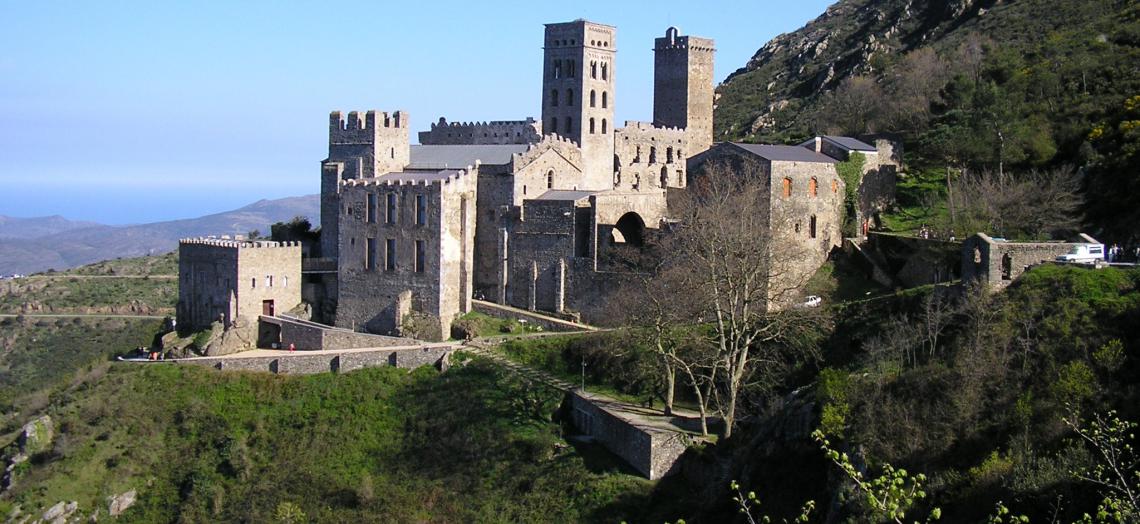
The views from the monastery are superb, stretching over the bay of Llançà, from Cerbère in France to the Cap Creus.
Constructed by the Benedictines between 979 and 1022, the monastery was sacked and abandoned in the eighteenth century and its most important treasure, an illustrated bible, is now in the Bibliothèque Nationale de Paris.
They were brought to this remote Cape for safe-keeping and hidden in a cave. However, when the danger had passed the relics couldn’t be found. A monastery was duly built on the site and dedicated to St. Peter (Pere in Catalan).
At its height, Sant Pere de Rodes became one of the most important religious centres in the region. Pilgrims travelled long distances to reach it, and at certain times it even offered indulgences comparable to those granted in Rome itself. For a remote monastery, perched high above the sea, that is no small claim.
But wealth and influence rarely go unnoticed. Like much of this coast, the monastery was exposed—to pirates, to looters, and to the slow erosion of time. Eventually it was abandoned, its stones taken and reused in nearby villages, its grandeur fading into ruin.
Make a circuit of it by driving the coast road from the Côte Vermeille via Banyuls, Cerbère, Port Bou and Llança, to Port de la Selva and return to France via Figuères.
Walkers can reach the monastery via the GR10, from the campsite at Port de la Selva (approx 2hrs there and back) but there is easy access by car on a good but winding road for the less energetic.
Out of season, the road is little used, a pleasure for cyclists who want to give the calves a bit of a work out – or a fabulous, fun climb on an electric bike…but keep those hands on the brakes on the way down unless you’re a total adrenaline junky!

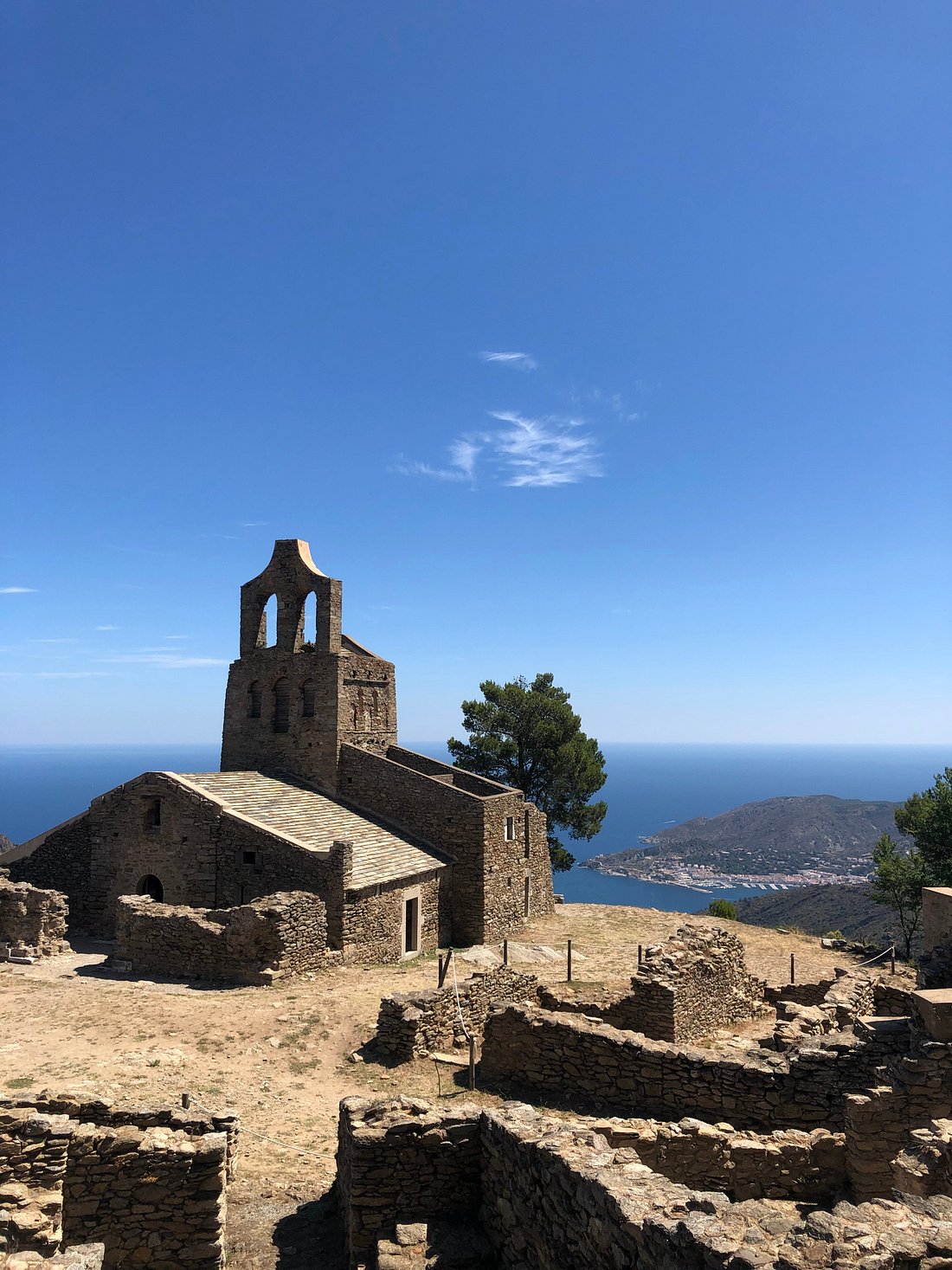
Above the monastery, a further twenty minutes climb brings you to the ruined castle of Saint Salvador de Verdera from which the views of the Bay of Roses and the whole of the Cap Creus are breathtaking.

The church with its soaring columns and intricate carving on the capitals is both grand and peaceful. Visit the impressive bell tower, lookout tower and church all dating from the XII century remain.
The first official mention of the monastery originates from the year 878 although a pot pourri of legend surrounds its creation. Some say that when Rome was threatened by Barbarians, Pope Boniface IV ordered the Church’s most powerful relics – including the head and right arm of St. Peter – to be hidden in this remote Cape for safe-keeping.
When the danger had passed the relics couldn’t be found. A monastery was duly built on the site and dedicated to St Peter (Pere in Catalan).
Entry however, will not cost you an arm and a head. It’s around 9€ with and there is a café-restaurant if you wish to stay for lunch. Have a lovely day.