
Shadows on the Canigou; Article 6
Shadows on the Canigou: Article 6 Escape Across the Pyrenees
The guides, smugglers, Allied airmen, Jews and resistance fighters who crossed into Spain
There was a way out. But it wasn’t easy and it wasn’t safe.
During the Occupation, the mountains between the Pyrénées-Orientales and Spain became a frontier between danger and survival.
People came to them for many different reasons.
Jewish families trying to escape deportation to the death camps, British and American airmen who had been shot down over occupied France, Frenchmen attempting to reach the Free French forces, Resistance couriers carrying messages and money, men trying to escape the Service du Travail Obligatoire, political fugitives. And sometimes people who simply knew that staying meant arrest or worse.
They came by train, on foot, in cars, hidden in lorries.
Eventually, if they were lucky, they disappeared upwards into the mountains.
Their guides were the passeurs.
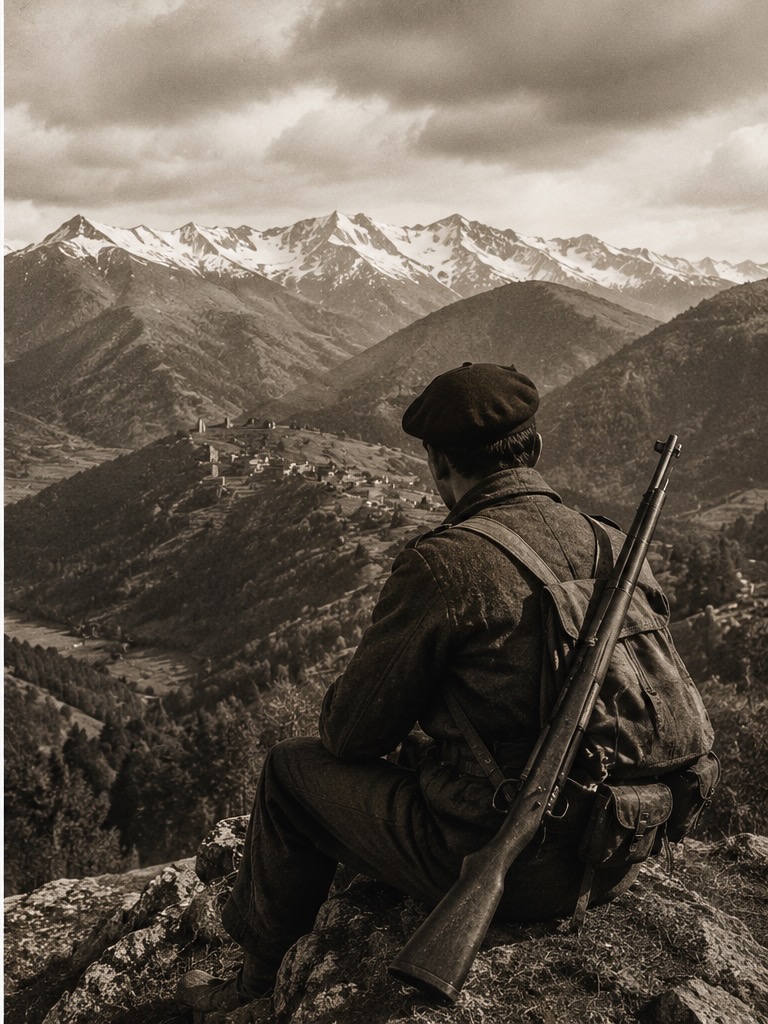
Some passeurs were smugglers who already knew the frontier. Some were committed résistants. Others were farmers, railway workers, priests or mountain people who understood the terrain and were simply good people trying to do the right thing.
Some just wanted the money. Others took enormous risks for no money at all.
All of them knew that being caught could mean prison, torture or death.
Many of them did not survive.
A Frontier Before the War
For centuries, people on both sides of the Pyrenees had crossed the mountains. Families with relatives across the frontier, traders, shepherds and smugglers.
That knowledge suddenly became invaluable after 1940 when the German occupation changed the meaning of the frontier.
Spain was under Franco and was officially neutral, but reaching Spain could offer fugitives a route towards Portugal, North Africa, Britain or the wider Allied world.
The problem was getting there.
French police and customs officers operated in the mountains. After the German occupation of the southern zone in November 1942, German patrols added another layer of danger.
Crossing illegally was itself an offence. So was helping someone to cross.
And the mountains were not the romantic landscape they might appear today. In winter they could mean snow, ice, fog, freezing temperatures and exhaustion.
A group could spend hours climbing while trying not to leave an obvious trail.
A guide had to know not only where the paths went but also where the patrols went.
The People Who Knew the Mountains
The passeur was more than a guide. He was a navigator, smuggler, scout and sometimes negotiator.
He had to know which track was safe, where a patrol might be stationed, which farmhouse might provide shelter.
And who could be trusted.
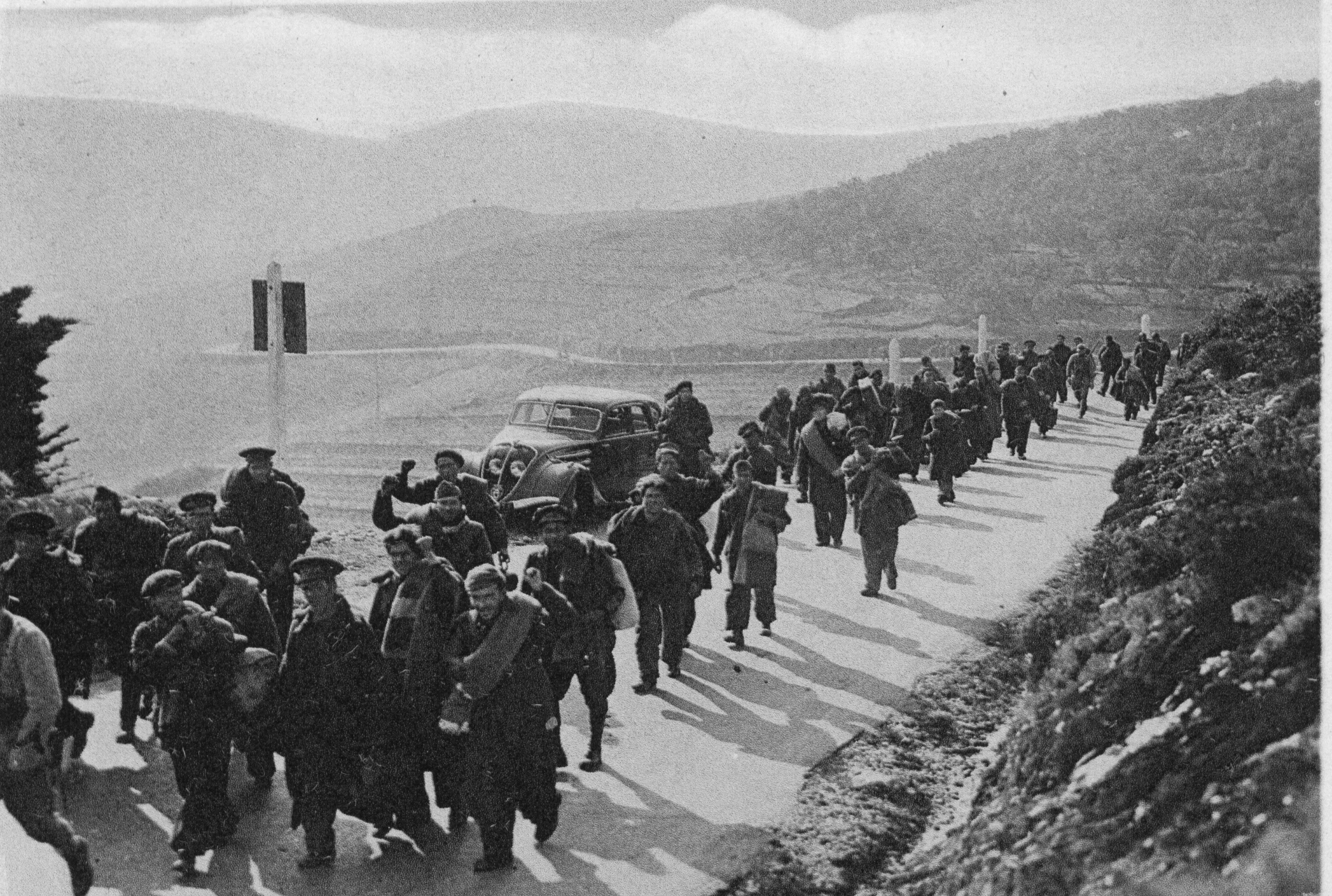
Recent research into the wartime Pyrenean escape routes has shown just how dangerous the work was. Guides had to move exhausted refugees through steep and sometimes icy terrain while avoiding French police, customs officers and German patrols. If caught, they could be interrogated, imprisoned or deported. Some were simply shot on sight.
The people being guided could be even more vulnerable….and sometimes unpredictable.
Some had never walked in the mountains before. They arrived with unsuitable clothing and shoes, carrying children, exhausted, frightened or ill with little or no idea where they were going.
And once they crossed the frontier, the danger was not necessarily over.
Spanish authorities routinely detained people who had entered the country illegally.
For many, Spain was not freedom.
It was simply the next stage of the escape.
The Jews Who Came South
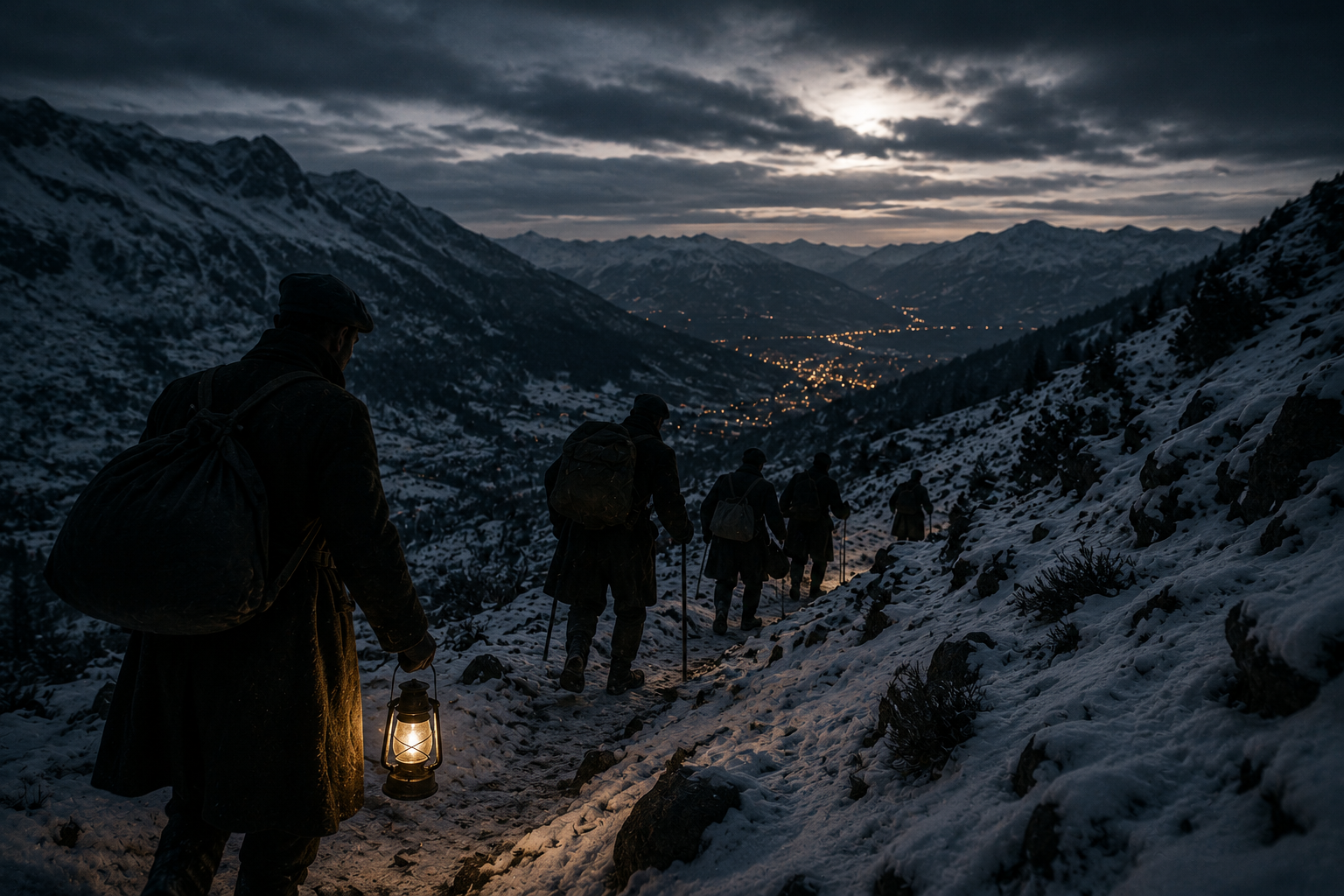
For Jewish refugees, the mountains could represent a desperate alternative to remaining in France.
After the mass arrests and deportations of 1942, the danger became increasingly obvious.
Whilst some went into hiding, or obtained false papers, others decided that the only possibility was to leave France altogether.
The Pyrenees offered an escape route.
Thousands of Jews crossed the mountain frontier into Spain during the war, although the numbers and routes varied considerably. Research published by Oxford University Press estimates that between 23,000 and 37,500 Jews fled Europe via Spain between 1940 and autumn 1944.
The routes were not fixed. They changed according to weather, patrols, informers and the availability of guides.
A route that worked one week might become suicidal the next. But compared to the horrors of the extermination camps, at least here was hope.
One of the most extraordinary aspects of these escapes is how improvised they could be. A family might arrive in Perpignan knowing only the name of a contact. A contact might send them to another person. That person might know a farmer. The farmer might know a passeur.
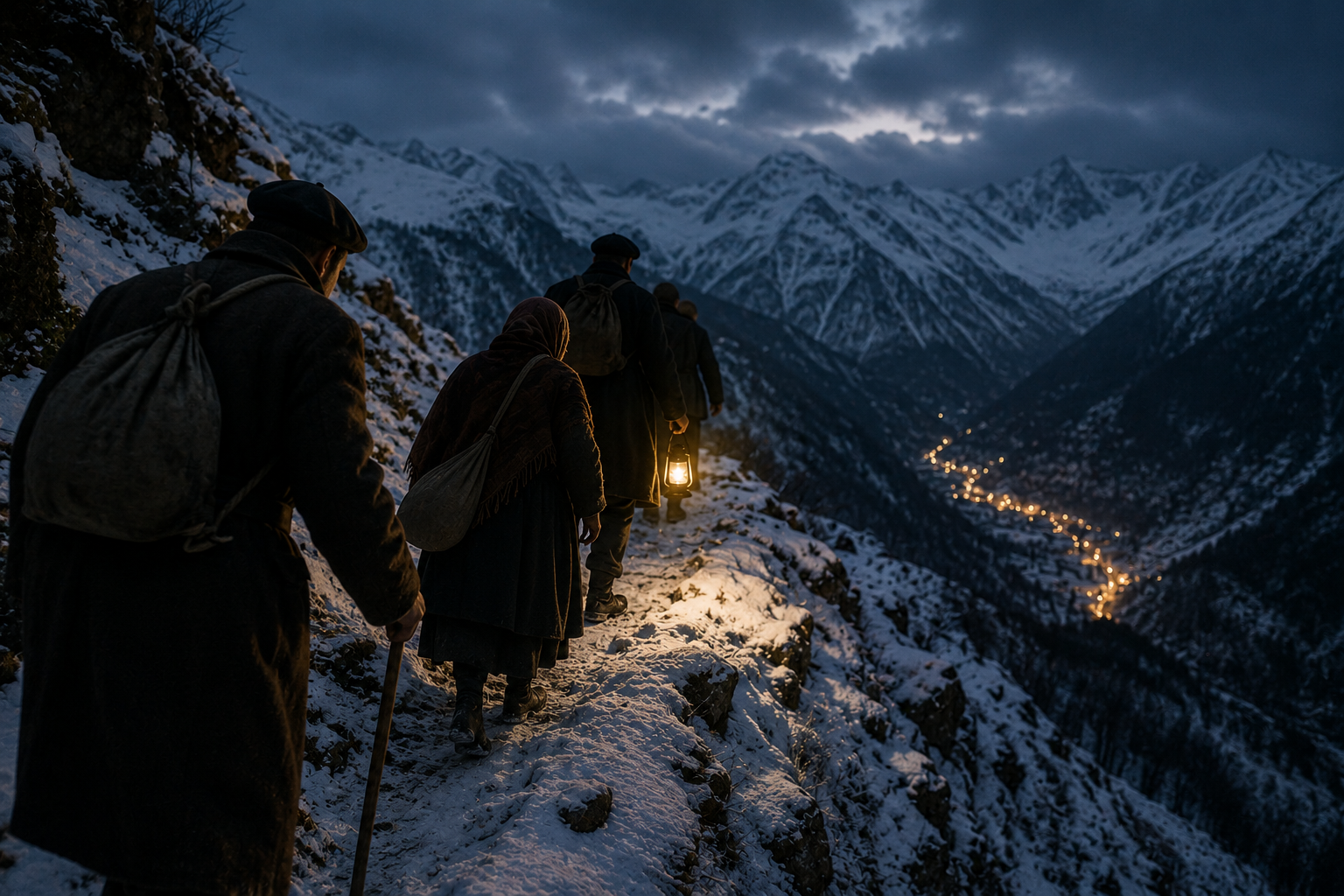
And eventually, late at night, the family might find itself climbing a mountain.
The Hotel in the Mountains
Hotels and boarding houses in the mountain resorts could become staging points.
Font-Romeu, for example, was not simply a place for winter visitors during the war.
It was also close to the Cerdagne frontier.
The geography mattered. The border around Cerdagne was particularly complicated, with French and Spanish territory interlocking in ways that had existed for centuries.
And there was another extraordinary feature. Llívia.
The Spanish enclave sits surrounded by French territory, a geographical anomaly that suddenly acquired enormous importance during the war.
For someone trying to escape France, reaching Llívia could mean reaching Spanish territory without having to cross the entire frontier.
But getting there was not necessarily easy. The road and surrounding area were watched. A fugitive could be arrested before ever reaching safety.
A Passeur Who Helped More Than a Hundred
Among the people involved in these escapes was Marcel Gallon, a Christian Brother who became a passeur in the Cerdagne.
Gallon was based at a sanatorium near Angoustrine.
The location was crucial. From there, the Spanish border was relatively close.
He began helping people cross into Spain and eventually guided more than a hundred fugitives.
They included Jews, French civilians, military personnel, Belgians, Czechs, Romanians and people attempting to escape the Gestapo or reach Allied forces.
His story is a useful reminder that the escape networks were not always run by professional Resistance fighters.
Sometimes they grew out of geography. A person happened to live in the right place. He knew the paths. He had contacts on the other side. And someone eventually asked him for help.
After that, there was no going back.
The Railwaymen
But not everyone crossed the mountains on foot from the beginning. Some of the most important escape work took place on the railway.
The railway was both a means of escape and a means of surveillance.
German authorities knew that people trying to flee south often travelled by train so railway workers could become enormously valuable to the Resistance.
They knew the timetables, they knew the stations, they knew which journeys were being watched, they knew where a person could disappear.
In the Pyrénées-Orientales, one of the most remarkable examples was Joseph Planes.
Planes was a railwayman living at Elne and working at the Perpignan railway depot.
He had been a prisoner of war after the fall of France but returned to France and quickly joined an escape network.
Alongside fellow railway workers Louis Baco and others, he helped organise the movement of fugitives towards Spain.
Between December 1942 and December 1943, the network is credited with helping 136 people, including 76 Allied airmen, cross into Spain.
Those numbers tell their own story.
It was an organised operation. People had to be collected. Hidden. Moved. Protected.
And eventually handed over to guides who knew the mountains.
The Airmen
For Allied airmen, the journey could begin hundreds of kilometres away.
A bomber or fighter could be shot down over France. The surviving crew might parachute into the countryside and suddenly they were behind enemy lines with little knowledge of the country, or the language .
They might be injured. German patrols would probably be searching for them. They needed to make contact with the Resistance whose objective was often to move them south.
The Pyrenees were the gateway. Once in Spain, they could eventually reach Gibraltar and return to Britain…..but the journey was just one part of a chain. If one link failed, the entire operation could collapse.
A farmer hiding an airman. A railwayman getting him onto a train. A Resistance courier taking him to a safe house. A passeur leading him into the mountains. A contact on the Spanish side. And finally the long journey towards freedom.
Every person involved increased the possibility of discovery. And each person had to be able to trust the next person in the chain – not always obvious when so many of their own countrymen were collaborators.
Joseph Planes
The story of Joseph Planes is particularly poignant because his escape work came to an end just before the assassination of Henri Treyeran described in the previous article.
On 18 December 1943, Planes and members of his network were betrayed and arrested. The machinery of German repression closed around them.
They were taken to Lyon, and on 2 February 1944, the same day that Treyeran was killed in Perpignan, Joseph Planes and his comrades were executed by the Germans.
Two very different acts of wartime violence were therefore taking place on the same day. In Perpignan, the Resistance killed a senior Milice figure and in Lyon, the Germans executed a railwayman who had helped people escape them.
Both events belonged to the same increasingly violent phase of the Occupation.
Not Every Journey Ended in Freedom
The mythology of the escape route can make the Pyrenees sound like a magical door.
Walk south, cross the mountains, arrive in Spain. Et voilà. Freedom!
The reality was much harsher.
People were caught, guides were betrayed, groups became lost.
Some fugitives were abandoned by dishonest passeurs, who took their money and disappeared. Some were arrested by German patrols. Others reached Spain only to be detained by Spanish authorities.
The experience of Rémi Dreyfus illustrates the uncertainty.
Born in 1919, he had been serving in the French cavalry when the Germans defeated France. He was later transferred to the 11th Cuirassiers at Lyon.
Dreyfus was Jewish. The Vichy regime’s antisemitic laws forced him out of the army in 1941, so he decided that if France would no longer allow him to fight for her, he would continue the fight by joining the Free French forces of General de Gaulle in England.
He travelled to Lyon, Toulouse, Marseille and Annemasse before making contact with a network of passeurs.
On 4 February 1942, Dreyfus finally reached Osséja in the Pyrénées-Orientales and set off into the mountains with a paid passeur, a Czech pilot and a Frenchman from Bayonne who spoke Spanish.
The snow was deep when they crossed the frontier and found shelter in a farmhouse at dawn.
Then the passeur disappeared.
Dreyfus had crossed the Pyrenees but he was still a long way from freedom.
With the help of Catalan peasants, and following advice from his brother Philippe, who had already reached London, Dreyfus eventually made it to the British consulate in Barcelona on 9 February. Three months after leaving France, Rémi Dreyfus finally reached Britain where he joined the Forces françaises libres, trained as an officer and volunteered for the parachute forces.
Two years later, the former cavalryman forced out of the French Army by Vichy’s antisemitic laws would return to France in uniform.
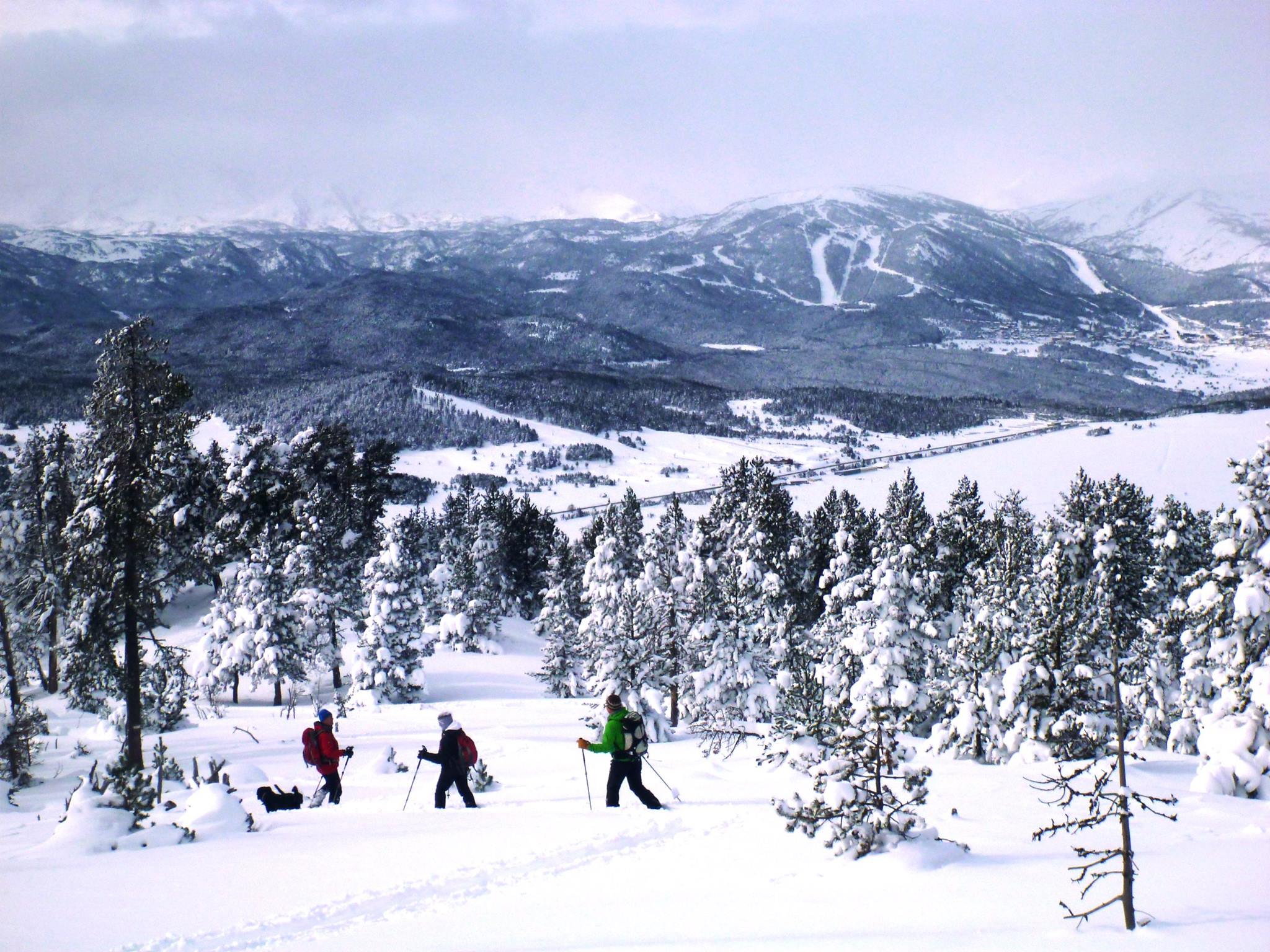
The Price of a Passage
Another uncomfortable truth was the cost. The same mountains could contain extraordinary courage and extraordinary exploitation.
Some passeurs were committed rescuers.
Others were smugglers who understood that desperate people would pay enormous sums for a chance of survival.
Historical accounts record refugees paying substantial amounts for passages.
One family paid 200,000 francs for an escape arranged from Perpignan.
Another couple paid 120,000 francs for passage towards Girona.
A Polish couple reportedly found a passeur at Collioure and paid with a gold wedding ring.
It was impossible to know good to trust until it was too late.
The Collioure Route
Collioure and the Albères offered another possible route towards Spain.
The landscape looks benign today with its vineyards, rocky hills, the Med glinting below, and Spain just around the corner, but the frontier was heavily patrolled and the apparent shortness of the journey was deceptive.
Fugitives might leave after dark, climb silently and wait for patrols to pass, but always with the knowledge that a light in the distance might be a farmhouse.
Or a patrol.
The Spanish Side
Crossing the frontier did not necessarily mean being welcomed. Franco’s Spain was neutral, but it was not an uncomplicated refuge.
People entering illegally could be arrested.
Jewish refugees in particular could be detained, allied servicemen interned. Many ended up in concentration camps such as Miranda de Ebros.
Originally established for prisoners of Franco’s Republican enemies, more than 15,000 foreign prisoners passed through Miranda during the Second World War. The camp was overcrowded, primitive and poorly supplied and for someone who had just crossed the Pyrenees after escaping the Gestapo, it could be a bitter twist.
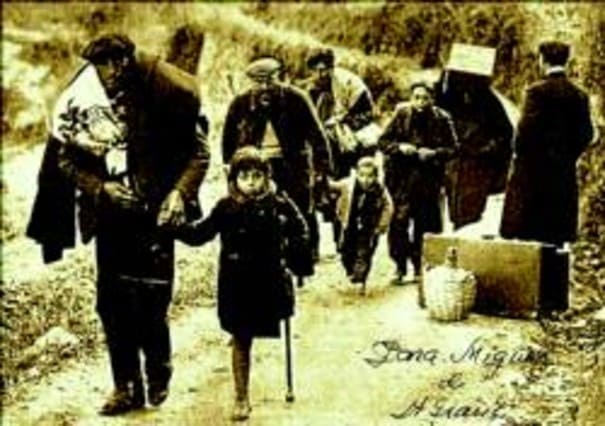
The Invisible Network
What made the escape routes work was not one organisation but a whole network. One person knew another. A railway worker knew a Resistance contact. A hotelier knew a farmer. A farmer knew a passeur. A passeur knew someone across the border.
A priest might provide a hiding place. A doctor might treat an injured fugitive. Someone else might forge a document. And somewhere in the chain there might be a person who knew how to reach Barcelona.
Unfortunately, networks could easily be infiltrated. Each link was undertaken by people with very different backgrounds and motivations.
A Different Kind of Resistance
The stories of the passeurs also complicate our understanding of Resistance.
Not every resistant was carrying a Sten gun. Not every act of resistance involved sabotage. Sometimes resistance meant hiding someone for one night. Driving someone twenty kilometres. Putting a stranger on a train.
Lying to a policeman. Providing a meal. Knowing which mountain path to take.
Or simply refusing to ask too many questions.
The people who did these things knew what could happen if they were caught.
Joseph Planes and his colleagues discovered the price.
So did many others. Their names are less famous than those of Resistance commanders.
But without people like them, many of the better-known stories of escape would never have happened.
The Last Crossing
By the summer of 1944, everything was changing.
The Allied landings in Normandy had taken place. The German position in France was deteriorating. The Resistance was preparing for open action.
The people who had spent years hiding were beginning to think about coming out.
And the escape routes began to acquire a different meaning.
For years, the mountains had been an exit from France. Now the direction of travel was beginning to reverse.
Weapons, information and fighters started to move the other way, becoming a route for people preparing to return to France.
But for the men and women who had crossed the mountains during the darkest years, the journey remained something more personal.
Some made it. Some did not.
And some disappeared so completely that history remembers only the route they took.
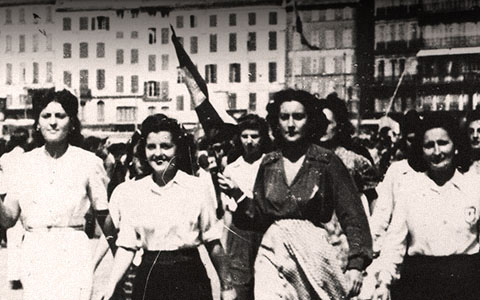
The Road to Freedom
But there was another group whose contribution was less visible still.
Women.
They hid fugitives, carried messages. forged papers. fed maquisards. worked as couriers…..and sometimes faced the Gestapo knowing perfectly well what awaited them if they were caught.
Their stories have too often been pushed into the background.
In the next article, we bring them back into the light.
Articles In This series
Article 1
The Traitor of Valmanya: The Strange and Tragic Story of Nessim Eskenazi
Article 2
Julien Panchot: The Maquis Leader Who Refused to Break
The story of the Resistance commander captured before the destruction of Valmanya.
Article 3
Valmanya 1944: The Village That Burned
A dramatic reconstruction of the attack on the village and its aftermath.
Article 4 Part 1
The Milice in Perpignan
Who collaborated locally, how the organisation operated, and how it was dismantled after Liberation.
The Milice in Perpignan Part 2
Who collaborated locally, how the organisation operated, and how it was dismantled after Liberation.
Article 5
Henri Treyeran: The Most Hated Man in Perpignan
A profile of the Milice leader assassinated by Resistance fighters.
Article 6
Escape Across the Pyrenees
The guides, smugglers, Allied airmen, Jews and resistance fighters who crossed into Spain.
Article 7
The Women of the Resistance in the Pyrénées-Orientales
Too often overlooked
Article 8
The Liberation of Perpignan
August 1944 and the collapse of German authority.
Article 9
Justice and Revenge
The trials, executions, and purges that followed Liberation.
Article 10
The Last Witnesses
How the Occupation is remembered today in the department.