
Article 1
The Traitor of Valmanya: The Strange and Tragic Story of Nessim Eskenazi
By the summer of 1944, the war was turning against Nazi Germany. Allied troops had landed in Normandy, the French Resistance was growing bolder, and in the Pyrénées-Orientales the mountain maquis were preparing for the liberation they believed was finally within reach.
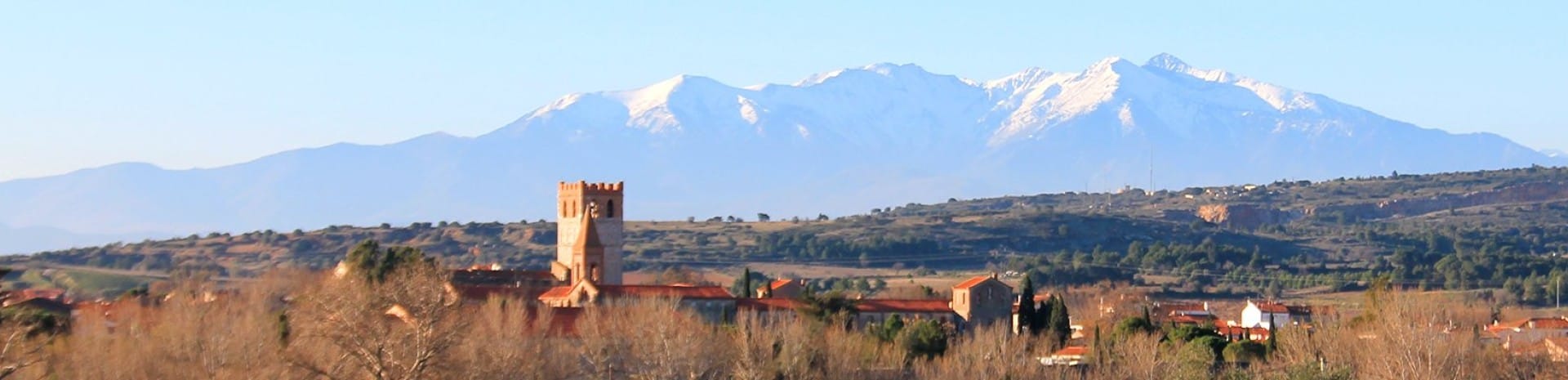
Yet in the shadow of the Canigou, one man would play a decisive role in one of the darkest tragedies in the department’s wartime history.
His name was Nessim Eskenazi.
Unlike most collaborators, Eskenazi did not fit the usual profile. He was not a militant fascist, a member of the Milice, or an activist in one of the collaborationist parties. He was a stateless Jew who had himself been persecuted by the regime he would ultimately serve.
His story remains one of the most extraordinary and disturbing episodes of the Occupation in the Pyrénées-Orientales.
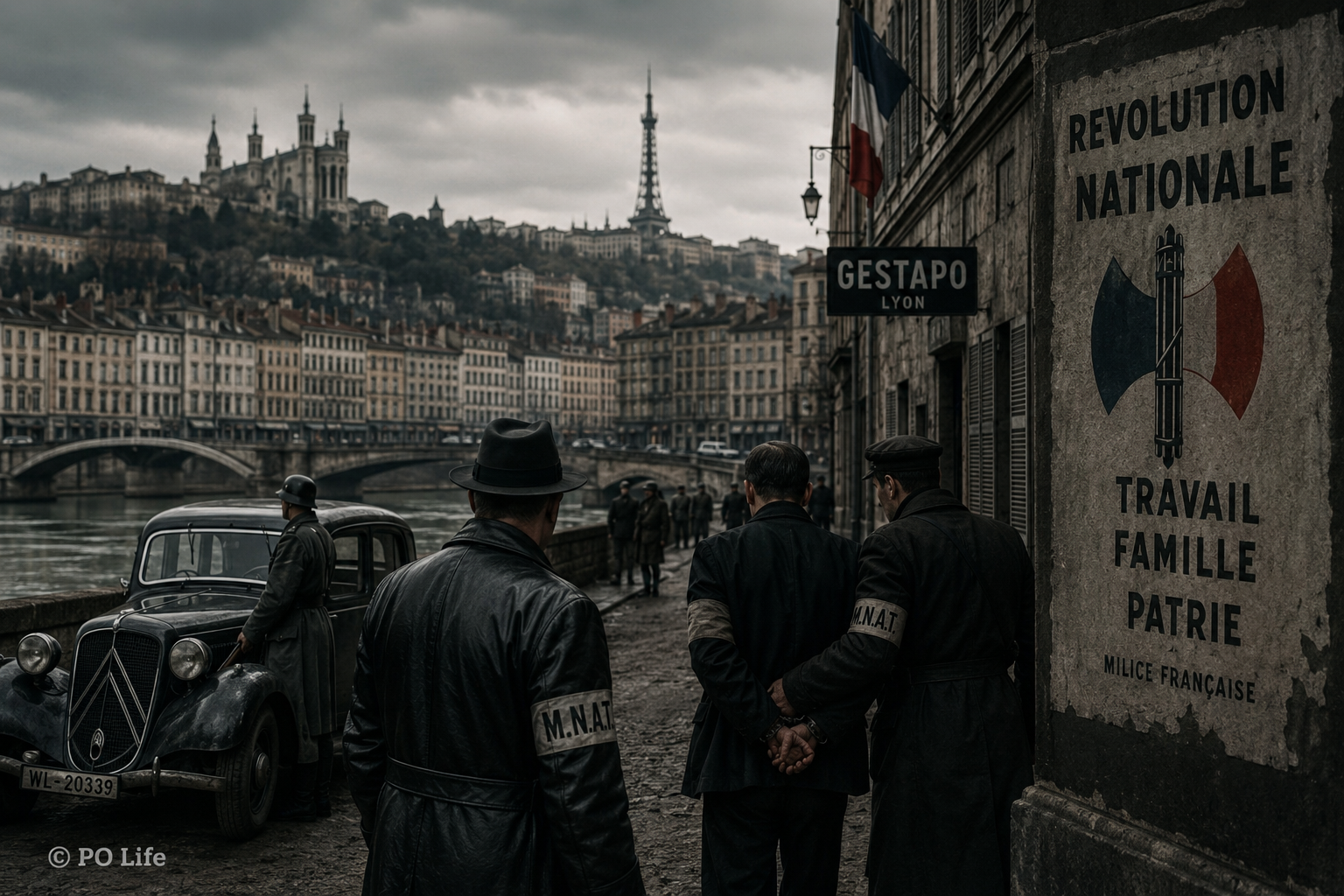
From Constantinople to France
Nessim Eskenazi was born in Constantinople, now Istanbul, in 1913. His family moved to France in 1928, part of the broader migration of Jews from the former Ottoman Empire seeking economic opportunities in Western Europe.
He settled in Paris and worked in cinemas as a projectionist. By all accounts, his early life was unremarkable. He married a French woman, started a family, and in 1938 obtained French citizenship through naturalisation. He appeared to have successfully integrated into French society.
Then came the defeat of 1940.
The Vichy regime introduced a series of antisemitic laws that transformed the lives of Jewish citizens. Eskenazi lost the right to continue working in his profession. Like thousands of others, he found himself pushed to the margins of society. His marriage collapsed, his employment disappeared, and his future became uncertain.
Seeking work, he eventually moved south to Perpignan.
For a brief period he found employment at the Castillet cinema, but his situation deteriorated further when Vichy authorities revoked his French nationality. Suddenly he was not only Jewish but stateless.
In occupied France, this was a dangerous position.
Without citizenship, without political influence, and with few prospects, Eskenazi faced an increasingly precarious existence.
A Pact with the Occupiers
At some point during the occupation, Eskenazi made a choice that would define his legacy.
Using his linguistic abilities and presenting himself primarily as a Turkish national, he secured employment as an interpreter with German customs authorities operating along the Franco-Spanish frontier.
The Germans valued multilingual personnel. The border region was a strategic zone through which Allied airmen, resistance fighters, escaped prisoners, and Jewish refugees attempted to reach neutral Spain.
What began as translation work evolved into something far more sinister.
Eskenazi became an operational agent working with German authorities in anti-Resistance activities. Whether he acted from conviction, fear, opportunism, self-preservation, or a combination of all four remains a matter of debate. Historians continue to wrestle with this question.
What is certain is that his actions had deadly consequences.
The Road to Valmanya
In the summer of 1944, one of the most active Resistance groups in the region was the Maquis Henri-Barbusse, commanded by Julien Panchot.
The maquis operated in the mountainous terrain around Valmanya, on the slopes of the Canigou. Like many Resistance groups in southern France, its members hoped to support the Allied advance and help liberate the region from German control.
German authorities were determined to destroy it.
Eskenazi was assigned to gather intelligence on resistance activity in the area. During a reconnaissance mission, he succeeded in approaching the region where the maquis was concealed.
Accounts indicate that he was captured by resistance fighters during one of these operations. Remarkably, he managed to escape.
That escape would prove fatal for the maquis.
Returning to German authorities, Eskenazi provided detailed information concerning the location of the resistance camp. His captivity had given him precisely the intelligence the Germans needed.
Armed with this information, German forces launched a major operation against Valmanya.
The Destruction of a Village
On 2 and 3 August 1944, German troops attacked the Maquis Henri-Barbusse.
Julien Panchot was captured.
He was brutally tortured and eventually killed.
The village of Valmanya suffered devastating reprisals. Homes were burned. Residents were terrorised. Much of the village was destroyed.
Today the attack remains one of the defining wartime tragedies of the Pyrénées-Orientales.
Although German troops carried out the operation, local memory never forgot the role played by the man whose information had guided them to the maquis.
That man was Nessim Eskenazi.
Liberation and Arrest
Only weeks later, the military situation collapsed for Germany.
In August 1944, German forces began withdrawing from the Pyrénées-Orientales as Resistance units took control of Perpignan and surrounding towns.
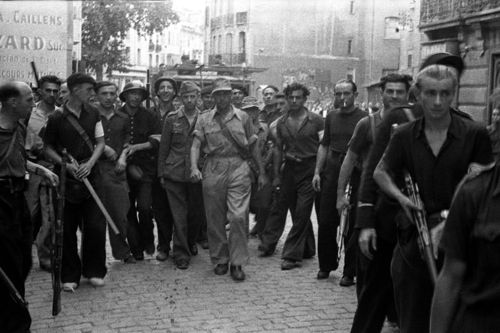
Sensing the change in fortunes, Eskenazi attempted an extraordinary manoeuvre.
According to contemporary accounts, he sought out the new French authorities and tried to provide information concerning German operations and orders.
Whether he hoped to secure leniency or present himself as a useful witness remains unclear.
The attempt failed.
He was arrested before he could reinvent himself.
The Resistance, local authorities, and much of the population regarded him not as an informant but as a collaborator whose actions had directly contributed to the deaths of French patriots.
Trial and Execution
Eskenazi’s trial took place in Perpignan after the Liberation.
The proceedings focused on his collaboration with German authorities and, above all, his role in the destruction of the Valmanya maquis and the death of Julien Panchot.
The verdict was uncompromising.
He was sentenced to death.
On 12 October 1944, barely two months after the liberation of Perpignan, Nessim Eskenazi was executed by firing squad.
The execution carried a symbolic dimension. The firing squad consisted of former resistance fighters who had volunteered for the task.
According to contemporary reports, Eskenazi faced death proclaiming his innocence.
It did not save him.
He was thirty-one years old.
An Uncomfortable Legacy
The story of Nessim Eskenazi resists simple interpretation.
He was neither a fanatical Nazi nor a conventional political collaborator. He belonged to a category that historians often find more difficult to explain: individuals who found themselves trapped by circumstances and who nevertheless chose to serve an oppressive regime.
His Jewish origins make his case particularly unsettling. He had personally experienced exclusion, discrimination, and statelessness. Yet rather than joining those who resisted, he aligned himself with the occupiers.
Some have seen in his story a desperate struggle for survival. Others view it as a clear case of opportunistic betrayal. The historical record does not allow a definitive answer.
What cannot be disputed is the outcome.
His information helped German forces locate one of the most important maquis in the Canigou region. Julien Panchot died. Valmanya burned. Families were shattered.
More than eighty years later, memorials in the Pyrénées-Orientales commemorate the Resistance fighters and villagers who suffered during those days of August 1944.
Few remember the man who led the Germans to them.
Yet understanding the Occupation requires remembering figures like Nessim Eskenazi as well.
His life is a reminder that collaboration was not always born from ideology. Sometimes it emerged from fear, ambition, survival, resentment, or weakness. The result, however, could be just as destructive.
In the mountains of the Canigou, the consequences are still remembered.
Articles In This series
Article 1
The Traitor of Valmanya: The Strange and Tragic Story of Nessim Eskenazi
Article 2
Julien Panchot: The Maquis Leader Who Refused to Break
The story of the Resistance commander captured before the destruction of Valmanya.
Article 3
Valmanya 1944: The Village That Burned
A dramatic reconstruction of the attack on the village and its aftermath.
Article 4
The Milice in Perpignan
Who collaborated locally, how the organisation operated, and how it was dismantled after Liberation.
Article 5
Henri Treyeran: The Most Hated Man in Perpignan
A profile of the Milice leader assassinated by Resistance fighters.
Article 6
Escape Across the Pyrenees
The guides, smugglers, Allied airmen, Jews and resistance fighters who crossed into Spain.
Article 7
The Women of the Resistance in the Pyrénées-Orientales
Too often overlooked
Article 8
The Liberation of Perpignan
August 1944 and the collapse of German authority.
Article 9
Justice and Revenge
The trials, executions, and purges that followed Liberation.
Article 10
The Last Witnesses
How the Occupation is remembered today in the department.
I love learning the history of my adopted home, thank you for providing so much rich history. I am looking for books that will continue to enrich my knowledge of the area and then go and visit these sites. Thank you for taking the time to publish all these interesting articles!
Thank you for your lovely comments Lynda. So glad that you enjoy our articles. We love writing them 🙂