

- This event has passed.
Easter in Villefranche de Conflent
4th April - 6th April
Event Navigation

Easter weekend in Villefranche de Conflent
Celebrate Easter the Catalan way with three days of music, tradition and family fun in the beautiful walled town of Villefranche-de-Conflent.
The festivities combine centuries-old local customs with lively street entertainment — including the famous giants of Villefranche, traditional Catalan musicians and a charming musical egg hunt.
The weekend ends with a scenic pilgrimage to the tiny hermitage of Notre-Dame-de-Vie, perched high on the pink marble cliffs above the town.
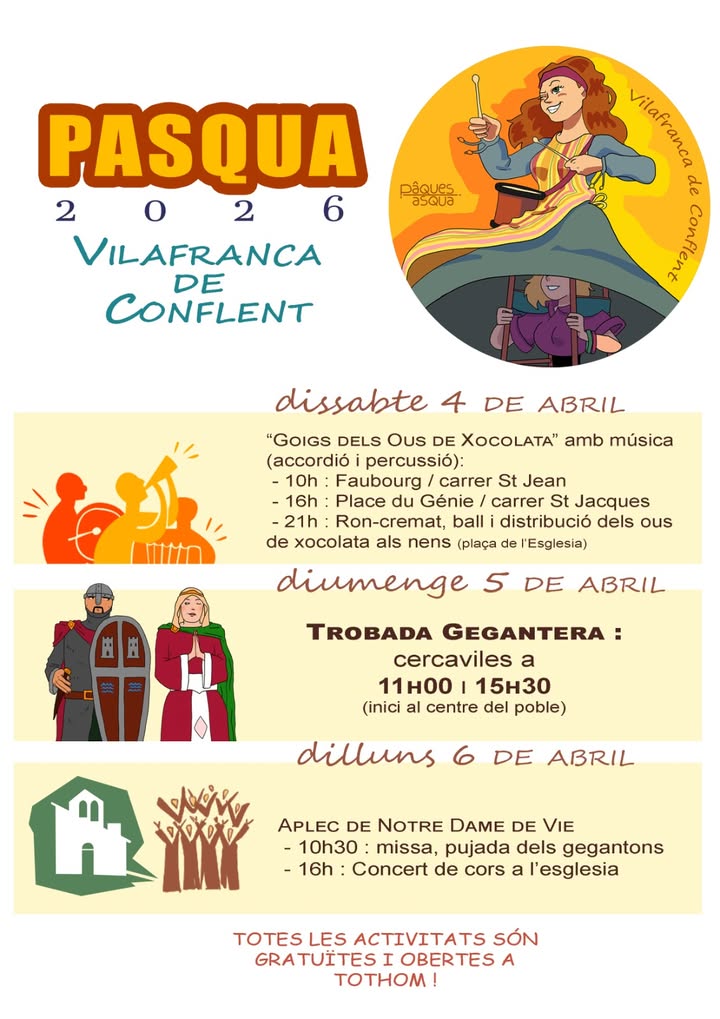
Programme 2026
Saturday 4 April
Goigs dels ous / chocolate egg singing tradition (musicians parade through the streets with the ’geganters de Villefranche’ playing Catalan musical instruments (gralles, flaviol and tambourin) and asking for chocolate eggs from the inhabitants of the town in exchange for their music.)
Ron cremat and traditional Catalan songs
Sunday 5 April
Parade of the Giants (Gegants) through the streets (A true spectacle, not to be missed!)
Monday 6 April
Aplec (pilgrimage) to Notre-Dame-de–Vie
Mass around 10:30
Afternoon choir concert (often around 16:00)
These events — giants, music, egg traditions and the pilgrimage — are the core of Villefranche’s Easter celebrations each year, even though small details or times sometimes change.
✨ Did you know?
Villefranche’s giants are part of a long Catalan tradition found across both sides of the Pyrenees. Many towns guard their giants carefully — they only come out for major celebrations such as Easter, patron saint festivals and local fêtes.!
 *Gegants are enormous painted papier-maché figures, sometimes 14 or 15 ft tall, with traditional clothing and a person inside. Most towns have their own giants, often representing some important person in the history of the town. They usually appear in couples, often as king and queen, or some other important person and go out during the patron saint holiday of the town (Festa Major) or on special days, and dance in the streets with little “big-heads” or “cap-grossos”.