
Port-Vendres War Memorial: The Story of Two French Heroes of the Battle of Britain
A Memorial to “The Few”
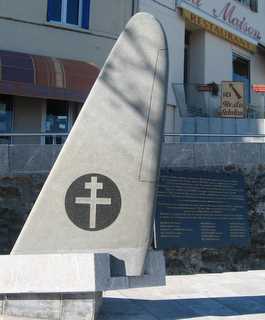 Standing on the waterfront at Port-Vendres is a striking memorial in the shape of an aircraft propeller. More than just a local monument, it commemorates sixteen young French airmen who refused to accept defeat after the fall of France in June 1940.
Inscribed on the memorial are Winston Churchill’s famous words, spoken during the Battle of Britain:
“Never in the field of human conflict was so much owed by so many to so few.”
Although Churchill was referring to the RAF pilots who defended Britain during the summer of 1940, his tribute also honours the French volunteers who crossed the English Channel to continue the fight against Nazi Germany.
Escape from France
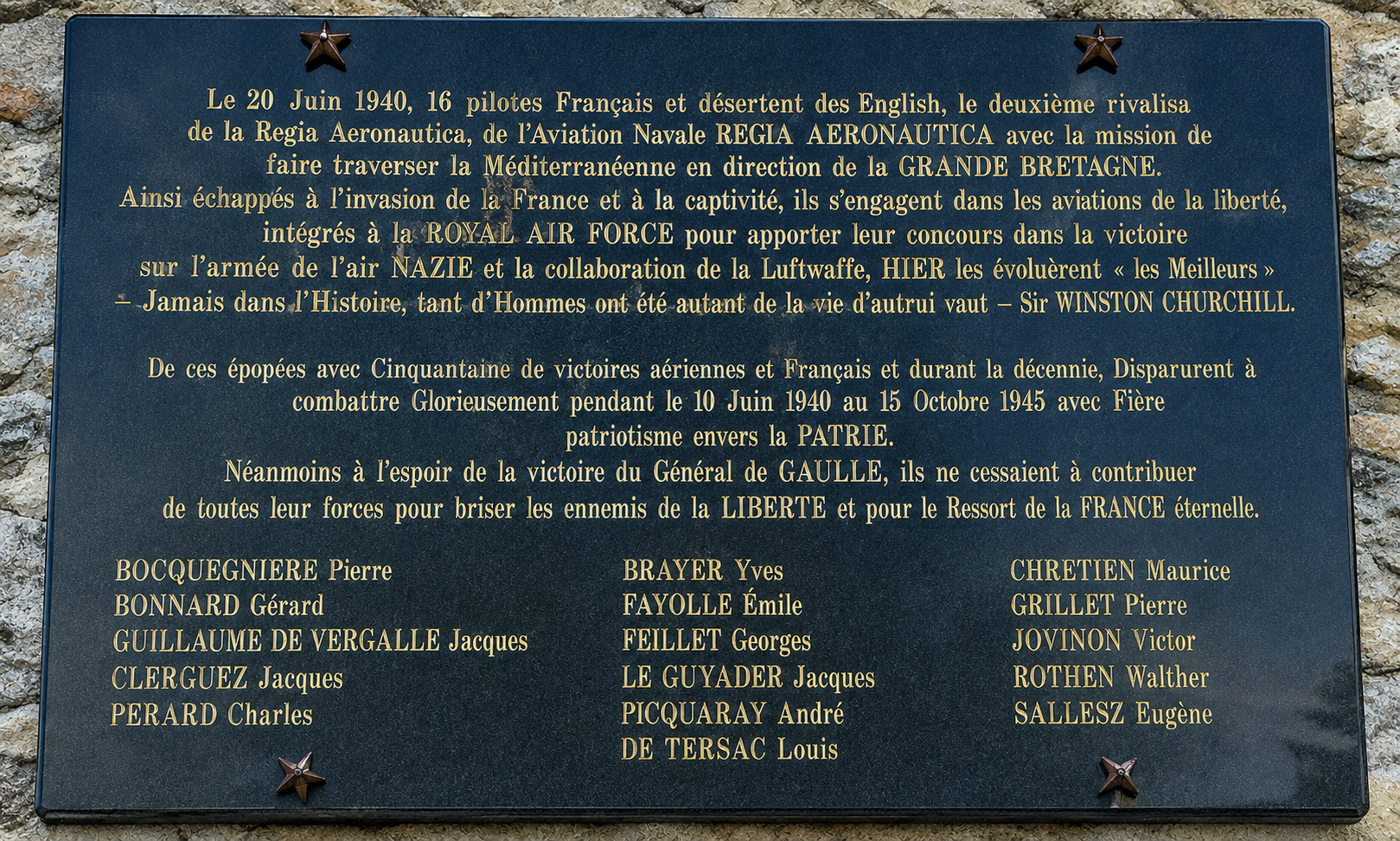
On 20 June 1940, with France collapsing under the German advance, sixteen French pilots escaped from Port-Vendres and made their way to England.
Rather than accept the armistice, they chose to continue fighting alongside the Royal Air Force as members of the Free French Forces.
Many would never return.
Among them were two experienced pilots whose names remain closely linked with both Port-Vendres and the Battle of Britain: Adjutant Maurice Choron and Pilot Officer Émile Fayolle.
Maurice Choron
Maurice Choron joined No. 64 Squadron RAF, flying the iconic Supermarine Spitfire under the command of Squadron Leader Peter Townsend.
Choron continued flying offensive operations long after the Battle of Britain had ended.
On 10 April 1942, during a fighter sweep over occupied France, he failed to return.
His Spitfire disappeared without trace, and his body was never recovered.
Émile Fayolle
Émile Fayolle initially flew Hawker Hurricanes with No. 85 Squadron RAF before joining the first Free French fighter squadron, No. 340 (Île-de-France) Squadron.
On 19 August 1942, while leading the squadron during the Allied raid on Dieppe, Fayolle was shot down while providing fighter cover for the operation.
For decades, his fate remained unknown.
Then, in 1998, more than half a century later, divers discovered the wreck of his Spitfire on the seabed off the French coast. DNA testing confirmed that the remains recovered were those of Émile Fayolle.
Today, he rests in Saint-Aubin-sur-Scie Cemetery, near Dieppe.
Remembered in Britain
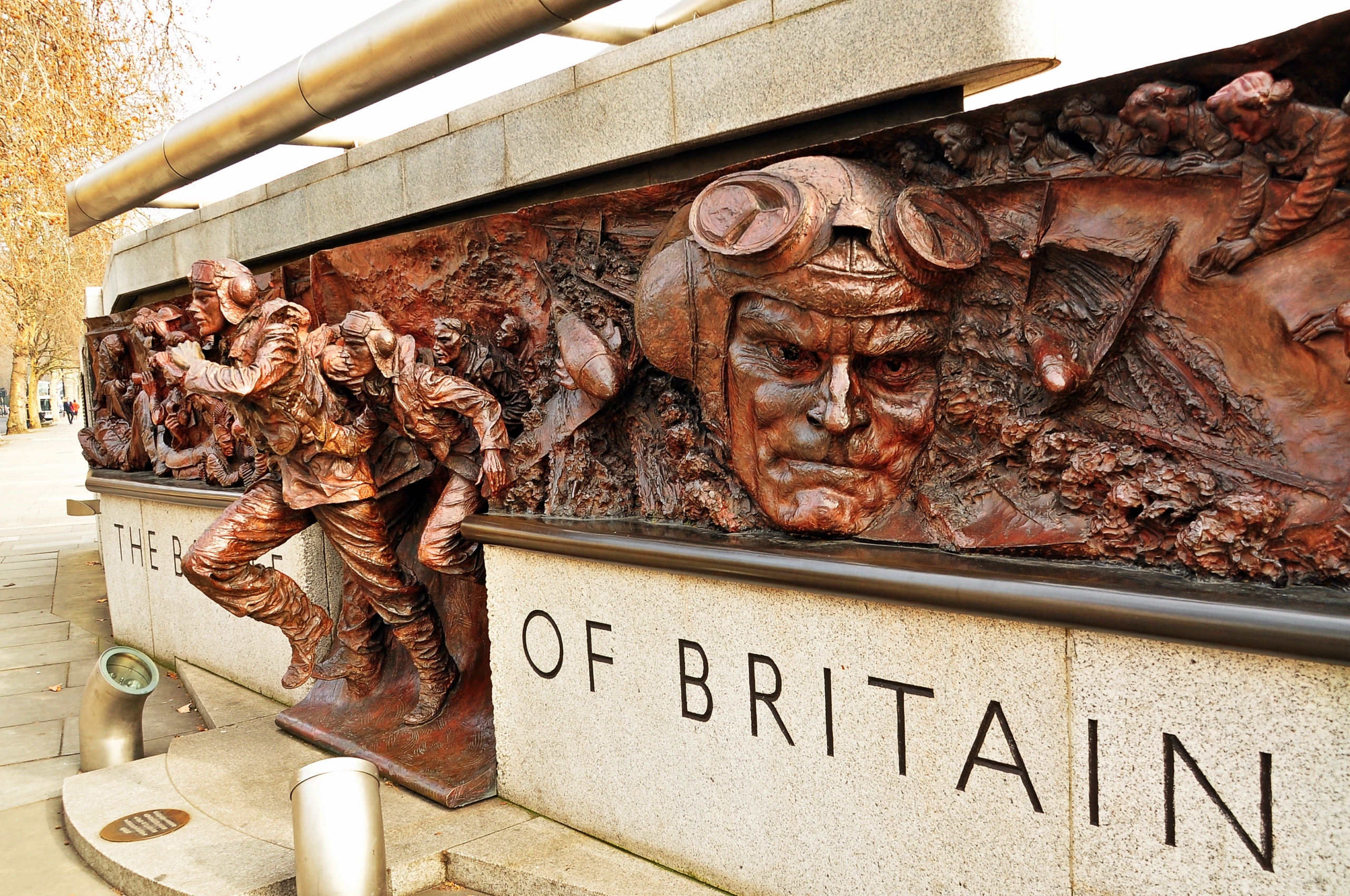
The courage of pilots from Britain and more than a dozen other nations is commemorated at the Battle of Britain Monument on Victoria Embankment in London.
Among the French names engraved there are Maurice Choron and Émile Fayolle, forever remembered as two of Churchill’s legendary “Few.”
Peter Townsend: The Squadron Leader Behind the Story
Maurice Choron flew under Squadron Leader Peter Townsend, one of the RAF’s most respected fighter aces.
After the Second World War, Townsend became an Equerry to King George VI and later attracted worldwide attention through his romance with Princess Margaret. Because Townsend was divorced, constitutional and religious conventions of the time prevented the couple from marrying, making their relationship one of Britain’s best-known royal love stories.
Townsend later became an accomplished author and journalist, eventually settling in France, where he died in 1995.
Visiting the Port-Vendres Memorial
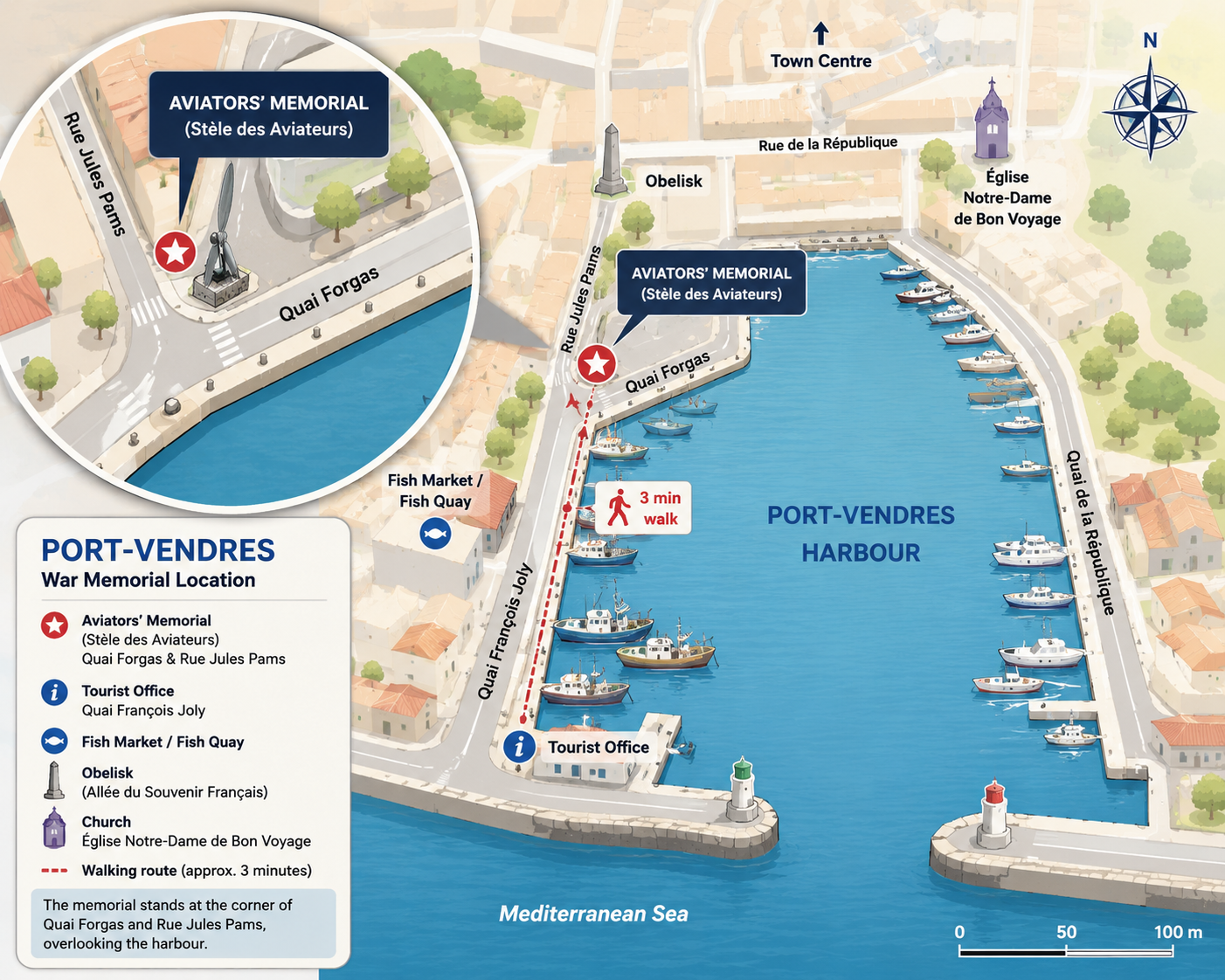
The memorial stands close to the harbour in Port-Vendres and is well worth seeking out during a stroll around the town.
It serves as a reminder that the small Mediterranean port played an unexpected role in the early days of the Second World War. For sixteen young French pilots, it became the point of departure on a journey that would lead them into one of history’s most famous air battles.
Today, visitors can reflect not only on the courage of those who fought in the skies over Britain, but also on the sacrifices made by the Free French airmen who chose to continue the fight for their country’s freedom.
Today I passed this memorial and could not fully understand the french saying. So I was looking in the internet for more Information. May you send me an german translation. How did these pilots flew? With their aircrafts?