
If you have a runny nose, streaming eyes and feel generally ratty, it might not necessarily be a cold or unmentionable virus!
The Pyrénées-Orientales regularly experiences high pollen levels, particularly during late winter and spring when cypress and grass pollen are at their peak.
According to the Réseau National de Surveillance Aérobiologique (RNSA), which monitors airborne allergens across France, our region is frequently among those most affected.
Pollen levels fluctuate throughout the season, so it’s important to check current forecasts before assuming conditions are mild.
🔎 Current pollen levels: Check the latest daily update from the RNSA before planning outdoor activities.
Hayfever (le rhume des foins) is an allergic reaction to the proteins in pollen, a fine powder released by plants as part of their reproductive cycle. Grass and cereal pollen (les graminées) are responsible for 95% of allergies and are often particularly high in the P-O
during peak season
Up to one in five people will experience hay fever at some point in their life. When the pollen count is high, it can also affect many people who have never had hay fever before, so if you have a runny nose and itchy eyes right now, it could well be le rhume des foins!
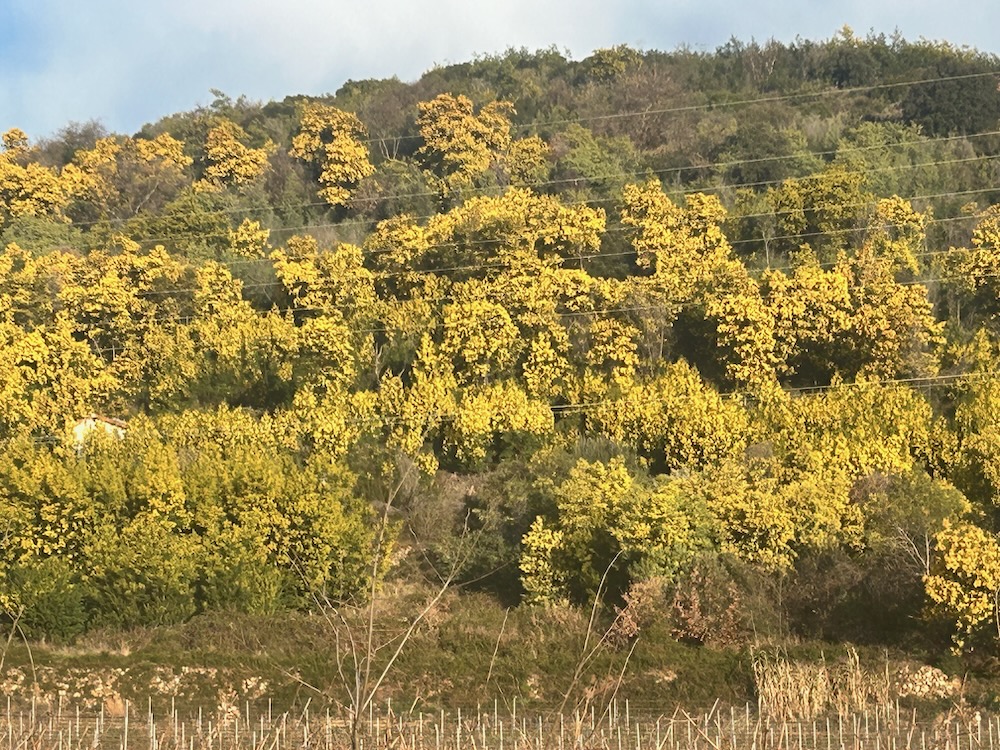
When Is Pollen Season in the P-O?
January–March: Cypress pollen (often intense locally)
April–June: Grass pollen (responsible for most hay fever cases)
Late summer: Weed pollen
SOME TIPS FOR MANAGING HAY FEVER
Whilst you can’t cure hay fever, there are various things that you can do to ease your symptoms when the pollen count is high.
- Monitor local pollen forecasts before planning outdoor activities.
- .Change your clothes/shower when you come in from outside. This will reduce your continued exposure to allergens that may have attached themselves to your clothes.
- Avoid cutting the grass (a good way to get out of working in the garden), as grass can trigger allergy symptoms, especially during late spring and summer.
- Wearing a filtered mask (like a surgeon’s mask) which can help to block the pollen when cutting grass is unavoidable.
- Purify the air with an air filter that traps small particles. Buy a pollen filter for the air vents in your car and a vacuum cleaner with a special HEPA filter
- Put Vaseline around your nostrils to trap pollen
- Wear wraparound sunglasses to stop pollen getting into your eyes.
- Dont keep fresh flowers in the house, dry clothes outside as they can catch pollen, or let your pets run in and out, as they can carry pollen indoors.
If symptoms are severe or persistent, consult your GP or pharmacist for appropriate treatment.