
La Poste – Post Offices and Postal Services in France
The French post office — La Poste — is still a familiar part of everyday life in France. Even many small villages have a post office or local postal service, although the services available can vary from one location to another.
Of course, the way we use the post has changed enormously. Email, messaging apps and online services have replaced a huge amount of everyday letter writing. These days, you are much more likely to receive an email than a letter from your bank, utility company or a friend abroad.
But physical post certainly hasn’t disappeared.
People still send important documents, registered letters, contracts, official correspondence, cards, photographs and parcels — and in France, knowing how to use La Poste remains surprisingly useful.
The good news is that you don’t necessarily have to queue at the post office to send something. You can buy postage online, print labels at home, track many types of mail and arrange some postal services from your computer or phone.
So, whether you’re new to France or have lived here for years, here are some useful things to know about using La Poste.
Finding a post office
You can find your nearest Bureau de Poste using the La Poste website. It is worth checking the opening hours before making a special journey, as services and opening times vary.
Some smaller outlets offer a more limited range of services than a full post office.
Buying stamps
You can still buy stamps at a post office, but you can also buy and print them online through La Poste.
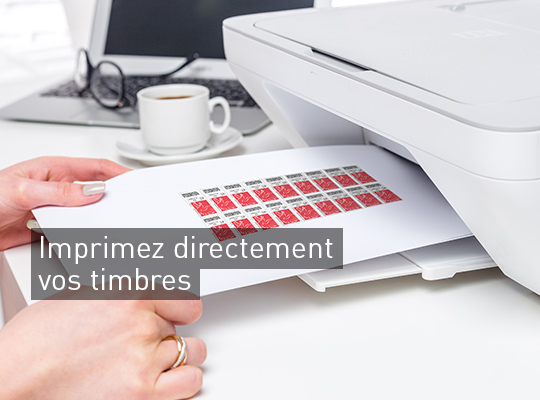
There is no longer a simple system of a red stamp for first-class post and a green stamp for second-class post as described in older guides.
The standard domestic service is now the Lettre verte. For a small letter weighing up to 20g, the 2026 rate is €1.52. La Poste also offers several other services depending on whether you need tracking, faster handling or proof of delivery.
You can check the current prices before sending something using La Poste’s online postal tariff guide:
La Poste – current postal rates
What is a Lettre verte?
The Lettre verte is the standard economical letter service for sending ordinary correspondence within France.
For a small letter of up to 20g, the 2026 price is €1.52. The service is intended for delivery in around three working days in metropolitan France.
You can also add tracking with a Lettre verte suivie.
A tracked letter of up to 20g costs €2.02 in 2026 when sent within France.
Sending something important? Use recommandé
If you are sending something important and need proof that you posted it, consider Lettre recommandée — registered mail.
This gives you proof of posting and allows you to choose an avis de réception, confirming that the recipient has received the letter.
This can be particularly useful for important documents, formal notices, cancellations, legal correspondence or anything where you may later need to prove that you sent it.
There are different levels of compensation depending on the type of recommandé you choose.
You can also send a registered letter online without going to the post office. La Poste can print, envelope, stamp and deliver your letter, while your proof of posting is retained digitally in your customer account.
Sending letters abroad
If you’re sending Christmas cards, letters or documents to family and friends outside France, make sure you select the international service rather than the standard French tariff.
La Poste offers international letter and tracked-letter services, with prices depending on the weight and destination. (
For example, in 2026 a standard international letter of up to 20g costs €2.25. A tracked international letter costs more.
Because international postal services and prices can change, it is always worth checking the current tariff before posting.

Sending parcels
For parcels, La Poste offers several services, including Colissimo and Chronopost.
The price depends on the size, weight, destination and speed required. You can check the current parcel prices and options on the La Poste website.
For international parcels, remember that customs rules may apply, particularly when sending goods outside the European Union.
Don’t assume that because something is being sent from France, it will automatically be treated as a simple letter when it arrives in another country.
Tracking your post
If your letter or parcel has tracking, you can use the tracking number on the La Poste website to follow its progress.
The French word to look for is:
numéro de suivi = tracking number
Keep the receipt or proof of posting until you know that your item has arrived safely.
Moving house?
La Poste offers a réexpédition du courrier service, allowing your mail to be forwarded to a new address for a specified period.

This can be particularly useful when moving house, although you should still change your address directly with your bank, insurance company, utilities, government departments and other organisations that send you important correspondence.
You can arrange postal forwarding online or through La Poste.
What if you don’t have an address yet?
If you need to receive mail without having it delivered to your home address, you may come across the term poste restante.
This is a postal service allowing mail to be addressed to a post office for collection. Availability and conditions can vary, so check with the particular post office before relying on it.
Postcodes in France
French postcodes contain five digits.
The first two digits generally identify the département, while the final three identify the commune or postal area.
For example:
66 000 Perpignan
The 66 identifies the Pyrénées-Orientales.
There are exceptions and special arrangements, so the postcode should always be checked rather than guessed.
If you’re unsure of a postcode, use La Poste’s online postcode/address search rather than relying on an old list.
And finally… do you have to go to the post office?
Not necessarily!
For many everyday postal jobs, you can now do much of the process online.
You can:
- buy stamps;
- print postage at home;
- prepare some types of tracked mail;
- send certain letters online;
- arrange registered letters online;
- track your mail;
- arrange mail forwarding;
- check postal prices;
- find your nearest post office.
For current services, prices and conditions, the best place to start is the official La Poste website:
www.laposte.fr
Some useful French postal vocabulary
La Poste – the French postal service
bureau de poste – post office
guichet – counter
timbre – stamp
affranchissement – postage / postage payment
Lettre verte – standard letter service
Lettre suivie – tracked letter
Lettre recommandée – registered mail
avis de réception – acknowledgement/proof of receipt
preuve de dépôt – proof of posting
numéro de suivi – tracking number
colis – parcel
enveloppe – envelope
destinataire – recipient
expéditeur – sender
adresse de livraison – delivery address
réexpédition du courrier – mail forwarding
poste restante – mail held at a post office for collection
boîte aux lettres – letterbox / mailbox
la levée – mail collection
retour à l’expéditeur – return to sender
destinataire inconnu – recipient/address unknown
frais de port – postage/shipping costs
frais de douane – customs charges
One final tip: if you receive an unexpected SMS or email asking you to pay a delivery charge, don’t automatically assume it is from La Poste. Fake parcel-delivery messages are a common form of smishing. If in doubt, go directly to the official La Poste website rather than clicking a link in the message.
Postal services, prices and conditions change, so always check the current information on the official La Poste website before sending something important
Hello,
The post office send a code to your old address to redirect your Mail. Has anyone found a way round this? I think it’s possible to go in and validate the request somehow.