
What’s on the French Christmas table?
The oysters are on ice, someone’s cutting the pain d’épices, and there’s a chocolate log in the fridge with a tiny axe stuck in it. Welcome to the French Christmas table, where even the pudding has a story.
Le réveillon: settle in for the evening
A réveillon is the festive meal on Christmas Eve or New Year’s Eve. The name comes from réveiller, to wake up, which gives you a fair idea of how late things can go. The Christmas meal was traditionally eaten after Midnight Mass in many households. These days, you’re just as likely to start earlier and still be at the table when midnight comes round.
Foie gras, faux gras and what to put on the toast
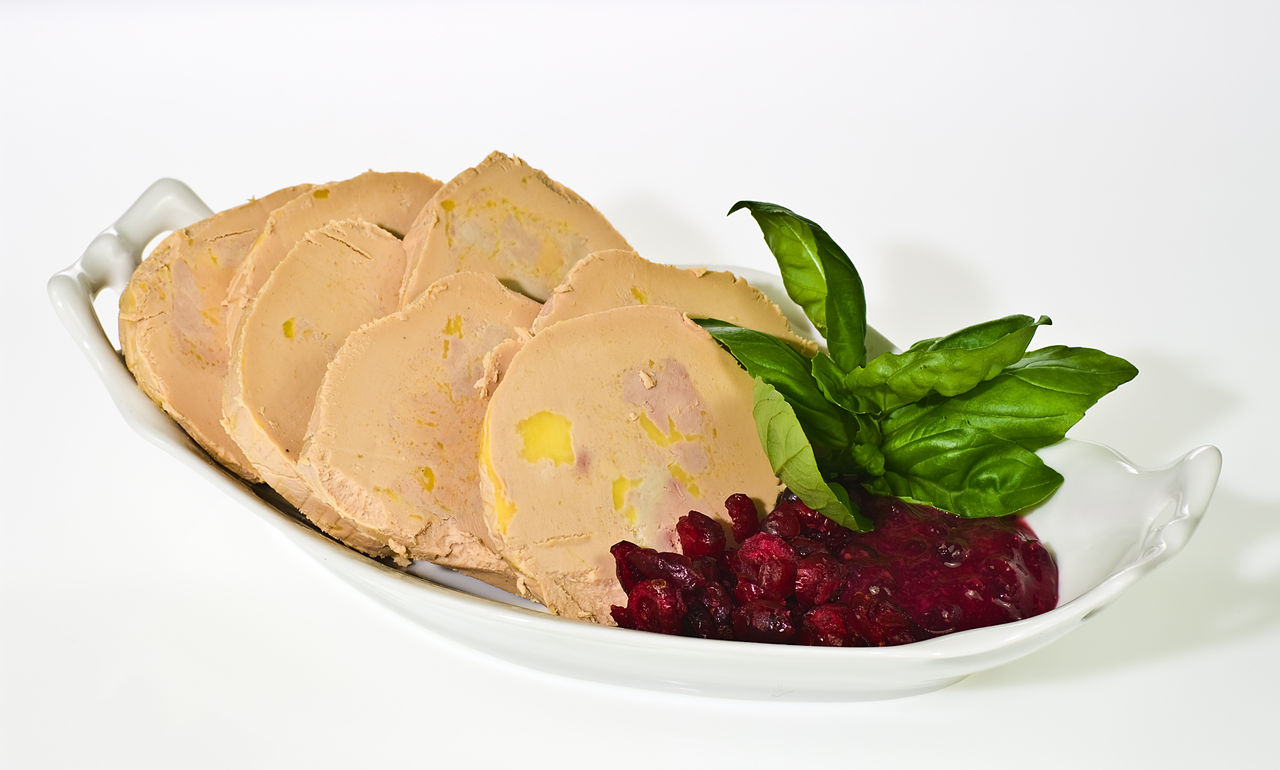
Foie gras is a festive favourite in France, usually served in thin slices with toast, brioche or pain d’épices, a sweet spiced loaf. A little fig confit goes well with it, or just a few flakes of sea salt. Here in the Pyrénées-Orientales, there’s an obvious local partner for it: a chilled glass of Muscat de NoëlMuscat de Noël.
It’s also one of the more divisive things on the Christmas table. Traditional foie gras is made from the enlarged liver of a duck or goose fattened by force-feeding, known in French as gavage. If you’re buying it, the wording on the label tells you what you’re getting.
- Foie gras entier is made with a whole liver or one or more intact lobes. Foie gras on its own means pieces of liver pressed together.
- Bloc de foie gras has a smooth, blended texture. Look for avec morceaux if you’d like pieces of foie gras in it.
- Mousse and pâté de foie gras contain other ingredients. You’ll find the percentage of foie gras on the label.
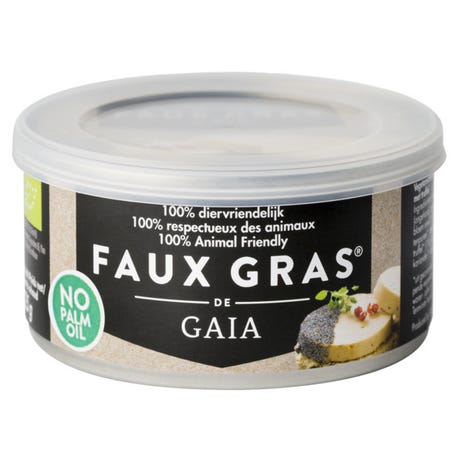
And faux gras? The name is a bit of wordplay: faux means imitation. The Belgian brand Faux Gras is plant-based, and you can make a festive spread along similar lines with mushrooms, lentils and walnuts, or with cashews and a splash of Cognac. Bring out the toast and fig confit for this one too.
Oysters, chestnuts and the bird in the oven
A platter of huîtres (oysters) is a classic opener. The fun starts before they reach the table, when someone volunteers to open the lot and discovers just how many there are in a dozen. They’re often served with lemon or a little vinaigre à l’échalote, vinegar with finely chopped shallots.
For the main course, you might see chapon (capon) or dinde aux marrons (turkey with chestnuts). And if you’ve wondered why the French call the chestnuts in the stuffing marrons when you learnt châtaignes at school, you’ll see both words used for edible chestnuts in the kitchen. The marron d’Inde, or horse chestnut, is a different thing altogether.
Marrons glacés: a sweet fit for a king?
A marron glacé is a whole candied chestnut, usually wrapped individually like a little present. Good ones are expensive for a reason. The chestnuts have to be peeled without breaking them, then soaked repeatedly in syrup over several days before they’re glazed.
One story puts their invention at the court of Louis XIV. Lyon has a claim too, and so does Cuneo, across the Alps in Italy. The Ardèche has a firmer date to offer. In 1882, Clément Faugier opened a marron glacé factory in Privas. If you’re given a box for Christmas, you may find that keeping it until New Year is the hardest part of the tradition.
The Christmas log that went from fireplace to plate
Long before French pâtissiers started making chocolate bark, the bûche de Noël was a real log. Families would put a large piece of wood on the fire and try to keep it burning as long as possible. The edible version took the shape of the old hearth log, and some pastry shops still go all out with ridged chocolate bark, meringue mushrooms and that little decorative axe.
There’s a local version of the story too. According to Perpignan’s Casa Pairal museum, as large hearths disappeared, one custom was to put a smaller log in the centre of the Christmas table, sometimes dressed with candles and greenery. So the log had already found its way onto the table in wood as well as in cake.
And if one dessert seems a bit stingy…
In Provence, the Christmas Eve tradition is to serve thirteen desserts, said to represent Jesus and the twelve apostles. Four of them, the quatre mendiants, are almonds, figs, raisins and walnuts or hazelnuts. Their colours are associated with the robes of four religious orders. Add nougat and a piece of pompe à l’huile, a sweet olive-oil bread, and you can see how quickly a plate of “just a little something” starts to fill up.
What has to be on your Christmas table? And what did you first try after moving to France that’s now part of your own Christmas?
CLICK HERE FOR A TYPICAL CATALAN CHRISTMAS/NEW YEAR’S EVE
A couple of specialities that you might be served over the festive season.
FOIE GRAS
(publishing this article does not reflect the views of the editor)
Despite the many ethical issues surrounding the force feeding of ducks or geese to enlarge their liver, the resulting foie gras is nevertheless part of the French heritage. A delicacy eaten throughout France on special occasions.
Foie gras entier (whole foie gras), made of a whole liver, may be either cooked (cuit), semi-cooked (mi-cuit), or fresh (frais). It can be bought from the butchers and is often “pan- fried” in slices and served hot either as a starter or on top of a fillet steak. (Tournedos Rossini)
Bloc de foie gras, cooked and shaped, with a minimum of 90% foie gras.
Should have rich taste and smooth texture. Buy it avec morceaux (with pieces) of foie gras for a rougher texture.Pâté de foie gras/mousse de foie gras.
Usually a combination of the meat of the bird and a small amount of the foie gras. Check the percentage of Foie Gras on the label.Duck (Foie Gras de Canard) or Goose (Foie Gras D’Oie)?
Goose foie gras is less common and more expensive than duck foie gras because its production requires more intensive care and feeding. Its taste is more intense than duck foie gras.
TO SERVE
Place it in the fridge for a couple of hours before serving so that it is chilled but not ice cold. Take out of fridge 15 minutes before serving and cut it into 10mm slices. Serve as a starter with toast triangles, crusty farmhouse bread or ‘pain d’épice’ or as a fabulous accompaniment to a sparking glass of champagne to celebrate just about anything! Put out a small bowl of chopped up shallots and some sea salt to sprinkle on.
FAUX GRAS
If the idea of force feeding of ducks and geese takes away your appetite, why not look out for the guilt-free alternative, faux gras, a novel twist on the classic recipe, made from the naturally fattened livers of free range geese and ducks, blended with goose or duck fat to produce a creamy texture similar to traditional foie gras. Cheaper and more humane, as long as you are quite happy to eat the waste organ of a bird in the first place.
MARRONS GLACES (Candied chestnuts)
First created during the reign of Louis XIV, these candied glazed chestnuts are eaten around Christmas time in France, a fairly costly luxury as true marrons glacés take several days to cook from start to finish.)
First, the chestnuts are washed & sorted, then boiled so that the shell and inner membrane come away easily.
They are then cooked repeatedly in a rich vanilla syrup until the flavour seeps into the heart of the chestnut.To make them, peel around two and a half pounds of chestnuts, and blanch in lightly salted water to loosen membranes.
Peel membranes off the chestnuts, discarding the water, and set them aside. In a heavy saucepan, heat a litre of water along with two heaping cups of sugar and a crushed vanilla bean until all of the sugar has dissolved, and then simmer for five minutes.
Add the chestnuts, bring the mixture to a boil, and cook for 10 minutes. Then cover the saucepan and allow it to sit for 12 hours.
Bring to boiling for one minute, cover and allow to sit for 24 hours, after which heat again, hold at boiling for a minute, cover, and leave for 24 hours again.
Repeat this process until all of the syrup has been absorbed, and then lay the marrons glacés out to dry in a warm oven.
Allow to cool completely. Enjoy!
SUBSCRIBE TO OUR WEEKLY NEWSLETTER
It’s absolutely free. Sign up, sit back and just wait for it to plop into your inbox every week with all the latest events and adventures in the Pyrénées-Orientales.