
OVER THE BORDER
The Curious Legend of Tarlà, Girona’s Acrobat of the Plague
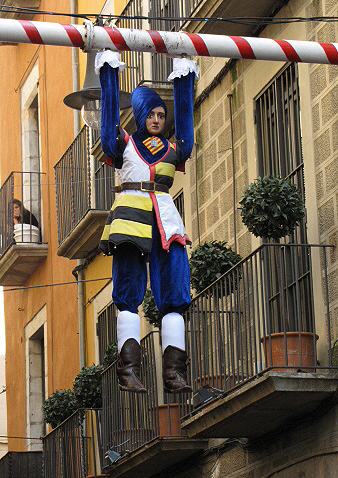 Each spring in Girona, a brightly dressed figure swings gently above the historic Carrer de l’Argenteria, suspended between the narrow buildings of the old town.
Known as Tarlà, the smiling acrobat has become one of the city’s most beloved symbols — a strange and cheerful reminder of one of the darkest periods in medieval history.
Today, visitors pause beneath the puppet to take photographs as café terraces fill with life below. But the origins of Tarlà date back to a time when the streets of Girona were silent.
Born During the Black Death
The legend begins during the outbreaks of plague that swept across Catalonia in the Middle Ages.
At the time, Girona’s tightly packed streets were crowded, unsanitary, and dangerously vulnerable to disease. When the plague reached the city, the authorities quarantined Carrer de l’Argenteria in an attempt to stop the infection from spreading.
Residents found themselves trapped inside their homes for weeks, sometimes months at a time.
According to local tradition, a young acrobat began entertaining those confined inside by performing tricks and balancing acts on poles stretched between the buildings.
The performer became known as Tarlà.
Some versions of the story describe him as a travelling entertainer, while others portray him as a local eccentric determined to lift the spirits of frightened neighbours. Over time, the line between history and folklore blurred — as it often does in old Catalan cities.
A Puppet Above the Street
Eventually, the real acrobat disappeared into legend, replaced by a puppet suspended high above the street in his honour.
Originally, Tarlà was made from sawdust with a carved wooden head. Today, the figure is usually dressed in colourful jester-like clothing, turning slowly in the breeze above shoppers and visitors below.
The tradition has survived for centuries.
Every year in spring, Tarlà is once again hung across the street, symbolising resilience, solidarity, and the importance of humour even in difficult times.
For locals, the return of Tarlà also marks the arrival of warmer weather and the beginning of festival season in Girona.
A Street Full of History
Carrer de l’Argenteria itself is one of Girona’s most historic streets.
Its name comes from the silversmiths (“argenters”) who once worked there during the medieval period, and many of the narrow buildings still retain their historic character. Looking upward, it is easy to imagine the street much as it appeared centuries ago.
The hanging figure of Tarlà adds an almost theatrical quality to the neighbourhood — part history, part folklore, part celebration.
And perhaps that is why the tradition continues to resonate today.
Because while Tarlà emerged from a period of fear and isolation, he ultimately came to represent something more hopeful: the ability of communities to endure hardship through creativity, humour, and togetherness.
Five centuries later, the acrobat still swings above Girona — not as a warning of plague, but as a symbol of life returning to the streets.