
Mais Oui – It’s Wild Asparagus Time!
Wild asparagus season has arrived in the Pyrénées-Orientales. If you enjoy woodland walks in late winter and early spring, keep your eyes open — February and March are the perfect months to spot and gather les asperges sauvages.
Unlike the thick cultivated asparagus found in shops, wild asparagus grows as a delicate, fern-like plant. The edible shoots are thin, slightly spindly, and wonderfully intense in flavour. They often hide amongst briars, grasses and low shrubs, winding their way through the undergrowth — which means finding them can feel a little like a treasure hunt.
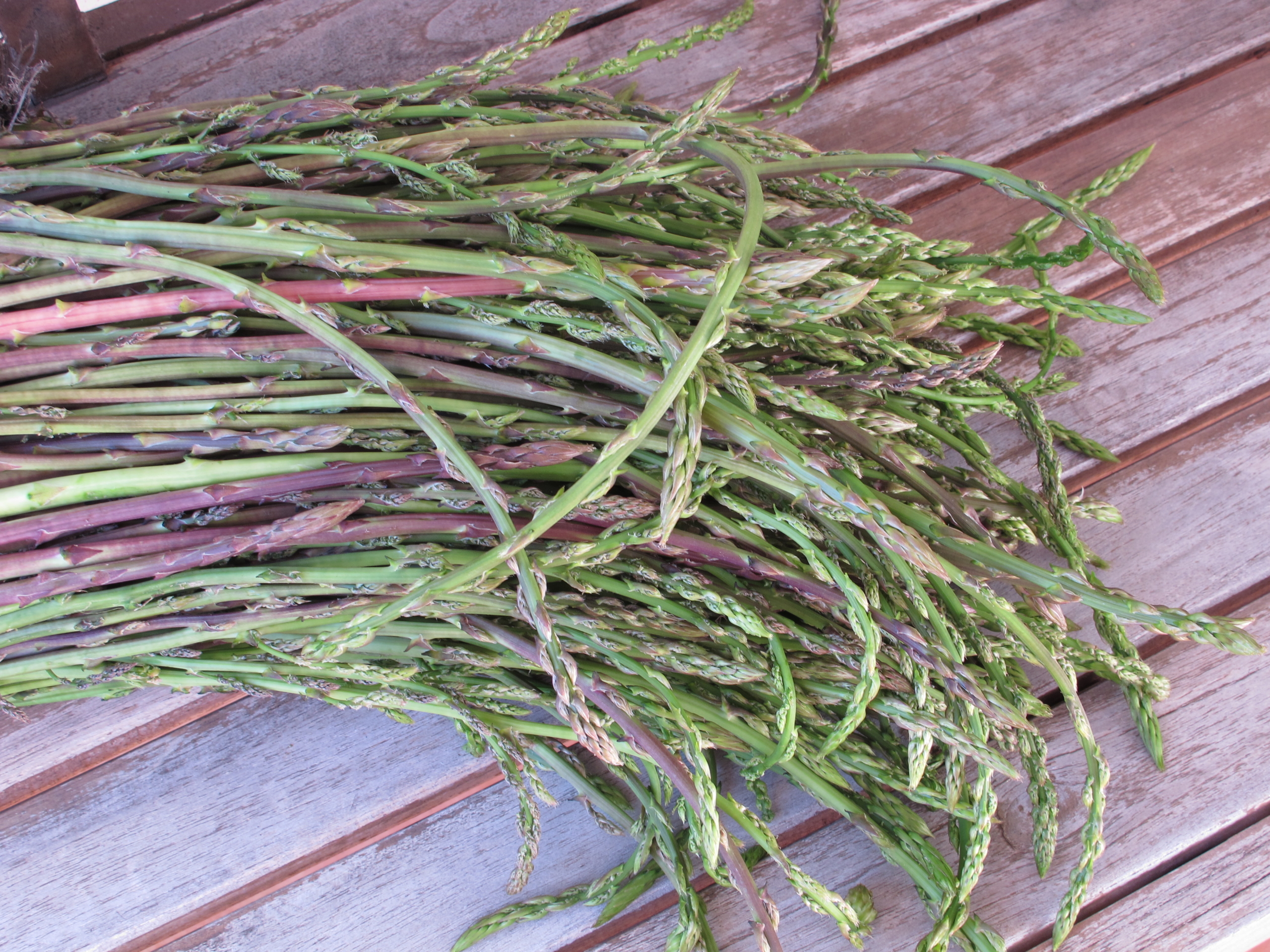
Once you learn what to look for, however, a walk in the countryside can quickly turn into a very satisfying foraging expedition.
A vegetable with ancient roots
The word asparagus comes from the Greek word meaning “shoot” or “sprout”. The plant has been enjoyed for thousands of years. Ancient Egyptians, Greeks and Romans all cultivated asparagus, and many early herbal texts mention it both as food and as medicine.
In fact, asparagus even appears in one of the oldest surviving cookery books: Apicius, a collection of Roman recipes believed to date from the 4th or 5th century. The Romans loved asparagus so much that they reportedly organised special couriers to rush freshly harvested asparagus from the countryside to Rome.
Wild asparagus — the kind found growing naturally around the Mediterranean — is generally thinner and slightly more bitter than cultivated varieties, but many people believe it has a far richer flavour.
Healthy… and slightly mysterious
Asparagus is a nutritional powerhouse. It is naturally low in calories, contains no fat or cholesterol, and provides a good source of folic acid, potassium and dietary fibre.
It is also one of the richest natural sources of rutin, a compound known to strengthen capillary walls.
But asparagus is perhaps most famous for something else entirely — the rather distinctive smell it can produce after digestion. This happens because the vegetable contains sulphur compounds that break down in the body.
Curiously, although everyone produces these compounds, only about half of people have the genetic ability to smell them. In other words, some people notice the effect… and others are blissfully unaware!
In 1891, Italian gastronome Pellegrino Artusi, author of The Science of Cookery and the Art of Eating Well, even joked that adding a drop of turpentine to a chamber pot containing asparagus-provoked urine could transform the smell into “the sweet scent of violets”. Culinary advice perhaps best left in the 19th century!
Foraging tips
- Wild asparagus tends to grow in dry scrubland, hedgerows and woodland edges.
- The shoots are best picked when they are young and tender.
- Snap the shoot gently — if it breaks cleanly, it is fresh.
- Use them quickly: wild asparagus deteriorates fast and can become tough and stringy within 24 hours unless refrigerated.
How to cook wild asparagus
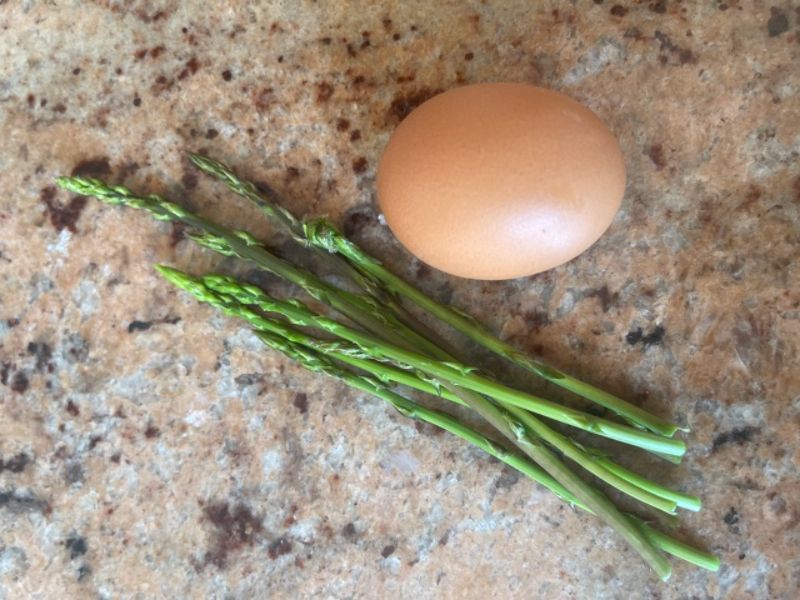
Wild asparagus cooks very quickly. Simply rinse under cool water and either steam briefly, stir-fry, or drizzle with olive oil and roast quickly in the oven or on the barbecue.
Because the flavour is naturally strong and slightly bitter, it pairs beautifully with garlic, eggs, cheese and cured meats.
Simple recipe
Garlic Wild Asparagus
Ingredients
- 3 tablespoons butter or olive oil
- A handful of wild asparagus
- 3 cloves garlic, chopped
Method
Melt the butter or olive oil in a frying pan over a medium heat. Add the garlic and asparagus spears. Cover and cook for around 8–10 minutes, stirring occasionally, until tender.
If you prefer them softer, reduce the heat and cook for a few minutes longer.
Wild Asparagus Quiche
What do you get when you combine a walk in the woods with three eggs? A delicious homemade quiche with freshly gathered wild asparagus.
Ingredients
- 1 sheet ready-made shortcrust or puff pastry
- 1 bunch wild asparagus
- 1 shallot
- 1 clove garlic
- 125g smoked lardons
- 3 eggs
- ½ cup milk
- Grated Gruyère cheese
- Salt and pepper
Method
Chop the asparagus, garlic and shallot and gently fry in olive oil for around 5 minutes. In a separate pan, cook the lardons.
Prepare the migaine (the base mixture used in quiches) by beating the eggs with the milk and seasoning with salt and pepper.
Line a tart tin with the pastry. Add the lardons and asparagus mixture, sprinkle with grated Gruyère, then pour over the egg mixture.
Bake at 180°C for 25–30 minutes, until golden.
A taste of spring
Wild asparagus is one of the small seasonal pleasures of life in the south of France. Spotting the first shoots of the year while out walking is often seen as a sign that spring is just around the corner.
So next time you head out into the countryside, keep your eyes open — you might just return home with the perfect ingredient for dinner.
WONDERFUL article on our favorite wild thing to stalk! Merci.