
Breast Screening in the Pyrénées-Orientales: A Practical Guide to Mammograms in France (What to Expect, Costs & How to Book)
What Is Breast Screening?
Breast screening (in French: dépistage du cancer du sein) is a routine check using a mammogram (X-ray) to detect early signs of breast cancer — often before you notice any symptoms. It is preventative, not because something is already wrong.
At What Age Do You Start Mammograms in France?
In France, women aged 50 to 74 are automatically invited for a mammogram every two years under the national screening programme. You should receive an ‘invitation’ to book an appointment if you are:
- Under 50
- Over 74
- Or have a family history of breast cancer
Speak to your médecin traitant (registered GP). You may qualify for earlier or more frequent screening.
Is Breast Screening Free in France?
Yes — if you are invited through the national screening programme.
Under the dépistage organisé: the mammogram is covered at 100% with no upfront payment in most cases. The images are automatically checked by two radiologists (a second reading is standard in France)
If you book privately outside the programme, costs are usually reimbursed by French state health insurance (Assurance Maladie) and your mutuelle, depending on your coverage.
Do You Need a Prescription for a Mammogram in France?
If you receive the official screening invitation — no prescription is needed.
If you are outside the national age range or have symptoms, your GP may give you an ordonnance (prescription).
Where Can You Have a Mammogram in the Pyrénées-Orientales (66)?
In the Pyrénées-Orientales, the organised breast screening programme is coordinated at departmental level as part of the national cancer prevention system.You can book at radiology centres across the department, including:
- Perpignan (hospital and private clinics)
- Prades
- Céret
- Coastal towns such as Argelès-sur-Mer and Canet-en-Roussillon
You are free to choose any approved radiology centre, according to the one that is the most convenient for you.
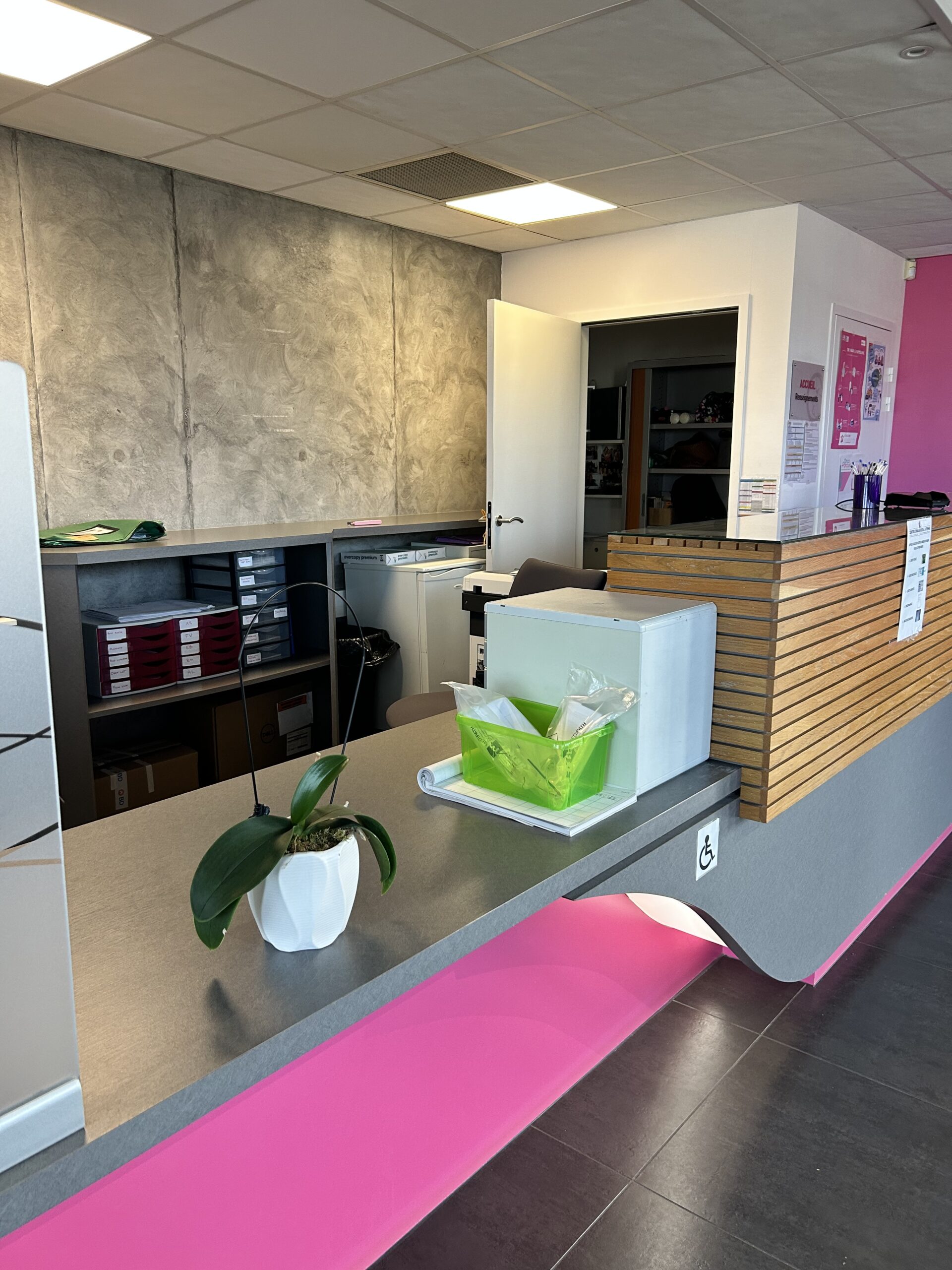
Appointments are required. Most bookings are made by phone, although some centres now offer online booking, or of course you can usually go in and book at the reception if you are not happy speaking on the phone.
If you have not received your ‘invitation’ but believe you are eligible (aged 50–74), you can:
Contact your GP (médecin traitant)
Contact your local CPAM office
Ask directly at a radiology centre
How Do You Book a Mammogram?
Here’s a simple phrase you can use:
Bonjour, je voudrais prendre rendez-vous pour une mammographie.
You will need:
- Your Carte Vitale
- Your mutuelle details (if applicable)
- Your invitation letter (if part of organised screening)
- Previous mammogram results (if you have them)
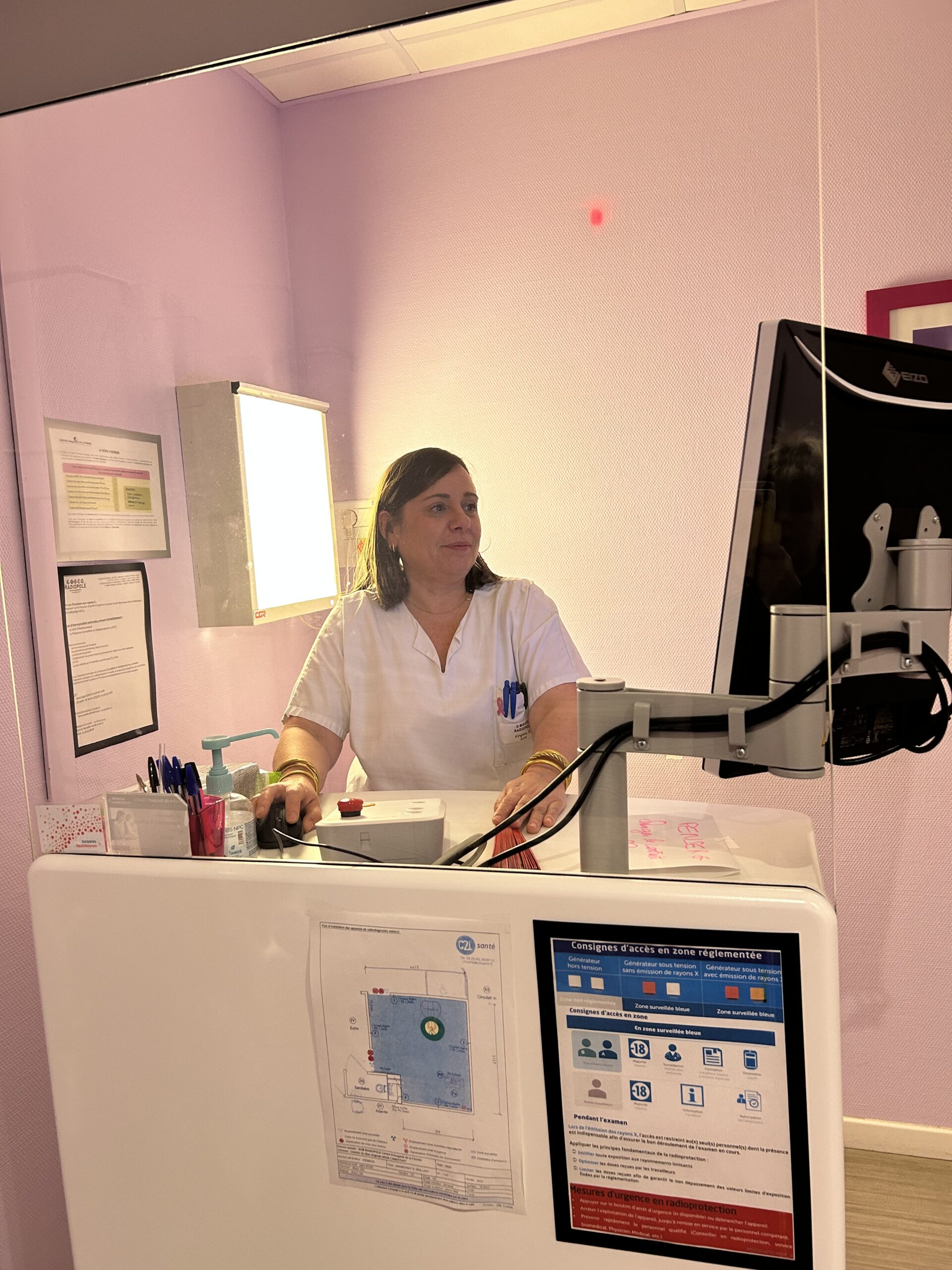
What Happens During a Mammogram? Is it painful?
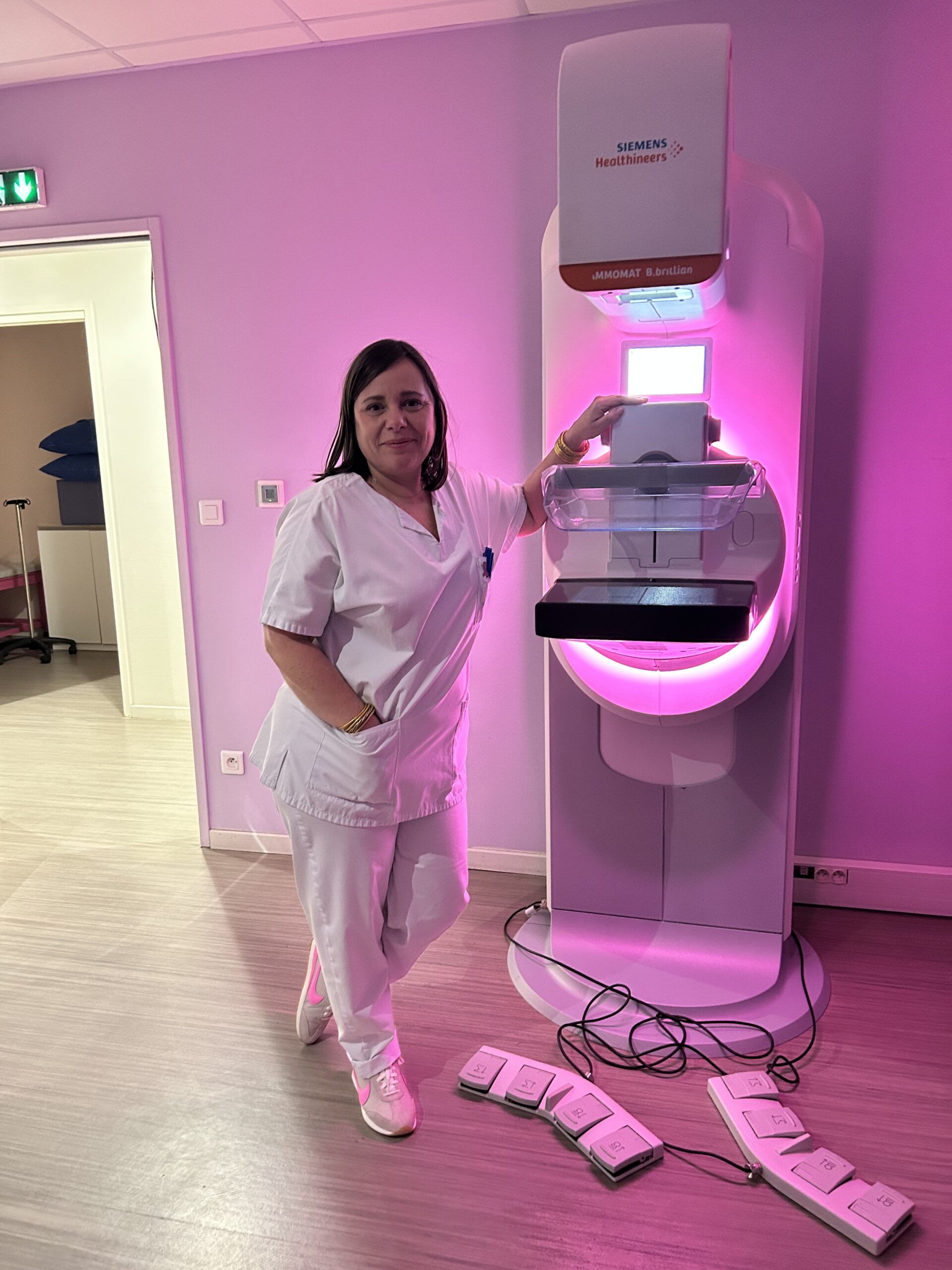
The appointment takes around 20 minutes. You undress from the waist up. Each breast is briefly placed between two plates for imaging. The compression may feel uncomfortable, but it lasts only a few seconds. Most women describe it as uncomfortable rather than painful.
If you are anxious, tell the technician. You can say: Je suis un peu stressée. They are used to reassuring patients.
When Do You Get Results?
Many radiologists give results immediately, but they many also send them by post or forward them to your GP.
If everything is normal, you will often walk away with receive a letter confirming this.
If something needs further checking, you may be contacted for:
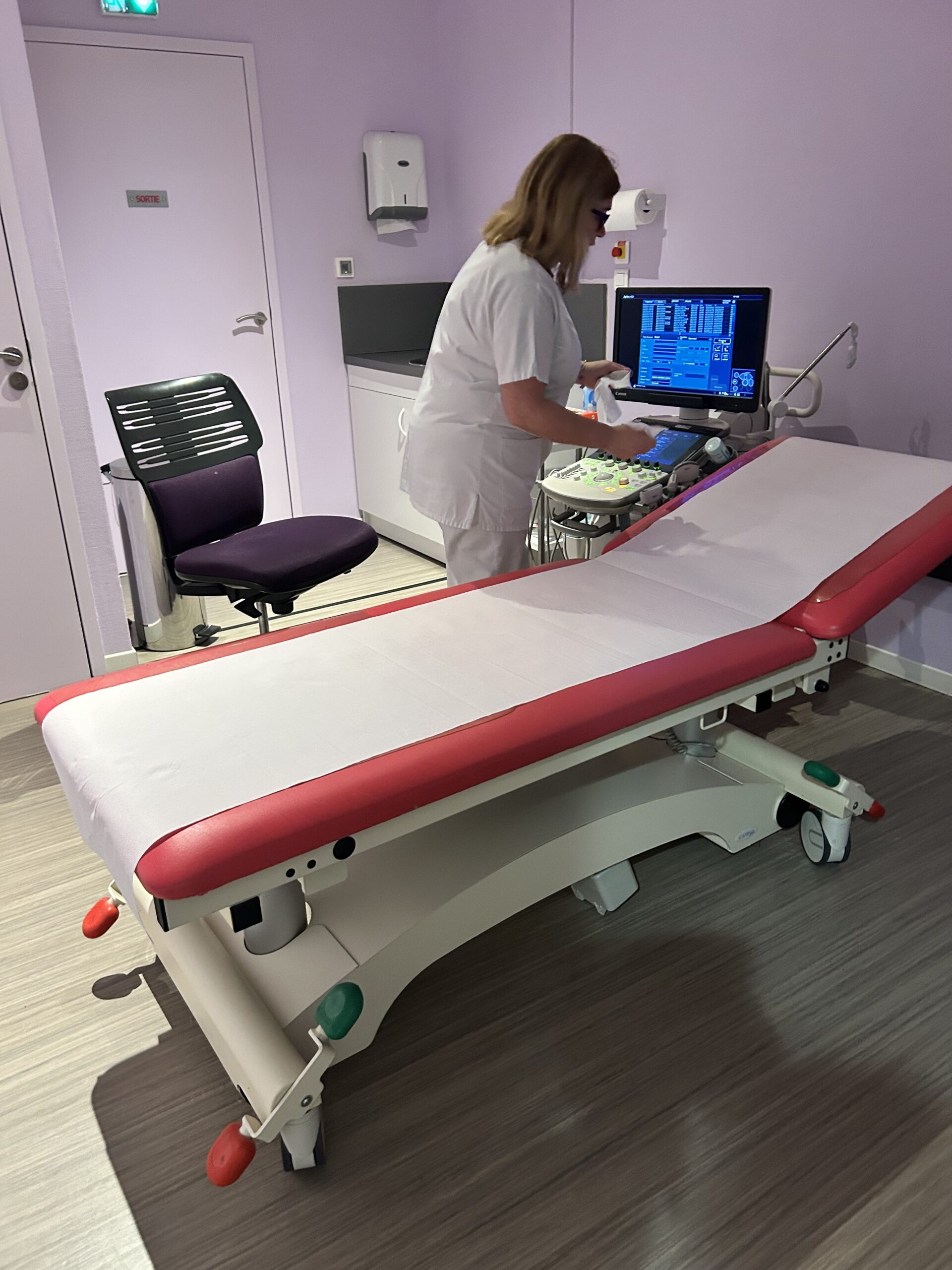
An ultrasound (échographie)
Additional images
Occasionally a biopsy (biopsie)
Important:
Most women called back for further tests do not have cancer. Follow-up is precautionary.
What Happens If Something Is Found?
If an abnormality is detected:
You will be contacted.
Additional tests will be arranged.
If necessary, you will be referred to a specialist.
France has a well-structured cancer care system, and early detection often means simpler treatment.
I’m Under 50 — Should I Still Be Screened?
Routine national screening starts at 50.
However, if you have:
A strong family history
Genetic risk factors
Previous breast issues
Speak to your GP.
You can say:.……J’ai des antécédents familiaux de cancer du sein.
What If My French Isn’t Very Good?
You are not alone. Radiology staff are very used to patients who are not fluent in French.
Helpful phrases:
Pourriez-vous parler un peu plus lentement ?
Je ne parle pas très bien français.
You can also take a friend with you.
🎀 What Is Pink October (Octobre Rose)?
Every October, France runs a national breast cancer awareness campaign called Octobre Rose.
In the Pyrénées-Orientales you may see town halls lit in pink, awareness walks, market information stands, fundraising events
October is often when many women finally book overdue mammograms.
Why Is Screening Important?
Breast screening:
Detects cancer early
Improves survival rates
Often reduces the need for aggressive treatment
Provides reassurance when results are normal
It’s a small appointment that can make a very big difference.
A Few Reassuring Facts
Screening detects many cancers very early.
Early detection usually means simpler treatment.
Most women called back for extra tests do not have cancer.
The exam is quick and highly routine for staff.
Useful French Vocabulary for Breast Screening
For English speakers living in France, here are words and phrases that may help.
English
French
Breast screening
Dépistage du cancer du sein
Mammogram
Mammographie
X-ray
Radiographie
Radiology centre
Cabinet de radiologie
GP
Médecin traitant
Appointment
Rendez-vous
Health insurance
Assurance Maladie
Top-up insurance
Mutuelle
Screening programme
Dépistage organisé
Invitation letter
Lettre d’invitation
Results
Résultats
Follow-up tests
Examens complémentaires
Ultrasound
Échographie
Biopsy
Biopsie
Useful Phrases on the Phone
To make an appointment:
Bonjour, je voudrais prendre rendez-vous pour une mammographie.
(Hello, I’d like to make an appointment for a mammogram.)
If you received the screening letter:
J’ai reçu une invitation pour le dépistage organisé.
(I received an invitation for the organised screening programme.)
If you don’t understand something:
Je suis désolée, je ne parle pas très bien français. Pourriez-vous parler un peu plus lentement ?
(I’m sorry, I don’t speak French very well. Could you speak a bit more slowly?)
To ask about payment:
Est-ce que c’est pris en charge à 100 % ?
(Is it covered 100%?)
If You’re Feeling Nervous
That’s completely normal. Many women delay screening because:
They feel anxious
They worry about pain
They’re unsure how the French system works
But the process is highly routine here, and radiology teams are used to helping people who don’t speak perfect French.
If in doubt, take a friend with you.
Final Thought
If you’ve received your invitation letter — book it.
If you haven’t and you’re eligible — ask your doctor.
If you’re unsure — make the phone call and ask.
Breast screening is one of the simplest preventative health steps you can take while living in France.
🇫🇷 French Summary (Résumé en français)
Dépistage du cancer du sein dans les Pyrénées-Orientales
En France, les femmes âgées de 50 à 74 ans sont invitées tous les deux ans à participer au programme national de dépistage organisé du cancer du sein. La mammographie est prise en charge à 100 % dans ce cadre, sans avance de frais dans la plupart des cas.
Dans les Pyrénées-Orientales, vous pouvez prendre rendez-vous dans un cabinet de radiologie, à l’hôpital ou dans certains centres de santé. Il suffit généralement d’appeler directement le centre choisi et d’apporter votre carte Vitale, votre mutuelle et, si vous l’avez reçue, la lettre d’invitation.
L’examen dure environ 20 minutes. Il peut être inconfortable mais il est rapide. Les résultats sont soit donnés immédiatement, soit envoyés par courrier. Dans le cadre du dépistage organisé, les clichés sont relus par un second radiologue pour plus de sécurité.
Le dépistage permet de détecter un éventuel cancer à un stade précoce, avant l’apparition de symptômes, ce qui augmente considérablement les chances de traitement simple et efficace.
En cas de doute ou de facteur de risque particulier, parlez-en à votre médecin traitant.