
January 2026
Traditional Catalan cuisine served up across the region in spring
Late winter and early spring in Catalonia means one thing for food lovers: calçots and the much-loved calcotada.
This late winter, early spring Catalan tradition can leave you in a fine old mess, but onion lovers will sigh with pleasure at these ‘calçots’ (pronounced cal-sott pronouncing the T, and sounding the ç like s) served up with a ’sauce romesco’ at a convivial ‘calçotada,’ (communal calçot get-together) and accompanied by entertainment, live music and dancing.
Calçotadas
Calçotadas usually take place in March (and sometimes late February), and you’ll find them popping up across the region. The aim is simple: eat as many of these tasty onions as your tummy will allow, dipped in sauce and often followed by barbecued meat, live music, and maybe even a spot of sardanes dancing.
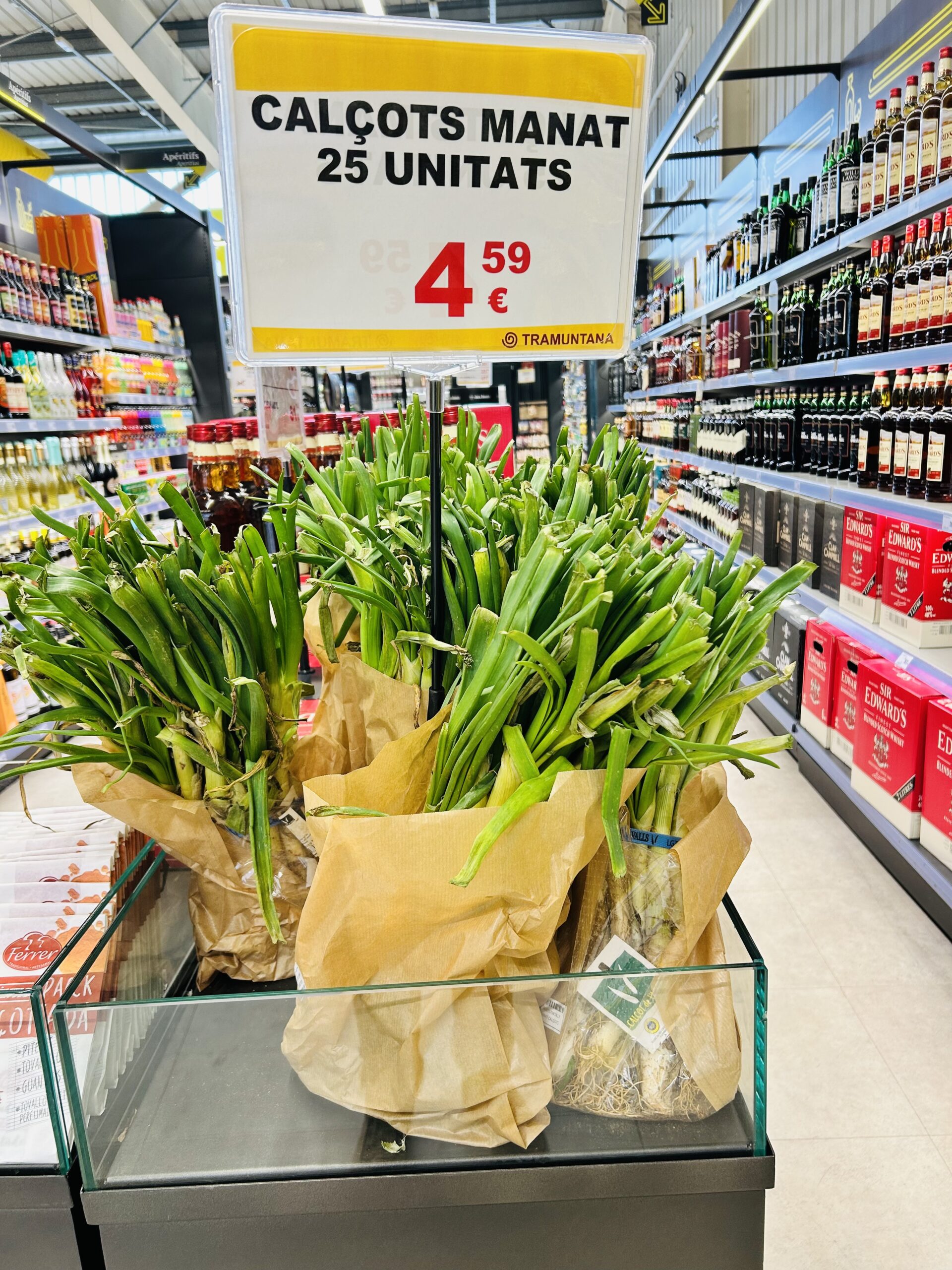
If you’re not heading to a village celebration, check with your local tourist office for a calçotada near you — or buy calçots in the shops and host your own gloriously messy feast at home.
So what exactly are calçots?.

Calçots are a variety of long, thick green onion — a bit like skinny leeks — with their peak season running from January to March.
They’re cooked on a barbecue and turned again and again until completely blackened on the outside, while becoming soft, sweet, and smoky inside. Traditionally, they’re served on upturned terracotta roof tiles and eaten by hand, dipped generously into romesco or salvitxada sauce, and accompanied by red wine or cava.

Look out for a calçotada in a village near you, or treat yourself to lunch out — many typical Catalan restaurants, particularly in southern Catalonia, offer them during the season. Bibs are usually provided, and some places even supply gloves.
After the calçots come grilled sausages or lamb, followed by the classic créma catalana.
To eat them properly, peel away the blackened outer layer, dip liberally into sauce, lift the calçot high above your head, and start from the sauce-dripping end. Expect sticky fingers — it’s all part of the fun.

Add an “-ada”
In Catalan tradition, adding “-ada” to a word turns it into a meal or festival based around a single ingredient, usually shared by many mouths. It could be anything from snails to fish or even chocolate (cargolada, bullinada, and more), often grilled or barbecued, and always wonderfully sociable.
Check with your local tourist office for a calçotada near you , or buy them in all the shops and have your own messy feast at home.
Did You Know…
Calçots originated in the town of Valls, in southern Catalonia, where an annual calçotada festival is still held today. The name comes from the Catalan verb calçar (“to cover”), referring to the traditional growing technique of repeatedly banking up soil around the shoots. This keeps the stems long, pale, and tender — and is the secret behind their distinctive shape.