
La Chandeleur – France’s Love Affair with Crêpes
Apart from the better-known Mardi Gras, France’s closest equivalent to Pancake Day is La Chandeleur, also affectionately known as le jour des crêpes.
Celebrated every year on 2 February, it is one of those French traditions where religion, folklore and food blend together—quite literally—in a frying pan.
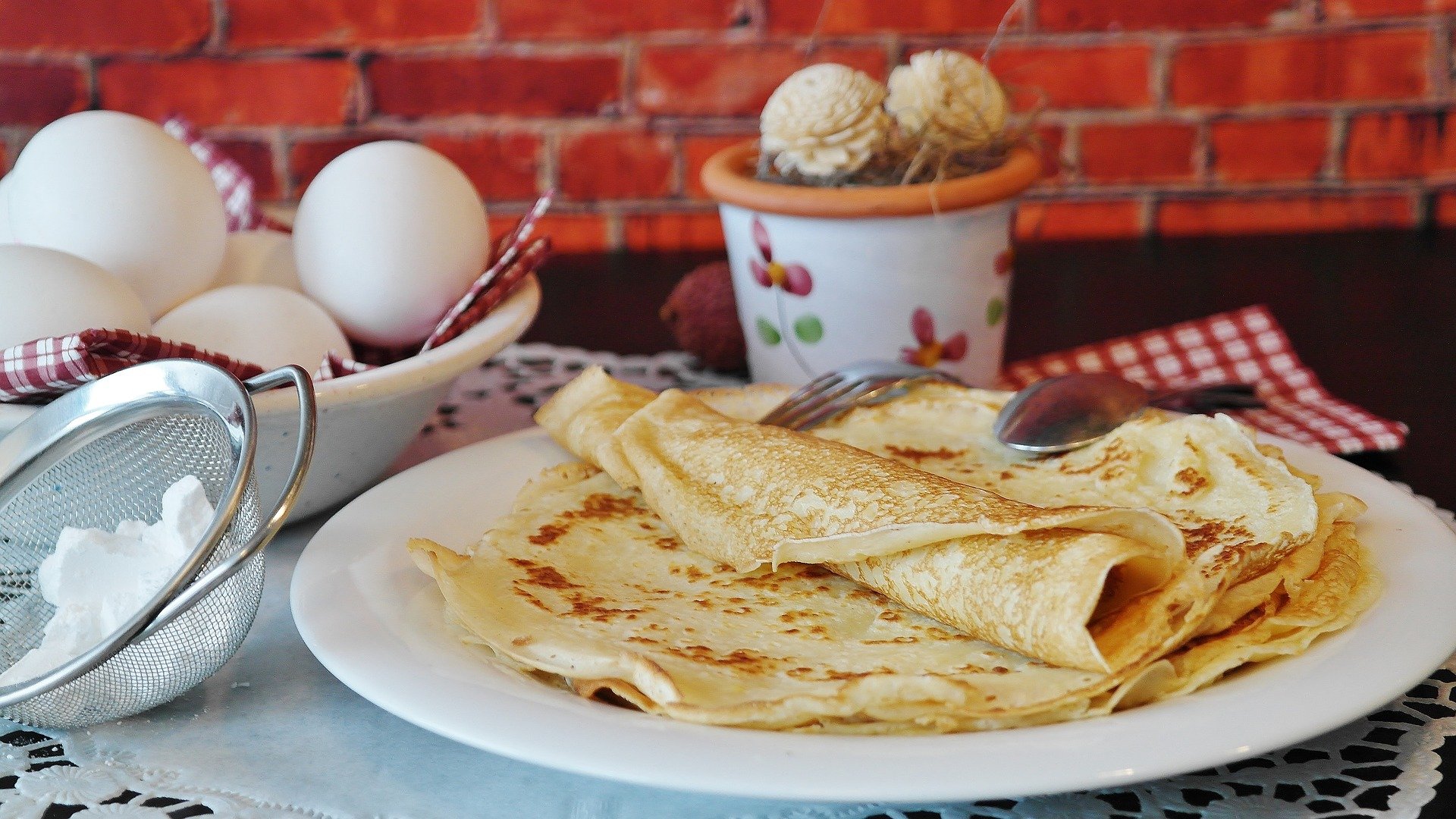
Today, even the most resolutely non-religious households will happily observe La Chandeleur, if only as an excuse to eat crêpes. Schools, offices and families all get involved, and it would be unusual to let the day pass without at least one attempt at flipping a perfectly round pancake.
From Pagan Ritual to Christian Feast
La Chandeleur has surprisingly ancient roots. Long before Christianity, Roman festivals of light were held at this time of year, marking the gradual return of longer days after winter. The Church later adopted the date to commemorate the Presentation of Jesus at the Temple, forty days after Christmas—officially bringing the Christmas season to an end.
The name Chandeleur comes from chandelle, meaning candle. Traditionally, candles were blessed in church and carried in procession, symbolising purification, protection and hope for the coming year.
Candles, Crêpes and Curious Superstitions
As with many old rural festivals, La Chandeleur is rich in sayings and superstitions.
One tradition involved lighting a candle in church and carrying it home without letting the flame go out. Anyone who succeeded, it was said, was guaranteed not to die in the coming year:
« Celui qui la rapporte chez lui allumée, pour sûr ne mourra pas dans l’année. »
Food also played a vital symbolic role. Eating crêpes on Chandeleur was believed to ensure a plentiful harvest—provided they were eaten after 8pm:
« Si point ne veut de blé charbonneux, mange des crêpes à la Chandeleur. »
Another well-known custom is to flip a crêpe with one hand while holding a gold coin in the other, a gesture said to bring prosperity and financial security to the household for the year ahead.
More practically, crêpes were also a sensible way of using up eggs, butter and milk before the start of Lent—long before fridges and freezers allowed food to be kept indefinitely.
And What About the Weather?
No traditional French celebration would be complete without a few weather proverbs—and La Chandeleur offers several, some of which rather contradict each other:
« Quand il pleut pour la Chandeleur, il pleut pendant quarante jours. »
If it rains on Candlemas, it will rain for forty days.
« Soleil de la Chandeleur, annonce hiver et malheur. »
A sunny Chandeleur announces winter and misfortune.
« Quand la Chandeleur est claire, l’hiver est par-derrière ; Chandeleur couverte, quarante jours de perte. »
If Chandeleur is bright, winter is behind us; if it is overcast, winter will last another forty days.
So, sunshine or rain? Opinions clearly differ—but perhaps it’s safest to focus on the crêpes.
A Tradition That Lives On
Whether observed for religious reasons, superstition, or simply for pleasure, La Chandeleur remains a cherished date in the French calendar. In the Pyrénées-Orientales, it is another reminder that even in mid-winter, life is meant to be enjoyed—preferably with a warm pan, a knob of butter, and a generous drizzle of sugar or honey.
And if your crêpe lands on the floor? Just smile, make another one, and blame the weather. 🥞
Love “pop your clogs” haha. Love POLife! It is just so lively.!!!