
UPDATE JANUARY 2026
When the Treaty of the Pyrenees was signed in 1659, Spain ceded Roussillon and 33 villages of the Cerdagne to France. Yet somehow, the small town of Llívia managed to remain Spanish. To this day, it is a little piece of Spain entirely surrounded by France.
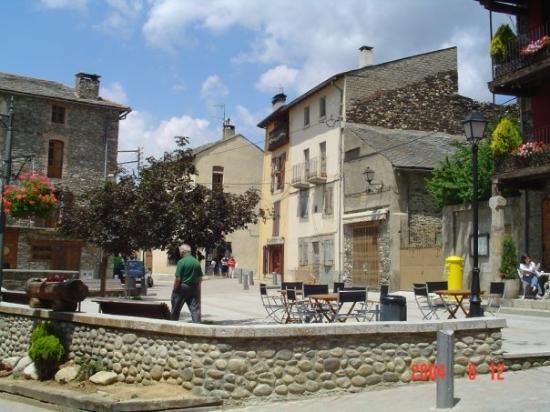
With the signing of the Treaty of the Pyrenees in 1659, the present day borders were formed between France and Spain. After centuries of fighting and disagreement, the Pyrenees were named as the true border bringing Roussillon, the Vallespir, the Conflent, Capcir and thirty-three villages of the Cerdagne under French rule.
About eight square miles in area, with a population of around 1,000 people, Llivia is considered by some as is a bit of a historical hiccup. By a strange quirk of fate it was decreed that Llivia was classed as a villa (town with a charter), not a pueblo (village). and as the treaty stipulated that only villages were to be ceded to France, it remains, inside France, a small enclave of Spanishness.
The road linking Llívia to Spain has long reflected this unusual status. Jointly owned by France and Spain, it has been a source of friction in the past, most notably during the so-called “war of the stop signs”, when French road signs were repeatedly removed overnight by pro-Spanish locals. Today, within the Schengen area, the border is largely invisible and life flows easily across it.
Although geographically isolated, Llívia remains administratively Spanish. Spanish law applies, elections are Spanish, and the town is culturally Catalan, with Catalan widely spoken alongside Spanish and French.
In 2017, the Catalan independence referendum saw 561 votes in favour out of 591 cast in Llívia, though the vote was later declared illegal by the Spanish courts.

Alongside its 17th-century fortified church, Llívia’s most celebrated landmark is the Oldest Pharmacy in Europe, founded in the early 15th century. Now a museum, it houses antique medicines, laboratory equipment, and one of the largest collections of historic prescription books in Europe, with records of pharmacists practising in Llívia since medieval times.