
Carnival in the Pyrénées-Orientales: Surprising Origins, Strange Traditions and Local Secrets
February and March bring a burst of colour to towns and villages across the Pyrénées-Orientales — expect fancy dress, lively street parades, music, dancing, fireworks and the dramatic burning of symbolic evil spirits to mark winter’s end.
But carnival is far more than a party — its roots stretch back thousands of years.
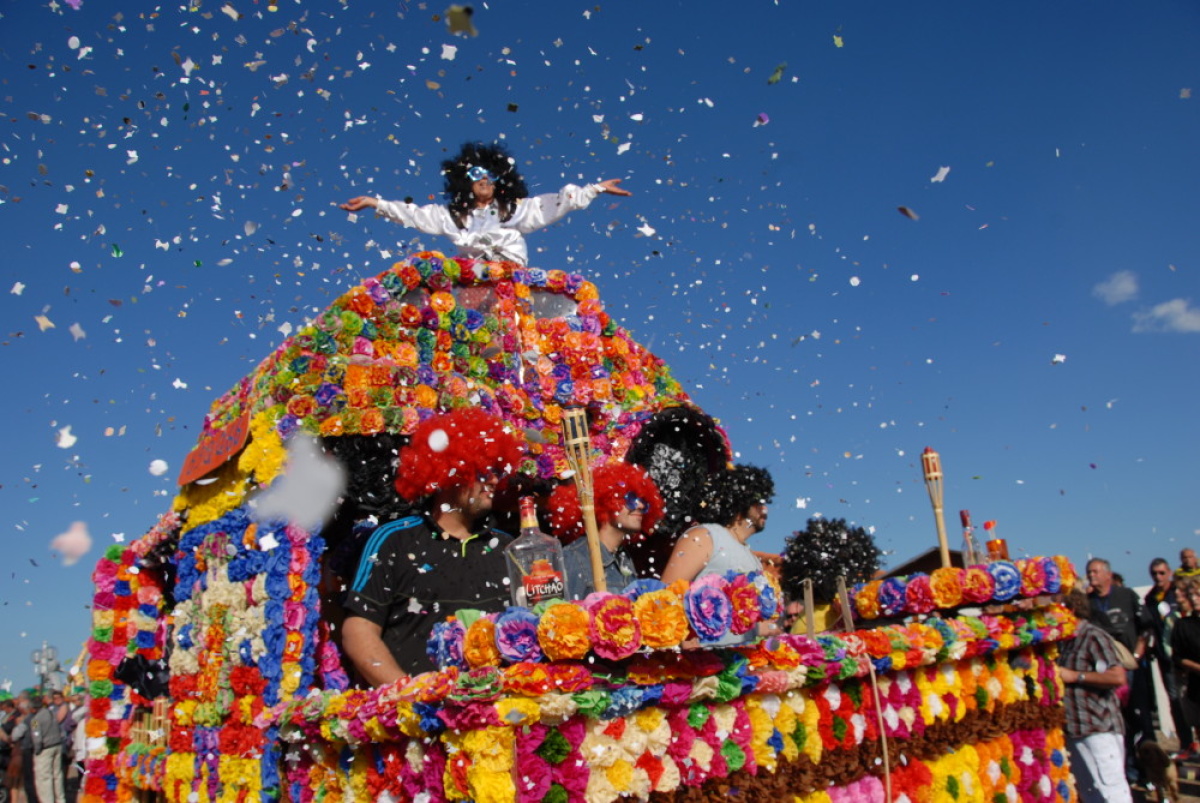
Ancient Beginnings
Many historians link carnival traditions to festivals in honour of Dionysus, the Greek god of wine, theatre and celebration. These springtime gatherings were famously exuberant, embracing music, masks and a temporary escape from everyday rules.
Later, when Christianity spread across Europe, the Church largely chose to absorb rather than abolish these popular festivities In fact, unable to suppress it, the church wisely adapted it instead to its own traditions
Carnival became the final indulgence before the solemn season of Lent — a 40-day period traditionally associated with fasting, reflection and repentance.
Where Does the Word “Carnival” Come From?
The most widely accepted origin is the Latin phrase carne vale — “farewell to meat.” This reflected the medieval custom of giving up rich foods during Lent.
Another theory traces the word to carrus navalis, meaning “ship cart,” referring to wheeled floats used in ancient processions — an early ancestor of today’s parade floats.
👉 Did you know?
The idea of carnival as a world temporarily turned upside-down may also echo the Roman festival of Saturnalia, when social hierarchies were relaxed, disguises were worn and mischief was actively encouraged.
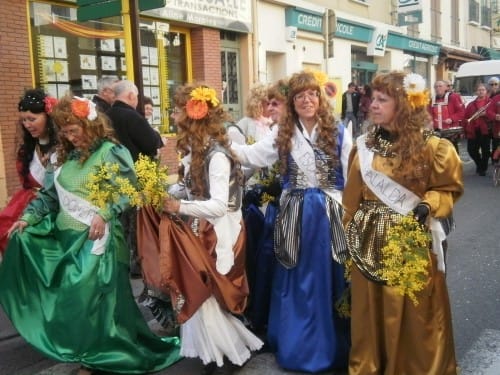
A World Turned Upside-Down
Historically, carnival allowed people to step outside rigid social rules. Men dressed as women, servants mocked their masters, identities were hidden behind masks — and for a few days, society embraced joyful chaos before order returned.
👉 Fun fact:
Masks were not just playful — they offered anonymity in small communities where behaviour was usually closely watched!
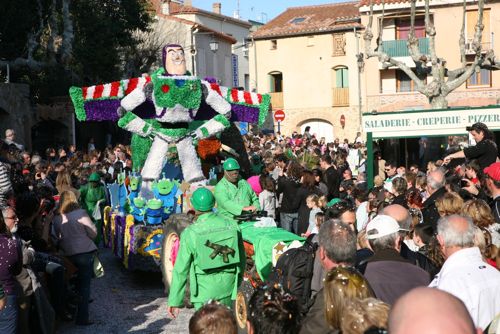
The Carnival King
One of the most enduring traditions is the creation of the Carnival King, often a straw-filled effigy representing the misfortunes, sins and hardships of the past year. At the end of the festivities, he is ceremoniously burned — a powerful symbol of renewal and the promise of spring. Fire rituals like this are common across Europe and often predate Christianity, reflecting ancient beliefs about purification and rebirth.
Watch Out for “Les Grégoires”
In some local celebrations, mysterious figures known as les Grégoires appear — dressed entirely in white with faces dusted in flour. They escort the Carnival King to his fiery fate, creating one of the most striking visual moments of the festivities.
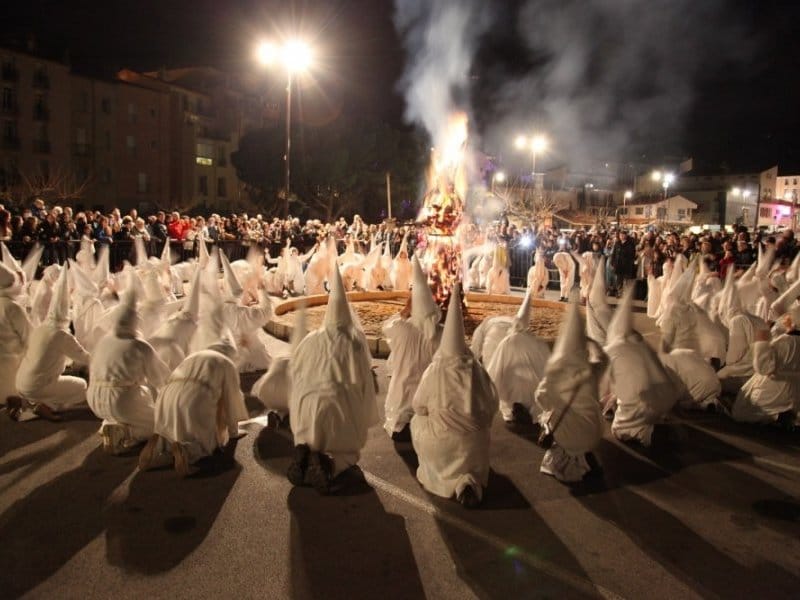
👉 Did you know?
White costumes historically symbolised ghosts or wandering winter spirits — another reminder that carnival marks the transition from darkness to light.
A Living Tradition
Today, carnival in the Pyrénées-Orientales blends ancient symbolism with modern fun. Expect family-friendly parades by day and lively celebrations by night, with each village adding its own personality to the season. Though the costumes evolve and the music grows louder, the deeper meaning remains unchanged: Say goodbye to winter, let go of the past, and welcome the energy of spring.
CHECK WITH THE TOURIST OFFICES FOR CARNIVALS AROUND THE REGION