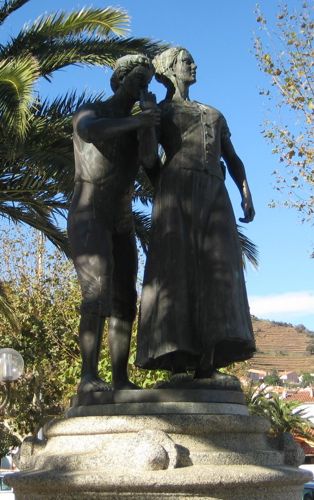
Fenouil and Fenouille: A Catalan Love Story
Who they really were has been lost to time, but by the late 19th century, the legend of Fenouil and Fenouille was so deeply rooted along the coast that it became part of local identity.
So much so that Jules Pams, a prominent figure of the Third Republic, proposed that their story be immortalised in stone.
In March 1901, the project was approved, and a bronze statue by sculptor Jean-Baptiste Ossaye-Mombur was installed in Port Vendres , on the Place Castellane overlooking the harbour.
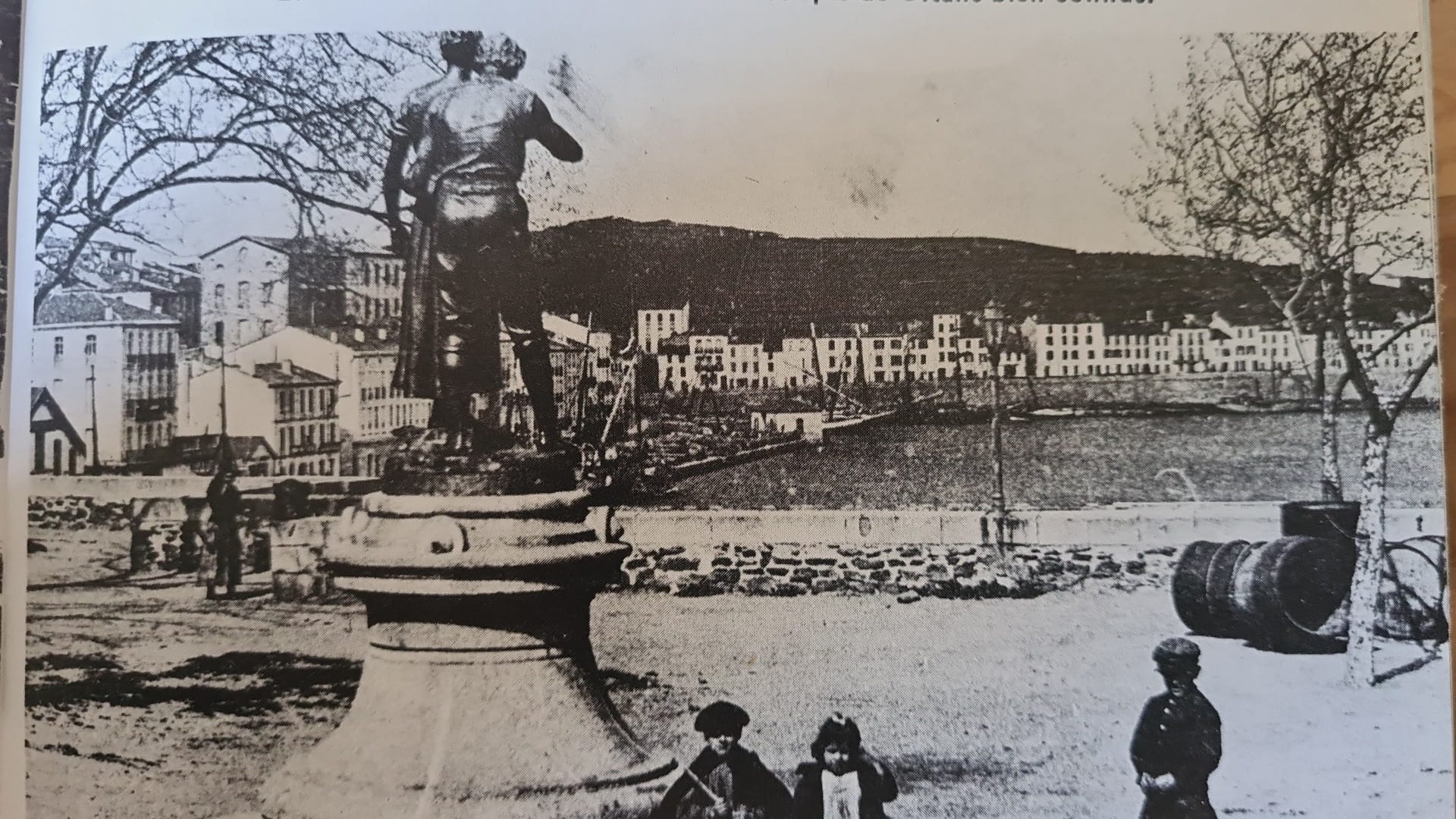
Entitled Idylle, but also called “le départ du pêcheur“, a young couple in simple country dress, stand side by side, gazing out to sea. The sculpture quickly captured the hearts of the townspeople and became a symbolic gathering point, woven into the life of the port and its celebrations,
But history intervened.
In 1942, during the Second World War, the statue was dismantled and melted down as part of the German occupation’s bronze requisition programme. For decades, the lovers existed only in memory and on faded postcards.
It was not until 1999 that the story was revived. The municipality commissioned local sculptor Gérard Vié to recreate the statue, working painstakingly from old photographs. The new version was unveiled in 2000, restoring Fenouil and Fenouille to their place above the harbour—and to the heart of the town.
The Legend
Fenouil and Fenouille are often described as the Romeo and Juliet of Catalonia.
According to the legend, they were young lovers from a modest background—he apprenticed to become a fisherman, she destined for the fish market. Their lives, like those of many in Port-Vendres, were shaped by the rhythms and dangers of the sea.
Each year, during the long fishing seasons, Fenouil would leave for weeks at a time. Fenouille, left behind, was consumed by worry—not only for his safety, but for his fidelity in distant ports.
Then one year, he did not return.
Lost at sea, Fenouil was gone forever.
Overcome with grief, Fenouille threw herself into the sea to join him.
The legend says that the sea, usually so merciless, showed an unexpected tenderness. On the shore, in the wet sand, it traced the faces of the two lovers together—united at last.
A passing sculptor, moved by the image, captured it in bronze.
And so their story endured. Forever bronze.