
La Retirada and the exodus of Spanish Art
The Retirada is a time to reflect on the errors of the past and, hopefully, learn important lessons to prevent such atrocities from reoccurring.
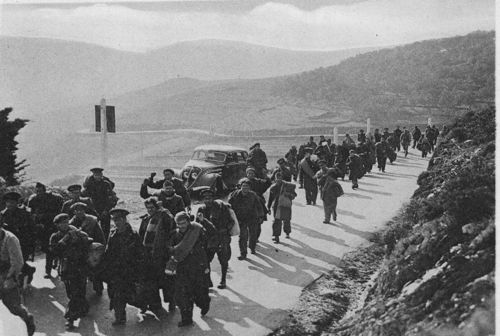
Well-documented are the vast waves of refugees, flowing over the border, out of Franco-ruled Spain and into the P-O. What is less known about the exodus, is that many important pieces of art also fled the tyrannical dictator.
Cultural artifacts have long been targeted by armies as a demonstration of their superiority, dominance and power. Collectors and curators were therefore anxious to protect their cultural heritage.
Joël Mattey, president of the association, Amis du Musée d’art Moderne de Céret, confirms that an agreement was established in Figuerès, allowing Spanish artwork to pass over the border. Tens of millions of cultural artefacts were removed from palaces, museums, churches, libraries and private collections across Spain.
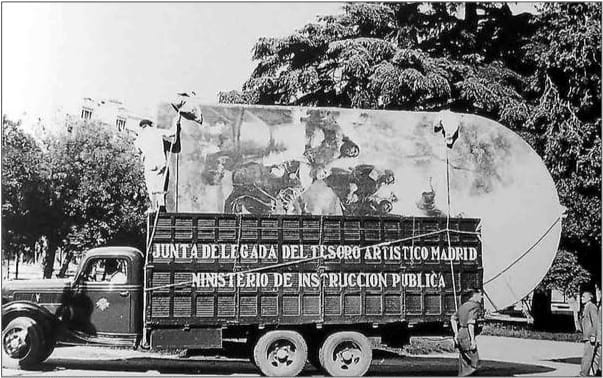
Secret convoys and disguised masterpieces
Many art shipments were deliberately disguised as ordinary refugee luggage. Crates were sometimes labelled as agricultural tools, furniture, or even food supplies to avoid attracting attention from bombers or patrols. Some curators reportedly travelled alongside the trucks, refusing to leave the works even during air-raid alerts
These priceless works were placed in lorries which then joined the snaking lines of Spanish refugees, all making the perilous route towards safety. Many paintings, sculptures, books and tapestries passed via the Château d’Aubiry in Céret before continuing their journey, en route for Geneva.
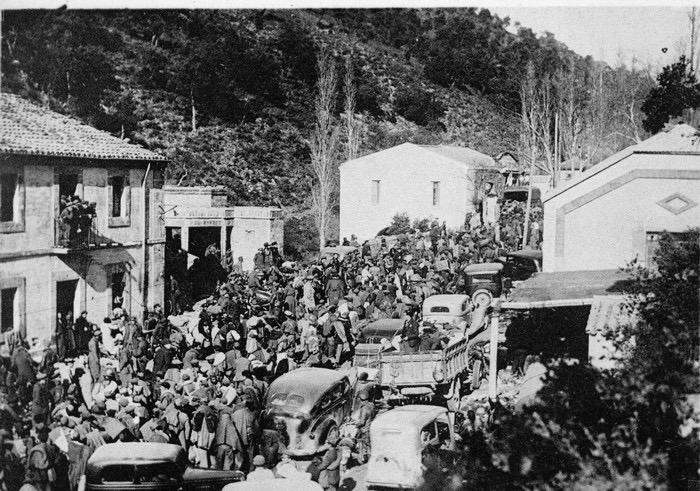
A race against bombing
By early 1939, transport routes were already under threat. The urgency was not abstract — several cultural convoys narrowly escaped aerial bombardment on roads leading to the French frontier. The exodus of art was literally a race against destruction.
The night guardians of Céret
Locals later recalled that during certain winter nights, armed guards and silent lorries arrived at unusual hours, unloading sealed crates under strict supervision. The secrecy surrounding these operations fuelled long-lasting rumours about what exactly passed through the town.
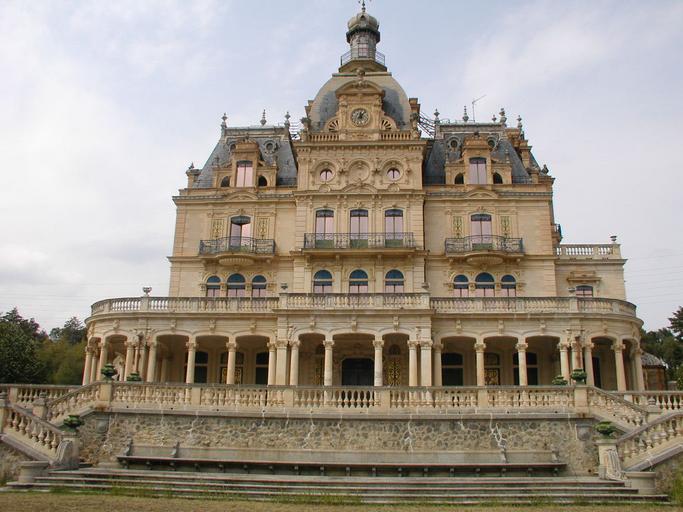
In fact, the elegant Château d’Aubiry became an unexpected refuge for cultural treasures in transit.
Local legend claims that some crates remained hidden there longer than officially recorded. Stories persist of sealed rooms, guarded corridors, and artworks stored in unexpected spaces — even former service rooms and cellars not originally intended for conservation.
While historians have not confirmed any “forgotten masterpiece,” the rumours endure and remain part of Céret’s collective memory.
Did you know? — Europe’s cultural rescue network
The evacuation of Spanish art was not an isolated effort. It formed part of a broader international movement to safeguard cultural heritage during wartime, involving museum professionals, diplomats, and humanitarian organisations across several countries.
Geneva became a key safe haven, symbolising neutrality not just for people — but for culture itself.
The human side of cultural preservation
Some refugees walking beside the convoys had never seen the artworks being transported, yet they protected them anyway. For many, safeguarding culture was seen as protecting the identity of a Spain they hoped would one day return.
A persistent mystery
Even today, archivists still debate whether the full inventory of evacuated Spanish cultural objects was ever completely documented. The chaos of war, shifting borders, and emergency transport conditions make absolute certainty unlikely.
For historians, that uncertainty is part of the legacy of the Retirada — not everything that crossed the border is fully traceable.
A symbolic crossing
For some historians, the movement of art across the Pyrenees represents more than preservation. It marks a symbolic migration of memory, where culture itself became a refugee — displaced, protected, and waiting for a safer future.
This February, take a moment to reflect on Europe’s recent history and, in particular, the role played by our region.